When the golden dunes of Rajasthan begin to shimmer under the first heat of summer, homes across the state awaken to a day of quiet devotion and gentle restraint, Sheetala Ashtami. The air feels calmer, kitchens fall silent, and the aroma of pre-prepared food mingles with the faint fragrance of sandalwood and turmeric. It’s a …

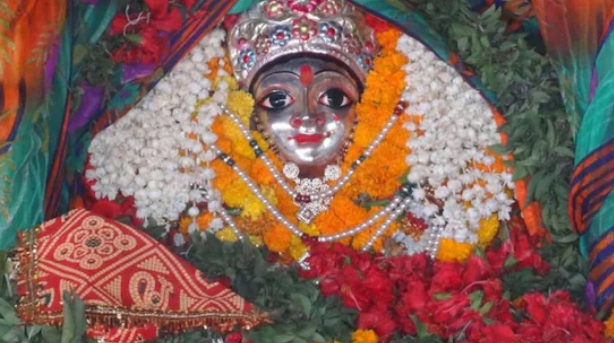
When the golden dunes of Rajasthan begin to shimmer under the first heat of summer, homes across the state awaken to a day of quiet devotion and gentle restraint, Sheetala Ashtami. The air feels calmer, kitchens fall silent, and the aroma of pre-prepared food mingles with the faint fragrance of sandalwood and turmeric. It’s a pause, a ritual of renewal and purification where faith meets science, and tradition embraces the wisdom of the seasons.
In the heart of Rajasthan’s cultural calendar, Sheetala Ashtami stands as a celebration of protection, purity, and maternal care, dedicated to Goddess Sheetala, the divine mother who guards her devotees against disease and discomfort.
“To worship Sheetala Mata is to honor the healing rhythm of nature, the calm after the heat, the stillness after celebration.”
Origins and Significance: The Healing Goddess of Rajasthan
Known locally as Basoda, Sheetala Ashtami is celebrated eight days after Holi, during the Krishna Paksha of the Chaitra month, when the weather shifts from cool to warm, and life adjusts to a new rhythm. This seasonal change, symbolic yet biological, is believed to bring both vitality and vulnerability. As temperatures rise, so do infections and fevers and so begins the prayer to Sheetala Mata, the protector against heat-borne ailments and skin diseases.
The worship of Sheetala Mata is ancient, described in sacred texts like the Skanda Purana, where she is said to have received her divine mandate from Lord Brahma to safeguard all beings on Earth.
She is portrayed riding a humble donkey, holding a broom, a pot of cool sanctified water, and neem leaves, symbols of cleansing, purification, and healing.
In Rajasthan’s folk consciousness, she is both fierce and compassionate, the guardian of children, the healer of the sick, and the one who restores balance when the world’s elements turn harsh.
“Her broom sweeps away disease, her pot cools the fever, her neem brings purity, Sheetala is the gentle guardian of every home.”
For generations, Rajasthani families have believed that offering prayers to Sheetala Mata protects their children from ailments like smallpox, chickenpox, skin rashes, and other seasonal infections. The festival is thus less about grandeur, and more about gratitude, a simple yet profound way of saying thank you to nature’s healing power.
Basoda: The Ritual of Rest and Renewal
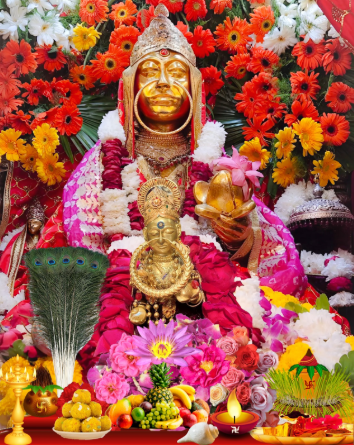
One of the most distinctive customs of Sheetala Ashtami is the Basoda tradition, eating basi (stale) food prepared the previous day. On this day, no fire is lit, no cooking is done, and kitchens rest. Instead, families eat the meals made the night before, offered first as prasad to the goddess.
In a land where seasons dictate diet, this tradition is rooted in wisdom. With the onset of summer, heavy and spicy foods are avoided, and lighter, cooling dishes take their place.
Rabri, aate ka halwa, ker sangri, parathas, kanji vada, dahi vada, and puri are prepared and served cold. The meal is simple yet symbolic, a gentle reminder to align one’s body with the rhythm of the changing season.
The goddess, embodying the essence of Sheetalta (coolness), is believed to bless those who partake in this cooling ritual. Clay pots are also reinstated in kitchens on this day, another nod to Rajasthan’s enduring harmony with nature.
“In Rajasthan’s heat, even food becomes prayer calm, cool, and crafted in gratitude.”
The Sacred Morning: Rituals of Purification
As dawn breaks on Sheetala Ashtami, women rise before sunrise and bathe in cold water, a symbolic act of cleansing the body and spirit. The puja sthal (worship area) is prepared with meticulous care, washed clean, and adorned with red cloth, flowers, and an earthen pot filled with cool water.
Unlike other festivals, incense or fire is not used here, for the essence of Sheetala lies in stillness and serenity. The offerings are simple: curd, rabri, gur, halwa, and barre. Turmeric, vermilion, sandalwood paste, and neem leaves accompany prayers, as women bow before the image or pot representing Sheetala Mata.
The worship begins with an invocation to Lord Ganesha, followed by offerings of water, sweets, and basi prasad to the goddess. Every act, every drop of water poured, represents a plea for peace, health, and balance in the household.
In villages, community prayers turn into quiet gatherings, no drums, no firecrackers, just faith carried in whispers and hymns.
The Culture of Donkey Worship
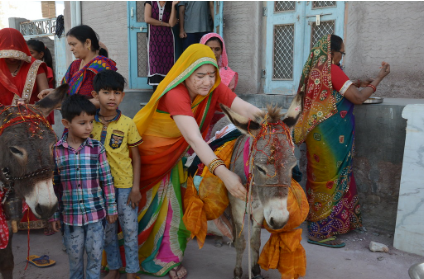
Among Rajasthan’s many unique customs, none are as endearing and distinctive as the donkey worship during Sheetala Ashtami.
Goddess Sheetala’s chosen vehicle, the humble donkey, is honoured with great devotion. It is believed that by worshipping the donkey, devotees express gratitude for its endurance and service, a symbolic recognition of humility and strength.
On this day, donkeys are adorned with tilak on their foreheads, garlands of marigolds, and offered treats like gur and chapatis.
In districts like Bikaner and Jaipur, local priests lead special ceremonies where families gather at Sheetla Mata temples. The air resonates with bhajans and chants of “Jai Sheetla Mata!” as devotees line up to offer prasad. Donkey owners often visit neighbourhoods, bringing their animals for blessings, a heartwarming sight of shared belief and community connection.
“Even the simplest creature becomes divine when seen through the eyes of devotion.”
The tradition speaks volumes about Rajasthan’s inclusive spirituality, where every being, from the mightiest deity to the humblest animal, is part of the sacred whole.
Scientific Wisdom in Tradition
Beyond faith, the rituals of Sheetala Ashtami also reflect an intuitive understanding of health and environment. The timing, post-Holi, at the cusp of summer, marks a period when waterborne and heat-related illnesses rise. Observing cleanliness, cooling the body with light foods, and pausing kitchen fires all contribute to rest, detoxification, and hygiene.
Even the neem leaves and water offerings carry antiseptic and purifying qualities. What appears as religious symbolism is in fact ancestral wisdom, science expressed through ritual.
“In the language of devotion, ancient India spoke the science of balance.”
Celebrations Across Rajasthan
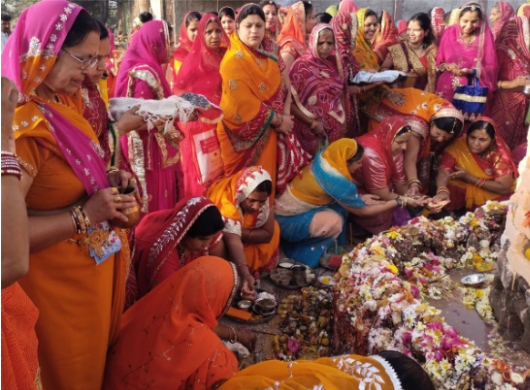
From bustling Jaipur and Jodhpur to serene village courtyards, Sheetala Ashtami is observed with quiet devotion rather than spectacle. In temples, long queues form as women offer basi prasad and pray for the well-being of their families.
In Bikaner, the Sheetla Mata temple becomes a hub of faith, hundreds gather, singing hymns and carrying offerings.
In Jaipur, the morning air fills with the hum of prayers, while children play near donkey processions decorated in bright colours.
In rural Rajasthan, the festival remains deeply personal, neighbours exchange prasad, families visit temples together, and the day flows with calm reverence.
While other festivals blaze with sound and colour, Sheetala Ashtami celebrates silence and simplicity, a collective exhale before the intensity of summer begins.
A Festival of Renewal
More than anything, Sheetala Ashtami reminds Rajasthan of its deep harmony with nature, how people have long lived in rhythm with the land’s extremes. It teaches balance: between heat and coolness, indulgence and restraint, chaos and calm.
The goddess may be worshipped in earthen pots and simple offerings, but her message is timeless, to care, to cleanse, and to coexist.
As modern life grows louder and faster, festivals like these offer a return to stillness, a quiet moment to honour the ancient wisdom that continues to guide Rajasthan’s cultural heartbeat.
Experience Sheetala Ashtami with Folk Experience
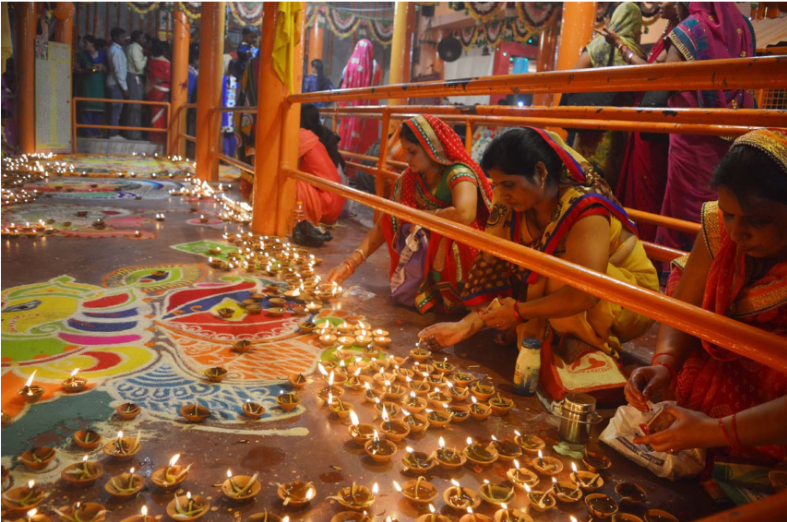
To truly understand Sheetala Ashtami, one must not only witness it but feel it. Join local women as they prepare Basoda prasad before sunrise, visit serene Sheetla Mata temples where prayers are whispered in the still dawn, and listen to village elders share timeless tales of healing, faith, and balance.
At Folk Experience, every journey is designed to immerse you in Rajasthan’s living heritage, not as an observer, but as a participant. Each experience is rooted in respect, storytelling, and sustainability, inviting you to engage meaningfully with the communities who keep these sacred traditions alive.
Our journeys are curated in collaboration with local families, temple caretakers, and artisans, ensuring that every moment supports rural livelihoods and sustains centuries-old practices. What you experience isn’t staged, it’s real, human, and deeply connected to the rhythm of everyday life.
Travel with Folk Experience, and discover that even silence has a song, the murmur of prayer, the rustle of neem leaves, and the soft echo of devotion carried gently across the desert wind.
“To experience Sheetala Ashtami is to feel Rajasthan breathe, slowly, calmly, in tune with the rhythm of the Earth.”