In the arid heartlands of Rajasthan, where wind carries ancient hymns and every dune whispers the memory of saints, warriors, and poets, there lives the tale of Harbuji Sankhla, the yogi-saint whose life bridged devotion and valour. Revered as one of Rajasthan’s great folk deities, Harbuji’s name is spoken with reverence in the same breath …

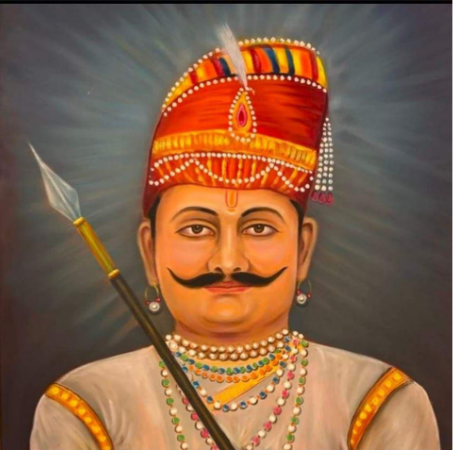
In the arid heartlands of Rajasthan, where wind carries ancient hymns and every dune whispers the memory of saints, warriors, and poets, there lives the tale of Harbuji Sankhla, the yogi-saint whose life bridged devotion and valour. Revered as one of Rajasthan’s great folk deities, Harbuji’s name is spoken with reverence in the same breath as Baba Ramdevji, his contemporary and spiritual companion.
A warrior by birth and a saint by choice, Harbuji embodied Rajasthan’s eternal balance, courage and compassion, austerity and generosity, prophecy and surrender. His story, rooted in both history and legend, continues to inspire thousands who seek guidance, strength, and faith across the sands of Marwar.
“In Rajasthan, even the desert blossoms where saints have walked.”
Birth and Early Life
Harbuji Sankhla was born in Bhundel village of Nagaur district, the son of Maharaja Meha Sankhla, a ruler of noble lineage. His early life, however, was marked by tragedy, his father was killed in battle, leaving young Harbuji orphaned and restless.
Choosing a life away from power and politics, Harbuji renounced his home and wandered into the forests near Chaku, close to Phalodi in present-day Jodhpur. It was here, amid solitude and silence, that destiny introduced him to Baba Ramdevji, the saint of Runicha, who would become both his spiritual brother and lifelong inspiration.
Under the guidance of Guru Balinath, Harbuji embraced asceticism, devoting his life to meditation, service, and truth. His transformation from a royal heir to a yogi marked the beginning of a journey that would blend Rajput courage with saintly wisdom.
Folk songs still sing of this turning point, a prince leaving behind his sword to take up the staff of a mendicant, proving that true strength lies not in conquest, but in surrender.
The Warrior Saint and the Mandor Struggle
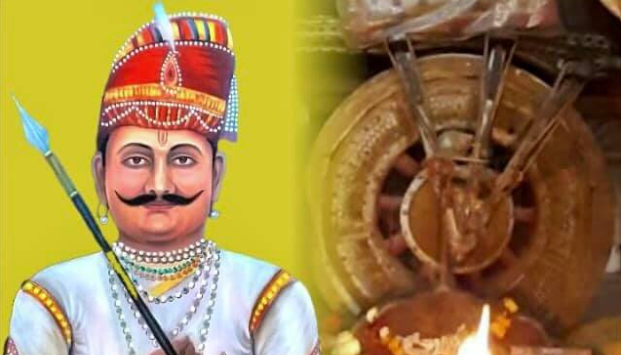
Harbuji’s life unfolded during a time of political upheaval in Marwar, when Mandor, the ancient capital, was embroiled in battles for control. Though he had renounced worldly attachments, Harbuji’s compassion for his people drew him back into history’s flow.
When Rao Jodha, the founder of Jodhpur, sought to reclaim Mandor and establish a new kingdom, he turned to Harbuji for guidance.
The yogi-saint, though living a life of austerity, opened his doors to Jodha and his followers, offering food, shelter, and blessings.
This act of hospitality was not merely kindness; it was a turning point. Harbuji’s blessings are said to have fortified Jodha’s army with courage and conviction, paving the way for the birth of Jodhpur State.
“When kings lost their kingdoms, they sought saints and found empires of faith.”
Despite his limited resources, Harbuji never hesitated to help those in need. His actions embodied the essence of Rajput dharma, bravery tempered by compassion. In return, Rao Jodha revered him as both a saint and strategist, often seeking his counsel in moments of uncertainty.
The Prophet and His Miracles
Across Rajasthan, Harbuji’s name is spoken with awe not only for his virtue but for his prophetic powers and miracles, tales that blend mysticism with morality.
One of the most cherished legends recounts how Harbuji prophesied that Rao Jodha’s kingdom would stretch “from Mewar to Janglu.” Years later, the prophecy came true when Rao Bika, Jodha’s son, founded Bikaner with the blessings of Karni Mata. This fulfilled Harbuji’s vision and cemented his status as a divine seer among Rajasthan’s folk deities.
He was known to guide devotees through riddles, dreams, and intuitive foresight, often predicting outcomes that shaped the destiny of families and rulers alike.
In folk ballads sung by Charans and Bhats, Harbuji is remembered as the saint who could read time itself, a yogi whose gaze pierced beyond the veil of fate.
“Where others saw dust, Harbuji saw destiny.”
Bond with Baba Ramdevji: Companions in Faith
Harbuji’s life and that of Baba Ramdevji are deeply intertwined. Both saints were contemporaries, cousins, and spiritual allies, sharing a vision of equality, social reform, and compassion for all.
Together, they worked to uplift the oppressed, heal the sick, and dissolve caste divisions that fractured society. While Ramdevji’s message travelled across western Rajasthan and beyond, Harbuji became the guiding light of Marwar’s heartland.
After Baba Ramdevji took Samadhi (spiritual liberation), Harbuji’s grief knew no bounds. He journeyed to Runicha, where he is said to have met Ramdevji’s spirit under a sacred tree. In that divine encounter, Ramdevji blessed him with a jeweled bowl and anklet, symbols of their eternal bond and mutual reverence.
A few years later, Harbuji too entered Samadhi, following the same spiritual path, not as an ending, but as a return to his guru’s light.
“When two saints meet, the desert listens and the sands remember.”
Harbuji’s Temple and Worship Traditions
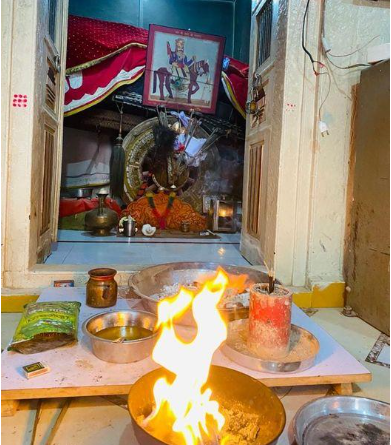
The main shrine dedicated to Harbuji Sankhla stands at Bhangti, near Phalodi in Jodhpur district, a site that radiates quiet devotion and rustic simplicity.
Unlike other temples, Harbuji’s shrine has no idol. Instead, the central object of worship is a wooden cart (rath), symbolising his legendary compassion and service. According to local belief, Harbuji used this cart to carry fodder for disabled cows, embodying his lifelong vow to serve all living beings.
Built in 1721 CE by Maharaja Ajit Singh of Jodhpur, the temple is unique for another reason; the priests are not Brahmins, but members of the Sankhla Rajput community. This rare tradition underscores Harbuji’s message of inclusion and his rejection of rigid hierarchies.
During festivals and local fairs, devotees offer grain, milk, and water, chanting hymns that recount his miracles. Women light lamps, and men sing bhajans praising his friendship with Baba Ramdevji.
In Mandore Gardens (Jodhpur), a statue of Harbuji stands among other folk deities, a silent sentinel of Rajasthan’s syncretic spirit.
“Where idols end, faith begins and there, Harbuji resides.”
Folk Legacy and Cultural Reverence
Centuries after his Samadhi, Harbuji Sankhla remains a symbol of spiritual humility and selfless service. His stories live through oral traditions, folk songs, and local legends sung by Rajasthani Charans and Bhats.
In these songs, Harbuji is not portrayed as a distant god, but as a lok devta, a divine protector who listens, guides, and blesses ordinary people.
Farmers pray to him for good harvests, shepherds for safe pastures, and travellers for guidance across the desert.
Local communities also believe that invoking his name during illness or crisis brings strength and clarity.
His connection to animals, especially cows, continues to be honoured through rituals of feeding and care, echoing his compassion for all creatures.
“Harbuji’s story reminds Rajasthan that divinity does not only dwell in temples, it lives in courage, kindness, and the quiet acts of good.”
Harbuji’s Spiritual Message
Harbuji’s teachings, preserved through folk memory rather than written scripture, revolve around a few timeless principles:
- Faith over Fear: True devotion lies not in ritual, but in unwavering belief.
- Service over Status: Compassion is the greatest act of worship.
- Unity over Division: Every soul, regardless of caste or creed, carries the same divine light.
- Silence over Show: Enlightenment begins when one renounces ego and embraces humility.
These ideas continue to resonate in rural Rajasthan, where saints like Harbuji are not historical figures, but living presences woven into daily life, honoured in homes, fairs, and festivals.
Walk the Path of the Saint with Folk Experience
In Rajasthan, stories of saints like Harbuji aren’t confined to temples, they live in the wind, in the hymns of shepherds, and in the silence of desert nights. To follow his journey is to step into a world where courage meets compassion, and faith wears the face of humility.
At Folk Experience, we curate journeys that don’t just show you Rajasthan’s sacred sites, they connect you to the lives that shaped them. Our paths follow the footsteps of saints, the songs of bhajans, and the wisdom carried through centuries of oral tradition.
What makes this experience special:
- Visit Bhangti, where Harbuji’s wooden cart stands as a symbol of eternal service and devotion.
- Sit with local Charans and Bhats, and listen to age-old ballads of Harbuji’s prophecies and friendship with Baba Ramdevji.
- Explore temples and stepwells across Marwar, where legends are retold through rituals still performed by the Sankhla community.
- Join twilight satsangs under open skies, where faith feels less like a prayer and more like belonging.
Every journey with Folk Experience is guided by local custodians, historians, singers, and storytellers who carry these memories not as performances, but as inheritances.
Through their voices, the saint’s message of simplicity, unity, and service comes alive, not as a relic of the past, but as Rajasthan’s living pulse.
“To walk with Folk Experience is to walk beside Rajasthan’s saints, where every story is a sermon, and every desert wind a prayer.”