There’s a certain kind of magic in Jaipur, the way its sun bounces off palace domes, the way artisans’ hands transform metal into poetry. Walk through the narrow alleys of Johari Bazaar, and you’ll see tiny sparks of fire glinting off enamel and gold, that’s the world of Meenakari, one of Rajasthan’s most radiant crafts.In …

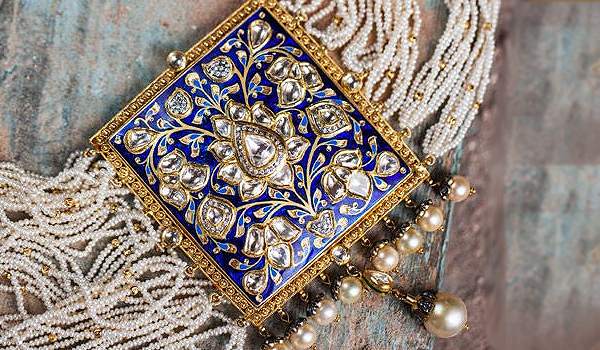
There’s a certain kind of magic in Jaipur, the way its sun bounces off palace domes, the way artisans’ hands transform metal into poetry. Walk through the narrow alleys of Johari Bazaar, and you’ll see tiny sparks of fire glinting off enamel and gold, that’s the world of Meenakari, one of Rajasthan’s most radiant crafts.
In every brushstroke of color, in every engraved curve, lies the essence of an art form that once adorned the walls of kings and the jewels of queens. Meenakari isn’t just ornamentation, it’s the story of devotion, precision, and beauty painted into metal.
“If heaven could be held in the palm of your hand, it would shine in Meenakari.”
A Glimpse Into History
The journey of Meenakari begins not in India, but in ancient Persia, where artisans first mastered the art of fusing glass enamel into metal. The word Meenakari itself is Persian, Meena meaning heaven, and Kari meaning work together, “the art of placing paradise on an object.”
It was during the Mughal era, under the reign of Emperor Akbar, that Meenakari travelled to India. The craft found its second home in Rajasthan, when Raja Man Singh of Amber invited Persian craftsmen to Jaipur in the 16th century. Under royal patronage, the art evolved, Persian delicacy met Rajasthani grandeur, creating something utterly unique.
Goldsmiths of Jaipur began to incorporate bright enamels, intricate flora and fauna, and Mughal motifs into their designs. From royal thrones and walls to ceremonial swords and jewelry, Meenakari became the mark of status and beauty, a silent storyteller of royal refinement.
“Jaipur didn’t just learn Meenakari; it made it sing in color.”
The Making of Meenakari: Where Fire Meets Imagination
The creation of a Meenakari piece is a symphony of many hands, the sonar (goldsmith), the meenakar (enameller), and the ghotnewala (polisher), each contributing to the craft’s perfection. It can take weeks, even months, to complete a single ornament.

Let’s step into an artisan’s workshop and watch the process unfold.
1. Preparing the Metal: The Canvas of Creation
The process begins with choosing a base metal, usually gold, silver, or copper. Gold remains the most preferred, as its purity allows colors to shine brightest.
The surface is cleaned thoroughly to remove impurities, ensuring the enamel adheres flawlessly.
2. Carving the Design: The Sketch of Spirit
The artisan engraves motifs, flowers, paisleys, peacocks, vines, into the metal using delicate chisels. Each incision forms tiny cavities that will later hold enamel.
This is where the personality of the piece is born, precision is key, for even the smallest error can alter how light catches the final work.
3. Adding the Colors: The Alchemy of Enameling
The color in Meenakari isn’t paint, it’s powdered glass. The enamel powder is mixed with water or a natural solution, then tinted using metal oxides (for instance, copper for green, cobalt for blue, and iron for red).
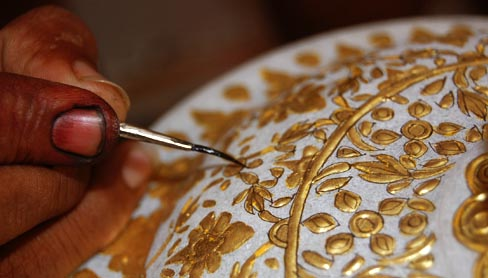
Using fine brushes, artisans fill these cavities with enamel paste, each hue applied separately and fired individually, layer after layer.
4. Firing: The Dance of Heat and Light
The enamelled piece is placed inside a kiln, a special furnace that reaches over 700°C. Inside, the glass powder melts and fuses with the metal, forming a luminous, glossy surface.
When the piece emerges, it gleams like a sunrise, colors locked forever in metal.
Some pieces undergo up to 10 firings, especially those with intricate, multicolored designs.
5. Finishing Touches: Polishing and Stonework
Finally, the piece is polished and sometimes adorned with precious stones, emeralds, rubies, or pearls to enhance its radiance.
The result? A breathtaking artwork where fire, glass, and metal fuse in harmony, an object that seems almost alive.
“To make Meenakari is to play with fire and create beauty that can’t burn away.”
Cultural Significance: More Than Ornamentation
In Rajasthan, Meenakari is not just admired, it’s revered. Its colours are woven into the emotional fabric of life and ritual.
- In Weddings: Meenakari jewelry, especially necklaces, earrings, and bangles, forms an essential part of a bride’s trousseau. The vibrant hues signify prosperity, fertility, and good fortune, while the intricate motifs symbolise harmony and eternal love.
- In Festivals: During Diwali, Teej, and Gangaur, Meenakari items like decorative boxes, trays, and idols are bought or gifted. Their shimmer is believed to invite positivity and wealth into homes.
- In Faith and Symbolism: Many designs depict divine symbols, the lotus for purity, peacocks for immortality, and sun and moon motifs for balance. Each pattern, each color, carries meaning like a sacred language written in enamel.
Beyond jewelry, Meenakari art finds its place in temples, palace ceilings, and even the hilt of ceremonial daggers, proving that beauty can be both sacred and powerful.
Reviving the Craft
Though centuries old, Meenakari continues to evolve. Modern designers and artisans are breathing new life into the tradition.
- Contemporary Fusion: Indian designers have reintroduced Meenakari into luxury bridal collections, pairing enamel detailing with modern silhouettes.
- Eco-Friendly Innovations: Artisans now use copper and silver instead of gold, making the craft more accessible and sustainable.
- Global Recognition: Exhibitions, digital marketplaces, and craft residencies are connecting Rajasthani meenakars with global audiences.
Still, preserving this art requires awareness and support. Many artisans work in small, family-run workshops in Jaipur, Nathdwara, and Pratapgarh, their livelihoods depending on fair wages and ethical trade.
“Every Meenakari piece is a conversation, between past and present, between hand and heart.”
Where to Find Authentic Meenakari Art
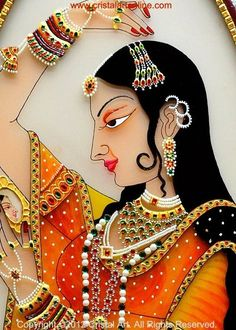
The beating heart of Meenakari lies in Jaipur, particularly in the historic Johari Bazaar and Tripolia Bazaar.
Here, amidst a riot of colours and sounds, you can find everything from elaborate bridal sets to small decorative curios, all shimmering with enamel magic.
Some notable Meenakari hubs include:
- Surana Jewellers, Johari Bazaar
- Kundan & Meena Emporiums, Tripolia Bazaar
- Local Artisan Studios offering live demonstrations
Visitors can even take part in Meenakari workshops, where artisans teach enameling basics, a hands-on way to understand the patience and precision that define this art.
- From Jaipur Airport: ~12 km / 25 minutes by cab
- Best Time to Visit: October–March (cooler weather, active workshops)
Why Does It Matters?
Every stroke of enamel tells a story, not just of beauty, but of endurance.
In an era of mass production, Meenakari stands as a reminder that human hands can still create miracles, that time, patience, and love remain the purest ingredients of art.
By choosing authentic Meenakari pieces, you are not just owning jewellery, you are preserving a heritage that began in royal courts and still beats in the heart of Rajasthan’s bazaars.
“Meenakari is not just metal and glass, it’s memory gilded in colour.”
Experience Meenakari with Folk Experience
At Folk Experience, we invite you to go beyond admiration, to witness creation.
Join our guided cultural trails through Jaipur’s Johari Bazaar, where master artisans still practice the ancient art of Meenakari in their small, glowing workshops. Watch fire turn to colour, learn the symbolism behind each design, and hear first-hand stories of families who have kept this craft alive for generations.
Our experiences are designed for travellers who want to touch, feel, and understand, not just see.
“Travel with Folk Experience and discover how Rajasthan turns metal into poetry.”