In Rajasthan, where the golden dunes whisper tales of bravery and devotion, one name echoes with undying reverence, Meha Ji Mangaliya. Known as a warrior, protector, and saint, Meha Ji’s life is a saga of courage, sacrifice, and faith. Celebrated as one of the Panch Peers of Rajasthan, his story blends history with folklore, inspiring …

In Rajasthan, where the golden dunes whisper tales of bravery and devotion, one name echoes with undying reverence, Meha Ji Mangaliya. Known as a warrior, protector, and saint, Meha Ji’s life is a saga of courage, sacrifice, and faith. Celebrated as one of the Panch Peers of Rajasthan, his story blends history with folklore, inspiring countless devotees who continue to honour his valor centuries later.
Through this story, we trace the journey of Meha Ji from his noble birth and youthful valour to his immortal legacy in Rajasthan’s living traditions.
The Birth of a Hero
Meha Ji Mangaliya was born in Tapu village near Jodhpur on Krishna Janmashtami, the very day Lord Krishna’s birth is celebrated. This auspicious beginning foreshadowed a life filled with divine purpose.
Belonging to the Gohil clan of the Mangaliya lineage, Meha Ji was the son of Kelu Ji, the respected Zamindar of Tapu. Raised amid the values of bravery and righteousness, Meha Ji’s spirit shone through from an early age.
His childhood was shaped by his maternal family, the Mangaliyas from whom he inherited his name and moral strength. The young warrior soon became known for his leadership, compassion, and unwavering sense of justice.
Avenging His Father’s Death
At the tender age of fourteen, Meha Ji faced his first test of courage. His father, Kelu Ji, had been killed in a dispute with his own brother, Uda. For years, Meha Ji carried the weight of this injustice. When he came of age, he gathered a loyal band of warriors and avenged his father’s death, a defining moment that transformed a boy into a legend.
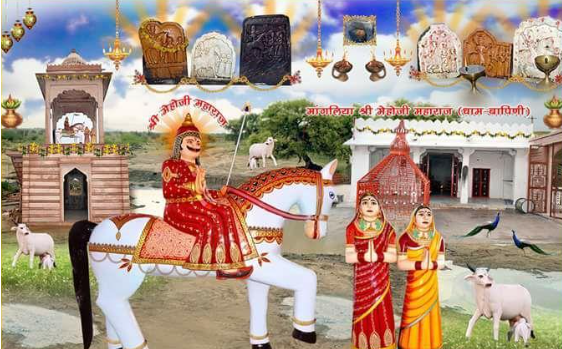
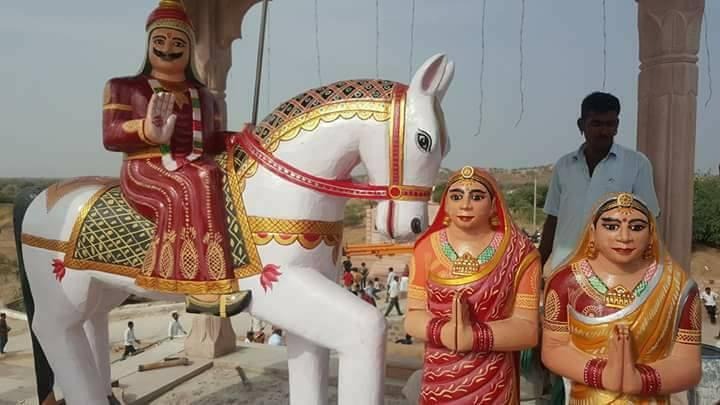
Riding his trusted steed Kiran Kabra, famed for its speed and loyalty, Meha Ji fought fearlessly. His victory wasn’t born of vengeance alone, it was a statement of dharma, a stand for justice that would echo through Rajasthani folklore.
The Promise to Pana Gujari: Protector of the Helpless
Among the many stories that illuminate Meha Ji’s character, his bond with Pana Gujari stands out. During a pilgrimage to Pushkar, he met Pana Gujari, a poor woman struggling to survive the hardships of famine. Moved by her plight, Meha Ji took her as his Dharam Behn (spiritual sister) and vowed to protect her in times of distress.
Years later, when drought struck and bandits threatened her cattle, Pana Gujari called out to Meha Ji. Keeping his word, he rode to her aid and defended her livestock, even at the cost of his own life. This act of sacrifice immortalized Meha Ji as a symbol of brotherhood, honour, and divine protection.
“For Meha Ji, dharma was not a word, it was a promise kept even beyond life itself.”
A Royal Connection: Meha Ji and Rao Chunda
History also records Meha Ji’s connection with Rao Chunda, the ruler of Marwar. Before setting out to conquer Mandore, Rao Chunda sought Meha Ji’s blessings. The saint-warrior gifted him a sword, symbolizing divine strength. That sword later became a talisman of victory in Marwar’s history, a moment that wove Meha Ji’s legend into the royal chronicles of Rajasthan.
Martyrdom: The Warrior’s End
Meha Ji’s final battle was fought against Rao Ranagdev Bhati of Jaisalmer. Fighting not for personal gain but to defend the innocent, he faced his enemy with unmatched bravery.
He fell in battle, not defeated, but deified. His sacrifice elevated him from warrior to folk deity, earning him a revered place among Rajasthan’s protectors of the land and people.
Temples, Fairs & Eternal Faith
Today, Meha Ji Mangaliya’s main shrine in Bapini (Jodhpur) stands as a beacon of devotion. The temple, where he is depicted riding his loyal horse, draws thousands of pilgrims every Krishna Janmashtami.
The celebrations,filled with folk songs, bhajans, and storytelling, transform the quiet desert village into a spiritual fairground. The temple priests, known as Bhopa, belong to the Mangaliya lineage and maintain an unbroken tradition of service not through bloodline, but through adopted sons chosen to carry the legacy forward.
Folklore and Oral Legacy
In Rajasthan, where history and myth entwine, Meha Ji’s story lives on through Charans and Bhats, traditional bards who sing his praises in poetic ballads. These songs recount not only his battles but also his compassion and wisdom.
Every retelling rekindles his memory, reminding listeners of the Rajput virtues of shaurya (bravery), satya (truth), and seva (service).
“Through every folk song sung around desert fires, Meha Ji rides again, eternal, fearless, and just.”
The Literary Chronicle: Veer Meha Prakash
Meha Ji’s life has also found a place in literature. The epic “Veer Meha Prakash” by Jasdan Bithu immortalizes his story in poetic form, celebrating his devotion, sacrifice, and leadership. It remains one of Rajasthan’s most treasured folk epics, ensuring that his legend endures not just in temples but in words and hearts.
Legacy Beyond Time
Meha Ji Mangaliya’s journey from a brave boy in Tapu to a deified protector stands as a timeless lesson in honour and selflessness. His story bridges Rajasthan’s royal past and rural present, uniting people across castes and faiths under the shared values of courage and compassion.
Even today, his devotees light lamps, sing praises, and call upon him in times of hardship, believing that Meha Ji still rides across the desert winds, guarding the righteous and guiding the lost.
Experience the Legend with Folk Experience
To truly understand Rajasthan’s soul, one must walk the paths where legends were born. At Folk Experience, we bring you closer to this living heritage, through temple visits, storytelling sessions with local Bhats, and immersive journeys across Marwar’s sacred landscapes. Witness how devotion, folklore, and bravery come alive in Meha Ji’s land.
“In Rajasthan, legends don’t fade, they become the desert wind that whispers through eternity.”