Beyond its golden forts and royal tales, Rajasthan’s true soul lives in its art. From the walls of humble village homes to the courts of Rajput kings, every brushstroke, pattern, and pigment tells a story of faith, celebration, and identity. These folk arts are not just visual beauty; they are living memories passed from one …

Beyond its golden forts and royal tales, Rajasthan’s true soul lives in its art. From the walls of humble village homes to the courts of Rajput kings, every brushstroke, pattern, and pigment tells a story of faith, celebration, and identity. These folk arts are not just visual beauty; they are living memories passed from one generation to the next.
Let’s journey through the vibrant artistic traditions that paint Rajasthan’s cultural heart.
Thapa Art: Painting Faith on the Walls
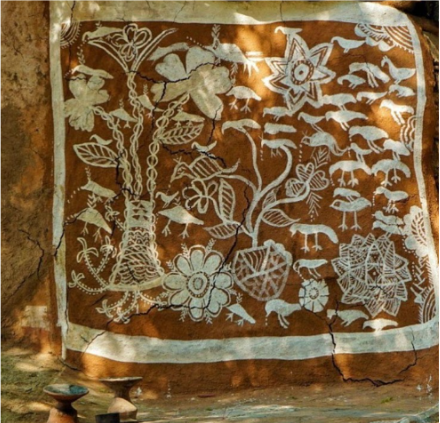
Walk through a Rajasthani village and you’ll find walls alive with gods, goddesses, birds, and flowers, each drawn in bold colours and graceful lines.
This is Thapa Art, one of Rajasthan’s oldest mural traditions. Created mostly by women known as chiteras, these paintings use natural ingredients such as kumkum, sindoor, ghee, henna, and cow dung.
Each image is drawn with purpose to mark a marriage, a birth, or a festival. Thapa art reflects the community’s deep connection to nature and devotion.
The vivid reds and yellows aren’t merely decorative; they are symbolic prayers for prosperity and protection.
“Every wall in a Rajasthani home is a silent storyteller, speaking in colours of faith and festivity.”
Mandana Art: Drawing Auspicious Beginnings
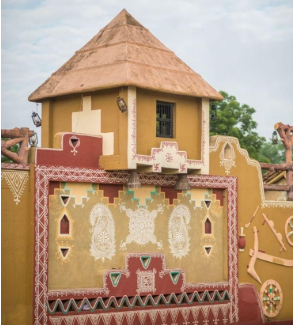
If Thapa adorns the walls, Mandana Art brightens the floors.
Practised across Rajasthan, Mandana is created during festivals, fasts, weddings, and special occasions like Govardhan Puja or childbirth.
The word Mandana means “to decorate.” Women draw geometric and floral motifs on floors and walls using a mixture of cow dung, red ochre (geru), and chalk. These patterns are believed to welcome prosperity and ward off evil spirits.
Often drawn collectively by women of a household or village, Mandana is both ritual and recreation, a way to beautify space, celebrate community, and express gratitude. Each pattern reflects harmony between the divine and the domestic, turning everyday life into art.
Rajput Paintings: The Royal Legacy on Canvas
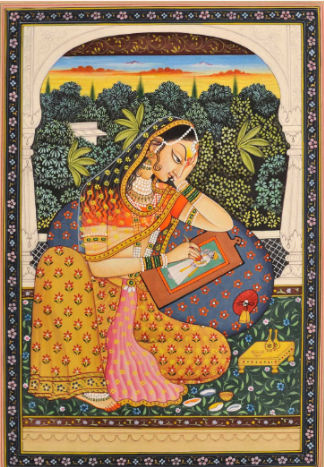
Emerging from the royal courts of Rajputana in the 17th century, Rajput Paintings capture the splendour of Rajasthan’s royal past.
These works portray scenes from the Ramayana, Mahabharata, and the life of Lord Krishna, rendered in radiant mineral and plant-based colours. Gold, silver, and lapis lazuli added brilliance to every frame.
These paintings are more than aesthetic treasures; they are historical chronicles of an era defined by heroism, love, and divine devotion. Each brushstroke reflects the disciplined artistry and emotional depth that characterised Rajput aesthetics.
Though born in palaces, their stories often draw from folk life, blending regal grandeur with everyday humanity, a union that makes Rajput art both majestic and profoundly human.
Gudna Motif: Tattoos that Tell Stories

In Rajasthan’s tribal and rural communities, art is not only seen, it’s worn. The Gudna Motif, a traditional tattoo art, transforms skin into canvas. The designs are made by piercing the skin with a needle dipped in soot from an oil lamp, mixed with natural ingredients like kumkum, aak milk, and harsingar flower juice.
Motifs of gods, animals, flowers, the sun, and the moon are etched onto the body, symbolising protection, fertility, and spiritual strength. Distinct designs identify different communities and life stages with special patterns for married and unmarried women.
The act of tattooing is communal, performed during life events and festivals. Each mark tells a story of belonging, belief, and resilience.
Phad Painting: The Scrolls that Sing

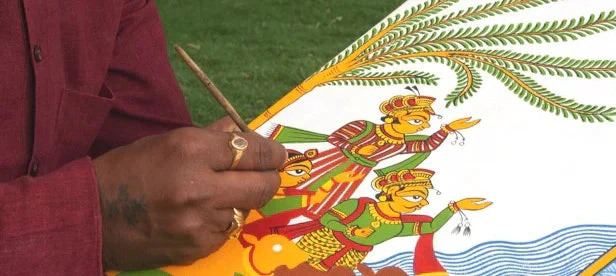
Among Rajasthan’s most captivating art forms, Phad Painting is both painting and performance. These long scrolls, sometimes stretching thirty feet, narrate heroic tales of local deities like Pabuji, Goga Chauhan, and Amar Singh Rathore.
Painted with natural vegetable dyes on cloth or canvas, every inch of a Phad is alive with intricate figures and vivid colours. The scrolls come to life when Bhopas (folk storytellers) unroll them at night and sing the tales illuminated by lamps.
Each Phad is a travelling temple, a sacred stage where myth, art, and music merge to preserve Rajasthan’s oral traditions.
Sanjhi Art: A Ritual of Devotion and Memory
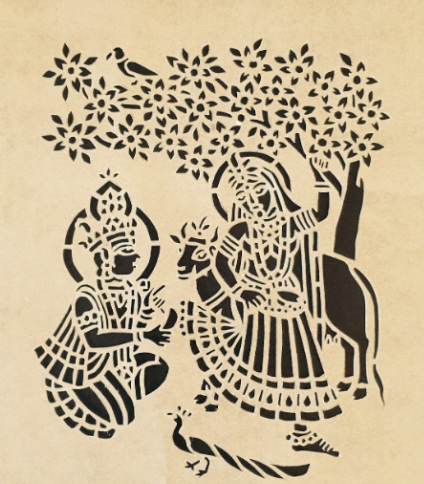
Less known but deeply symbolic, Sanjhi Art, also called Sanjhuli or Sinjhi is practised by unmarried girls during the period of Pitru Paksha, a time devoted to ancestors.
The ritual begins on the full moon of Bhadrapada and ends on the new moon of Ashwin. Walls are plastered with cow dung and decorated with bas-relief motifs using flowers, coloured paper, and kharia (chalk solution). Each day, a new design is created and erased, culminating in a final image called kilakot.
Sanjhi art celebrates femininity, ancestry, and renewal. It connects young women to their lineage, teaching patience, creativity, and devotion through the act of creation and dissolution.
A Living Legacy
Rajasthan’s folk arts are more than decoration, they are dialogue. From the murals on clay walls to scrolls that travel across villages, every form carries echoes of devotion, storytelling, and resilience.
These traditions remind us that art does not need grand galleries to survive. It lives in courtyards, festivals, and memories, evolving yet enduring through the hands of those who continue to create.
“In Rajasthan, art is not a profession; it is a way of living, breathing, and belonging.”
Experience Rajasthan’s Living Arts with Folk Experience
To truly understand Rajasthan, one must see its art where it was born in its villages, fairs, and family courtyards. Travel with Folk Experience and witness the artists at work: women painting Mandanas on fresh clay walls, craftsmen narrating stories through Phad scrolls, and tribal communities carrying their heritage in ink and colour.Discover the living pulse of Rajasthan, where every colour has a story, and every story is a celebration.