In the moonlit deserts of Rajasthan, where dunes ripple like waves under starlit skies, the haunting sound of the poongi echoes through the night. Drawn by its melody, you see women draped in swirling black ghagras, embroidered with silver mirrors that catch the firelight. Their movements, fluid, hypnotic, serpentine, mirror the very creatures their ancestors …

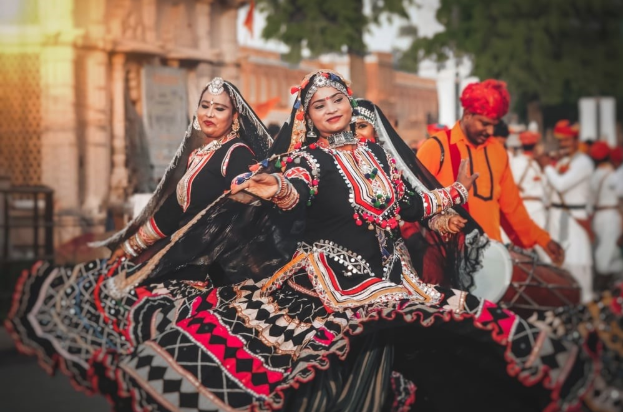
In the moonlit deserts of Rajasthan, where dunes ripple like waves under starlit skies, the haunting sound of the poongi echoes through the night. Drawn by its melody, you see women draped in swirling black ghagras, embroidered with silver mirrors that catch the firelight. Their movements, fluid, hypnotic, serpentine, mirror the very creatures their ancestors once charmed.
This is the world of the Kalbelia Dance, Rajasthan’s most enchanting folk performance, where rhythm meets reverence and tradition transforms into art.
Each twirl of a Kalbelia dancer is a whisper of the desert, wild, free, and eternal.
The Roots of the Serpent’s Dance
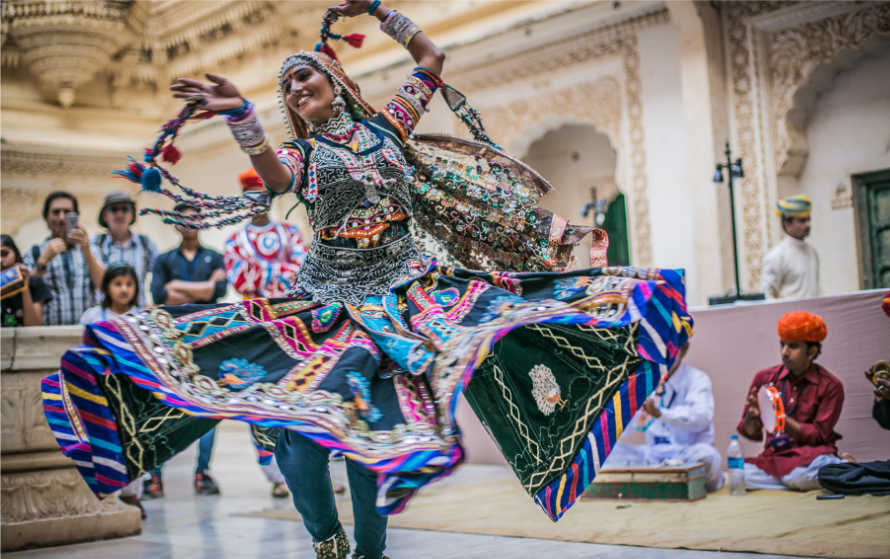
The story of Kalbelia is as old and mystic as the Thar itself. Performed by the Kalbelia tribe, once nomadic snake charmers, this dance draws inspiration from their ancient profession and deep reverence for serpents. Traditionally, the men played instruments while the women danced, weaving movements that mimicked the slither and grace of snakes.
Their signature instrument, the poongi (or been), was the same flute once used to charm cobras. Accompanied by the dholak, morchang, and khanjari, it creates an intoxicating rhythm that brings the performance to life.
No written manuals, no formal schools, only oral tradition. The art of Kalbelia has been passed down through generations, its beauty preserved in memory, music, and movement.
The Allure of the Attire
If music gives the dance its soul, the costumes give it a heartbeat.
Kalbelia women wear flowing black ghagras (skirts) and odhanis (veils), intricately decorated with silver threadwork, mirrors, and beads. The black symbolizes the serpent’s skin, while the shimmering accents represent its scales glinting in the desert sun. Their jewellery, heavy, antique Banjara-style ornaments, adds both rhythm and radiance as they move.
Each spin, each sway becomes a story. The dancers’ agility, their sinuous movements, and their fierce expressions transform the stage into a spellbinding sight, a living ode to freedom and femininity.
The Legend of Sage Kanifnath
The Kalbelia tribe’s roots trace back to the teachings of Sage Kanifnath, a disciple of the great yogi Jalandhar Nath of the Nath sect.
Legend says that Kanifnath once drank a bowl of snake venom, blessed by his guru with the power to withstand death itself. The venom turned his throat blue, much like Lord Shiva’s, earning him the title Neelkanth Mahadev.
His followers, too, began handling snakes with devotion and fearlessness, eventually known as “Kalbeliyas”, those who live with (and from) kaal (death) and belia (the bowl).
From that moment, snakes were no longer symbols of fear but of reverence. For centuries, the Kalbelias earned their livelihood as snake charmers, healers, and travelling performers, custodians of both art and survival.
From Venom to Verse: The Evolution of a Legacy
For generations, the Kalbelias roamed the Thar, performing their dances at fairs, royal gatherings, and village festivities. Their performances were part of rural celebrations, births, weddings, and harvests, moments where music and dance bound communities together.
But in 1972, the Wildlife Protection Act banned snake charming, leaving the community without its traditional livelihood. Out of adversity, art was reborn. The Kalbelias turned to their dance, transforming it into a profession and a powerful form of self-expression.
Today, what was once a performance of survival has become a celebration of identity. The UNESCO recognition of Kalbelia dance as an Intangible Cultural Heritage of Humanity (2010) affirmed what Rajasthan always knew, that this art form is more than dance; it’s poetry in motion.
The Music and Movements of the Desert
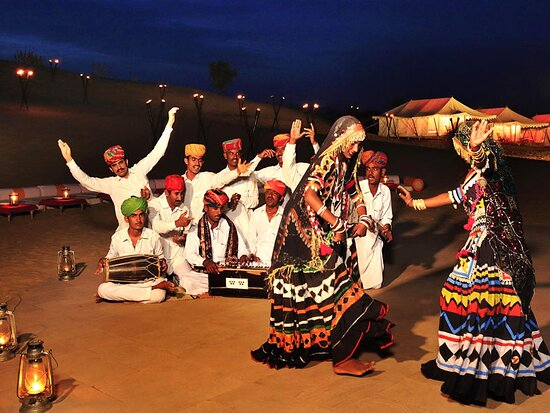
The Kalbelia dance is an intricate conversation between music and movement.
The poongi’s winding melody echoes the motion of a snake, while the dholak and morchang add rhythm and resonance.
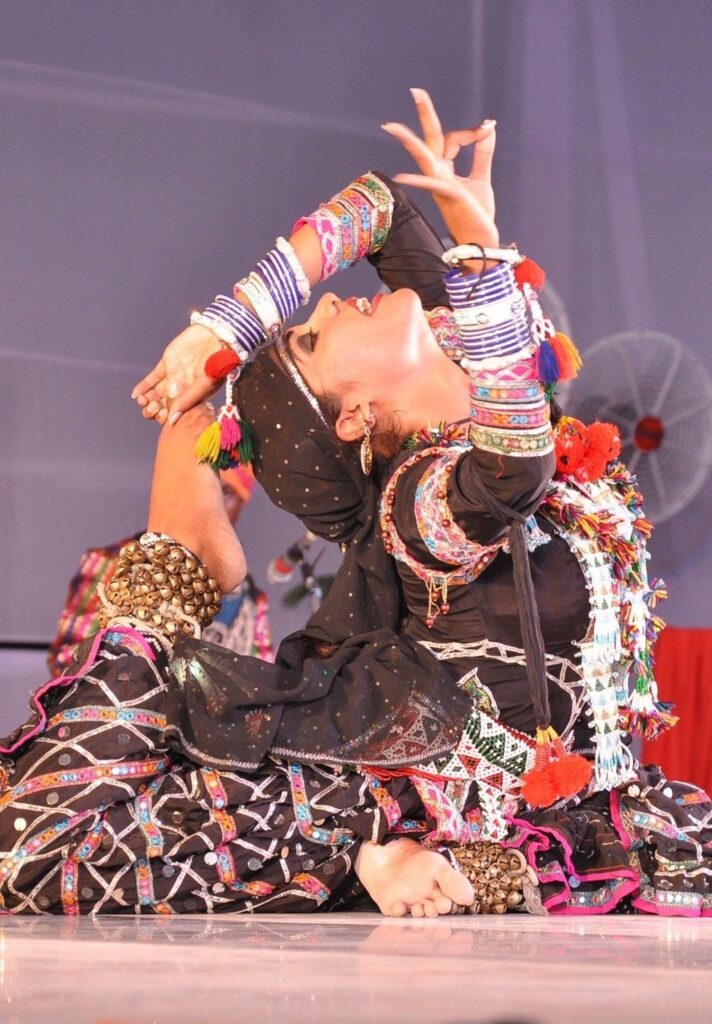
The women move with astonishing speed and agility, bending, swirling, arching backwards until their heads nearly touch the ground.
Every gesture has meaning: a flick of the wrist, a sudden turn, a dramatic whirl. Together, these movements form a visual symphony of the desert’s spirit, untamed yet harmonious.
“It’s not just performance; it’s trance.“
Where to Witness Kalbelia Dance Today?
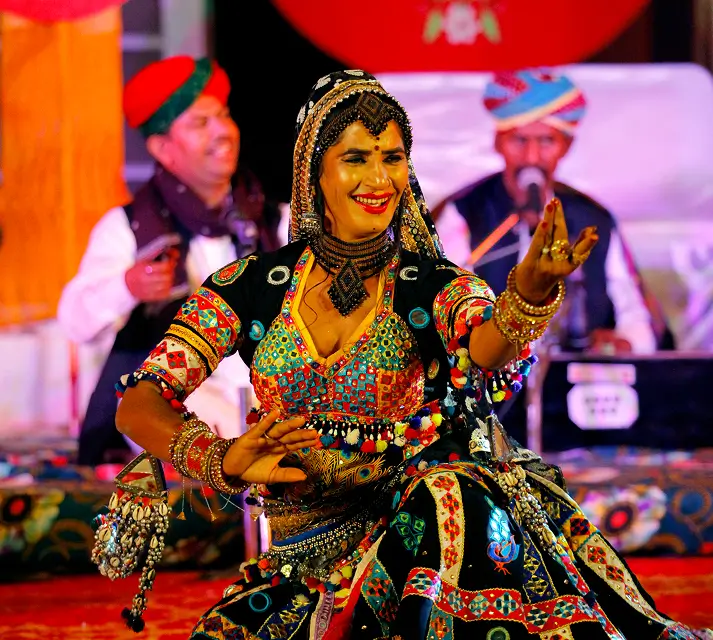
To experience the Kalbelia dance is to witness Rajasthan at its most alive.
You can see performances across the state from Jaipur’s cultural evenings and Jodhpur’s Rajasthan International Folk Festival to Bikaner’s Camel Festival and Jaisalmer’s Desert Festival.
In the evenings, desert camps and local dhanis host intimate Kalbelia performances under open skies, where dancers move to the rhythm of the sands themselves.
In these moments, surrounded by music, bonfires, and stars, you’ll understand that Kalbelia isn’t just a dance, it’s the desert’s heartbeat made visible.
The Eternal Grace of the Kalbelia Spirit
The story of Kalbelia is the story of resilience. From snake charmers to celebrated artists, the tribe has transformed adversity into artistry. Through every swirl of their skirts and every note of the poongi, they remind the world that culture, like a serpent, never dies, it only sheds its skin to be born anew.
“To watch the Kalbelias dance is to see the desert come alive, fierce, fluid, and full of soul.“
Experience the Rhythm with Folk Experience
At Folk Experience, we believe true travel means connection to people, to stories, to heritage that breathes through movement and music.
Our curated cultural journeys take you beyond the stage, into the lives of Rajasthan’s artists, where you’ll meet Kalbelia dancers, learn their rhythms, understand their history, and even join their celebration under desert stars.
By choosing a Folk Experience journey, you don’t just witness Rajasthan’s culture, you become part of it.
Travel with Folk Experience, where every dance tells a story, and every story moves to the rhythm of Rajasthan’s heart.