Across Rajasthan’s wind-carved dunes and grazing lands lives a story sung at nightfall of a shepherd-warrior whose word was stronger than steel. Veer Tejaji, born of the soil and beloved by the peasantry, stands at the meeting point of folklore and faith: a guardian of cattle, a healer against serpent-bite, and a hero whose courage …

Across Rajasthan’s wind-carved dunes and grazing lands lives a story sung at nightfall of a shepherd-warrior whose word was stronger than steel.
Veer Tejaji, born of the soil and beloved by the peasantry, stands at the meeting point of folklore and faith: a guardian of cattle, a healer against serpent-bite, and a hero whose courage was matched only by his compassion.
According to bardic records preserved by Bhats, Tejaji was born on Magha Shukla 14, Samvat 1130 (January 29, 1074 CE) in Khirnal (Nagaur), into the Dhaulya gotra of the Jat community.
His father, Chaudhary Tahar, was the village chieftain; his mother, Ramkunwari, is said to have prayed to Nagaraja at Tyod for a child, hence the serpent’s blessing that threads his life story.
Child marriage bound Tejaji to Pemal of Paner in infancy, an alliance later shadowed by family hostilities. Yet these early trials sowed the seeds of a life defined by duty, endurance, and the unshakeable keeping of one’s word.
Where vows are kept even at the edge of death, there rises the legend of Tejaji.
Tests of Honour: Resolve Forged in Fields and Feuds
As tradition demanded, the village head’s household ploughed first after the Jyeshtha rains. One season, urged by his mother, Tejaji took the plough himself. A taunt, about his inability to bring his wife home, stung his pride and set him on a path of action.
Before fetching Pemal, he first retrieved his sister Rajal from Tabiji, defeating the ambushing Meena Sardar, an early sign of a warrior who preferred protection over provocation.
At Paner, a curse from his mother-in-law (for disturbing milking) foretold a black snake’s bite. Tejaji turned back in anger, but destiny intervened through Lachha Gujari, Pemal’s friend, whose plea to rescue stolen cattle would become the pivot of his legend.
The Promise, the Battle, and the Snake
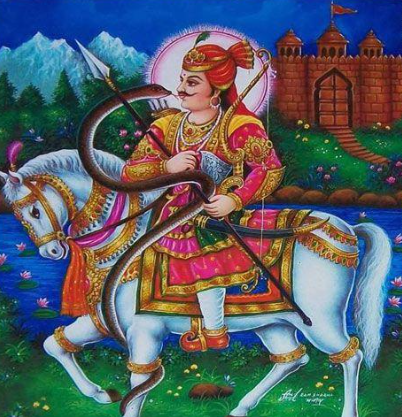
On the road, Tejaji is said to have saved a serpent from a fire. In anger, the snake demanded its due: a bite. Tejaji promised, “after I keep my word to protect the helpless”. Mounting his famed mare Lilan, he rode to confront the dacoits again linked to the Meenas and rescued Lachha’s cows, though grievously wounded in the effort.
True to his vow, Tejaji returned to the serpent. Finding no uninjured spot left on his body, he offered his tongue. The bite ended his mortal life on Bhadrapada Shukla Dashmi (August 28, 1103) but began his immortality in the people’s faith.
Another oral thread remembers Tejaji and Pemal attacked on their return; Tejaji fell in battle, Pemal embraced Sati at Sursura, and his sister Rajal too chose Sati, an episode sung with aching devotion in village ballads.
Basak Naga, moved by Tejaji’s integrity, granted a boon: in Kaliyuga, every household would remember Tejaji as protector, especially against snakebite.
Temples, Fairs, and Living Rituals
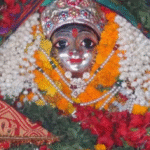
Shrines to Tejaji dot Rajasthan, with devotees seeking aid especially in serpent-bite cases. Temple priests (often Bhopa) enter ritual trance, suck out poison, and tie a sacred thread in his name, a practice rooted in faith and communal care.
The great annual fair, Mela Tejaji, blooms at Parbatsar (Nagaur) on Teja Dashmi, drawing traders, pastoralists, and pilgrims.
Another powerful ritual survives in Sureli, where, during Teja Dashmi, a Bhopa carries a live snake, and in a dramatic re-enactment accepts a bite on his tongue, before being revived by devotees singing Teja bhajans. As elder ritualists age, communities grapple with how best to preserve the sanctity and safety of this fragile tradition.
Tejaji’s samadhi is remembered at Sursura near Kishangarh; an earlier cattle fair there preceded the Parbatsar prominence.
Tejaji Ballad: The Night Songs of the Monsoon
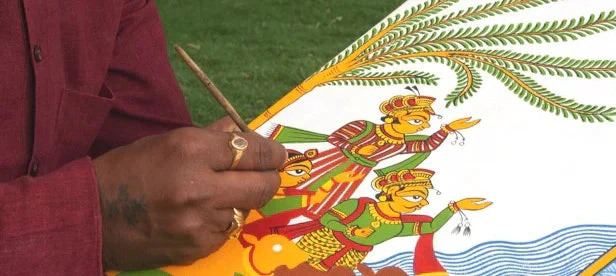
When clouds gather and pastures green, Rajasthan’s villages call for the Tejaji Beawal, a long, sung ballad performed at shrines and courtyards.
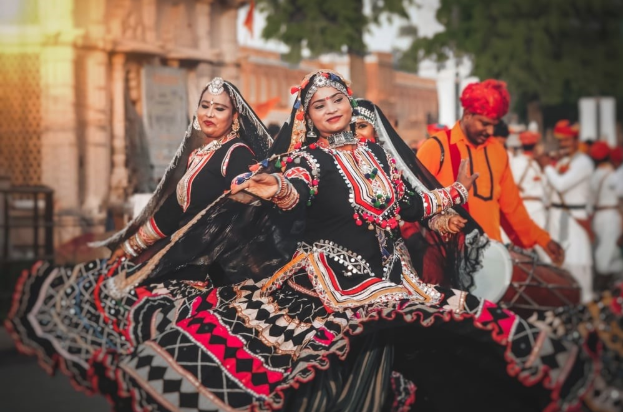
Two lead singers, supported by chorus and dholak, algoza, manjira, and handclaps, carry the tale deep into the night.
These performances once spanned two months of the monsoon; today, many unfold closer to Teja Dashmi, as the number of skilled algoza players dwindles.
The ballad is not about abstract salvation; it is about work, cattle, rain, honour, and promise, the everyday cosmology of Rajasthan’s pastoral communities.
Its aim is practical and profound: to invoke Tejaji’s presence, to heal, to protect, to bless the fields before the plough first breaks earth.
Why Tejaji Endures
Tejaji’s legend holds because it speaks plain truth to rural life: keep your word, protect the vulnerable, honour the herd, face fate upright. He is a deity not of distant palaces but of commons and corrals, of seed and season. In him, Rajasthan recognizes its own reflection—resilient, oath-bound, and fiercely compassionate.
A promise kept becomes a shrine; a life given becomes a road the living can walk.
Experience Rajasthan’s Folk Faith with Folk Experience
At Folk Experience, we don’t just recount legends, we guide you to where they still breathe. Walk the fairgrounds of Parbatsar on Teja Dashmi, listen to Bhopa singers weave the Beawal by lantern light, and learn how communities continue rituals of healing and protection. Meet oral historians, musicians, and temple keepers who keep Tejaji’s vow alive, one song, one thread, one field blessing at a time.
Travel with Folk Experience, where folklore is not a chapter to read, but a circle to sit in, a chorus to join, and a promise to remember.
Get in Touch with Us
We’d love to hear from you—share your thoughts or ask a question!