In Rajasthan, where every sunrise paints the desert in gold and every evening hums with devotion, Gangaur arrives like poetry in motion, a festival where love, art, and faith intertwine. As the scent of marigolds fills the air and women in vibrant ghagras sing to Gauri Mata, the desert comes alive in hues of vermilion …

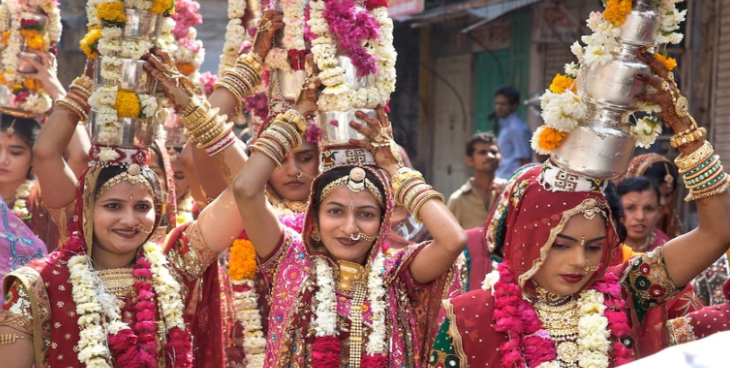
In Rajasthan, where every sunrise paints the desert in gold and every evening hums with devotion, Gangaur arrives like poetry in motion, a festival where love, art, and faith intertwine. As the scent of marigolds fills the air and women in vibrant ghagras sing to Gauri Mata, the desert comes alive in hues of vermilion and saffron. It’s more than a festival; it’s Rajasthan’s ode to feminine grace, marital harmony, and the eternal bond of Shiva and Parvati celebrated through rituals so intricate and emotions so raw that even the wind seems to carry their devotion.
Rajasthan: The Land Where Stories Breathe Through Tradition
Few places in India celebrate life the way Rajasthan does. Every season, every village, and every household seems to have a story to tell through song, dance, or ritual. The state’s festivals are not just events; they are living expressions of identity, where devotion meets beauty and heritage finds its heartbeat. Among these vibrant celebrations, Gangaur stands apart, deeply personal, yet profoundly communal. It embodies the spirit of womanhood, the sanctity of love, and the rhythm of rural life, celebrated with equal fervour in royal palaces and humble courtyards alike.
“In Rajasthan, festivals are not just dates on a calendar, they are moments where life and legend walk hand in hand.”
What is Gangaur and Why It’s Celebrated?
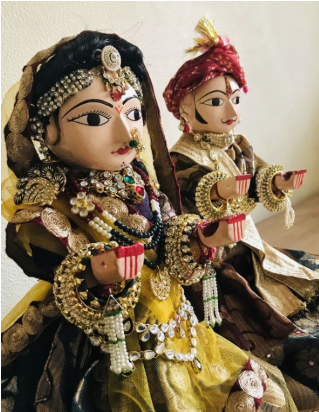
At its essence, Gangaur venerates the divine union of Lord Shiva (“Gan”) and Goddess Parvati (“Gauri”). The festival’s name itself “Gan-Gaur” signifies their togetherness.
For centuries, married women have observed Gangaur by fasting and performing elaborate rituals to seek blessings for their husbands’ long life and marital harmony. Unmarried girls, meanwhile, pray for a partner who embodies Lord Shiva’s virtues: strength, devotion, and integrity.Celebrated in the Hindu month of Chaitra (March–April), immediately after Holi, Gangaur marks the gentle transition from winter’s retreat to the promise of spring.
For sixteen days, homes across Rajasthan transform into sanctuaries of faith, where women wake before dawn, adorn idols with flowers, and sing ancient geet that have echoed for generations. What unfolds is not just a festival, but a soulful dialogue between devotion, nature, and community.
Myths and Legends: Stories Behind the Celebration
According to legend, Goddess Parvati performed deep penance to win Lord Shiva’s affection, symbolising patience, perseverance, and the sacred balance of love. Their union became an eternal symbol of conjugal harmony, inspiring women to embody the same grace and faith.
Another tale tells of Shiva, Parvati, and Narad Muni visiting a village disguised as travelers. The women, filled with devotion, offered them humble food. Pleased by their sincerity, Parvati blessed them with marital happiness and prosperity. From that day, women across Rajasthan began to honour her blessings through the rituals of Gangaur.
There is also the story of Parvati’s ceremonial visit to her parents’ home and her emotional return to Shiva, mirrored in the festival’s final day when women bid farewell to the goddess through song and immersion. Each myth, whether royal or rural, weaves devotion into daily life transforming Gangaur from mere ritual into living mythology.
From Palaces to Courtyards: The Evolution of Gangaur
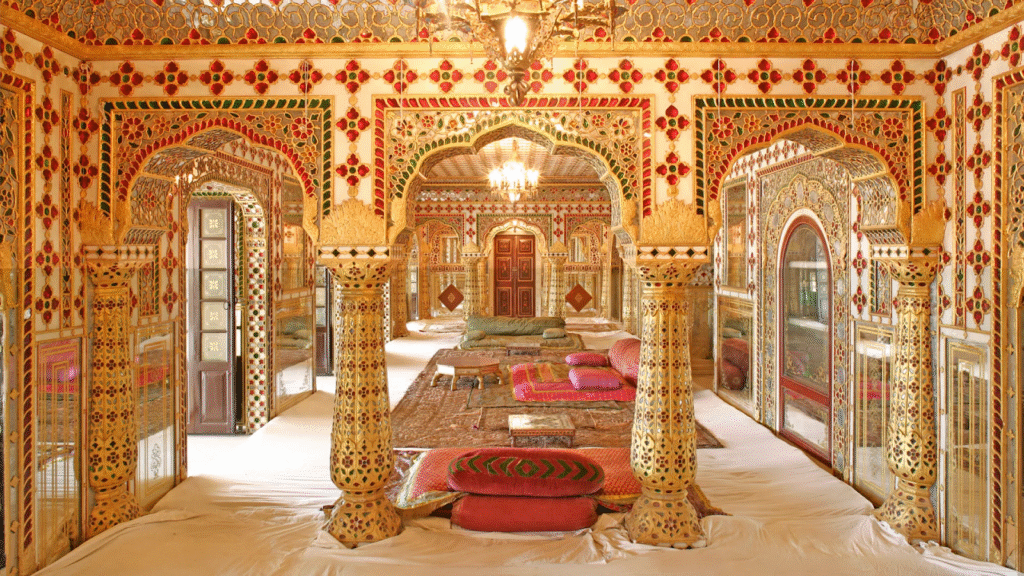
Gangaur’s origins stretch back to Rajasthan’s Rajput era (8th–18th centuries CE), when royal courts and warrior clans elevated it into a pageant of splendour. In those times, queens and princesses led grand processions through palace courtyards, carrying gilded effigies of Isar (Shiva) and Gauri (Parvati). Their songs, the Gangaur geet, were soft yet powerful ballads of divine love, sung to the rhythm of anklets and drums.
As time passed, village communities adapted these customs, giving the festival a folk dimension that transcended caste and class. Clay idols evolved into intricate wooden carvings; the royal palaces gave way to temple courtyards and community wells. Today, Gangaur belongs to everyone, from urban Jaipurites to women in remote desert hamlets, united in a shared rhythm of devotion and artistry.
The Rhythms of Rituals: Sixteen Days of Devotion
Gangaur begins the day after Holi Dahan, when the ashes from Holika’s bonfire are collected by women to form pindiya, small symbolic balls made from a mix of ashes and cow dung. These are placed on a wooden platform and adorned with tilak marks, symbolising purity and new beginnings. The same ashes are also used to sow wheat or barley seeds in earthen pots, a ritual that celebrates fertility and abundance. By the end of the festival, these green shoots become offerings to Gauri Mata, a gesture of gratitude to the earth and the cycles of life.
Each morning, women gather flowers and sacred grass (dhruva), singing traditional songs to gently awaken Gauri Mata and Isarji. Their homes fill with the scent of sandalwood and rosewater as they
perform small yet meaningful acts of worship, sprinkling milk and turmeric water on the idols, tracing solah tika (sixteen sacred marks), and singing folk geet that recount stories of love and virtue.
As days pass, the festival grows in colour and emotion. Women apply henna, exchange betel nuts, and craft elaborate adornments for their idols. For newly married women, a special Udyapan ceremony mirrors the rituals of a wedding, inviting sixteen girls to partake in blessings and sweets, a reaffirmation of community and the cycle of relationships.
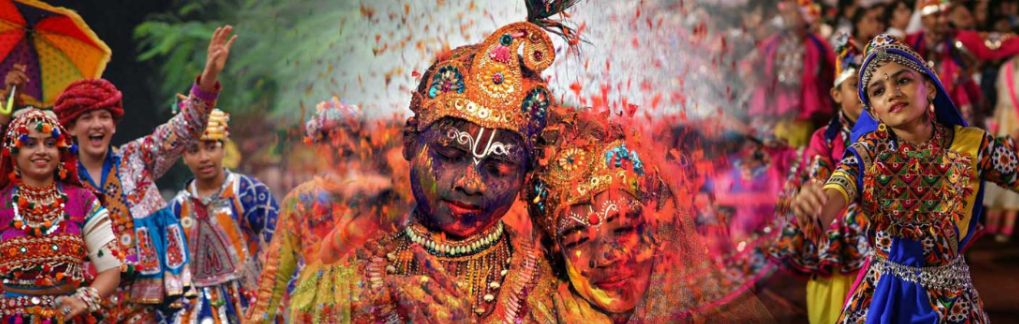
The last three days, known as Ratijaga, are filled with music and movement. Women sing late into the night, their voices echoing across courtyards under starlit skies. They dress in their most vibrant attire, decorating both themselves and their idols in gold-threaded sarees and jewellery, preparing for the final farewell.
The Final Day: The Sacred Farewell
The sixteenth day, also known as Badi Gangaur, marks the emotional climax of the festival. Offerings of Guna (a sweet made from wheat flour and jaggery), fruits, seera, and puri are placed before Gauri Mata. Married women adorn themselves in solah shringar, sixteen traditional ornaments and listen to the Gangaur katha, a tale of love, sacrifice, and devotion.
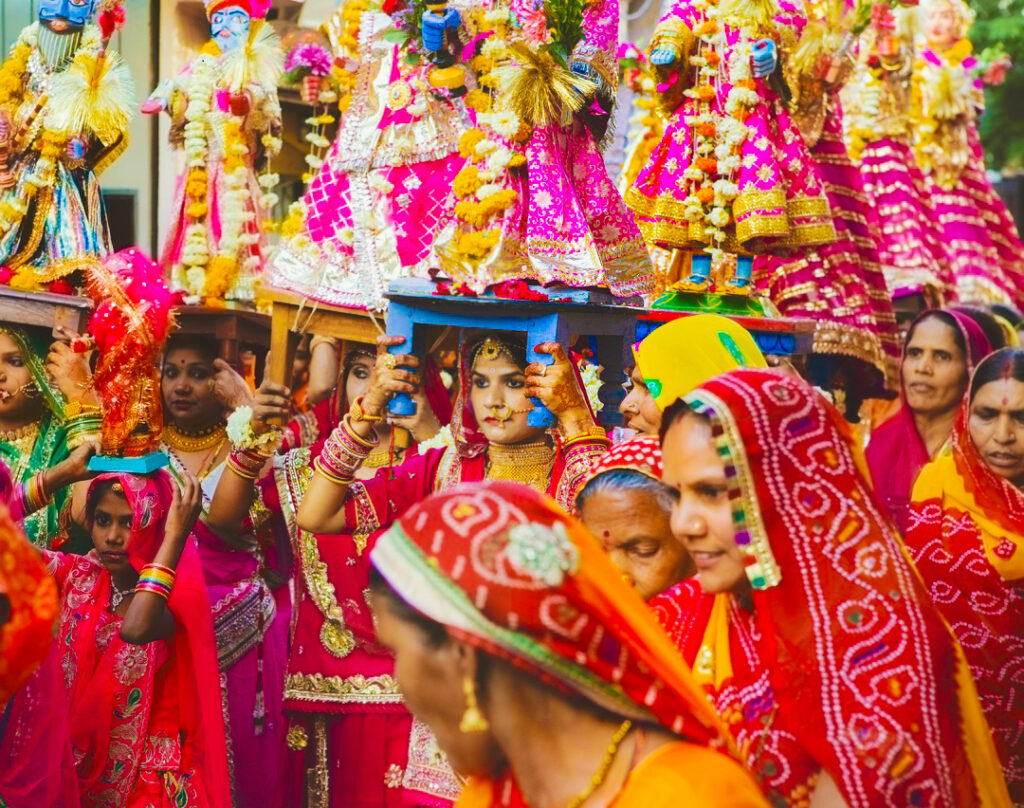
As the sun sets, processions fill the streets. Women carry idols of Gauri and Isar on their heads, walking gracefully toward the nearest well, pond, or lake. The air resonates with vidai geet, farewell songs sung with teary eyes, marking Parvati’s return to her divine abode. Lamps float gently across water, casting golden reflections, a sight both beautiful and bittersweet. It’s in this moment that Gangaur transcends ritual and becomes pure emotion, a festival that captures the fragility and strength of love itself.
“Every prayer whispered, every song sung, carries the timeless hope of love that endures beyond lifetimes.”
Where Gangaur Thrives: Rajasthan’s Living Tapestry
While every corner of Rajasthan celebrates Gangaur in its own way, a few cities turn the festival into an unforgettable spectacle.
- Jaipur hosts perhaps the most elaborate celebrations. The royal procession through the Pink City’s old lanes features decked elephants, folk dancers, and women in traditional attire carrying idols amid music and cheers. Artisan bazaars line the streets, selling handcrafted souvenirs and local sweets, turning devotion into a public carnival.
- Udaipur celebrates Gangaur by the serene waters of Lake Pichola. As dusk descends, the ghats come alive with oil lamps, the sound of drums, and the soft chorus of vidai songs. The sight of idols gliding over water in small boats is nothing short of magical, a moment that stays etched in memory long after the festival ends.
- Jaisalmer and Bikaner, too, host local fairs where folk musicians, craftsmen, and travellers mingle under the desert sky, celebrating Rajasthan’s living heritage in all its glory.
In rural villages, Gangaur remains deeply personal. Women craft wooden idols by hand, gather in courtyards, and sing age-old songs passed down by their grandmothers, a reminder that devotion thrives most beautifully when it’s woven into everyday life.
Gangaur Today: A Living Heritage

Beyond its rituals and colours, Gangaur remains a reflection of Rajasthan’s enduring soul, a culture that honours love not as a fleeting emotion, but as a sacred duty. It celebrates women as creators, nurturers, and keepers of tradition.
Even in modern times, when lifestyles evolve and cities grow busier, Gangaur continues to draw both locals and travellers seeking a deeper connection with India’s living heritage.
For travellers, witnessing Gangaur is not just about photography or sightseeing. It’s about immersing yourself in a rhythm that has pulsed through Rajasthan for centuries, the sound of folk songs at dawn, the fragrance of henna and jasmine, the grace of women carrying their faith with poise and joy.
Experience Gangaur with Folk Experience?
For travellers, witnessing Gangaur is not just about photography or sightseeing. It’s about immersing yourself in a rhythm that has pulsed through Rajasthan for centuries, the sound of folk songs at dawn, the fragrance of henna and jasmine, the grace of women carrying their faith with poise and joy.
To truly understand Gangaur, one must not only watch it but feel it. Join local artisans in carving your own wooden Gauri–Isar idols, attend evening Ratijaga sessions filled with music and laughter, and walk alongside women during the serene visarjan at the lakeside ghats. Let the colours, sounds, and sacred rhythms of Gangaur transform your perception of cultural travel.
At Folk Experience, every journey is designed to connect you to these living traditions, not as a spectator, but as a participant. We work hand in hand with local artisans, temple custodians, and community women to create experiences rooted in authenticity, respect, and storytelling. Each journey supports rural livelihoods, sustains heritage crafts, and ensures that the songs, rituals, and artistry of Rajasthan continue to thrive.
Travel beyond the itinerary and into the soul of Rajasthan, where every colour has a story, and every story a heartbeat.
“To witness Gangaur is to witness the heartbeat of Rajasthan, where every color, every chant, tells a story of faith and love.”