In the sixteenth century, Raja Nagpal of Bhaderwah was summoned to Emperor Akbar's court — and commanded to bow. He refused. The king of this valley bows before no one but Vasuki Nag, the serpent god who guards its springs. Furious, the emperor ordered him brought in through a low window the next day, so that bending would be forced upon him. Nagpal entered feet first, then his body — his head never once lowered.
The order came for his execution. And as the soldiers stepped forward, a five-hooded serpent rose from the king's turban. Akbar stood stunned. The emperor of Hindustan begged forgiveness of Vasuki Nag, honoured Raja Nagpal with royal gifts, and sent him home to his mountains.
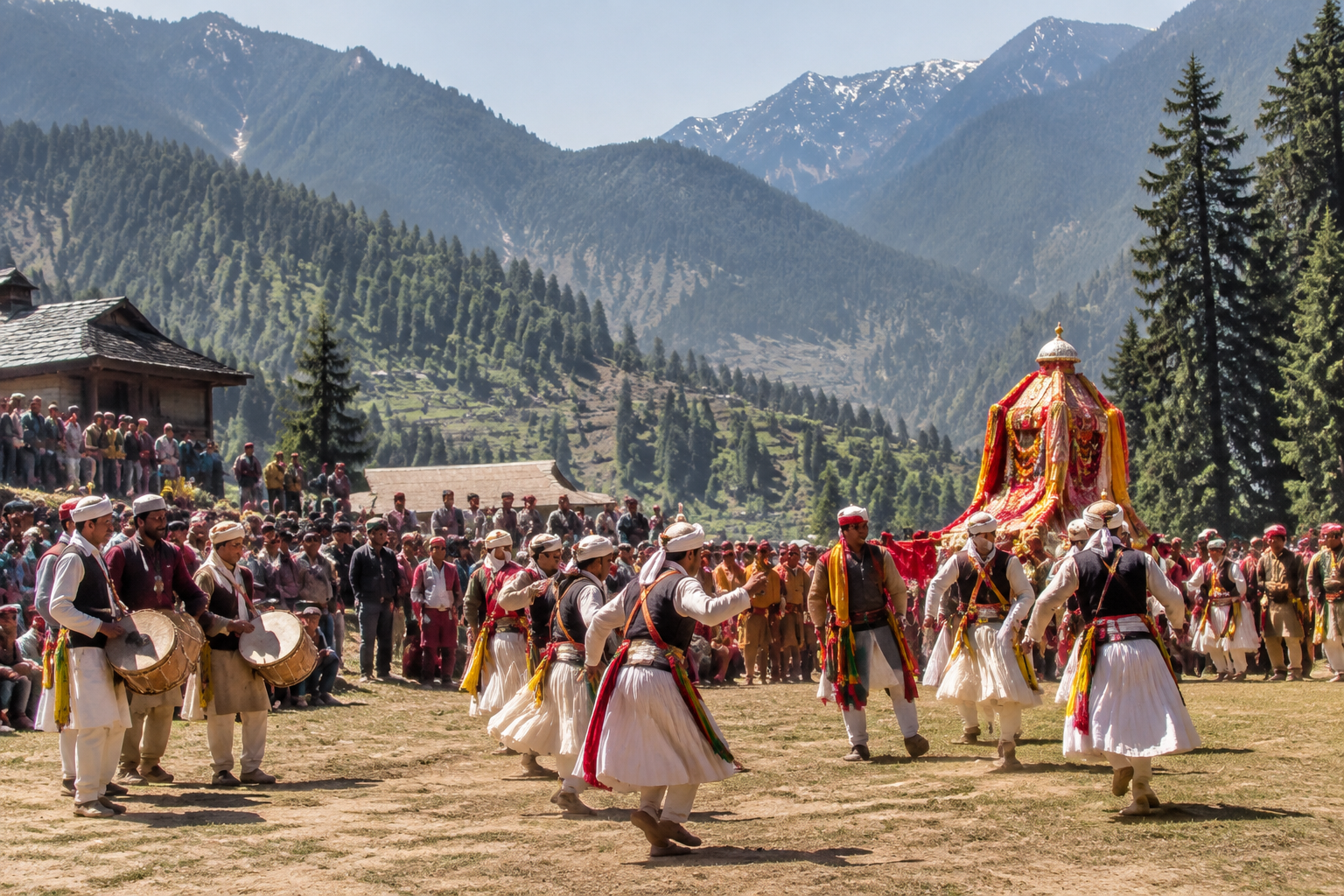
Bhaderwah has celebrated that moment ever since. Every Nag Panchami, silken cloths — patt vastra, offered by devotees to Vasuki Nag — are bound through the night into a towering pillar: the Patt. At dawn it begins to dance, swirled before the Durga Mata temple, then Vasuki Nag, then Ganesh Math, to drums and jaikaras. And at Khakhal ground, the whole town — every faith, caste, and generation — joins the Kud dance in one moving circle. You are welcomed into its rhythm as a guest of the valley, never as a spectator behind a rope.
The journey's design principle is simple: the ritual sets the clock; the valley fills the silences. Ceremonies belong to the dawns and evenings. The middays are yours — deodar forests, alpine meadows, riverside temples, and the slow kitchens of Bhaderwah.