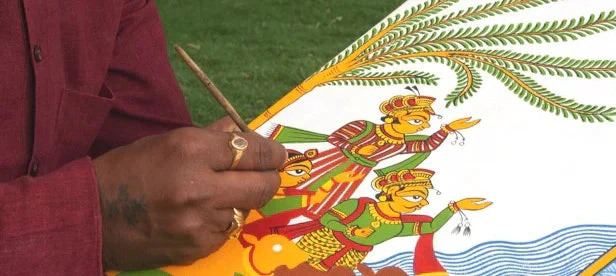
In the heart of Rajasthan’s golden desert, where dunes whisper ancient prayers and the horizon glows with a sacred light, lives the legend of Baba Ramdev, also known as Ramdev Pir or Ramsa Peer, a saint whose spirit transcended religion, caste, and time itself.For centuries, the people of Rajasthan have told stories of this divine …

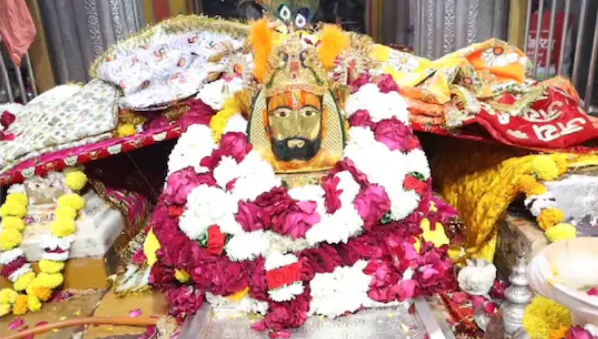
In the heart of Rajasthan’s golden desert, where dunes whisper ancient prayers and the horizon glows with a sacred light, lives the legend of Baba Ramdev, also known as Ramdev Pir or Ramsa Peer, a saint whose spirit transcended religion, caste, and time itself.
For centuries, the people of Rajasthan have told stories of this divine soul, a warrior-saint who healed the sick, revived the dead, and united communities divided by faith and status. His tale is one of compassion, miracles, and an unshakable belief in equality.
To walk through the lanes of Ramdeora, near Jaisalmer, is to feel his presence. The air hums with hymns, the scent of incense mingles with desert dust, and pilgrims walk barefoot for miles to pay homage to the saint who belonged to everyone.
“Baba Ramdev did not build temples or mosques; he built faith.”
The Birth of a Legend
Baba Ramdev was born in the 14th century in the village of Runicha, near Pokhran in Jaisalmer. His parents, Ajmalji and Mainade, were devout followers of Lord Vishnu, and it is said that Ramdev’s birth was foretold in divine dreams.
Mainade had visions of Lord Krishna, who promised to incarnate as her son. True to this promise, Ramdev was born with a celestial aura, hailed as a manifestation of Vishnu – Krishna himself. Some even trace his lineage to Arjuna, the Pandava prince, calling him the 72nd descendant of the warrior.
From an early age, he displayed extraordinary compassion and divine powers. One of the most popular stories tells how, as a child, he asked for a wooden horse and when given one, he touched it, bringing it to life before everyone’s eyes. He rode it across the skies, a miracle that still echoes in the songs of his devotees.
Miracles and “Parchas”: The Divine Deeds
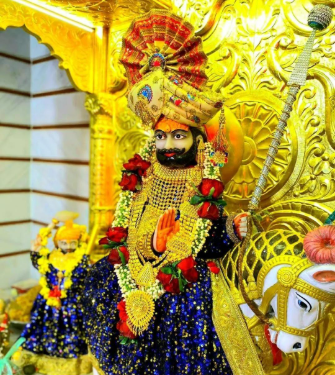
The tales of Baba Ramdev’s miracles, known as parchas are passed down through generations, sung in homes and temples across western Rajasthan.
1. The Defeat of the Demon Bheru: In one of his earliest parchas, Baba Ramdev freed the land from the terror of a demon named Bheru, who haunted the Pokhran region. Guided by his guru Balinath, Ramdev confronted the evil force and restored peace, marking the beginning of his divine journey.
2. The Resurrection of Sarthiya and Healing of Netal Devi: It is said that on the wedding day of his friend Sarthiya, tragedy struck when the groom died suddenly and his bride Netal Devi was paralysed with grief. Baba Ramdev prayed to the divine and brought Sarthiya back to life, healing Netal Devi’s body and spirit.
3. The Merchant from Mewar: A merchant named Dalaji once prayed to Baba Ramdev for a child and was blessed with a son. While journeying to Ramdeora in gratitude, he was attacked by bandits. As he lay dying, he called out to Baba, who appeared on his blue horse, revived Dalaji, and ensured his safe passage. In gratitude, Dalaji built a temple on that route, a testament to faith rewarded.
4. The Blind Sage and the Miracle of Sight: A blind sage from Sirohi, abandoned by his companions, prayed under a khejri tree at Ramdeora. Baba appeared before him and restored his vision, a story that gave birth to the sacred shrine called Paghali, still visited by devotees today.
5. The Queen’s Well, Ranisa ka Kuan: Once, when Rani Netalde was thirsty, Baba Ramdev struck his staff into the earth, and water gushed forth in the middle of the desert. A small temple now marks the spot, known as Ranisa ka Kuan, two kilometres from the main shrine, an eternal reminder of his power to nurture life in barren land.
The Saint of the People
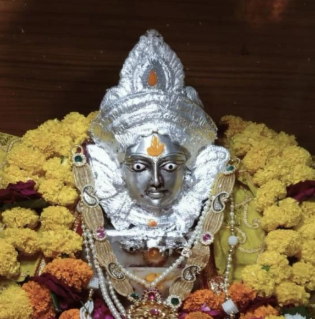
What truly sets Baba Ramdev apart is not only his divine power but his message of equality and compassion.
He was a saint who walked with kings and labourers alike, breaking down barriers of caste and creed. Among his closest companions was Dali Bai, a Dalit woman whom he treated as his sister. Their bond became a symbol of social harmony, and her shrine near Ramdeora stands as a testament to his inclusive spirit.
For the Bhambis, Raikas, Regars, Meghwals, and Chamars, Baba Ramdev became a protector and friend, someone who recognised their dignity in a time when society often denied it.
His teachings urged people to rise above division, reminding them that devotion is not bound by birth, but by the heart.
“In the eyes of Baba Ramdev, there was no high or low, only human.”
A Bridge Between Faiths
Perhaps the most remarkable aspect of Baba Ramdev’s life is how he united two worlds, Hindu Bhakti and Muslim Sufi traditions.
He is revered as both Ramdev Pir among Hindus and Ramsa Peer among Muslims. His shrine at Ramdeora resembles a dargah more than a temple, covered with a chadar, housing a symbolic grave, and open to all faiths.
The famous story of the Five Pirs from Mecca reflects this spiritual unity. Curious about his fame, these Sufi saints came to test Baba Ramdev. When he miraculously produced sacred utensils from Mecca to feed his guests, they bowed before him, acknowledging his divine power. They blessed him with the title “Ramsa Peer; The Pir of Pirs.”
To this day, his followers, Hindus and Muslims alike, visit his shrine, offering chadars and prasad side by side.
“Where others built walls of belief, Baba Ramdev built a bridge of faith.”
Ramdeora Fair: The Desert’s Grand Pilgrimage
Each year, the tiny village of Ramdeora comes alive with colour, chants, and devotion during the Baba Ramdev Fair, one of Rajasthan’s largest spiritual gatherings.
Pilgrims walk barefoot for miles, chanting his name, carrying flags, and singing bhajans. Many undertake the journey as a Paidal Yatra, a walk of faith that culminates at his Samadhi (final resting place).
Two major fairs are held annually:
- Bhadwa Mela, in the bright fortnight of Bhadrapada (August–September)
- Magh Mela, in the month of Magha (January–February)
At the Ramdevra Temple, built by the Maharaja of Bikaner in the 20th century, devotees tie sacred threads and coconuts to the iron gates, symbolising wishes and vows. The Ramser Talab, a lake dug by Baba himself, is believed to have healing properties; pilgrims take its soil as a blessing.
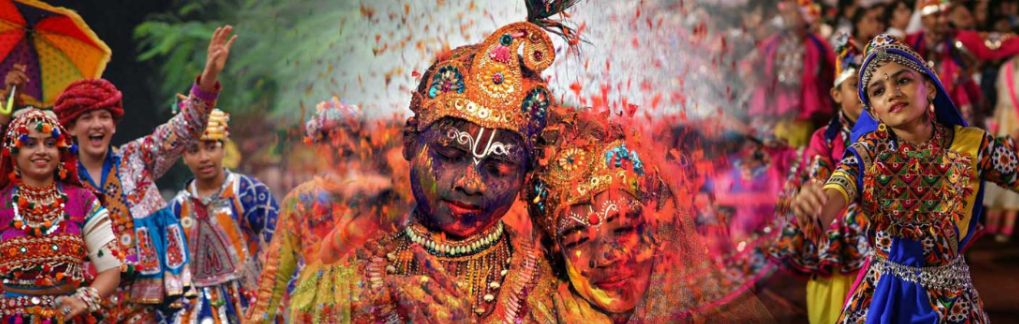
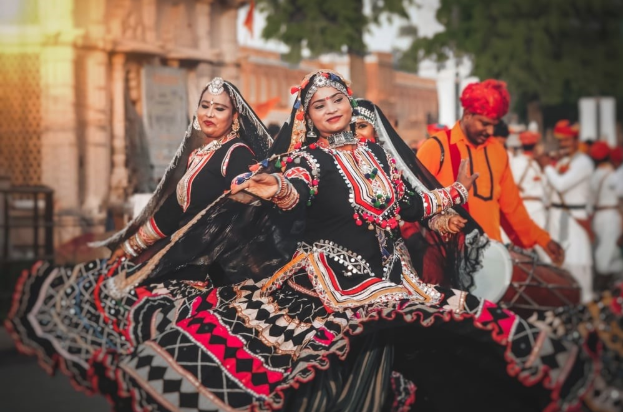
The fairs are a sight to behold camels, folk singers, traders, and sadhus all converge in a symphony of sound and colour. At night, the air fills with devotional songs, and the flicker of oil lamps turns the desert into a sea of stars.
“Ramdeora is not just a place, it’s a pilgrimage of the heart.”
Celebrating Baba Ramdev Jayanti
Every year, on the second day of Shukla Paksha in Bhadrapada, devotees celebrate Baba Ramdev Jayanti, his birth anniversary.
Temples are adorned with flowers, and devotees offer wooden toy horses, a symbol of his miraculous childhood tale.
Homes prepare special dishes, which are offered as prasad before being shared in community feasts.
The main celebrations take place at Ramdevra, where bhajans, satsangs, and jagaratas (night-long devotional vigils) fill the air. The Rikhia community, known for their traditional singing, lead these events, recounting Ramdev’s parchas in soulful melodies that often move listeners to tears.
Even today, his followers believe that singing his praises can cure illnesses, resolve conflicts, and bring peace to restless hearts.
Legacy of Faith and Inclusion
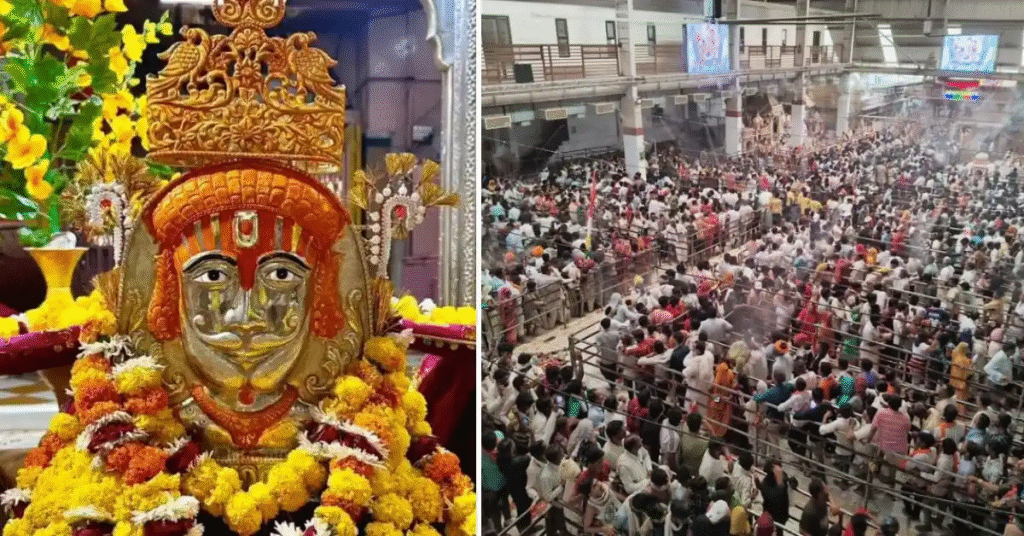
Centuries after his Samadhi, Baba Ramdev continues to be the soul of Rajasthan’s spiritual landscape. His teachings of equality, humility, and compassion remain timeless in a world still divided by faith and status.
For the people of western India, he is not just a saint, he is a way of life. His devotees range from royal families to shepherds, from Hindus to Muslims, united under his message of oneness.
“Baba Ramdev taught us that faith is not about who you pray to, it’s about how you live.”
Experience the Spirit of Baba Ramdev with Folk Experience
To walk through the desert village of Ramdeora is to feel faith take form, in the sound of bhajans drifting through the wind, in the pilgrims’ footsteps that have crossed dunes for centuries, and in the serenity that surrounds Baba Ramdev’s shrine.
At Folk Experience, we invite you to not just witness his legacy, but to live it. Our journeys are designed to help you connect with Rajasthan’s sacred heart, where devotion meets community, and miracles still feel near.
What makes this journey unforgettable:
- Walk the sacred sands of Ramdeora alongside local devotees on a Paidal Yatra, a walk of faith that echoes centuries of belief.
- Experience the soulful Rikhia bhajans sung under starlit skies, their melodies narrating Baba Ramdev’s miracles and teachings.
- Witness the Ramdeora Fair, where camels, sadhus, and traders gather in a spiritual symphony of colour, devotion, and folklore.
- Visit Ranisa ka Kuan and Ramser Talab, the sacred sites tied to his miraculous deeds, where stories live in every grain of sand.
- Meet local communities, artisans, singers, and pilgrims who keep the saint’s message of equality and unity alive through everyday acts of devotion.
Every experience is crafted with respect, sustainability, and authenticity, connecting you with Rajasthan’s living soul, not just its legends. You’ll walk through stories still told in song, and return with faith renewed by human connection.
Travel with Folk Experience, and discover a Rajasthan that prays, sings, and smiles in the spirit of Baba Ramdev, a land where divinity walks barefoot, and every heart still believes in miracles.
“Because in every grain of sand, every song, and every shrine, Baba Ramdev lives on.”