6 Traditional Crafts of Bihar You Should Know Before You Travel
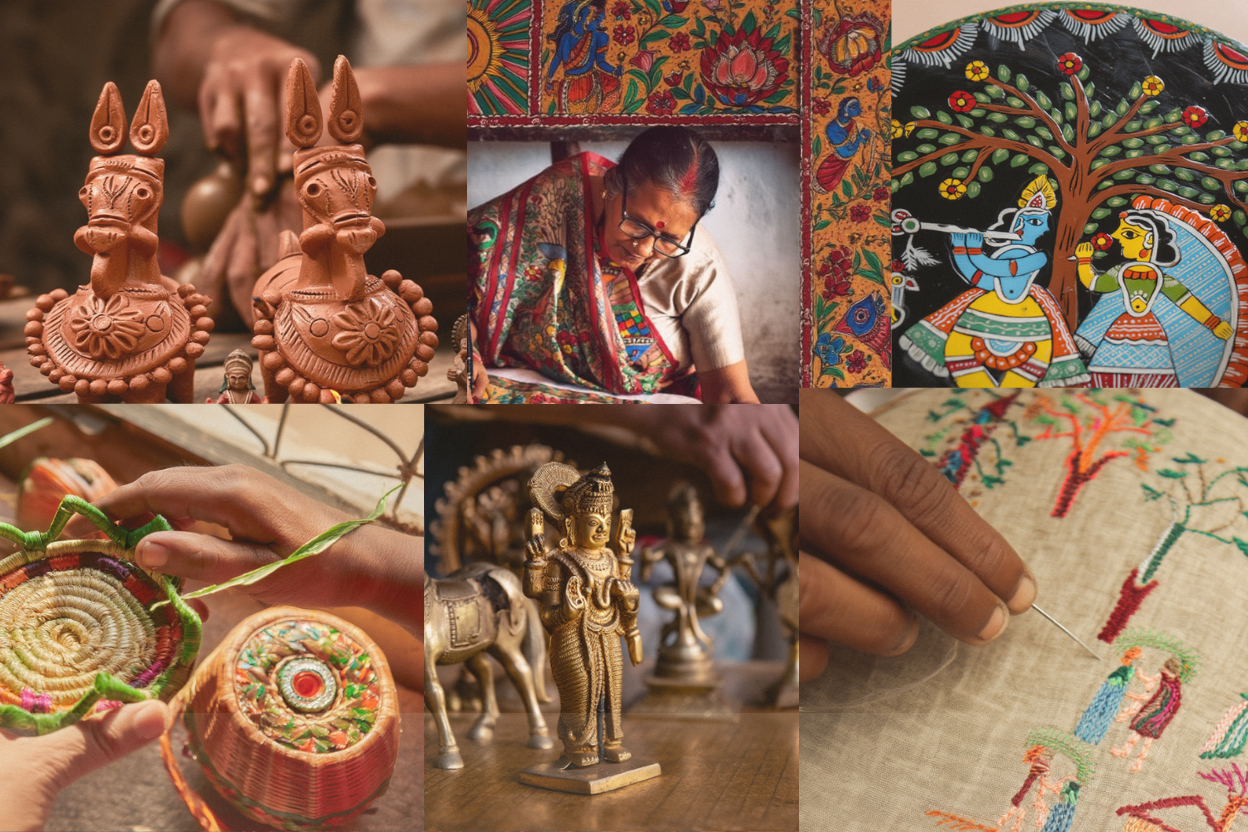
Before you step into Bihar's temples, towns, or riverbanks, notice what its people make. Bihar's traditional crafts were never created for tourists. They were born inside homes, village courtyards, and local rituals, most of them designed to serve a purpose, religious, domesti...
Meet your AI Story Guide
Turn this field note into a one-minute brief with the essential places, people, and traditions.
Why Crafts Matter in Bihar
Most of Bihar's craft traditions share a quality that distinguishes them from the decorative arts of more prosperous regions: they were made to be used, not admired. The terracotta lamp was lit. The Sikki basket held the harvest offering. The Sujani quilt covered a sleeping child before it covered a gallery wall.
This utility is not a limitation. It is what kept these crafts alive across centuries of political disruption, economic pressure, and changing patronage. A craft that serves a function survives. A craft made only for display tends not to.
For travellers, Bihar's crafts work as cultural entry points in a way that monuments rarely do. A monument tells you what a civilisation built at its most powerful. A craft tells you how ordinary people lived, what they believed, and what they were willing to spend time making with their hands when they had very little time to spare.
1. Madhubani Painting
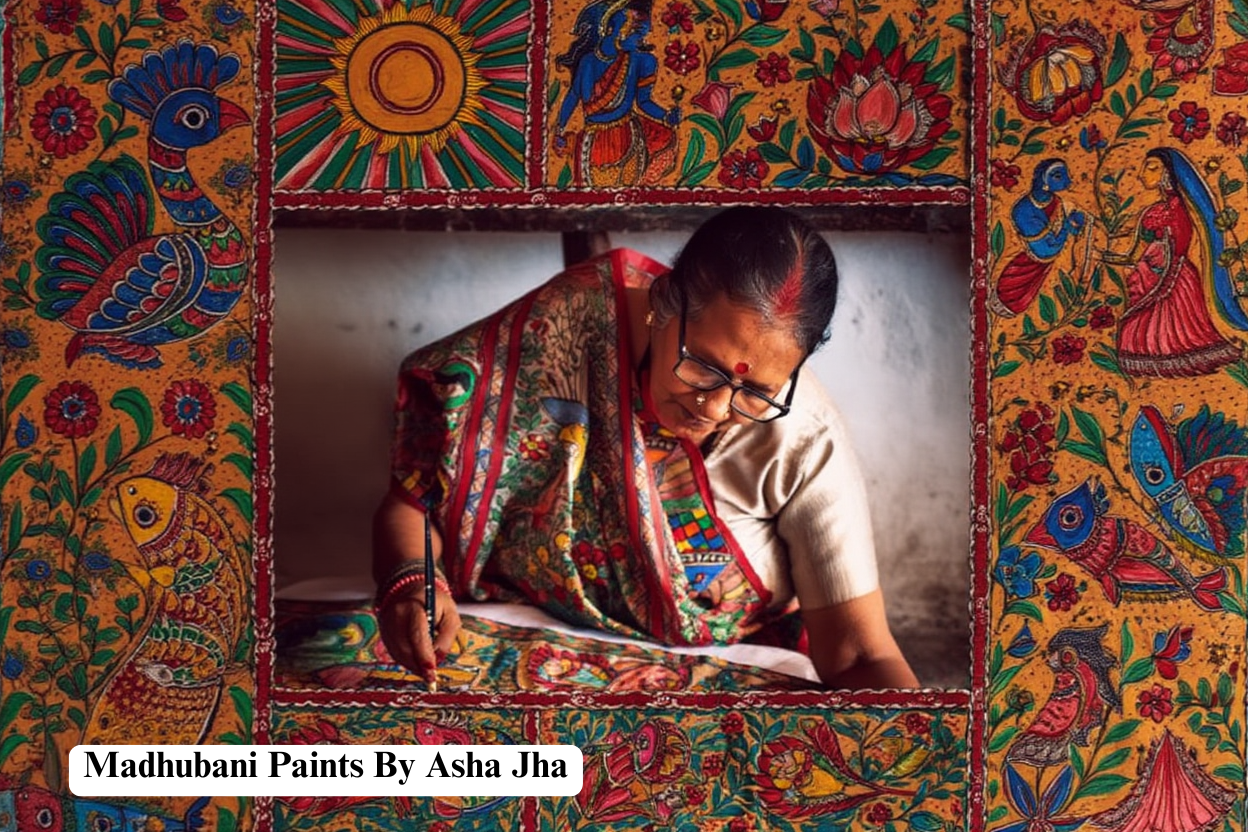
Madhubani painting comes from the Mithila region of northern Bihar, and its original canvas was not paper or cloth. It was the mud walls and freshly plastered floors of homes, repainted before every significant occasion: weddings, festivals, the arrival of a new season, and the birth of a child.
Women made these paintings, using natural pigments prepared from tuber plants, lampblack, cow dung, and flowers, applied with fingers, twigs, and brushes made from bamboo or matchsticks. The compositions fill every available space. Empty space in a Madhubani painting is considered inauspicious, so the figures of gods, animals, plants, fish, and geometric borders press against each other until the surface is completely covered.
FACT: Madhubani painting received a Geographical Indication tag in 2007, protecting the name and the tradition's regional identity. The GI documentation recognises five distinct styles within the tradition: Bharni, Katchni, Tantrik, Godna, and Kohbar, each associated with different communities and purposes within the Mithila region.
The 1966 drought that devastated Mithila's agricultural economy was the event that pushed Madhubani painting from walls onto paper when the All India Handicrafts Board encouraged women artists to sell their work to generate income. What began as emergency intervention became a permanent shift. Today, thousands of women artists across Mithila earn their primary income from Madhubani painting, with the work sold domestically and internationally. The tradition expanded its reach by moving off the wall. Whether it lost something in that move is a question the artists themselves answer differently.
2. Tikuli Painting
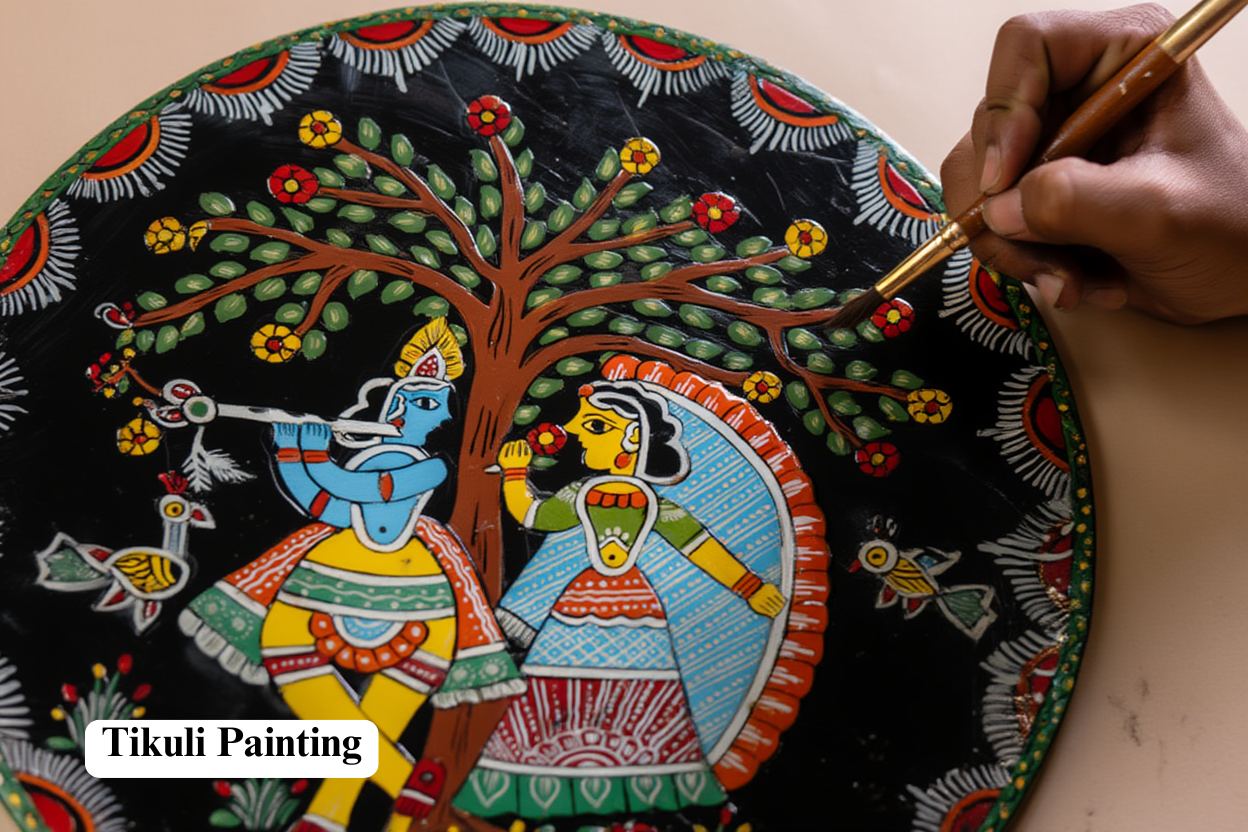
Tikuli painting has its origin in the bindi, the decorative dot worn on the forehead by women across the subcontinent but elevated in Bihar's Mithila region to an art form of considerable elaboration. The tikuli, a small ornamental disc of gold or silver foil, was once made by specialist craftsmen for women of status. Over centuries, the decorative sensibility developed around these ornaments migrated from the forehead to the surface of hardboard and glass.
The paintings that emerged from this tradition carry the visual vocabulary of Bihar's royal and religious past: mythological scenes, ceremonial themes, and figures from the Ramayana and the Jagannath tradition, rendered in the flat, jewel-like style that the foil origin of the form established. The craft traces its history back over 800 years, with evidence of patronage from Bihar's mediaeval courts.
What makes Tikuli painting interesting for a traveller is precisely what makes it obscure: it sits at the intersection of jewellery, ritual, and painting in a way that does not fit neatly into any single craft category, and it has not received the international recognition that Madhubani painting has attracted. The tradition continues in Patna, where a small number of families maintain it, working in the same neighbourhoods where it was practised a century ago.
3. Sujani Embroidery
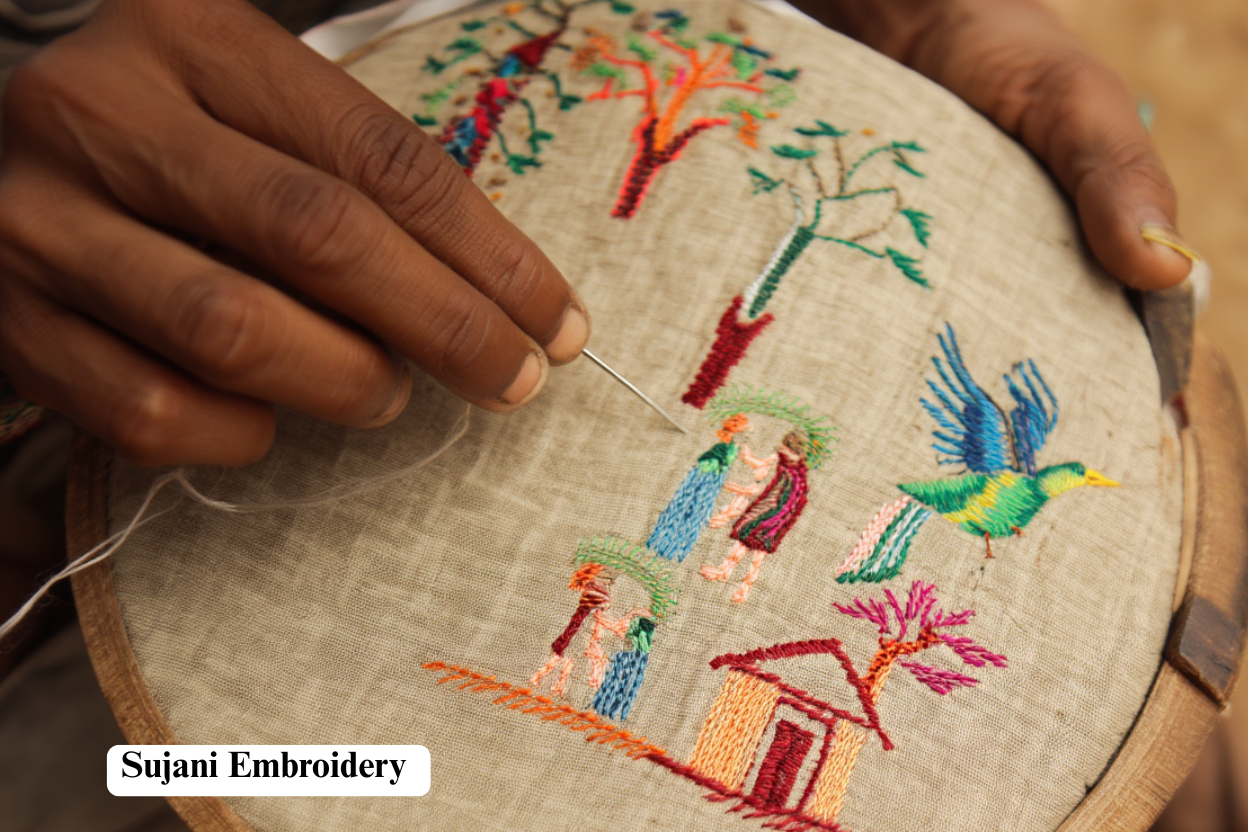
Sujani begins with what would otherwise be discarded. Old sarees, worn thin by years of use, are layered over each other and stitched together with a running stitch that simultaneously holds the layers and builds up the image. The name derives from the Sanskrit word for needle. The tradition comes from the Bhusura village area of Muzaffarpur and the surrounding districts, where women have been making these quilts for generations.
What the Sujani records is not myth or religious iconography. It records life as the women who made it actually experienced it: childbirth, agricultural work, migration, the arrival of a bridegroom, a death in the family, and the texture of daily routine that official history does not think is worth preserving. These are stitched documents of lived experience, made from the fabric of worn-out clothing by women who had limited access to any other form of record-keeping.
FACT: Sujani embroidery was revived in the late 20th century through the work of activist Shanti Devi and the organisation Aipan, which brought together rural women from marginalised communities to produce and sell Sujani work. The revival positioned the craft explicitly as a tool of economic independence and social documentation, expanding the subject matter to include themes of social justice, women's rights, and community history.
The revival gave Sujani a political dimension it had not previously had in its purely domestic form. Contemporary Sujani work, produced by women's collectives, sometimes addresses subjects that the traditional domestic version never touched: caste discrimination, violence against women, and the experience of migration. The needle has become, in some hands, an instrument of testimony as much as decoration.
4. Sikki Craft
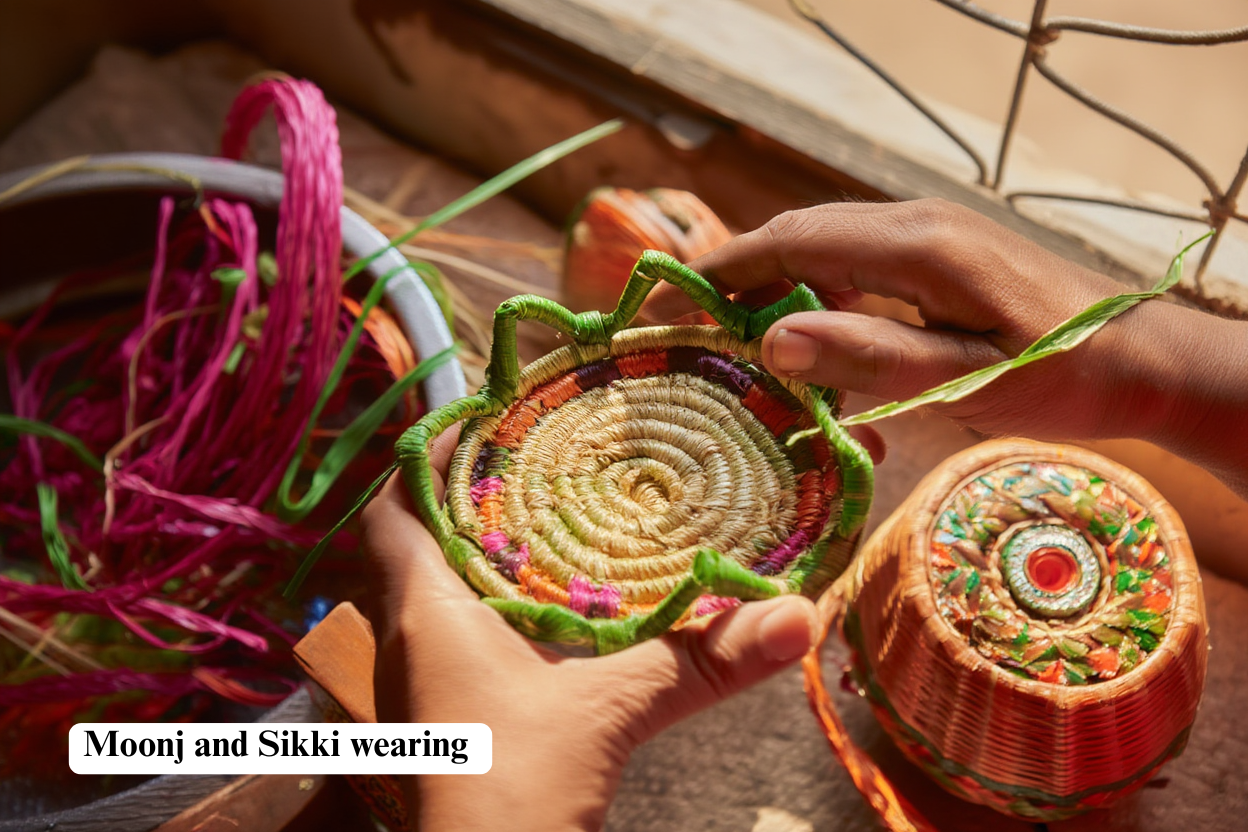
Sikki is a golden grass, a specific variety that grows in the waterlogged fields of north Bihar and parts of Nepal. It is harvested once a year, dried, and woven into baskets, containers, trays, and the specific ritual objects that Bihar's wedding traditions require. The colour needs no dye: the dried Sikki is naturally golden, and the weaving tradition uses that colour as its primary aesthetic element.
The craft is transmitted from mother to daughter, typically learnt informally over years of watching and helping rather than through any formal instruction. It is also overwhelmingly women's work, which means it has historically been undervalued in economic terms even as it produces objects that every household in the region uses.
The zero-waste quality of Sikki craft is not a contemporary affectation but a structural fact of the tradition: the grass is renewable, the dyes where they are used are natural, and every part of the harvested material is used in some form. This is not sustainability as a marketing position but sustainability as the natural consequence of a craft that developed in a region with limited resources and no access to industrial alternatives.
For travellers, the Sikki craft villages of north Bihar, particularly in the Sitamarhi and Darbhanga districts, offer a picture of a craft tradition that is entirely embedded in the agricultural and ceremonial calendar of its region, not a studio practice but a seasonal, community-embedded activity.
5. Terracotta Craft
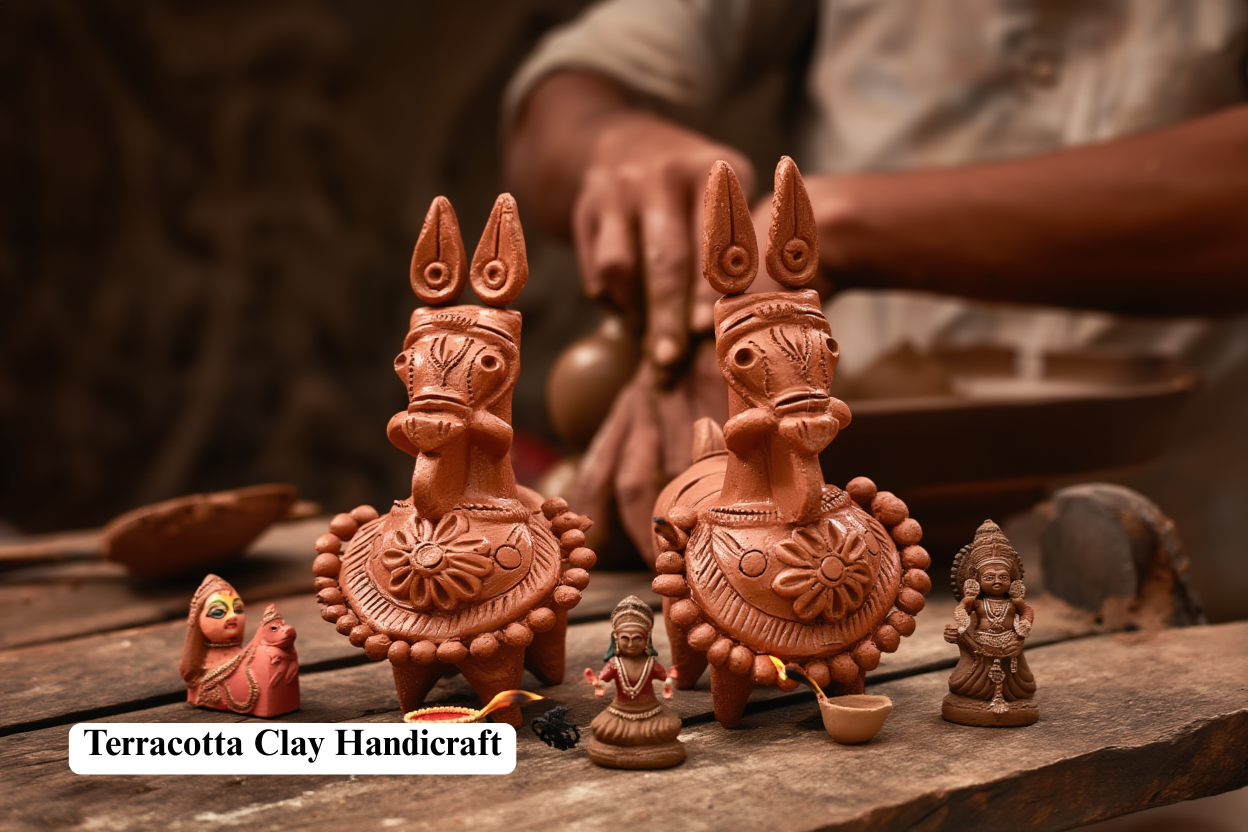
Bihar's terracotta tradition connects the present to one of the longest continuous craft histories in the subcontinent. Archaeological findings from Mauryan period sites in Bihar show terracotta figurines, lamps, and ritual objects that share formal characteristics with objects being made in the same region today, not because the tradition was reconstructed from archaeological evidence but because it was never interrupted.
Clay lamps, toys, figurines of local deities, and containers for grain and water: the forms that Bihar's terracotta craftsmen produce are determined by the functions the objects serve. The aesthetic is not decorative in the secondary sense but directly expressive of the purposes involved. A lamp made to be lit at a festival has a different form from a lamp made to be sold in a gift shop, and the craftsmen who have maintained the tradition longest are the ones still making the first kind.
FACT: The terracotta horse is one of Bihar's most recognizable craft forms, used as a votive offering at rural shrines across the Ganga plains. The tradition of offering clay horses to local deities, particularly the horse deity Sal Baba, is documented across many districts of Bihar and reflects a syncretic folk religious tradition that predates both the major Hindu temple traditions and the colonial reorganization of religious life in the region.
6. Metal Craft
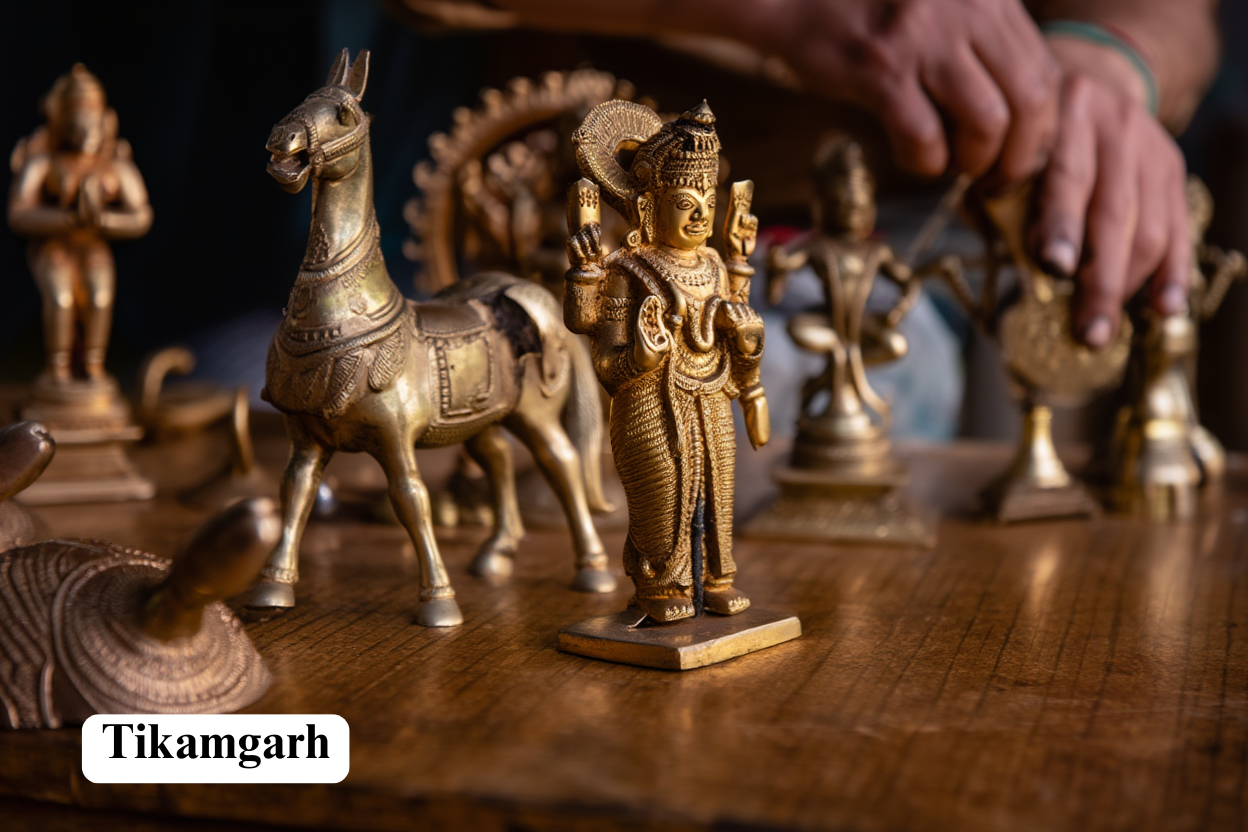
Bihar's traditional metal craft is not the decorative metalwork of craft fairs. It is the domestic metalwork of a region where brass, bronze, and bell-metal vessels have been made for cooking, ritual, and daily use across many centuries, passed through generations of craftsmen whose families have maintained the same techniques because the techniques work and the objects serve their purpose.
The craftsmanship in Bihar's metal tradition is valued for what it produces rather than for display. A brass water pot made in the traditional manner by a craftsman in the Bhojpur region is an object of considerable technical accomplishment, but its value is in its durability and function, not in its position as a collectible. This is not a limitation of the tradition. It reflects a craft philosophy in which usefulness and beauty are not separate categories.
The decline of traditional metal craft in Bihar is driven by the same forces that affect domestic craft everywhere: aluminium and stainless steel are cheaper and lighter, and the market for traditionally-made brass and bronze has contracted as the domestic contexts that created the demand have changed. The craftsmen who continue are mostly older; their skills are undervalued in economic terms, and their objects are increasingly sought by collectors and cultural organisations rather than by the village households that originally drove the demand.
Engaging With Bihar's Crafts as a Traveller
Bihar's crafts are accessible in ways that the state's official tourism narrative does not always make clear. The Madhubani painting villages are within reach of any visitor to the Mithila region. The Sikki craft communities of north Bihar are working within their agricultural calendar, not in studios managed for visitor access. The Sujani collectives in Muzaffarpur welcome visitors who arrive with genuine interest and appropriate patience.
What these crafts ask of a traveler is not expertise or even prior knowledge. They ask for the willingness to slow down, to watch someone work, to understand that the object being made has a context that the finished product in a shop does not carry with it.
Folk Experience designs Bihar visits around that understanding. The village visit where a Madhubani artist explains why the fish motif appears at every wedding. The Sujani collective, where women describe what they chose to stitch and why. The terracotta craftsman who still makes votive horses for the local shrine rather than for craft fairs.
Bihar's crafts are not souvenirs. They are evidence of how people here have organized their beliefs, their domestic lives, and their economies across centuries. Encountering them on their own terms, in the places where they are made and used, is one of the most direct ways into the state that exists.
Folk Experience will take you there.