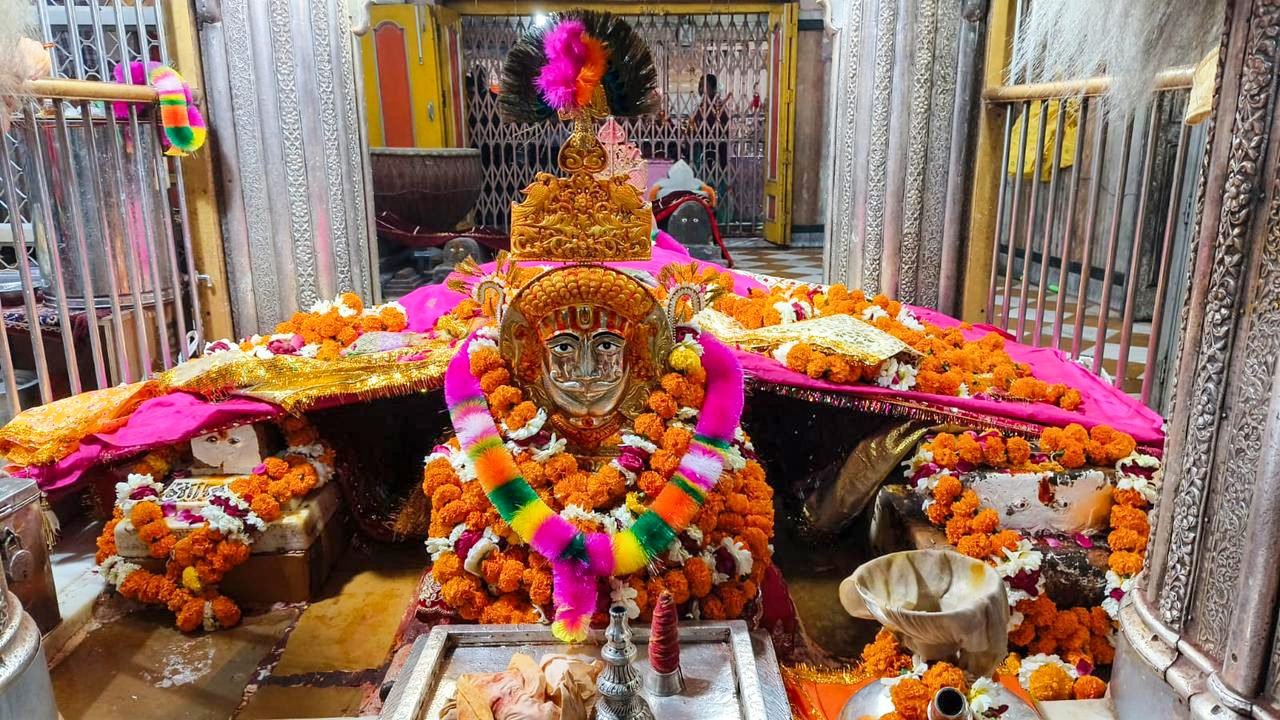
Baba Ramdev: The Legend, Miracles, and Eternal Spirit of Rajasthan
You hear his name everywhere in western Rajasthan. You can hear his name mentioned at bus stands, tea shops, and even in the middle of nowhere on a highway cutting through the Thar. People refer to him as Baba Ramdev, Ramdev Pir, or Ramsa Peer, depending on the individual. He'...
Meet your AI Story Guide
Turn this field note into a one-minute brief with the essential places, people, and traditions.
The Birth of a Legend
He was born sometime in the 14th century. The village was Runicha, near Pokhran in Jaisalmer district. His parents, Ajmalji and Mainade, were devoted to Lord Vishnu. And the story goes that his birth wasn't exactly a surprise to them.
Mainade had dreams. Visions, really. She had visions of Lord Krishna telling her that he would be born as her son. And when Ramdev was born, people say there was something unmistakably different about him. A distinct light. Devotees call him a manifestation of Vishnu-Krishna himself. Some go further and trace his lineage all the way back to Arjuna, the Pandava prince, calling Ramdev his 72nd descendant.
Even as a kid, he wasn't ordinary. There's a story people love to tell, probably the most famous one from his childhood. Little Ramdev asked for a wooden horse. Someone gave him one. He touched it, and the thing came alive. Just like that. He rode it across the sky while everyone watched, stunned. That image of Baba Ramdev on a flying horse is painted on walls, trucks, and temple gates all across western Rajasthan. It's not just a story for the people here. It's history.
Miracles and "Parchas": The Divine Deeds
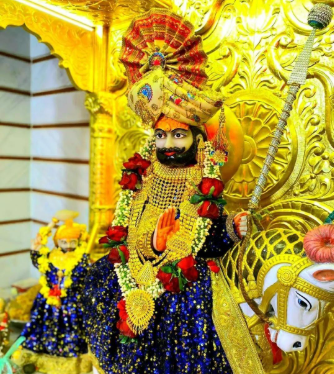
The miracle stories, or 'parchas', as they're called locally, are a major reason why Baba Ramdev's legend has survived so long. People sing them in their homes. They narrate it in temples. Grandmothers tell these stories to their grandchildren at bedtime. Here are some of the big ones.
The Demon Bheru. This manuscript is one of the earliest parchments. A demon named Bheru was terrorising the Pokhran region. Nobody could deal with him. Baba Ramdev, guided by his guru Balinath, went after the demon and finished the job. Freed the land. That was the opening chapter of his divine journey.
Sarthiya and Netal Devi. This one's devastating. On his friend Sarthiya's wedding day, the groom suddenly died. His bride, Netal Devi, was paralysed with grief; literally, her body gave out. Baba Ramdev prayed, and Sarthiya came back. Netal Devi was healed, too, body and spirit. Just try telling that story to someone in Ramdeora without them getting emotional.
The Merchant Dalaji. A merchant from Mewar named Dalaji had prayed to Baba Ramdev for a child and got his wish for a son. On his way to Ramdeora to give thanks, bandits attacked him. Left him for dead. Dalaji called out to Baba with whatever strength he had left. And Baba appeared. On his blue horse. Revived him and got him safely to his destination. Dalaji built a temple on that route afterwards. Still stands.
The Blind Sage. His companions abandoned him at Ramdeora, where he was a blind holy man from Sirohi. He sat under a khejri tree and prayed. Baba Ramdev appeared and gave him his sight back. That spot became a shrine called Paghali. People visit it to this day.
Ranisa ka Kuan. Once, Rani Netalde was thirsty in the middle of the desert. Baba Ramdev struck his staff into the ground, and water came rushing out. A small temple marks that exact spot now, about two kilometres from the main shrine. Water in the desert. If that does not exemplify power, what does?
The Saint of the People
Miracles are impressive. But honestly, what makes Baba Ramdev genuinely remarkable, the thing that separates him from a hundred other miracle stories, is his stance on equality.
The setting was 14th-century India. Caste wasn't just a social thing; it was everything. It decided who you could eat with, pray with, and sit next to. And here was Baba Ramdev walking with kings and labourers, as if there was no difference between them. Because of him, there wasn't.
His closest companion was Dali Bai, a Dalit woman. He treated her as his sister. In that era, that wasn't just unusual; it was radical. Her shrine stands near Ramdeora today, and it says something powerful about who Baba Ramdev was and what he stood for.
For communities like the Bhambis, Raikas, Regars, Meghwals, and Chamars, he became a protector. He saw their dignity when society often did not. His message was simple, but stubborn devotion has nothing to do with where you're born. It's about what's in your heart. Period.
A Bridge Between Faiths
This episode might be the most unusual part of his legacy. Baba Ramdev is worshipped by Hindus and Muslims. Not tolerated by both, actively worshipped by both. That's not common. That's barely even heard of.
Hindus call him Ramdev Pir. Muslims call him Ramsa Peer. His shrine at Ramdeora looks more like a dargah than a temple, covered with a chadar, housing a symbolic grave, with doors open to anyone regardless of what god they pray to.
There's a famous story about five Sufi saints, Pirs from Mecca, who heard about Baba Ramdev's fame and came to test him. To see if he was the real deal. When he miraculously produced sacred utensils from Mecca to serve his guests food, they didn't question him further. They bowed. And they gave him a title: Ramsa Peer. The Pir of Pirs.
That story still gets told at the shrine. And the reality of it is still visible. Hindus and Muslims visit side by side, offering chadars and prasad at the same shrine and praying to the same saint. In a world that still divides religions, this place quietly stands out.
Ramdeora Fair: The Desert's Grand Pilgrimage
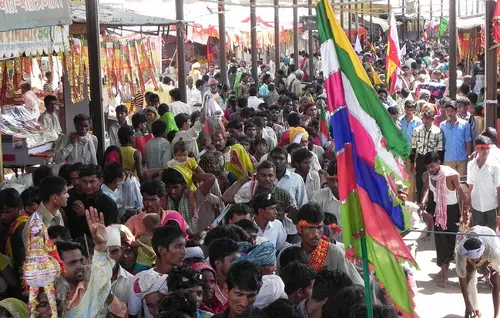
Every year, the tiny village of Ramdeora transforms into an entirely different place. Thousands of pilgrims descend on this little desert settlement for the Baba Ramdev Fair, and it's one of Rajasthan's biggest spiritual gatherings.
People walk barefoot for miles to get there. They chant his name, carry flags, and sing bhajans the whole way. Many do the Paidal Yatra, a walk of faith ending at his samadhi, his final resting place.
The two main fairs happen during Bhadwa Mela, in the bright fortnight of Bhadrapada (August–September), and Magh Mela, in Magha (January–February).
At the Ramdevra Temple built by the Maharaja of Bikaner in the 20th century, devotees tie sacred threads and coconuts to the iron gates. Wishes. Vows. Promises made to a saint who they believe is listening. Nearby, there's the Ramser Talab, a lake that Baba himself is said to have dug. Pilgrims take soil from its banks as a blessing. Many believe the water has healing properties.
And the scene itself is something you won't forget. Camels, folk singers, traders, and sadhus were all packed into this little village, creating a kind of organised chaos that somehow felt sacred. When the sun goes down, devotional songs take over and oil lamps light up everywhere. The desert, for a few nights, looks like a sky full of stars that fell to the ground.
Celebrating Baba Ramdev Jayanti
Every year on the second day of Shukla Paksha in Bhadrapada, people celebrate Baba Ramdev Jayanti, his birth anniversary.
Temples get decorated with flowers. Devotees bring wooden toy horses, a callback to that childhood miracle everyone knows. Homes prepare special food, offered first as prasad, then shared in big community feasts where nobody's left out.
The main celebrations happen at Ramdevra. Bhajans, satsangs, and jagaratas are the all-night devotional vigils where nobody sleeps and nobody wants to. The Rikhia community leads the singing, narrating Ramdev's parchas in melodies that have a way of cutting through you. People cry. Not from sadness. From something else, maybe. Feeling seen by a saint who lived 700 years ago.
And his followers still believe genuinely, not performatively, that singing his praises can heal illness, settle disputes, and bring quiet to a restless mind.
Legacy of Faith and Inclusion
Baba Ramdev took his samadhi centuries ago. But in western Rajasthan, you wouldn't know it from the way people talk about him. He's in the present tense. Always.
His teachings of equality, humility, and compassion aren't relics of a bygone era. They feel urgent now, perhaps more than ever, in a world that continues to grapple with the same divisions he fought against. His devotees range from royal families to shepherds and from Hindus to Muslims, and they're all connected by this shared belief that one man's life can still change how you see the world.
Experience the Spirit of Baba Ramdev with a Folk Experience
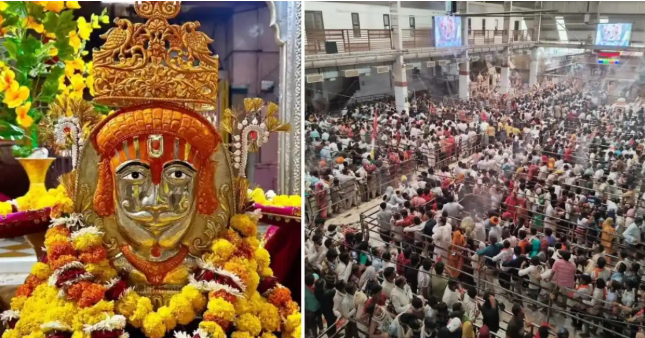
Walking through Ramdeora is an experience that's challenging to compare to anything else. Bhajans drifting on the wind. You can hear the footsteps of pilgrims who have been traversing these dunes for centuries. A quiet, solid kind of serenity around the shrine that doesn't feel manufactured. It feels earned.
At Folk Experience, we don't just take you to see these places. We help you feel them. We design our journeys to foster genuine connections with the land, the communities, and the traditions that sustain Baba Ramdev's spirit.
What you can expect: Walking the sacred sands of Ramdeora alongside actual local devotees during a Paidal Yatra. Sitting under open skies listening to Rikhia bhajans that narrate his miracles in melodies you won't be able to get out of your head. Witnessing the Ramdeora Fair in all its beautiful chaos: camels, sadhus, traders, devotion, folklore – all of it happening at once. Visiting Ranisa ka Kuan and Ramser Talab, the sacred spots tied to his miracle stories, allows you to feel the weight of what happened there. And meeting the local communities' artisans, singers, and pilgrims who keep his message of equality alive not through grand gestures but through the small, daily stuff.
Everything we do is built on respect, sustainability, and keeping things real. We're not selling a packaged spiritual experience. We are inviting you to experience the vibrant essence of Rajasthan, where the people pray, sing, and refuse to let their saints become mere stories in a book.
Come walk where Baba Ramdev walked. Come hear the songs his people still sing. Perhaps, amidst the desert, you will discover what his pilgrims have been discovering for seven hundred years: that genuine faith does not require walls or roofs. It just needs a heart that's open.
Because in every grain of sand, every song, and every shrine, Baba Ramdev lives on.