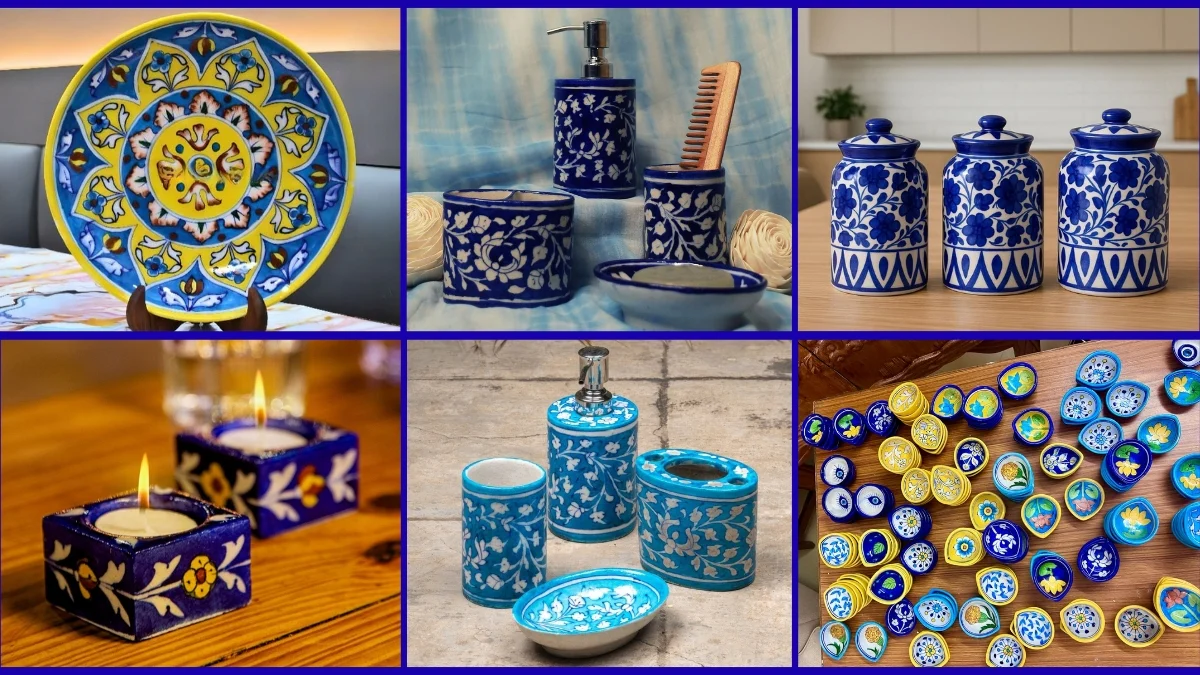
Blue Pottery of Rajasthan: The Timeless Art Painted in the Colours of the Sky
You know those narrow bylanes in Jaipur? There's this sound you'll catch if you're paying attention, a soft clink of pottery. Almost sounds like a melody, honestly. Under Rajasthan's absolutely brutal sun, artisans just sit there cross-legged on floors for hours, shaping stuff...
Meet your AI Story Guide
Turn this field note into a one-minute brief with the essential places, people, and traditions.
A Glimpse into History: From Persia to the Pink City
So blue pottery's story goes back over 600 years. Persian and Turkish artisans basically carried it across borders. When it showed up in India during Mughal times, the craft bounced around before finally settling down in Jaipur. That happened under Maharaja Ram Singh II back in the 19th century, he really championed this art form.
The Maharaja brought master potters right to his royal court. And that's when something cool happened, Persian patterns started blending with Indian motifs. You got Islamic geometry mixing with local stuff like elephants, peacocks, these blooming lotus flowers.
Different communities handled this craft traditionally, the Khaarwaal, Kumbhar, Bahairva, and Nat people. Blue pottery became part of what makes Jaipur, well, Jaipur. Elegant stuff, luminous, and way tougher than it looks.
Now here's what blows people's minds: blue pottery doesn't actually contain any clay at all.
Nope. It's made from quartz stone powder, powdered glass, Multani mitti (Fuller's earth, if you're wondering), katira gond, and saaji. That whole combination? That's what creates the translucent shine and keeps everything lightweight and eco-friendly.
The Crafting Journey: From Earth to Elegance
Making blue pottery is science meeting soul. It's this really patient process, mixing, molding, painting, firing, that stretches across days, sometimes weeks depending on the piece.
1. Preparing the Dough
Everything starts with getting the mix right:
70% quartz powder (gives you strength)
15% powdered glass (that's where lustre comes from)
15% Multani mitti (binds it all together)
Artisans knead this whole mixture with water until it gets smooth and workable. Then they just let it sit there and rest. Funny thing, even earth apparently needs downtime before it can transform into something beautiful.
2. Moulding the Shape
Plaster-of-Paris molds get created in whatever shapes are needed, bowls, plates, lamps, tiles, you name it, then left out to sun-dry. The dough gets pressed real carefully into these molds, they fill it with fine wood dust for support, trim it with a knife.
After a day or two of drying, pieces get removed, brushed clean using this small broom called a koochi, then smoothed out with sandpaper.
Every curve, every single edge gets refined by hand. It's like this ongoing conversation between the artisan and whatever they're making.
3. Painting the Patterns
Once the surface is ready to go, it becomes a blank canvas waiting for whatever the artisan's imagination comes up with. They use natural oxides mixed with edible gums, painting these really delicate motifs in cobalt blue, turquoise, green.
Color-wise, here's what they typically work with:
Cobalt oxide creates deep blue
Copper oxide gets you sea green
Manganese does the dark outlines
The brush just glides along gently, tracing flowers, peacocks, vines, these geometrical borders, motifs that have honestly been around for generations.
In blue pottery, patience does all the painting while time holds the brush.
4. Firing and Glazing
After painting's done, pieces head into a kiln at 800°C. Makes them firm and tough. Then there's this special glaze, they make it from borax, zinc oxide, potassium nitrate, boric acid, powdered glass, that creates the signature shine everyone recognizes. Once it's glazed, back into the kiln it goes at 1,000°C, which locks in that brilliance for good.
End result? You get these pieces that gleam like glass but stay cool when you touch them, lightweight, surprisingly durable, and they've got this ethereal quality that's hard to describe.
Symbolism and Cultural Significance
Every color, every motif in blue pottery actually means something. It's all rooted in Persian philosophy meeting up with Rajasthani symbolism.
Blue: This represents divinity, sky, infinity, the whole calmness and purity thing.
Peacock: Rajasthan's state bird. Symbolizes beauty, love, and signals when monsoon's coming.
Floral vines: These got inspired by Mughal gardens. They represent eternal growth and harmony.
Walk through City Palace's corridors or check out Hawa Mahal's intricate tiles, you'll still see blue pottery traces decorating Jaipur's royal past. Lots of families pass these artworks down through generations, keeping them as heirlooms. Love, legacy, craftsmanship, all wrapped up in these pieces.
Challenges of a Fading Legacy
Look, despite being absolutely gorgeous, blue pottery's future isn't looking too great right now.
1. Cheap Imitations
Mass-produced machine versions from factories over in Moradabad and Uttar Pradesh have completely flooded markets with cheap copies. These knockoffs lack the precision, the soul, the cultural depth that handmade pieces carry. But here's the problem, they're affordable. So they end up overshadowing everything the real artisans are doing.
2. Fewer Artisans, Fewer Heirs
These days, maybe 30–40 families in Jaipur still handcraft blue pottery. That's it. Younger generations? They're heading toward steady jobs with benefits, leaving behind the wheel, the kiln, centuries of family tradition.
Crafts only survive when their stories keep getting retold, and not by machines. By actual human hands.
3. Rising Costs
Materials like quartz and cobalt oxide? Prices have literally doubled over the last decade. For artisans already struggling just to make ends meet, these price jumps make producing handcrafted blue pottery harder and selling it even tougher.
Where to Find Authentic Blue Pottery
Want an authentic piece showing Jaipur's real artistry? Head straight to Sanganer, that's the actual heart of Rajasthan's blue pottery tradition.
Sanganer Workshops: Try Laxmi Colony on Main Road in Sanganer, or studios at Heerayali Ka Khawda, Muhana Turn, Diggi Malpura Road. Artisans there are pretty welcoming, you can watch them work, learn about the process, buy genuine handcrafted pieces.
Pro Tip: Hold any piece up toward light. Real blue pottery shows slight translucence, feels smooth when you run your fingers across it, weighs surprisingly little for its size.
Why This Craft Matters
Blue pottery goes so far beyond just being some tourist souvenir. It's cultural resilience in physical form. Every single handcrafted bowl or tile holds centuries of knowledge that got passed quietly through families, and here's the thing, most of it was never even written down anywhere.
Choosing authentic blue pottery means you're doing more than buying art, you're actively helping keep a 600-year-old heritage alive. One that connects Persia's deserts all the way to Rajasthan's dunes.
Buying handmade means you're not just owning a product, you're carrying forward an actual story.
Experience the Art with Folk Experience
Really understanding blue pottery means going way beyond just looking at finished pieces in shops, you need to actually feel the whole process. The rhythm of hands working with earth, that particular hush when a brush first touches the surface, the quiet pride artisans have when they're turning literal dust into something divine.
Walk through Sanganer's narrow lanes where clay's smell mixes with this sense of devotion that's hard to explain. The walls there practically hum with centuries worth of craft knowledge.
At Folk Experience, we skip right past regular markets and museums. We bring you straight into the beating heart of Rajasthan's artistry. You sit down with Jaipur's actual master potters, learn how to mix that quartz and glass dough yourself, paint your own motifs, then watch as your creation literally glows to life inside the kiln. It's not some staged demonstration, it's a real dialogue happening between you and a heritage that's flat-out refusing to disappear.
Every single experience we create happens through direct collaboration with local families and craft custodians. Your participation directly supports artisan livelihoods, keeps centuries-old traditions going strong. Here, travel becomes preservation, every brushstroke you paint helps keep a 600-year-old story breathing.
Travel with Folk Experience and you'll discover that crafts genuinely have heartbeats, artisans have incredible stories, and every creation has its own soul.
Buying handmade means you're not just owning art, you're carrying an actual legacy forward into the future.