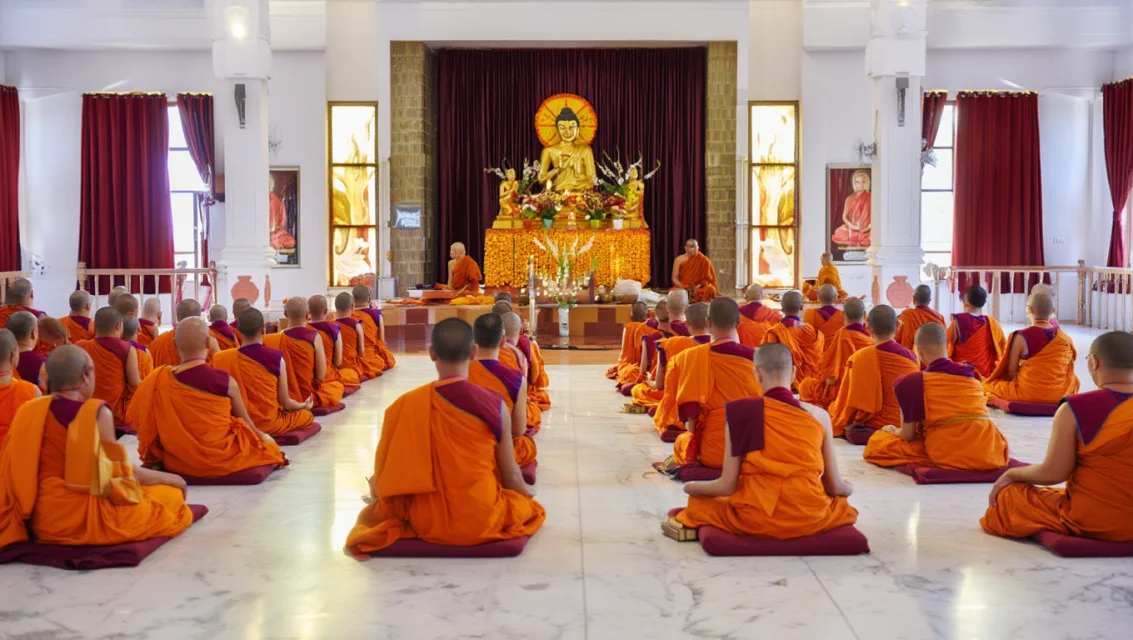
Buddha Jayanti in Bihar: Faith and a Global Buddhist Connection
Every year, on the full moon of Vaisakh, pilgrims from across the world arrive in Bihar. They come not as tourists passing through, but as seekers retracing the path where Siddhartha Gautama sat beneath a pipal tree and attained enlightenment. According to records from the Mah...
Meet your AI Story Guide
Turn this field note into a one-minute brief with the essential places, people, and traditions.
Why Buddha Jayanti Matters to Bihar's Spiritual Identity
Buddha Jayanti marks the birth, enlightenment, and parinirvana of Gautama Buddha: three defining moments held within a single observance. While the festival is celebrated across the Buddhist world, Bihar occupies a different position from everywhere else. It is not interpreting Buddhist history from a distance. It is standing on the soil where it happened.
Many traditions have shaped Bihar over the centuries. Hinduism arrived early and sank deep roots. Jainism found fertile ground here. Islam built communities that remain. But Buddhism carries a different weight in the state's memory because the moment that started it all happened here, and the teachings that came out of that moment went on to shape how millions of people across the world think and live, a reach that still holds.
For travellers, Buddha Jayanti in Bihar offers more than just a religious event. It shows how local faith and global spirituality can hold each other up across centuries without either one weakening.
Bodh Gaya: Where Bihar Becomes the Centre of the Buddhist World
Bodh Gaya is not a metaphor. It is the place.
Under the Bodhi Tree in Bodh Gaya, Siddhartha Gautama is believed to have attained enlightenment over 2,500 years ago. What happened in that moment went far beyond one person's transformation. It set a philosophy in motion that crossed oceans and outlasted empires. The Mahabodhi Temple, a UNESCO World Heritage Site, now marks the exact spot.
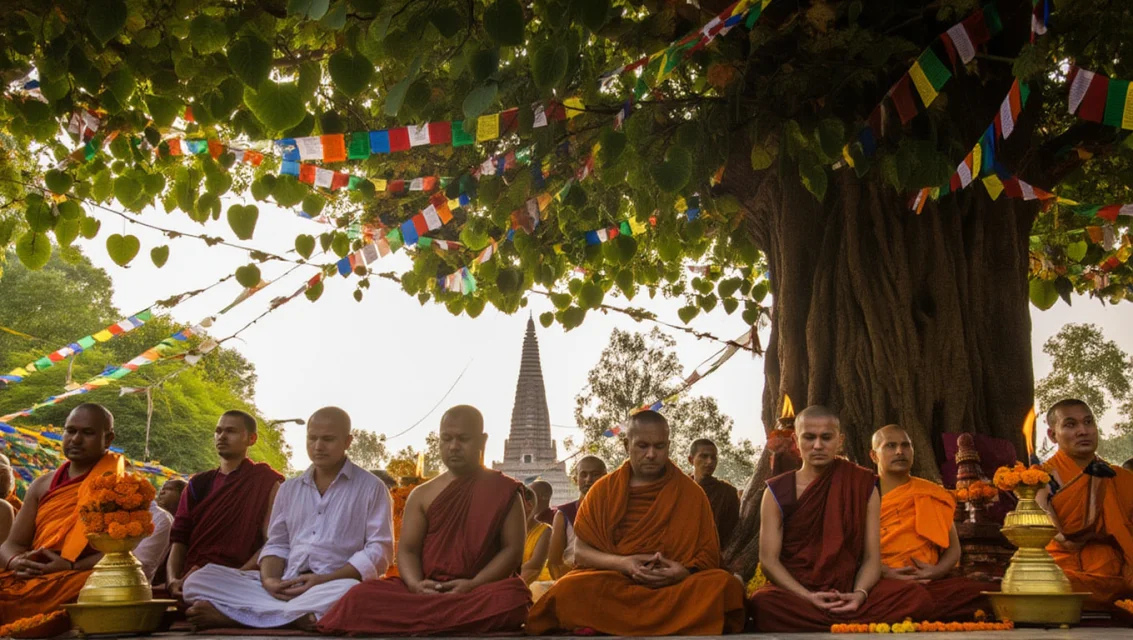
During Buddha Jayanti, Bodh Gaya pulls people into something shared rather than simply receiving them as visitors. Monks in maroon and saffron robes settle into meditation around the grounds. Pilgrims circle the temple slowly, many of them barefoot. Prayer flags move in the breeze above, and incense drifts through air already thick with chanting in Pali, Tibetan, Japanese, and Thai, all of it happening at once, layered and unhurried.
Bodh Gaya's significance does not rest only on what happened 2,500 years ago. The site is still in daily use. Faith is practiced here every morning, not preserved behind barriers or explained in museum captions. People come to pray, not to look at the concept of prayer.
For Bihar, the practice matters in a particular way. The teachings spread everywhere, but the place they came from remained unchanged. Bodh Gaya is still here, still functioning, still drawing the people those teachings shaped.
The Rituals and Observances of Buddha Jayanti in Bihar
Buddha Jayanti in Bihar unfolds through rituals that are unhurried and inclusive. They move at the pace of devotion rather than a schedule.
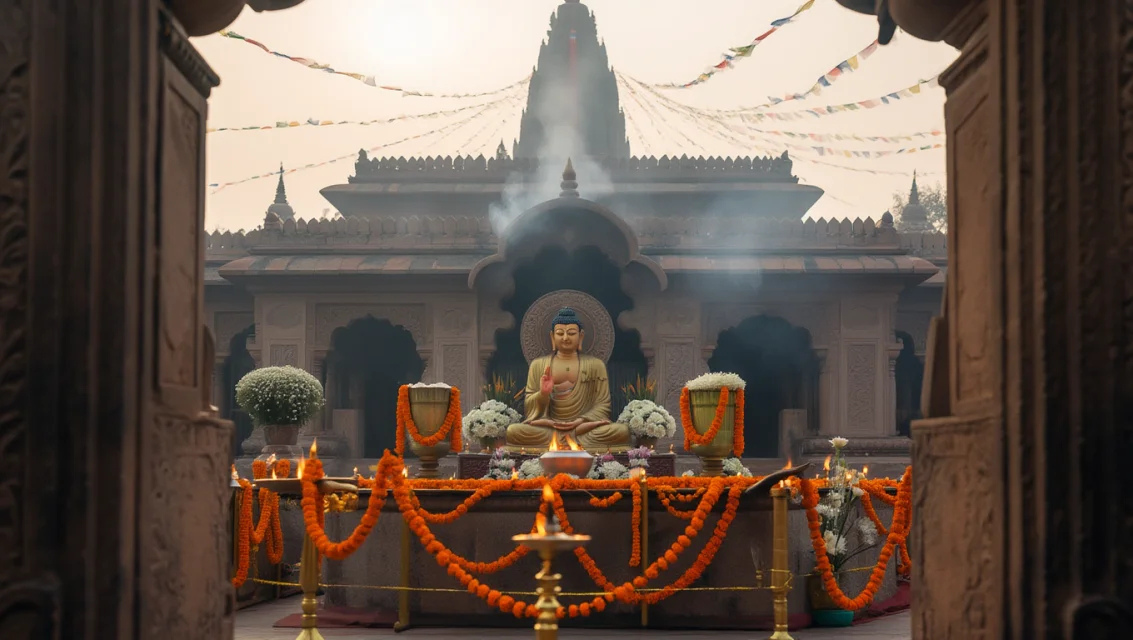
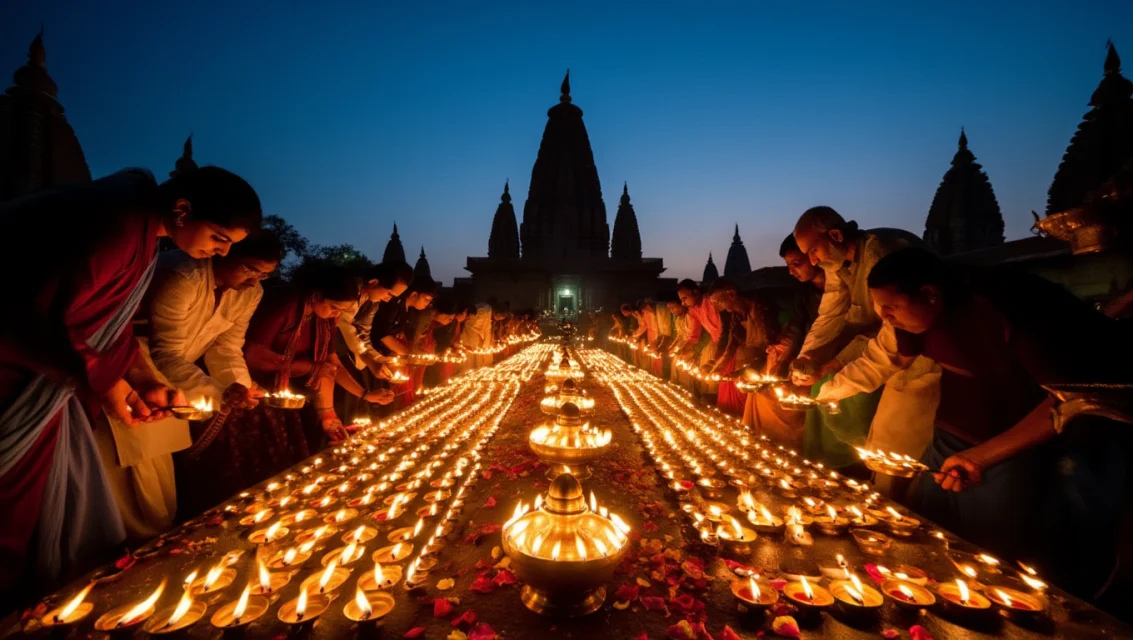
The day begins before dawn. Devotees gather at the Mahabodhi Temple to offer prayers, flowers, and oil lamps. The Bodhi Tree is bathed in water and milk as an act of purification and gratitude. Monks recite sutras while laypeople join in collective meditation sessions.
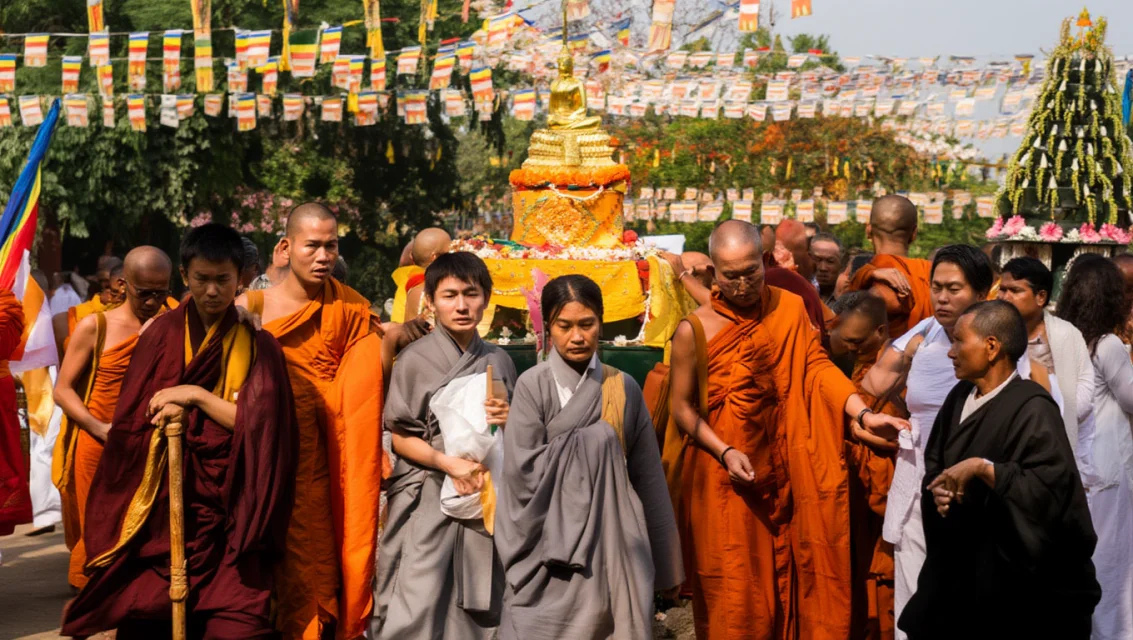
Processions move through Bodh Gaya carrying images of the Buddha, accompanied by chanting and music. Anyone who wants to walk alongside is welcome to. The processions belong to whoever shows up with honest intent.
Throughout the day, Dhamma talks are held where scholars and monks discuss Buddhist teachings. Sanghadana, the offering of food and essentials to monks, is widely practiced. Many pilgrims also release caged birds or animals, a gesture tied to the Buddhist principle of compassion and freedom from suffering.
None of these rituals require credentials or prior knowledge. They ask for presence and a certain willingness to slow down.
International Participation: Bihar as a Meeting Ground for Global Buddhism
What sets Buddha Jayanti in Bihar apart from celebrations elsewhere is how naturally the international dimension sits alongside local devotion.
Pilgrims arrive from countries where Buddhism is the majority faith: Thailand, Myanmar, Sri Lanka, Japan, South Korea, Bhutan, and Tibet. They come not as delegates or official representatives but as individuals looking to stand at the place where their faith began.
Monasteries built by different Buddhist nations surround Bodh Gaya: Thai, Japanese, Tibetan, Burmese, Chinese, and Vietnamese.
Each reflects the architectural and devotional character of its home country. During Buddha Jayanti, their doors open for prayers, meals, and cultural programs, and the result is something genuinely uncommon. Dozens of languages are audible within a small radius. Practices from traditions that rarely overlap find themselves adjacent. The variety does not pull things apart. It adds texture to something that holds.
For travelers, watching this gathering offers a perspective rarely found elsewhere: a local place functioning as a global anchor and the diversity it draws strengthening rather than complicating what people come here for.
How Buddha Jayanti Reflects Bihar's Spiritual Legacy
Bihar's spiritual legacy is not a single thread. It is layered and accumulated over a very long time.
Jainism found deep roots here: Mahavira, the 24th Tirthankara, was born in Vaishali. Sufi and Bhakti movements followed later and left their own marks. Over centuries, Bihar became a place that attracted people with serious questions and gave them enough space and tradition to work toward answers. Many of those answers went on to shape the world outside Bihar's borders.
Buddha Jayanti does not push any of that aside. Hindu devotees visit Bodh Gaya alongside Buddhists. Local communities join the celebrations carrying their own connection to the history, not as guests at someone else's occasion but as people with a stake in what is being remembered.
Bihar does not present one tradition as the answer and ask others to stand back. Multiple truths have coexisted here for a long time, and that is part of what makes the state genuinely worth understanding.
For travellers, the practical takeaway is this: the spirituality you encounter in Bihar is not guarded or gatekept. It is practiced openly, and it has been practiced that way for a very long time.
Buddha Jayanti Through the Eyes of Local Communities
For people living in Bodh Gaya and the villages around it, Buddha Jayanti is not an occasion that arrives from outside. It is part of the year's rhythm, as expected and as personal as anything else in the calendar.
Many families here have been connected to the temple and pilgrimage economy for generations. When the festival comes, the town fills, guesthouses get busy, and shops and eateries see their busiest weeks of the year. But the commercial activity runs alongside something more personal. Many of these same families attend prayers, bring flowers, and take part in rituals that hold meaning for them quite separately from the income the season brings.
Children grow up watching the processions. Elderly residents carry decades of Jayanti memories. For them it is not an event with a start and end time. It is simply what happens at this time of year, as reliable and as personal as anything else in their lives.
This is worth holding onto when you visit. Sacred sites are not only pilgrimage destinations. They are home to people whose lives are shaped by them daily.
The Challenges of Preserving Bihar's Buddhist Heritage
Despite its significance, Bihar's Buddhist heritage is under real pressure.
Infrastructure around Bodh Gaya has not kept pace with the growing number of visitors. When the festival season peaks, the town gets congested. Waste management becomes a visible problem. The pressure on local water, roads, and services is felt. The Mahabodhi Temple, while well-maintained, sits within a complicated web of religious, political, and administrative oversight that sometimes slows straightforward preservation work.
There is also the harder question of whether tourism might gradually crowd out the reverence that makes the place worth visiting in the first place. As numbers grow, that balance has to be actively maintained rather than assumed.
For travelers, engaging honestly with this means keeping one thing clear: Bodh Gaya is a place of worship first and a tourist site second.
Why Understanding Buddha Jayanti Changes the Way You Travel Bihar
Buddha Jayanti asks for a particular kind of attention. It pulls you toward participation rather than observation, toward stillness rather than coverage.
Just as food reveals how a place sustains itself and crafts reveal how it remembers, Buddha Jayanti shows how Bihar holds faith: not as ideology announced from a podium, but as something practiced quietly, returned to each year, and shared without conditions.
In Bihar, spirituality is not arranged for visitors. It is simply ongoing, and travellers are welcome to step into it respectfully and without fanfare.
That openness is what makes this kind of travel stay with you rather than fade into a list of places visited.
Why Choose Folk Experience to Travel Bihar
Traveling in Bihar is not about working through a list of destinations. It is about understanding people, practices, and the texture of daily life. That is where a folk-led approach makes a real difference.
Because culture is lived, not staged.
Folk experiences take you past temple boundaries and into communities where Buddhist traditions sit alongside daily life, not arranged for an outside audience.
Because context changes what you see.
Knowing what Buddha Jayanti actually means in Bihar gives you something that monument visits alone cannot: a genuine sense of why this place matters to the people who hold it.
Because it supports the people who carry this heritage.
Folk-led travel connects you directly with guides and families who have lived alongside these sacred sites for generations. The knowledge you receive comes from people who belong to the place, not agencies coordinating from elsewhere.
Because presence matters more than photographs.
Rather than moving quickly between sites, you engage with rituals, conversations, and the kind of moments that do not photograph well but stay with you long after you leave.
Because travel should slow you down.
Folk experiences build time for looking carefully, sitting with things, and treating sacred spaces with the respect they deserve rather than the efficiency that itineraries tend to demand.
Because what you understand, you treat differently.
When you travel through living faith and history rather than past it, Bihar stops being a destination and starts being something you carry forward.
Choosing a folk experience means choosing depth over distance, people over places, and meaning over movement.
Bihar does not give itself up quickly. It opens gradually through conversation, through returning to the same ghat twice, and through a moment of stillness at dawn. That is when it becomes something more than a place you visited.
Three things cannot be long hidden: the sun, the moon, and the truth.