Chhath Puja: Rivers, Rituals, and Collective Discipline in Bihar
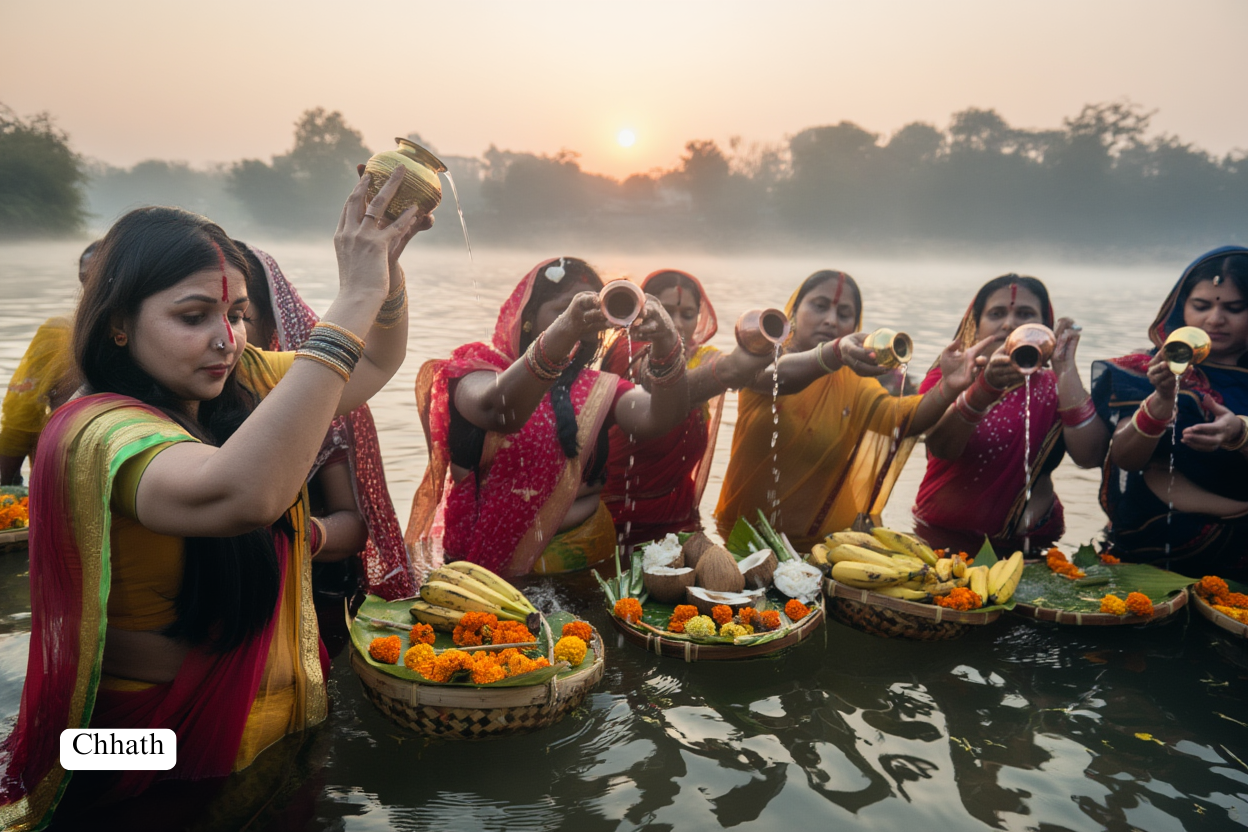
In Bihar, Chhath Puja does not arrive with announcements or decorations. It arrives with preparation. Homes are cleaned days in advance, daily routines slow down, and conversations quietly shift toward discipline and restraint. According to administrative estimates and cultura...
Meet your AI Story Guide
Turn this field note into a one-minute brief with the essential places, people, and traditions.
Why Chhath Puja Matters to Bihar’s Cultural Identity
At the heart of Bihar's cultural life, Chhath Puja holds a place unlike any other festival. No idols stand at the center of its practice. No priests mediate the prayers. No temple interior governs how the ritual unfolds.
The devotee faces the sun and the river directly, without intermediary. Rich or poor, high-caste or low, men and women alike follow the same discipline. That kind of equality isn't just symbolic on paper. It is lived out in shared hunger, shared space, and shared labour.
Chhath, more than any other practice, has slowly shaped what Bihar expects from itself. Restraint over display. Sincerity over ceremony. Those who observe it aren't just fulfilling a religious obligation. They're inhabiting a framework that quietly governs how people behave, relate, and hold each other accountable.
Rivers and Ghats: The Living Centre of Chhath Puja
Rivers in Chhath Puja aren't scenery. They're the ritual itself. Devotees across Bihar step into the water at sunrise and sunset to offer prayers, wading into whatever river, pond, or water body their neighborhood considers sacred. The major rivers tied to Chhath observances include:
Ganga: The ceremonial backbone of Chhath in Bihar. Crowds gather at its banks to offer arghya as the sun climbs and dips.
Kosi: Reverence and flood both run through this river's history. People who observe Chhath on the Kosi know what it means to live beside water that doesn't stay put, and the faith that endures alongside it.
Gandak: Chhath on the Gandak, in north Bihar, is community discipline made visible. People gather beside the moving water and hold the ritual together the way it's always been held.
Bagmati: Tied to village ponds and local tributaries, the Bagmati connects Chhath to the small rhythms of seasonal village life.
Son: Quieter ghats, community-managed banks, and devotion that unfolds without fanfare, that's Chhath on the Son in southern Bihar.
Punpun: Close to Patna but deeply local, the Punpun draws neighborhood gatherings for Chhath rituals that feel personal and grounded.
And then there are all the ponds, lakes, and temporary water bodies, in every town and village, that become sacred for these few days.
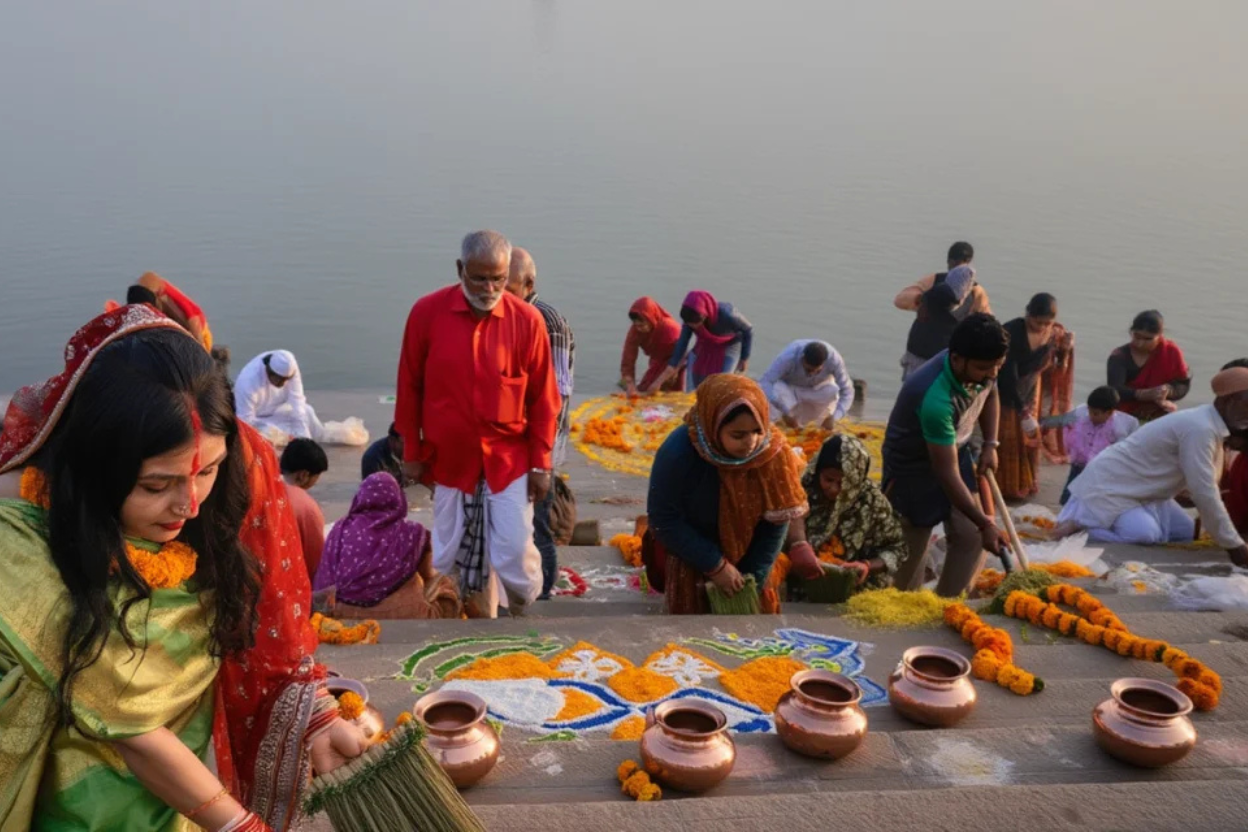
Nobody hires a construction crew to set up the ghats. People do it themselves: bamboo railings go up, paths get cleared, steps get patched, all so that the elderly and the young can reach the water without difficulty.
In Patna and other urban centres, thousands of residents turn up without being asked in the weeks before Chhath, scrubbing riverbanks and neighborhood ponds, cleaning stretches of the Ganga and its tributaries. Not for wages. Not because anyone called a meeting. But because clean water is the prerequisite for everything the festival requires. That cleaning is part of the ritual itself.
Chhath Puja draws no line between faith and environmental responsibility. Clean water here isn't metaphor. It's the condition without which the whole practice falls apart.

The Discipline of Ritual: Structure and Precision
Chhath Puja runs on structure. Its multi-day sequence tracks closely with solar cycles, and timing matters more than appearance. Getting the ritual right takes precedence over making it look a certain way. Each phase has its moment:
Ritual bathing and preparation, marking both physical and symbolic purification
Dietary restraint and fasting, often stretching past 36 hours
Evening offerings to the setting sun, done collectively at riverbanks or water bodies
Morning offerings to the rising sun, closing out the ritual cycle
Structure does something specific here. It turns devotion into a kind of daily practice, where faith shows up through consistency and endurance, not through performance or visual splendor.
No committee enforces this discipline. No institution tracks compliance. What holds it together is something older: knowledge carried in families, corrected gently when it slips, demonstrated by example rather than taught from a manual. You learn Chhath by watching, year after year, until it's yours.
Discipline in Chhath isn't commanded. It's passed on.
Fasting, Routine, and the Body in Chhath
Chhath is hard on the body. Fasts run 36 hours or longer, and many devotees go without water through that entire stretch. Around the observing devotee, daily household life quietly reorganizes itself. Prayer schedules change the morning routine. Food preparation shifts. Rest becomes something everyone in the household accommodates together.
Nobody has to be asked. Families and neighbors just adjust. One person's act of devotion pulls the whole household in, and the community holds it with them. Endurance here doesn't go unnoticed. It gets respected and quietly protected by the people nearby.
Collective Worship and Community Participation
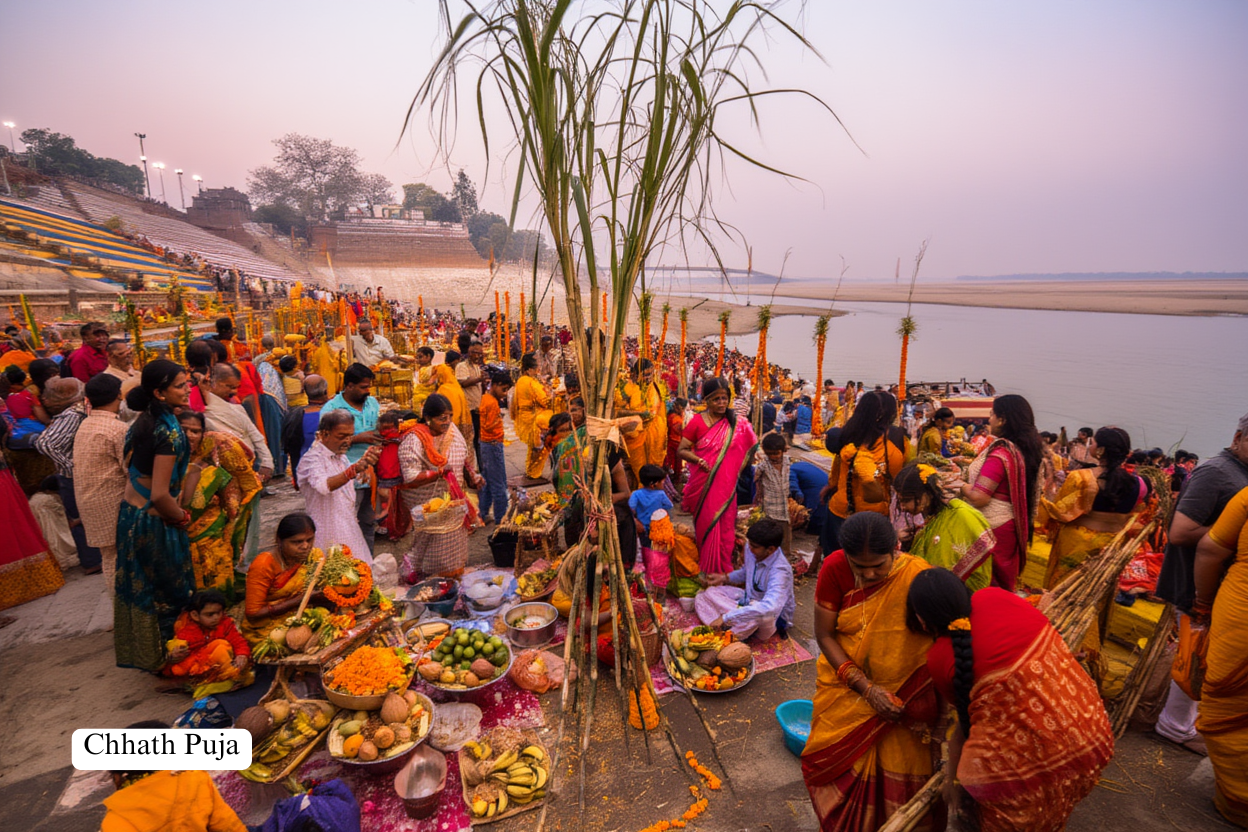
There are no stage organizers for Chhath Puja. No event management company. No roped-off audience zones. What happens instead is communities figuring it out on their own, guiding crowds, making room, keeping an eye on elders, and making sure first-time observers find their footing.
Researchers studying eastern India's ritual traditions have consistently noted that Chhath knowledge doesn't travel through institutions or written guides. It moves person to person, generation to generation, through participation. Adults bring children. Elders show, rather than tell. The festival keeps going because people live it, not because anyone curates it.
Chhath Through the Women’s Lens
Women are at the centre of Chhath Puja, not in a symbolic sense but in a practical one. They organize the fasting rituals, prepare the offerings, and pass down songs and practices to the next generation. The labour involved, both physical and emotional, is significant. And it gets carried with a kind of quiet authority that doesn't call attention to itself.
For many women, Chhath opens up genuine space for agency. Leadership, endurance, and devotion sit side by side here without needing a title or formal recognition. Year by year, that's how Bihar's cultural thread stays alive.
Chhath Beyond Bihar: Migration and Memory
Chhath Puja has followed Bihar's people wherever migration has taken them. In Delhi, Mumbai, Pune, and cities well beyond Bihar's borders, communities recreate the ritual beside lakes, artificial water bodies, and temporary ghats. The surroundings may be unfamiliar, but the discipline itself doesn't bend.
That consistency says something important about what Chhath actually is. It's a cultural anchor. It gives people a way to stay connected to home through practice, not just through memory or nostalgia. Even far from Bihar, the routine of Chhath makes a place feel familiar again.
Why Chhath Puja Is Central to Bihar’s Folk and Social Life
Chhath hasn't softened with modernity because it was never designed for an audience. What keeps it going is plain enough: collective discipline, ecological responsibility, and equality that people actually practice rather than just declare. Those aren't aspirations. They're what Bihar's social life has run on for generations, and Chhath is where they get exercised.
It doesn't adapt to what's popular. It asks for commitment. And that's the reason it holds its place at the heart of Bihar's folk culture without needing to reinvent itself every few years.
Why Understanding Chhath Changes the Way You Travel Bihar
When you understand Chhath Puja, travel in Bihar slows down. You stop interrupting and start observing. Presence takes over from consumption. You find yourself moving by the logic of seasons and rituals rather than itineraries.
The way crafts explain how Bihar makes things, Chhath explains how Bihar believes, holds itself to account, and belongs to something larger.
Faith in Bihar isn't a performance staged for visitors. It's practiced together, at the river's edge.
Why Choose Folk Experience to Travel Bihar
Travelling in Bihar isn't a matter of ticking destinations. It's about getting close enough to people, practices, and everyday life to actually understand something. That's the difference a folk-led approach makes.
Folk Experience lets you travel Bihar differently:
Because culture is lived, not staged: Folk experiences put you inside real communities where Chhath is practised as part of life, not as a show.
Because rituals teach more than monuments: Sitting with Chhath gives you deeper access to Bihar's social values than any monument or museum could.
Because it respects local rhythms: Folk-led travel follows seasons, rivers, and community calendars, not tourism packages.
Because stories stay with you longer than images: You leave with real understanding, not just photographs.
Because travel should slow you down: Folk experiences build in patience, discipline, and the kind of presence that changes how you see things.
Because understanding builds respect: Travel through rituals, food, and traditions doesn't just show you Bihar. It helps you start to understand it.
Choosing a folk experience means choosing depth over distance, people over places, meaning over movement.
That's how Bihar reveals itself: not loudly, but steadily, standing together at the river's edge.
keep wandering