Dhinga Ganwar Festival of Jodhpur: Honouring Women's Power and Playful Tradition
So dusk falls over Jodhpur's blue city, and something pretty wild starts happening. The air suddenly gets filled with drums beating, people laughing everywhere, these vibrant saris rustling all around. Women hit the streets, not standing on the sidelines watching, but right sm...
Meet your AI Story Guide
Turn this field note into a one-minute brief with the essential places, people, and traditions.
What is Dhinga Ganwar?
Dhinga Ganwar is honestly one of the most extraordinary celebrations you'll find in Rajasthan. It's basically this extension of the Gangaur Festival, which honors Mata Gauri, Lord Shiva's consort. Gangaur focuses on marital devotion and all that. But Dhinga Ganwar? It brings this whole different twist, celebrating women's agency, individuality, and joy in the most playful form imaginable.
"Dhinga" literally translates to fun through deception. "Ganwar" (sometimes people say Gavar) refers to Goddess Gavar Mata, who's supposedly another form of Parvati. So you've got this festival that becomes a joyous expression of female power, mixing reverence with a healthy dose of rebellion.
There's this story locals tell about a widow who had a dream. Lord Shiva appeared and told her to worship his other wife, Goddess Ganwar, instead of Gangaur.
She actually followed through with what the vision showed her. That gave birth to a totally new tradition, one that balances spirituality with spirited celebration.
Another tale from Jodhpur's folk history involves something pretty miraculous from 1970. Workers were doing an excavation at this place called Haddiyon Ka Chowk, and they dug up an idol of Gavar Mata.
After that discovery, weird stuff started happening. People experienced these divine signs, doors mysteriously opening by themselves, the goddess's image showing up across different homes.
The women of Jodhpur took all this as a divine calling, to celebrate Gavar Mata and their own strength through this vibrant festival.
Rituals and Preparations: Sixteen Days of Devotion
The festival plays out over sixteen days. It basically mirrors Gangaur's whole structure, and everything builds up to this absolutely spectacular night procession. The number 16 carries some seriously deep symbolic value here, it represents solah shringar (those sixteen adornments women traditionally wear) and moon phases, tying together beauty, fertility, and faith.
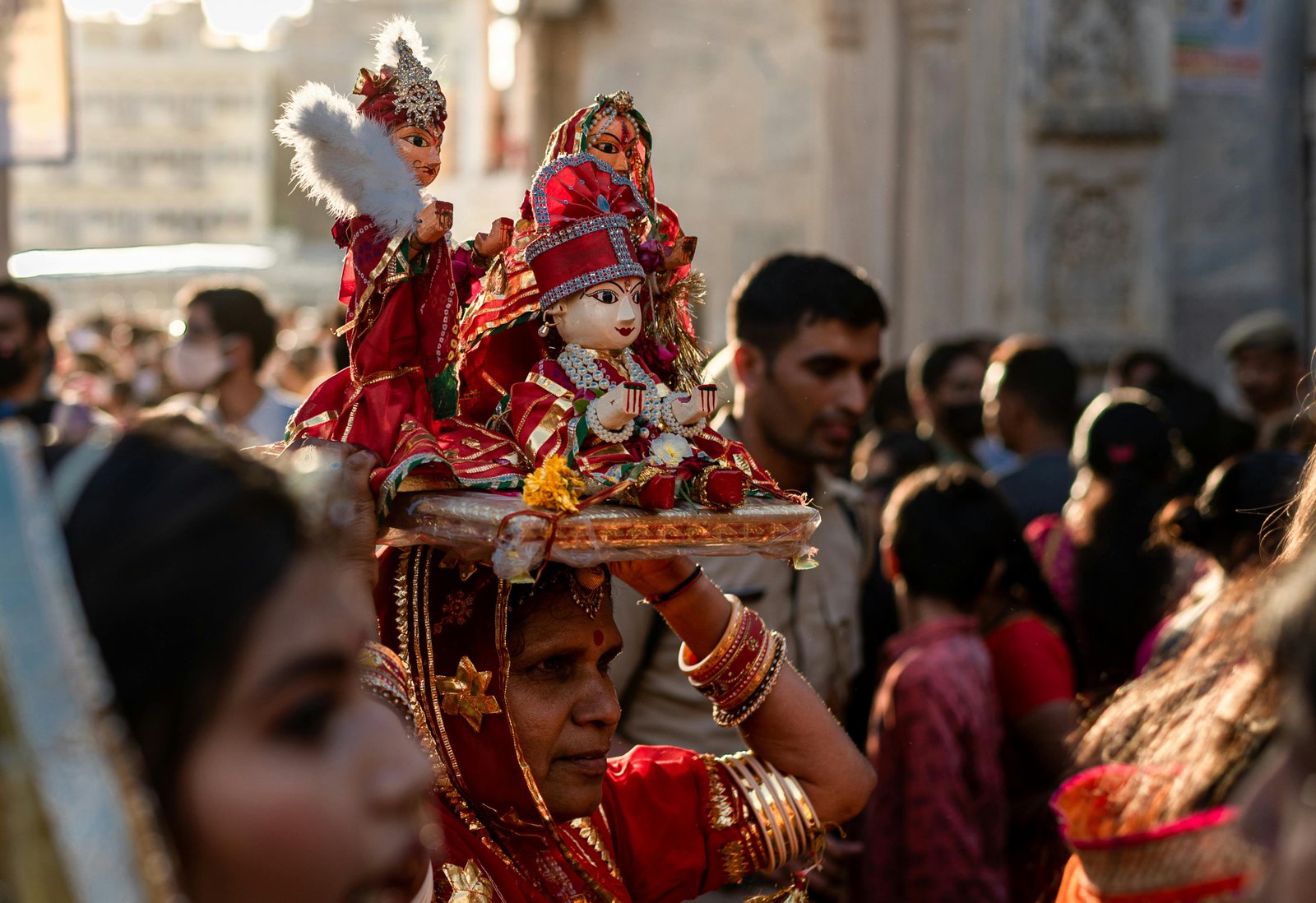
Before festivities get rolling, women paint images of Gavar Mata, Lord Shiva, Lord Ganesha, the sun, moon, plus sacred motifs like mice and women carrying earthen pots. They use natural colors, painting right on walls and courtyards. Then the Dhinga Ganwar idols get dressed up in gold jewelry, embroidered clothes, delicate veils, the works.
Sixteen women worship together, sharing rituals, songs, food, this practice strengthens sisterhood and keeps traditions breathing. On the final day, eleven idols of Gavar Mata get positioned across Jodhpur's old city. Each one marks a sacred stop during the night's festivities.
In every courtyard, a new goddess gets born, through laughter, through color, through the courage women have to celebrate themselves.
When the Night Falls: The Festival Comes Alive
Twilight deepens, and Jodhpur's narrow lanes just start shimmering with anticipation. The city, painted in all these shades of blue, becomes this living artwork of movement and sound. Women dressed in traditional stuff, ghagras, odhnis, ornate jewelry, kick off their procession, balancing idols right on their heads.
The celebration's real heartbeat? That's Toorji Ka Jhalra, this centuries-old stepwell some queen built way back when. It symbolizes the historical role women played managing water and life out in the harsh desert.
On Dhinga Ganwar night, the stepwell transforms completely into a sacred stage. Its platforms get filled with over a hundred women dancing in circles around the drummers. The dhol's rhythm bounces off stone walls, mixing devotion with pure exhilaration.
The air gets super thick with music, chants, laughter. Tourists and locals crowd around watching, but not as passive onlookers. They get drawn right into the crowd's energy. For that single night, Jodhpur stops being just some city of forts and kings. It becomes a city that women rule.
Do Women Really Hit Men? The Playful Power of Dhinga Ganwar
Yep, and that's honestly part of what makes this festival so damn unforgettable.
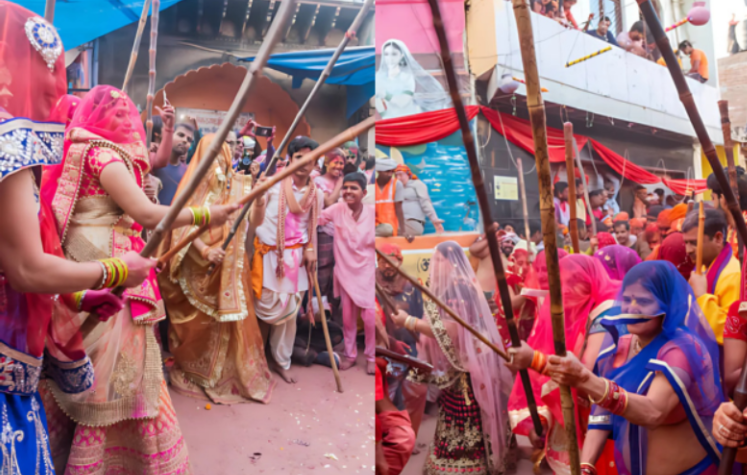
During Dhinga Ganwar, women grab lathis (sticks) and roam the streets in groups. Sometimes they dress up as gods, maharajas, Bollywood stars, even cricketers.
What's their mission? Playfully chase down and "hit" any unmarried men who dare cross their path. But relax, it's all good-spirited fun! Legend even says any unmarried guy who gets struck by a woman during Dhinga Ganwar will end up married within the year.
This whole act, while funny and symbolic, carries deeper cultural messaging, a playful power flip. It gives women this moment to express strength, joy, independence within a patriarchal setup, turning tradition completely upside down, quite literally.
In Jodhpur, even the sticks end up singing, they sing about freedom, laughter, and women who fear nothing.
Symbols and Meanings: Between Myth and Modernity
Dig beneath all the color and chaos, and you'll find some really profound symbolism. Dhinga Ganwar goes way beyond just being a night of partying. It reflects Rajasthan's unique way of merging faith with freedom.
Gavar Mata stands for courage, transformation, feminine energy.
The lathi symbolizes self-defense, strength, assertion, reminding everyone that devotion doesn't automatically equal submission.
Costumes let women embody all sorts of identities, from gods to rulers to pop culture icons. Shows that femininity itself is multifaceted, not one-dimensional.
Culturally speaking, Dhinga Ganwar breaks barriers without actually smashing tradition. It proves empowerment can be festive, that joy can work as rebellion, laughter can equal liberation.
A Celebration of Women, for Women
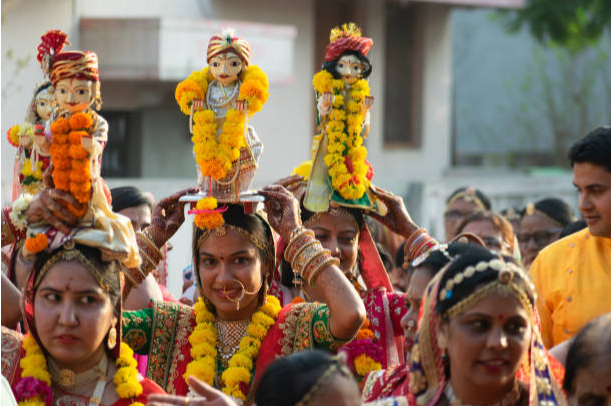
What really makes Dhinga Ganwar remarkable is how inclusive it is. Married women, widows, young girls, they all participate together, no hierarchy, no hesitation. It's one of the rare festivals in India where widows actively get included in rituals. That reinforces this idea that womanhood itself, not marital status, is what's sacred here.
Festival preparation becomes this massive communal effort. Jewelry gets shared around, songs get practiced together, and every single woman, regardless of age or background, becomes part of the city's heartbeat.
For visitors, it's a sight that stays with you forever. A celebration that captures everything about Rajasthan's spirit: proud, poetic, bursting with life.
Experience Dhinga Ganwar with Folk Experience
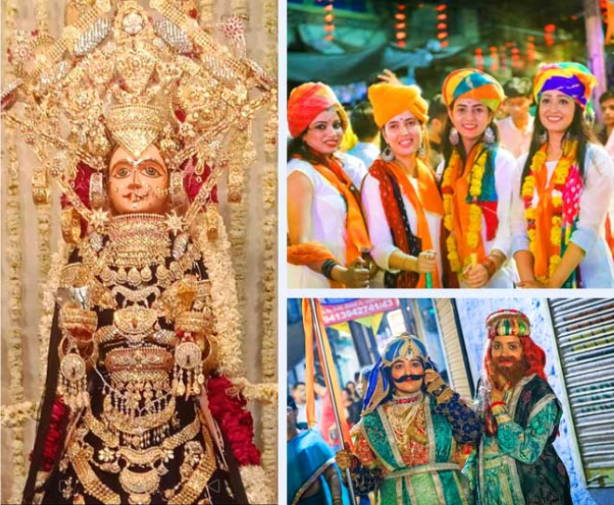
Witnessing Dhinga Ganwar means catching Rajasthan at its absolute most alive, when laughter literally transforms into devotion, and courage morphs into celebration. Walk alongside Jodhpur's women as they completely take over streets beneath moonlit sky, their bangles jingling perfectly in rhythm with drums. Feel that pulse at Toorji Ka Jhalra stepwell, where generations of women have gathered to dance, pray, and reclaim their stories through song.
At Folk Experience, we skip right past the surface level. We bring you into courtyards where legends get retold, where empowerment gets expressed not through boring speeches but through pure joy. Our journeys connect you directly with the women keeping this festival breathing, artisans crafting its symbols, communities embodying its fearless spirit.
Every experience gets built on respect, sustainability, authentic storytelling. You won't just witness some festival. You'll actually understand what it means for Rajasthan's women to celebrate faith, strength, and freedom simultaneously.
Travel with Folk Experience, and you'll discover a Rajasthan singing about resilience. Every beat of the dhol echoes some woman's laughter. Every color splashed across the night sky tells a story about her power.
Travel with Folk Experience, and discover Rajasthan not as some random spectator, but as a storyteller, someone who carries its rhythm long after those drums fall silent.
Travel with Folk Experience, and discover Rajasthan not as a spectator, but as a storyteller ,one who carries its rhythm long after the drums fall silent.