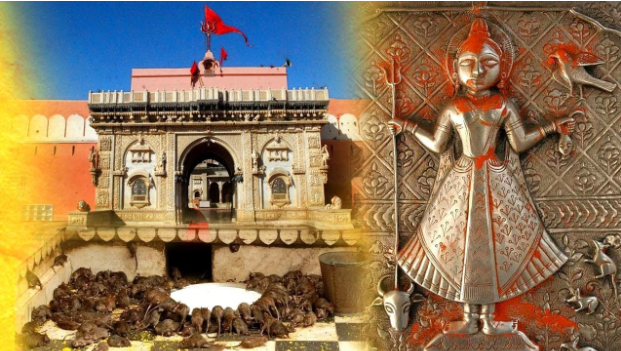
Discover the Mystical Karni Mata Temple: Home to Sacred Rats
Let's get the weird part out of the way first. There's a temple in Rajasthan where rats are sacred. Not a few rats. Thousands of them. They run across the marble floors, drink from communal milk bowls, and crawl over pilgrims' feet, and the pilgrims are happy about it. Some of...
Meet your AI Story Guide
Turn this field note into a one-minute brief with the essential places, people, and traditions.
The Divine Legend of Karni Mata
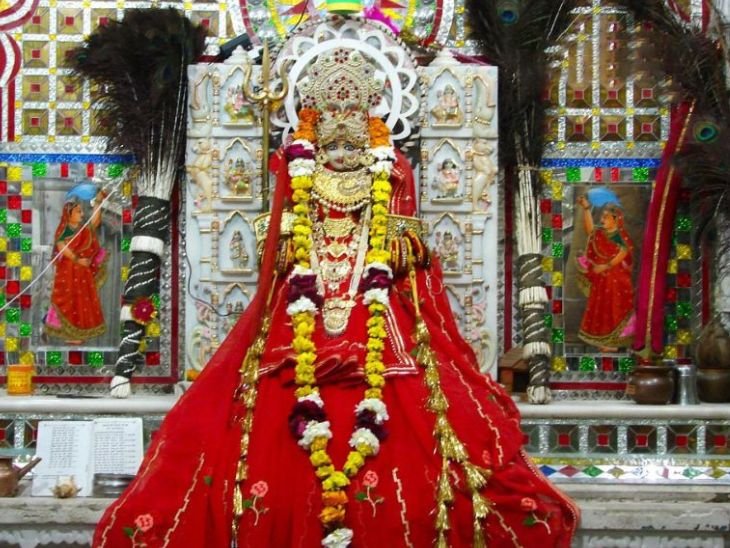
She was born in Ridhubai in 1387 CE in a village called Suwap near Phalodi in northwestern Rajasthan. Her parents were Meha Ji Kiniya and Adha Ji Mandha, both from the Charan community. And from the very start, things were unusual. The story goes that she spoke moments after being born. Not cried but spoke. Declared her divine purpose right there.
Her birth was supposed to fulfil an old prophecy that Goddess Durga would take human form to guide and protect her devotees. And even as a child, Karni Mata wasn't someone you'd mess with. There's a story where her aunt mocked the birth of another girl in the family. Karni Mata fused the woman's fingers together. Divine reminder, delivered early.
She got married at 27 to a man named Depoji Charan from Sathika village. But married life wasn't in the cards. When her husband tried to consummate the marriage, he found a lion sitting beside her, the sacred vehicle of the goddess. That ended the discussion pretty quickly. He understood. She wasn't meant for that kind of life. Karni Mata arranged for him to marry her younger sister, Gulab, and then devoted herself entirely to spiritual work and serving the people around her.
What followed was a life full of miracles: curing sickness, blessing childless couples with children, and shielding villages from drought and disease. People in the region believed she could command nature. And her combination of fierce power and deep compassion earned her a permanent place in Rajasthan's Shakti worship tradition.
The Legend of the Rats: Life, Death, and Rebirth
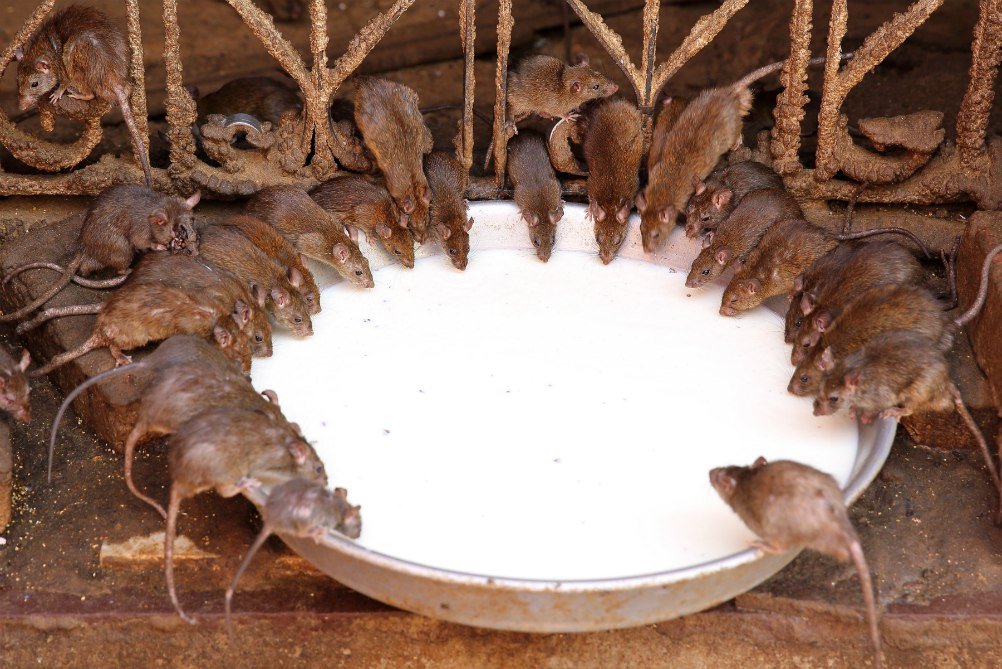
Now, let's discuss the topic that everyone is curious about. The rats.
Here's the story. Karni Mata's stepson Laxman drowned while trying to drink water from a pond. She was devastated. She went to Yama, the god of death, and demanded that he bring Laxman back to life. Yama said no. The cycle of life and death can't be broken, he told her. Rules are rules.
Karni Mata didn't accept that. She made a declaration that still defines this temple today: from now on, none of her followers would pass into Yama's realm after death. Instead, they'd be reborn as rats. They would live inside her temple, protected and cared for, until it was time for their next human birth.
That's how it started. And that's why, today, over 25,000 black rats live inside the temple. They're called kabas, and they're treated not as pests but as family. Priests feed them. Devotees revere them. Among the thousands of black kabas, there are a handful of rare white ones believed to be manifestations of Karni Mata herself and her sons. Spotting a white rat is considered incredibly lucky. People will wait for hours for a glimpse.
Every day, large bowls of milk, grains, and sweets are set out for the rats. If a kaba runs over your feet, that's considered a blessing. And the prasad, the holy food that the rats have nibbled on, devotees eat willingly. Gratefully, even. They believe that something divine has touched it.
Here's the part that genuinely surprises people: despite 25,000 rats living in a confined space, there has never been a recorded disease outbreak at this temple. Not even during the plague of 1994, which hit other parts of Rajasthan. Scientists have studied this phenomenon. Devotees have their own explanation for Karni Mata's protection. Take your pick.
The Temple: Architecture and Atmosphere
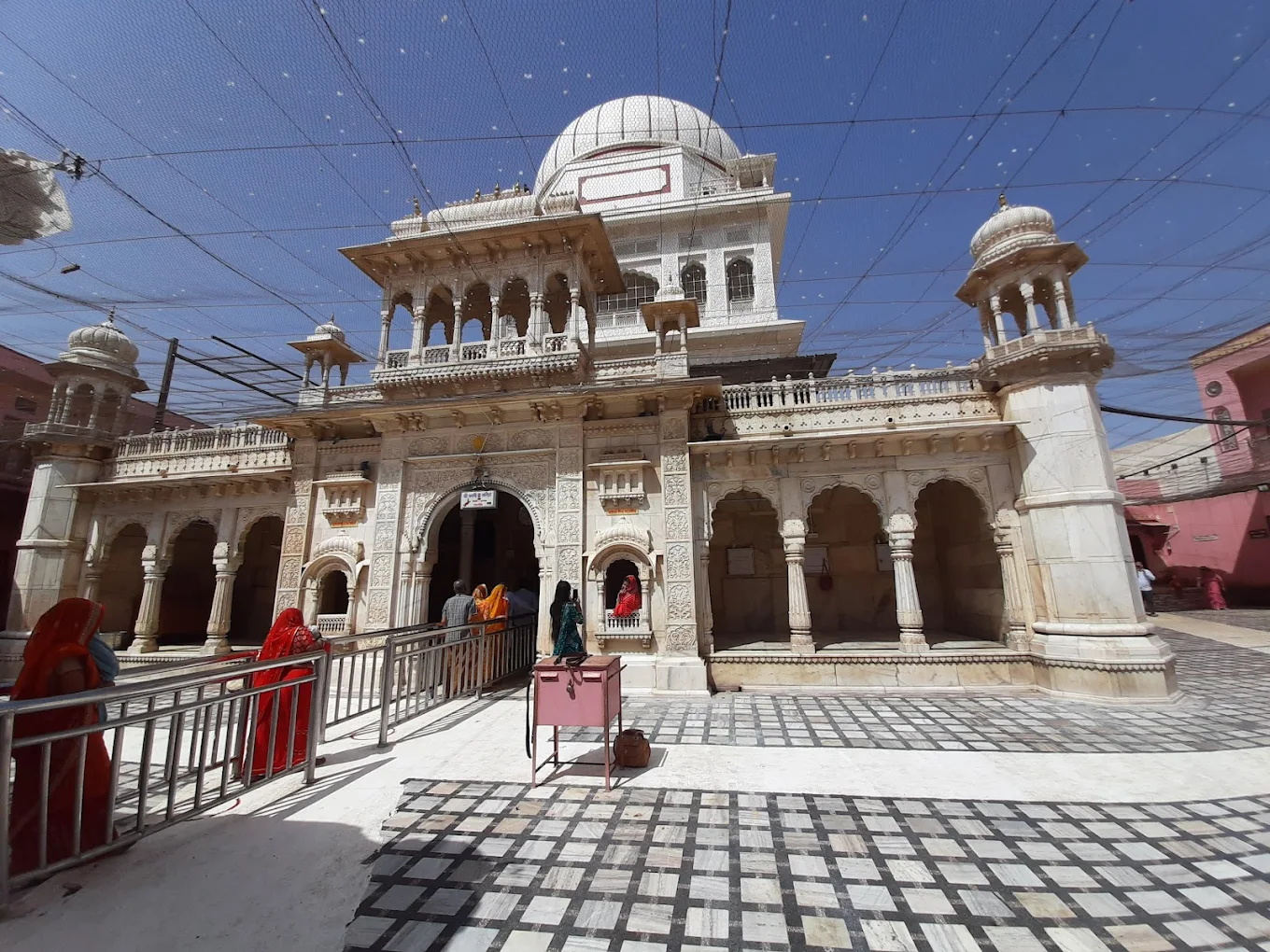
The temple itself was built in the early 20th century under Maharaja Ganga Singh of Bikaner. It's crafted from marble and silver, and it's genuinely beautiful, not just spiritually but architecturally.
The main entrance features intricately carved silver panels showing the goddess in different forms, surrounded by celestial motifs. Step inside and you'll discover the sanctum, the garbhagriha, where Karni Mata's idol sits adorned with silver and garlands. Rats scurry freely around her feet. Around the idol. Across the floor. Everywhere.
People describe the atmosphere in different ways. Surreal comes up a lot. There's this mix of devotion, curiosity, and a kind of reverence that's challenging to fake. The sound is distinctive too: a constant rustle of tiny feet layered underneath the soft chanting of priests. You won't hear anything like it anywhere else. Guaranteed.
And despite what you might assume, the temple is remarkably clean. Devotees and caretakers share the work of maintaining it. It's a point of pride for the community, actually, this idea that discipline and devotion go hand in hand.
Rituals and Sacred Offerings
The day starts early here. Really early. At 4 AM, before the sun has any say in the matter, priests perform Mangla Aarti. A conch shell sounds. And then hundreds of rats come out of their burrows to receive the first offerings: milk and sweets.
The evening aarti has a different energy. Flickering diyas throw light across the temple floor while the kabas weave between the flames. Devotees bow, offer grains, and whisper prayers for protection, prosperity, or whatever they've come to carry in their hearts.
The food offered – milk, jaggery, grains, and sweets – becomes prasad once the rats have tasted it. Sharing it isn't just tradition. It's communion. A way of saying that the line between the divine and the living is thinner than we think.
One surprising detail for visitors is that devotees occasionally present liquor to the goddess. It's a ritual representing complete surrender, giving up worldly inhibitions in the presence of divine energy. It's not what you'd expect in a temple, but then again, nothing about it is what you'd expect.
Festivals: When the Goddess Comes Alive
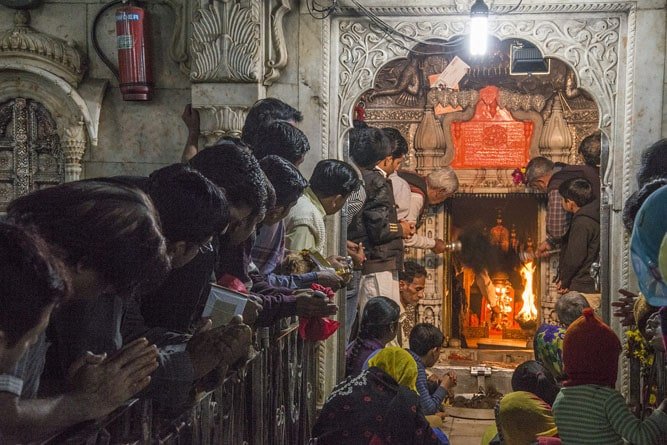
If you want to see Deshnoke at full intensity, come during Navratri. It happens twice a year, March–April and October–November, and for those nine nights, this quiet desert town becomes something entirely different.
Karni Mata's idol gets draped in shimmering silks. Silver ornaments. Garlands everywhere. Lamps line every pathway. Bhajans and ghoomar rhythms in the Charan tradition fill the air from dusk until dawn.
Thousands of devotees do the Paidal Yatra, walking from Bikaner to Deshnoke on foot, through the desert, to offer prayers. For a lot of them, the walk itself is the point. The journey is the offering. When they arrive, dusty and worn out, their expressions are worth more than any photo.
The temple fair during Navratri doubles as a social gathering. People trade, feast, and catch up with family they haven't seen in months. Caste, community, creed – it all fades into the background when everyone's sitting under the same Rajasthani sky, singing the same songs.
Karni Mata Beyond the Temple
Her influence didn't stop at Deshnoke. Not even close. Karni Mata is woven into Rajasthan's political and military history in a way most visitors don't realise.
She was considered a guardian deity by the Rathore and Rajput clans. Kings sought her blessing before going to war. Rulers sought her for advice, believing she had divine foresight. The fort of Mehrangarh in Jodhpur and the city of Bikaner both have foundation legends that trace back to her blessings.
And this isn't just ancient history. Even now, her blessings are part of major ceremonies across the region: royal functions, village fairs, and community events. She's not just a temple goddess. She belongs to the land itself.
Karni Mata Today: Faith in Modern Times
For tourists and modern travellers, the Karni Mata Temple is one of those places that messes with your assumptions. You show up expecting something strange. And it is strange. But it's also deeply moving in a way you don't see coming.
The temple challenges how you contemplate fear and reverence. It challenges your understanding of what is sacred and what is not. The temple also explores the connection between humans and other forms of life. People arrive intrigued and leave introspective. That's not marketing; that's what actually happens.
There's a humility to how the people of Deshnoke coexist with these creatures. They do not consider themselves superior to the kabas. They see them as part of the same cycle. Same life, different form. And spending time in that worldview, even for a few hours, does something to you, as it encourages a deeper appreciation for the interconnectedness of all life forms and the sacredness often overlooked in daily existence.
Experience the Mystique with Folk Experience
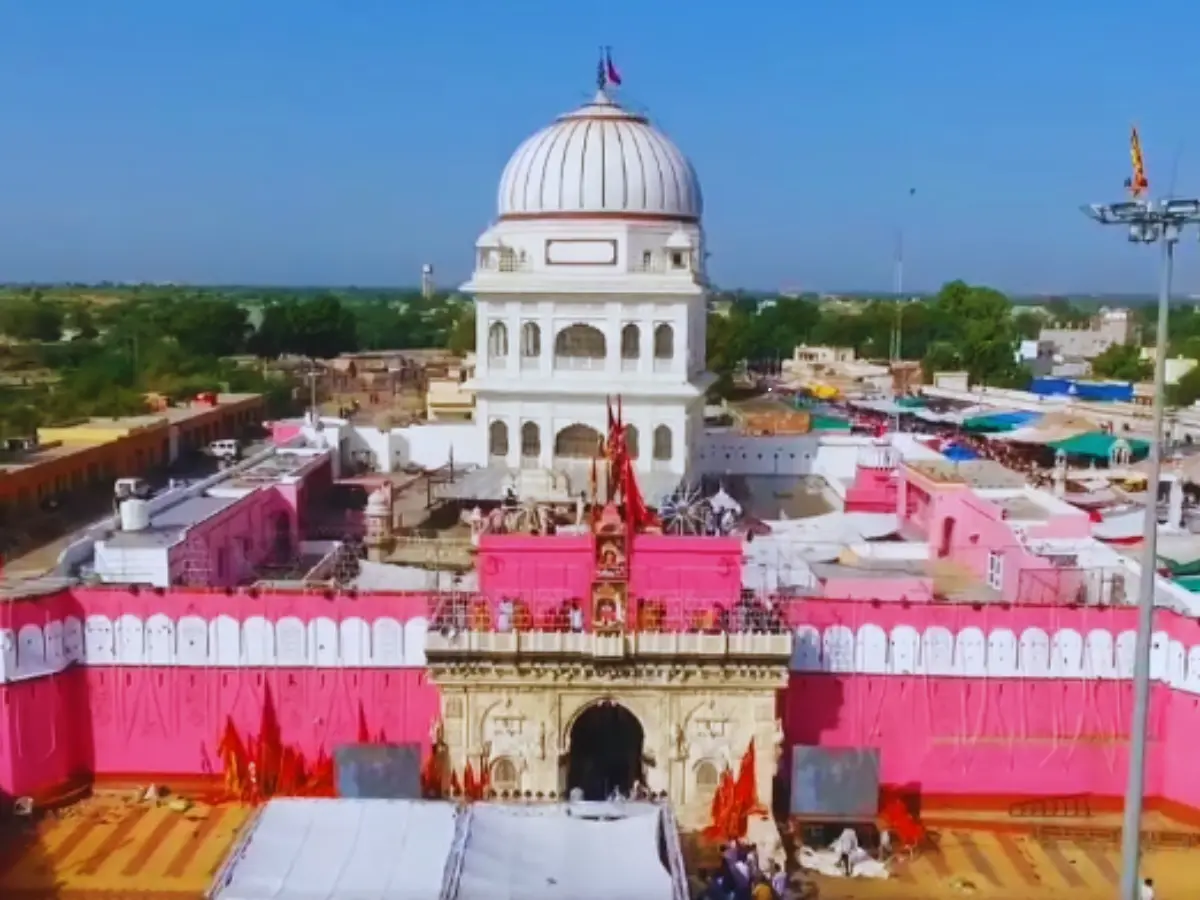
Some things don't translate well through a screen or a guidebook. The Karni Mata Temple is one of them. To understand this place, you must be there barefoot on the marble, with rats brushing past your ankles, incense in your nose, and chanting in your ears.
At Folk Experience, that's precisely the kind of encounter we set up. Not a tour. Not a checklist. A real, unhurried experience with a place that has been holding the same mystery for five centuries.
This is what it looks like: walking barefoot through the temple corridors at dawn with local devotees as the first aarti awakens the kabas. Sitting under the desert skies, Charan storytellers share the oral legends of Karni Mata, not from a script but from their own memory, passed down from their parents. If you time it right, you can witness the Navratri night rituals, where silver lamps and devotional music turn Deshnoke into something that doesn't feel quite real. Participating in our cultural interpretation sessions allows us to explore the ecology, symbolism, and philosophy that explain how this temple functions.
Everything is personal, ethical, and grounded in real relationships with the local community. We don't package sacred spaces into neat little experiences. We open the door and let you step through on your own terms.
Some things are best understood by standing in them and letting them wash over you. Deshnoke is that kind of place.
In Deshnoke, faith whispers through marble halls, and the smallest life becomes divine.