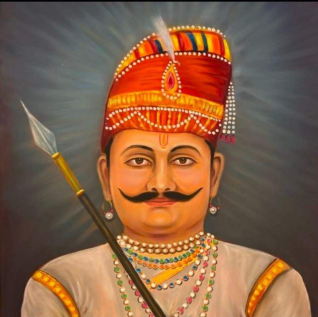
Harbuji Sankhla: The Yogi, the Saint, and the Folk Legend
If you spend enough time in Marwar, the western stretch of Rajasthan where the desert gets serious and the towns get smaller, you'll start hearing certain names repeated. Baba Ramdevji, obviously. Karni Mata. And then, quieter but no less important: Harbuji Sankhla. He doesn't...
Meet your AI Story Guide
Turn this field note into a one-minute brief with the essential places, people, and traditions.
Birth and Early Life
Harbuji was born in Bhundel village, Nagaur district. His father, Maharaja Meha Sankhla, was a ruler of noble lineage, which contributed to their comfortable life. But that comfortable life didn't last. His father was killed in battle. Just like that, young Harbuji was an orphan.
He could have stayed. He could have claimed his inheritance, played the political game, and tried to hold onto power. He didn't. He walked away from it. Left home and wandered into the forests near Chaku, close to Phalodi, what's now the Jodhpur district. Out there, in all that silence and emptiness, he met Baba Ramdevji. The saint of Runicha. That meeting changed everything.
Under the guidance of a guru named Balinath, Harbuji committed himself to an entirely different life. Meditation. Service. Truth. No palace, no army, no title. The prince had only a staff and a purpose.
Folk songs in this region still mark that moment, the prince who put down his sword and picked up a mendicant's staff. It's treated as proof of something people in Rajasthan deeply believe: real strength isn't about conquering. It's about letting go.
The story of the Warrior Saint and the Mandor Struggle is significant.
Timing matters in this story. Harbuji lived during a genuinely turbulent period in Marwar. Mandor, the old capital, was being fought over, and the whole region was unstable. Rao Jodha, the man who would go on to found Jodhpur, was trying to reclaim Mandor and build something new.
Now, Harbuji had given up worldly life. He wasn't in the business of politics anymore. But when Jodha came to him, struggling, under-resourced, looking for any kind of support, Harbuji didn't turn him away. He opened his doors. Fed Jodha's followers. Sheltered them. Blessed them.
And this wasn't a small gesture. According to local accounts, Harbuji's blessings gave Jodha's forces a kind of confidence and conviction that tipped things in their favour. It's credited as one of the turning points that led to the establishment of Jodhpur State.
Think about that for a second. A yogi, who owned almost nothing, provided food and shelter for the army of a future king. That's the kind of story Rajasthan runs on.
Rao Jodha didn't forget. He treated Harbuji as both a saint and a trusted advisor afterwards. People came to him for counsel when situations became uncertain, especially during times of political turmoil or personal crises, as they valued his wisdom and spiritual guidance. That relationship between the king and the ascetic became one of the defining partnerships of Marwar's history.
The Prophet and His Miracles
Harbuji wasn't just respected for his virtue. People also feared him somewhat, similar to how one fears someone who appears to know what will happen before it occurs.
The biggest prophecy story goes like this: Harbuji told Rao Jodha that his kingdom would eventually stretch "from Mewar to Janglu". At the time, that must have sounded wildly optimistic. But years later, Jodha's son Rao Bika went and founded Bikaner with Karni Mata's blessings, and the prophecy came true. That moment locked Harbuji's reputation in place permanently. He wasn't just a saint. He was a seer.
But it wasn't always grand political predictions. He also guided ordinary people through riddles, through dreams, through a kind of intuitive foresight that devotees say he just had. Families would come to him before major decisions. Rulers would consult him before going to war. He could apparently read situations and people with an accuracy that felt supernatural, allowing him to provide invaluable advice that influenced the decisions of families and rulers alike.
The Charan and Bhat folk singers still include him in their ballads. In those songs, Harbuji is the saint who could read time. The yogi whose gaze cut through whatever fate had planned.
Bond with Baba Ramdevji: Companions in Faith
You can't really tell Harbuji's story without telling Ramdevji's alongside it. The two were contemporaries. Cousins, actually. And spiritual allies who shared a very similar vision of equality, social reform, and compassion without conditions.
They worked on the same problems. Uplifting the oppressed. Healing the sick. He attempted to eliminate the internal caste divisions that were tearing communities apart.
Ramdevji's influence spread wide across western Rajasthan and beyond. Harbuji had a more concentrated impact, becoming the spiritual anchor of Marwar's heartland.
When Baba Ramdevji took samadhi, his spiritual departure, Harbuji was gutted. He travelled to Runicha, and the story goes that he met Ramdevji's spirit there, under a sacred tree. During that encounter, Ramdevji gave him a jewelled bowl and an anklet. Symbols. Of their bond. The connection between them would not end just because one of them had left his body.
A few years after that, Harbuji entered Samadhi himself. Following the same path. Not as a death; devotees are clear about this but as a return. Going back to the light his guru lived in.
Harbuji's Temple and Worship Traditions
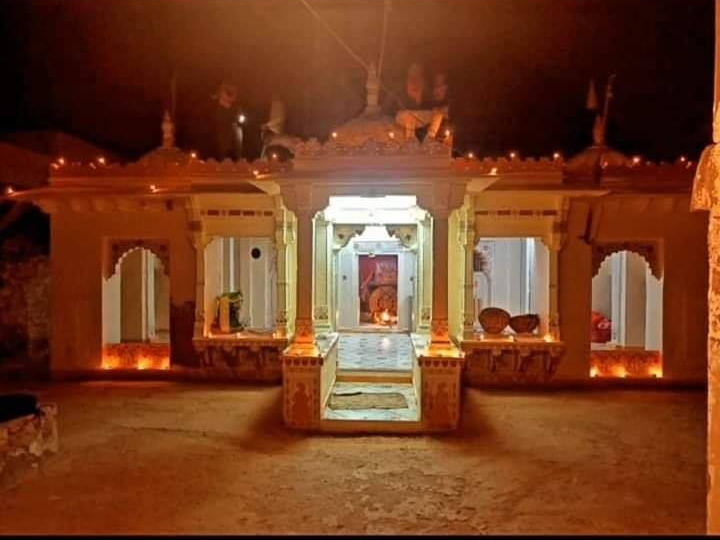
The main shrine is at Bhangti, near Phalodi in Jodhpur district. If you are anticipating something grand, you may want to adjust your expectations It's quiet. Simple. Rustic in a way that actually feels right for a saint who lived the way Harbuji did.
There's no idol inside. That's the first thing that surprises visitors. Instead, the central object of worship is a wooden cart, a rath. The story behind it is classic Harbuji: he used that cart to carry fodder for disabled and injured cows. Every day. He did this as an act of service. And now, centuries later, that cart is what people pray to. Not a gold statue. Not an elaborate shrine. It was a cart that had been used to feed animals. That says more about what Harbuji valued than any scripture could.
The temple was built in 1721 CE by Maharaja Ajit Singh of Jodhpur. And here's another detail that stands out: the priests aren't Brahmins. They're members of the Sankhla Rajput community. That's unusual for a Hindu temple, and it's a direct reflection of Harbuji's rejection of rigid hierarchies. His message of inclusion isn't just preached here. It's structurally built into how the place operates.
During festivals and local fairs, devotees bring grain, milk, and water. Women light lamps. Men sing bhajans about Harbuji's friendship with Ramdevji. Over in Mandore Gardens in Jodhpur, there's a statue of Harbuji standing among other folk deities, a quiet reminder of his place in Rajasthan's spiritual landscape.
Folk Legacy and Cultural Reverence
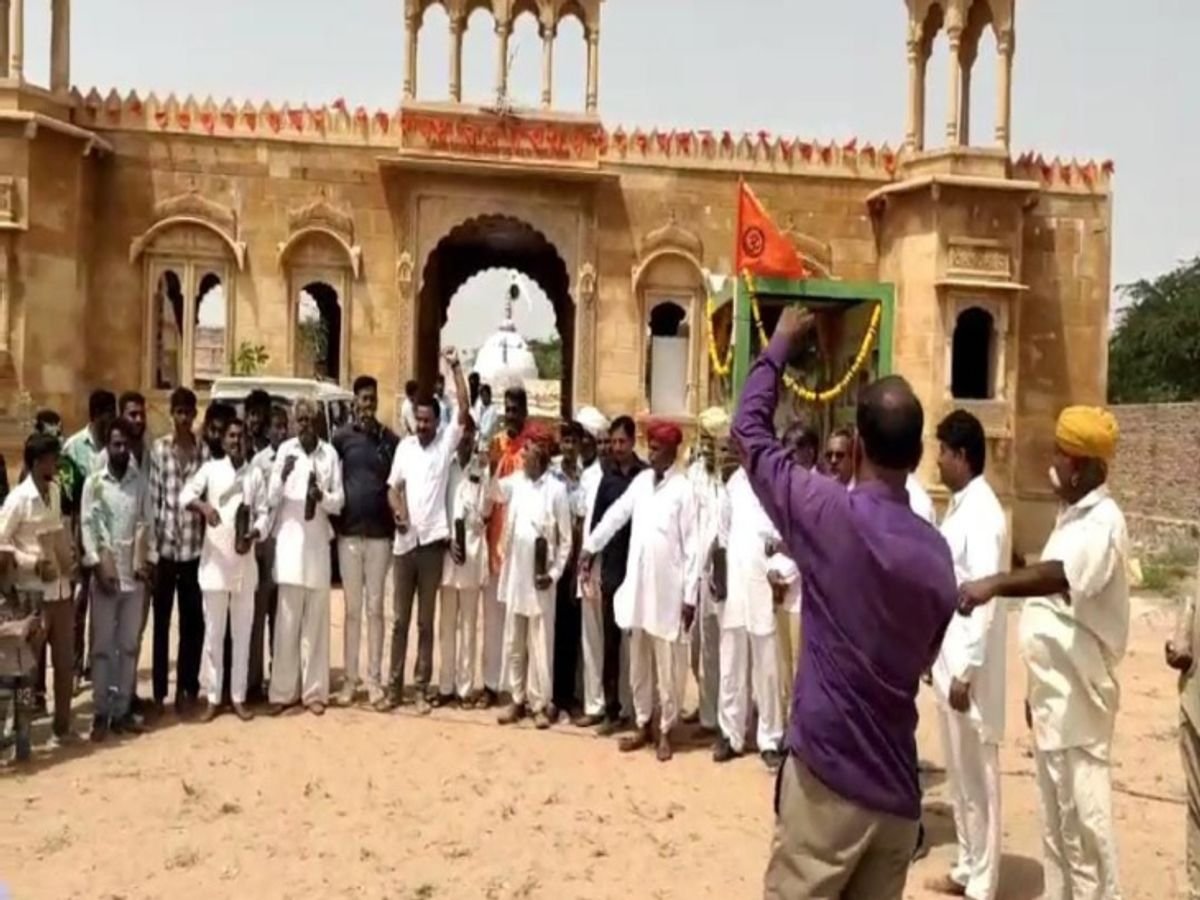
Harbuji has been gone for centuries. But in the villages of Marwar, he isn't treated like a historical figure you read about in a textbook. He's a lok devta, a folk deity, a divine protector whom people genuinely believe is still listening.
Farmers pray to him before planting season. Shepherds ask for safe pastures. Travellers invoke his name before crossing the desert. When someone's sick or going through a crisis, his name is called. This belief is not as superstitious as the real, practiced faith that has been passed down through families for generations.
His stories survive through oral tradition. Charan and Bhat singers carry them forward in folk songs and ballads that don't treat Harbuji as some distant god sitting on a cloud. He's portrayed as someone close. Accessible. He embodies the divine figure who arrives to assist ordinary individuals in their times of need.
Feeding rituals and acts of care still honour his connection with animals, particularly cows. It's one of those threads that connects the present directly to his life. He hauled fodder for injured cows on a cart. People in these villages still feed cows in his name. The chain hasn't broken.
Harbuji's Spiritual Message
He didn't leave behind written scriptures. No books, no formal teachings carved into stone. The remnants of his teachings were preserved through folk memory, songs, stories, and community practices. The essence of it can be distilled into a few ideas that are easy to articulate but challenging to embody.
Faith matters more than fear. Real devotion isn't about performing rituals perfectly; it's about believing when it's difficult. Compassion outranks status. Doesn't matter who you are or where you were born; serving others is the highest form of worship. Every soul carries the same light, regardless of caste or creed. And enlightenment starts when you stop performing and start being honest with yourself.
None of that is complicated. In rural Rajasthan, those principles aren't philosophy; they are part of daily life, with Harbuji honoured at homes, invoked at fairs, and celebrated at festivals. They're practising.
Walk the Path of the Saint with Folk Experience
The thing about saints like Harbuji is that their stories don't live in museums. They live in the wind out here. The hymns sung by shepherds as they walk their flocks are a testament to their legacy. In the silence of desert nights when there's nothing between you and the sky. You have to actually be in these places to feel it.
That's what we do at Folk Experience. Our journeys follow the actual paths these saints walked, and more importantly, they connect you with the people who still carry these traditions as part of their daily lives. Not as a performance. As inheritance.
What that looks like in practice: visiting Bhangti, where Harbuji's wooden cart still stands as the centrepiece of a shrine that has been active for three hundred years. Charan and Bhat singers perform ballads about Harbuji's prophecies and his friendship with Ramdevji, not for tourists, but because it's their job. The Sankhla community continues to perform rituals linked to Harbuji's legacy as they explore the temples and stepwells scattered across Marwar. Joining twilight satsangs under open skies allows the line between prayer and simply being present to dissolve.
Every journey is guided by local custodians, historians, singers, and storytellers who carry these memories because their parents carried them and their grandparents before that. Through their voices, Harbuji's message of simplicity and service doesn't feel like something from the 14th century. It feels like something you need to hear right now.
To walk with folk experience is to walk beside Rajasthan's saints, where every story is a sermon and every desert wind a prayer.