Madhubani Painting: An Introduction to Bihar’s Most Recognised Art
The painting on the wall was not made to last. It was made from a mixture of cow dung and mud, plastered fresh before a wedding, painted over with natural pigments while the surface was still slightly damp so the colour would bind. When the wedding was over, the wall would be ...
Meet your AI Story Guide
Turn this field note into a one-minute brief with the essential places, people, and traditions.
The Mithila Region and Its Traditions
Madhubani painting takes its name from the Madhubani district of north Bihar, which sits in the Mithila cultural region: the territory historically associated with the Maithili language, the Janaka dynasty of the Ramayana, and a set of cultural practices, painting, embroidery, music, and social organization, that distinguish it from the Bhojpuri west and the Magahi center of the state.
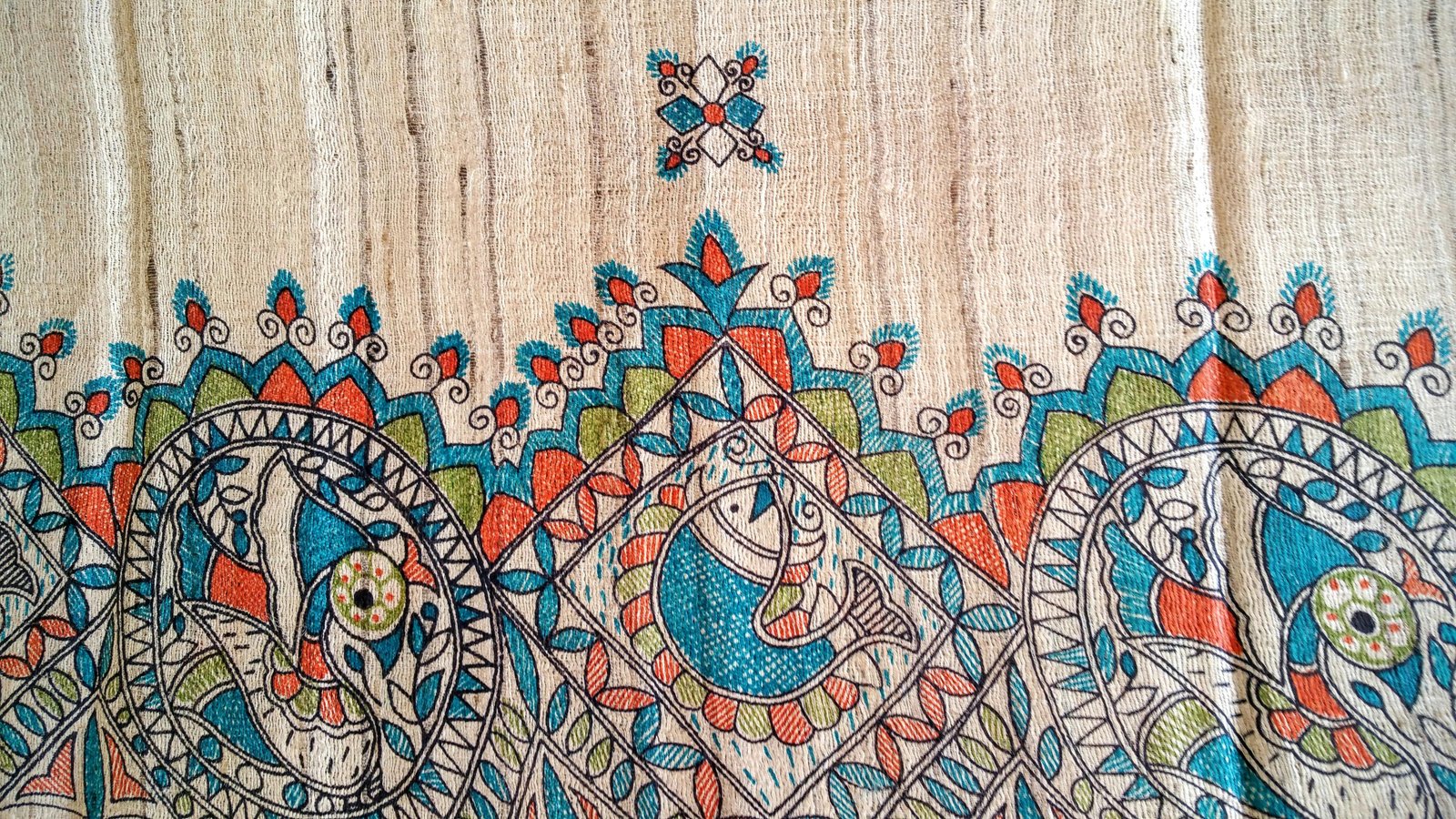
FACT: Madhubani painting received a Geographical Indication tag in 2007, protecting the name and the production geography. The GI documentation identifies five distinct styles within the tradition: Bharni, Katchni, Tantrik, Kohbar, and Godna. Each is associated with different communities within the Mithila region and with different ceremonial contexts. Bharni style, associated with the Brahmin community, uses bold colour fills. Katchni style, associated with the Kayastha community, uses fine hatching rather than colour fills. The styles were historically maintained separately by different castes, though contemporary Madhubani production has blurred some of these distinctions.
The wall paintings that preceded the paper tradition were tied to specific ritual spaces within the house. The most important was the Kohbar Ghar, the bridal chamber, where a specific set of images was painted before every wedding: the lotus, the fish, the bamboo, the parrot, and the elephant, all connected through the tradition's symbolism to fertility, prosperity, and the auspicious beginning of a marriage. The empty spaces in Kohbar paintings are filled with smaller images until every part of the surface carries an image, because in Mithila's visual cosmology empty space is inauspicious.
The Motifs and What They Mean
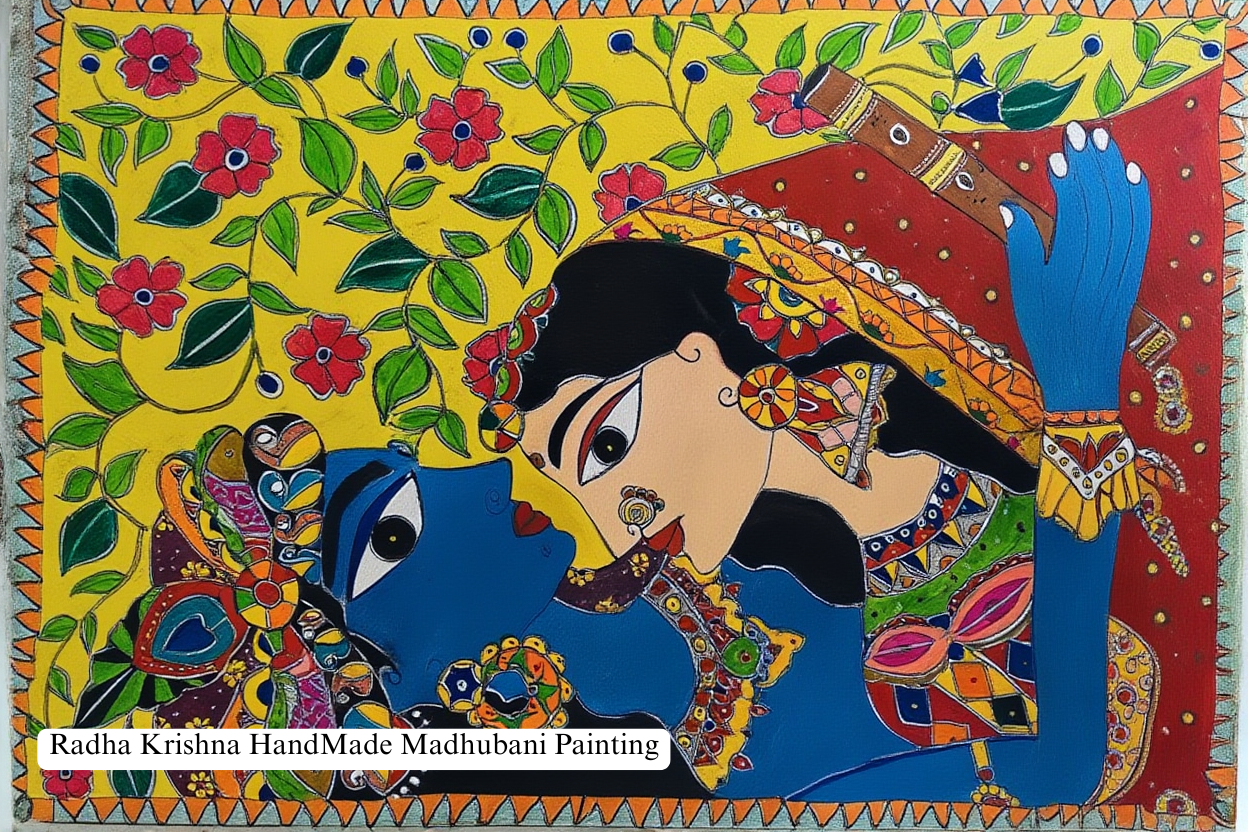
The visual vocabulary of Madhubani painting is not arbitrary. Each element carries a meaning that the tradition has maintained across generations of transmission, and understanding it transforms the experience of looking at the paintings from aesthetic appreciation into cultural reading.
The fish is one of the most consistently present motifs across all Madhubani styles and contexts. In Mithila's symbolic system, the fish represents fertility, abundance, and auspiciousness. It appears in wedding paintings, in festival decorations, and in the domestic paintings that mark other significant occasions. The specific form of the fish in Madhubani, two fish facing opposite directions in a circular arrangement, is related to the Pisces symbol in a way that scholars of comparative iconography have noted, though the Mithila tradition's version predates any direct contact with Western astrological symbolism.
The lotus, the bamboo, the sun and moon, the elephant, and the peacock: each carries specific associations that the painter selects according to the occasion and the intended blessing. A painter who is creating a wedding Kohbar painting is not choosing motifs for visual effect but for symbolic accuracy, placing each element in the position the tradition requires for the specific blessings being invoked.
FACT: The Madhubani tradition includes paintings made specifically for particular deities and ritual contexts, not interchangeable with each other. Ardhanarishvara paintings, depicting Shiva as half-man, half-woman, are associated with specific festivals. Durga paintings for Navratri follow specific compositional requirements. The paintings made for Sama Chakeva, the Mithila festival of sibling bonds, have their own specific vocabulary. A practitioner of the full tradition maintains dozens of distinct compositional schemas, each tied to a specific ritual occasion.
The Five Styles and What Distinguishes Them
The five styles identified in the GI documentation are not merely aesthetic variations. They reflect the social organization of the Mithila region, in which different caste communities historically maintained distinct versions of the same tradition.
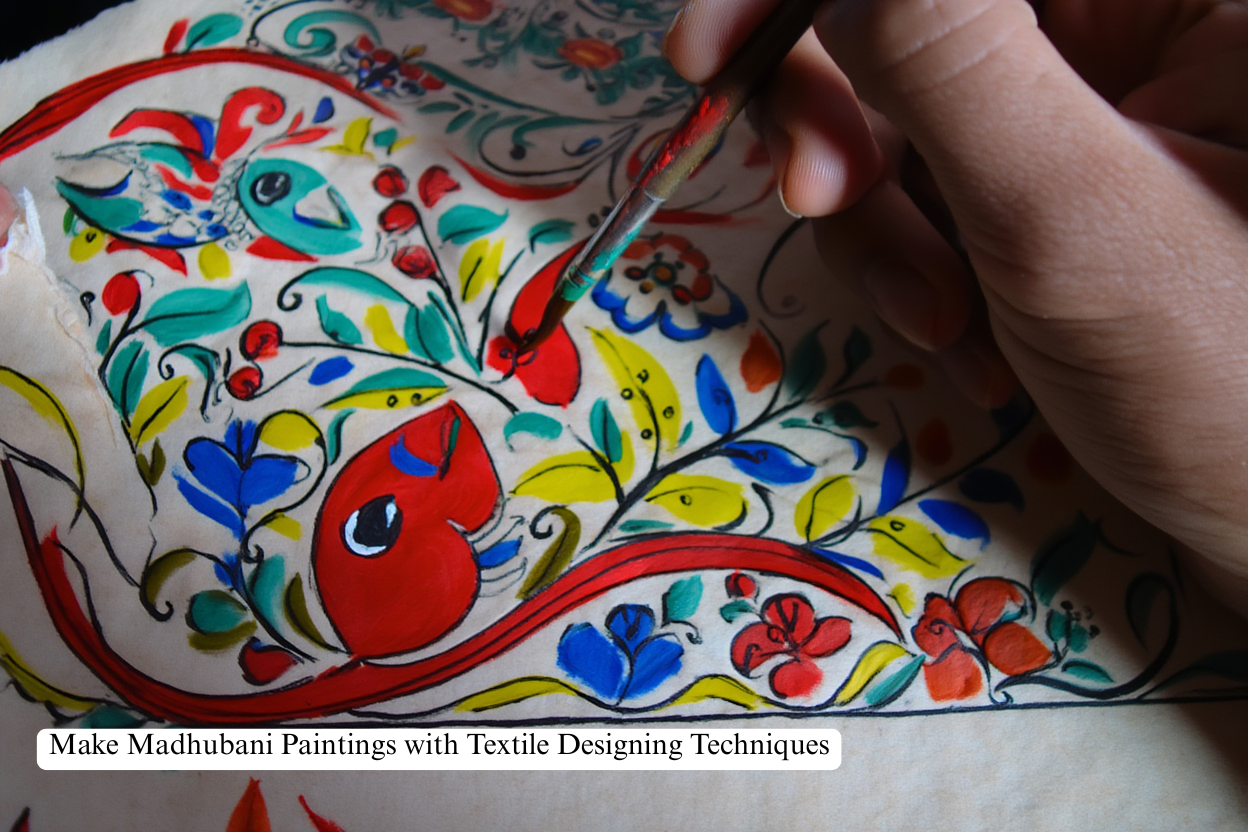
The Bharni style, associated with the Brahmin community, is characterized by bold color fills bounded by black outlines. The figures are solidly colored in red, yellow, blue, and green, with minimal internal patterning. The effect is bold and vivid.
Katchni style, associated with the Kayastha community, avoids color fills entirely. The images are built from fine parallel lines, the hatching technique producing texture and the illusion of volume without color. The effect is more delicate and more labor-intensive than Bharni.
Tantrik style uses geometric and symbolic forms associated with Tantric traditions, particularly yantra diagrams and specific deity forms. It is the most spiritually specialized of the styles and is associated with specific ritual contexts.
The Kohbar style is the bridal chamber tradition, characterized by the specific set of auspicious motifs described above, used in the specific context of wedding preparation.
The Godna style is the most recently formalized, derived from the tattoo tradition of marginalized communities in Mithila who historically expressed their cultural identity through body art rather than wall painting. When Godna-style Madhubani was recognized and brought into the broader market, it gave artists from these communities, whose wall-painting tradition had been less prominent, a pathway into the Madhubani economy.
From Wall to Paper: What Changed and What Did Not
The 1966 drought intervention that moved Madhubani from walls to paper changed the physical substrate of the tradition without changing its visual logic. The motifs transferred directly. The compositional principles transferred directly. The filling of all empty space, the bold outlines, the preference for frontal presentation of figures, and the specific color relationships: all of these remained intact on paper because they were the tradition itself, not properties of the wall surface.
What changed was the relationship between the painting and the occasion. A wall painting made for a wedding is done and gone when the occasion is over. A paper painting made for the market circulates indefinitely, passing through hands that have no connection to the occasion that originally gave the tradition its purpose. The paper painting is separated from the ritual context that gave the wall painting its meaning.
FACT: Padma Shri awardees within the Madhubani painting tradition include Sita Devi of Jitwarpur village, considered one of the tradition's most significant figures, and Jagdamba Devi, who was among the first Madhubani painters to receive national recognition. The Mithila Art Institute in the Madhubani district, founded by the American scholar and arts administrator Raymond Owens in the 1970s, played a significant role in the systematization and international promotion of the tradition in its early years of market development.
Despite this, the tradition retains its connection to ritual practice among the communities that maintain it most authentically. Paintings are still made on walls for weddings and festivals in many Mithila villages. The paper paintings sold in markets coexist with the wall paintings made for domestic ritual, the two forms drawing on the same visual vocabulary for different purposes.
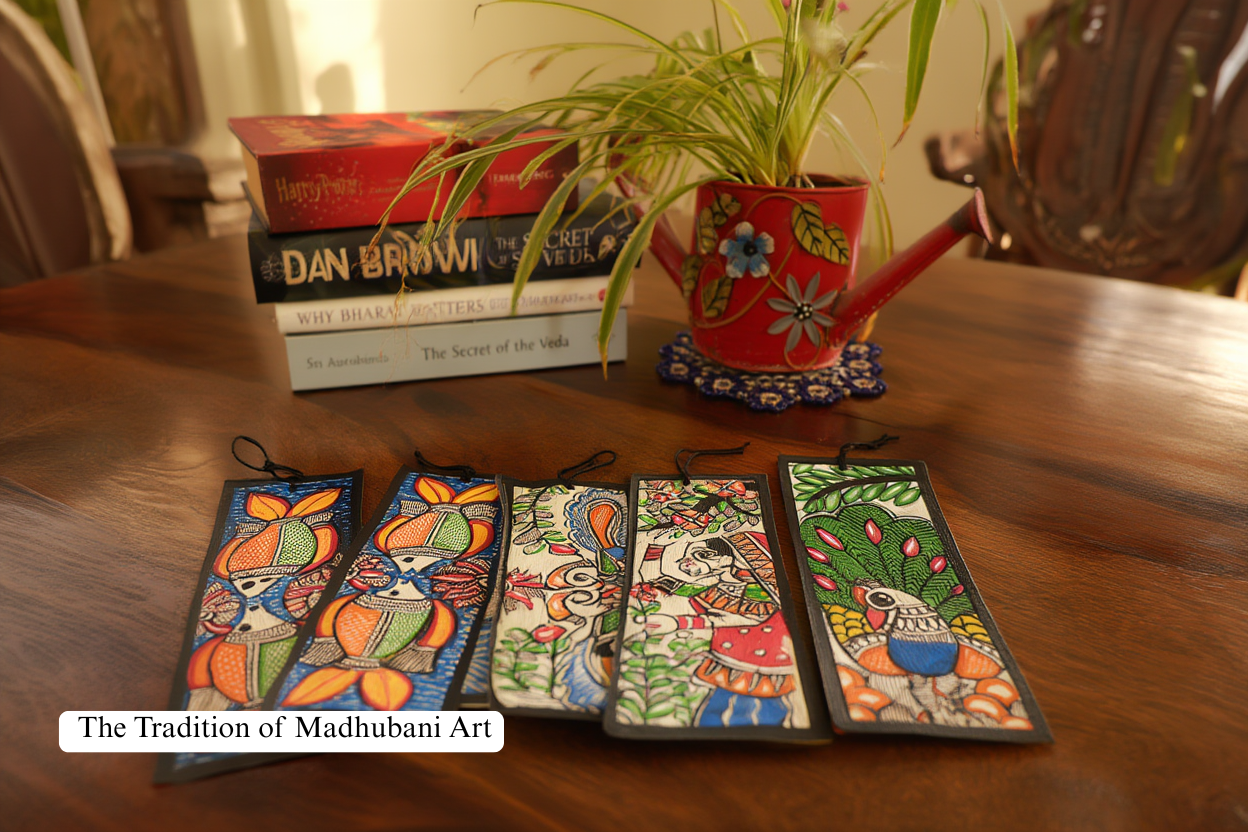
The Market and Its Complications
The market for Madhubani painting is large and mostly opaque. The GI tag protects the name but does not prevent machine-printed imitations from being sold as Madhubani in tourist markets. The volume of printed fabric and paper sold as Madhubani in the markets of Patna, Delhi, and the major craft fairs significantly exceeds the volume of handmade work from actual Mithila artists.
For buyers who cannot distinguish handmade from printed, the distinction is invisible, and the price difference seems unjustifiable. The handmade work from an experienced Madhubani artist reflects hours of careful work. The printed version reflects a photograph of someone else's work, reproduced mechanically. The visual difference is present but requires a trained eye to identify consistently: the slight imperfection of hand-drawn lines, the texture of the surface, and the quality of the color.
The most reliable route to authentic Madhubani is direct purchase from artists or from organizations that work directly with artist communities in the Madhubani district. Folk Experience facilitates this access as part of the Mithila itinerary, with visits to artist villages including Jitwarpur and Ranti, where Madhubani painting is practiced in the domestic settings from which it originates.
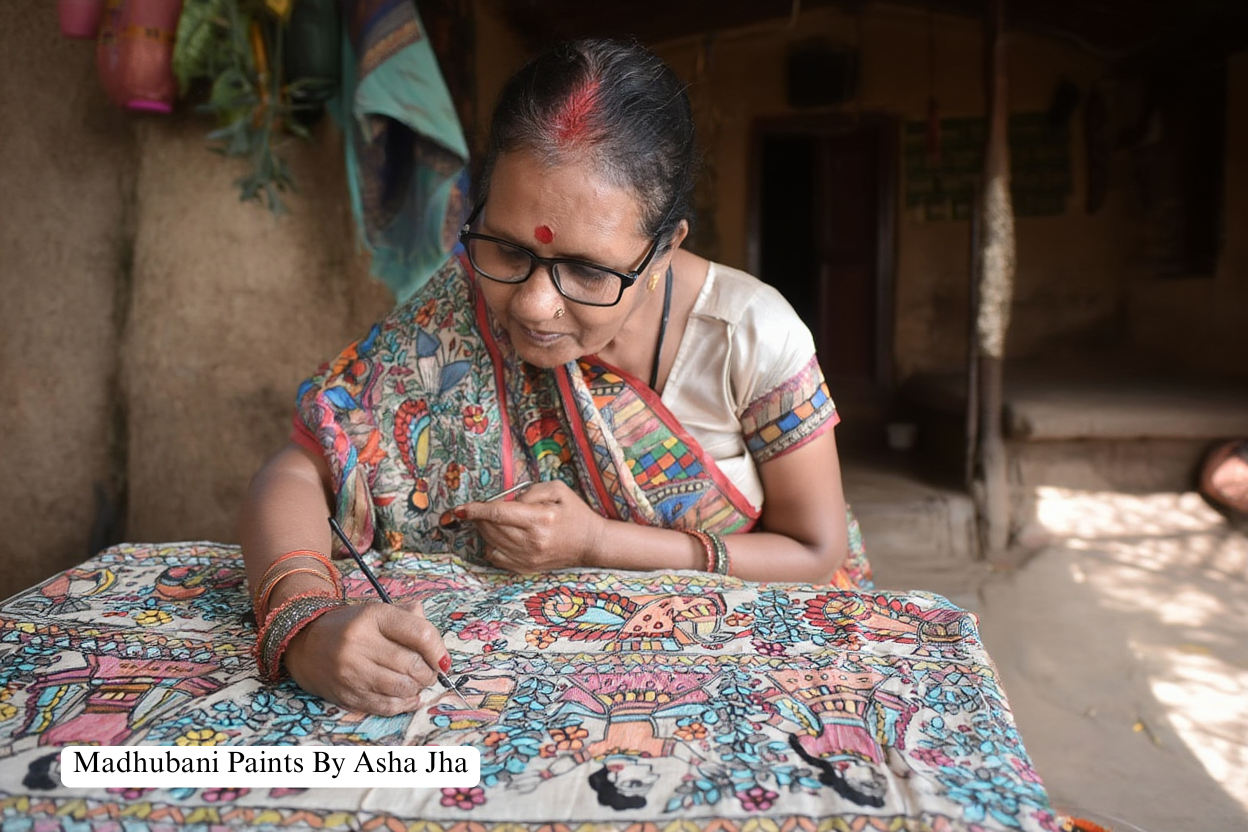
The conversation with a Madhubani artist in her village about which style she practices, which occasions she paints for, how she learned and who taught her, and what the difference is between what she makes for the domestic ritual context and what she makes for the market is a more complete understanding of the tradition than any gallery label or tourist guide provides.
Folk Experience will take you to where the painting is still being made for the reasons it was invented.
keep wandering