Major Folk Festivals of Bihar: Rituals, Seasons, and Community Life
Bihar's festivals do not arrive with announcements. They arrive with preparation: the cleaning of the riverbank, the shaping of clay, the beginning of a fast, and the gathering of sesame and jaggery from the harvest. They are tied to seasons and solar cycles and agricultural t...
Meet your AI Story Guide
Turn this field note into a one-minute brief with the essential places, people, and traditions.
Chhath Puja: Direct Worship at the Water's Edge
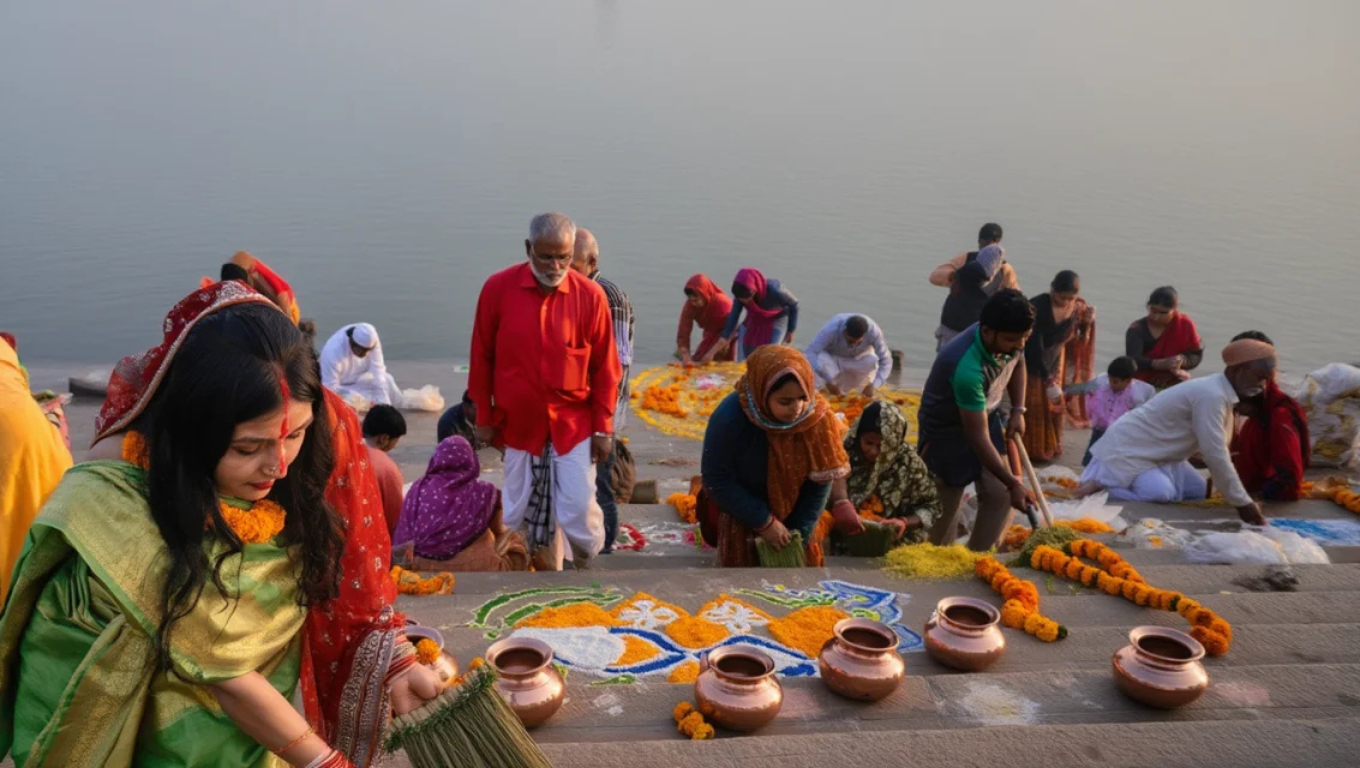
Chhath Puja is the festival that most completely expresses Bihar's understanding of devotion as collective physical practice. For four days in October or November, the festival structures the life of entire communities around the worship of the sun at water bodies: rivers, ponds, and, in the cities and diaspora settlements where Biharis have carried the festival, any body of water available.
The primary observer fasts for thirty-six hours or more, often without water. The offering, the arghya, is made at the precise moment of sunset on the third day and sunrise on the fourth, standing waist-deep in the river with the offering vessel held toward the sun. The timing cannot be approximate. The sun does not accommodate late arrivals.
FACT: Chhath Puja has no priestly mediation, no temple interior, and no idol at its center. The worship is direct, between the devotee, the sun, and the water. This structural independence from the Brahminical temple tradition reflects a pre-Brahminical solar worship lineage that religious historians trace to Rigvedic hymns to Surya, making Chhath one of the oldest surviving folk religious practices in the Gangetic Plains.
What surrounds the fasting devotee during Chhath is not a support structure arranged by anyone in particular. Neighborhoods clean the riverbanks days in advance, without coordination by any authority and without payment. Communities erect bamboo railings and clear paths to the water so that elders can participate safely. Families manage the preparation of the prescribed offerings and the organization of the household around the devotee's schedule. The collective labor that Chhath generates is as much a part of the ritual as the arghya itself.
The festival has travelled with Bihar's migrant population to every city in India and to countries across the world, from Suriname and Trinidad, where indentured laborers arrived from Bihar in the 19th century, to the construction sites and factory towns of contemporary India. The discipline of Chhath does not change with the water. A devotee performing the sunrise arghya at Juhu Beach in Mumbai is performing the same ritual as one standing in the Ganga at Patna, with the same fasting, the same timing, and the same offerings.
Sama Chakeva: The Festival That Lives in Courtyards
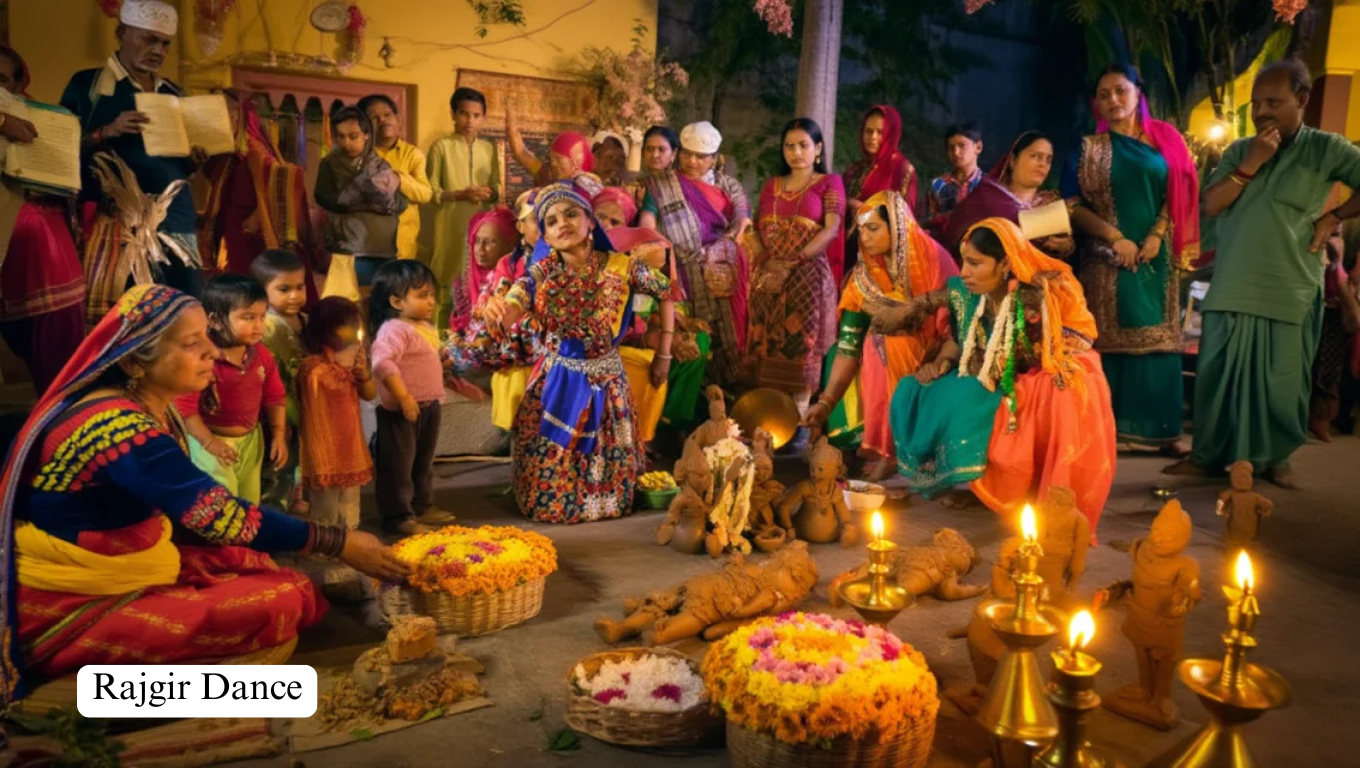
Sama Chakeva is celebrated in the Mithila region of Bihar in October and November after the monsoon recedes, and it is almost entirely invisible to anyone who is not already inside the community that observes it. There are no public processions, no announced events, no stages. The festival happens in courtyards and shared neighborhood spaces, among women and children, through the making of clay figures and the singing of folk songs.
The story at the festival's center, of a sister wrongfully transformed by a sage's curse and a brother whose patience and devotion eventually restore her, is a story about the sibling bond under the conditions that rural Bihar regularly imposes on it: separation, distance, the slow erosion of contact that migration produces, and the faith that the bond persists despite all of this. The festival is particularly observed in communities with high male out-migration, which is much of Mithila, and the emotional resonance of a story about a brother finding his way back to his sister is not abstract in those communities.
The songs that accompany the festival evenings are in Maithili, learned through listening and repetition across many Sama Chakeva seasons, and they contain archaic Maithili vocabulary that scholars have used as evidence in the argument for Maithili's classical language status. The festival is, among other things, an archive.
Madhushravani: The Monsoon Ritual of Newly Married Women
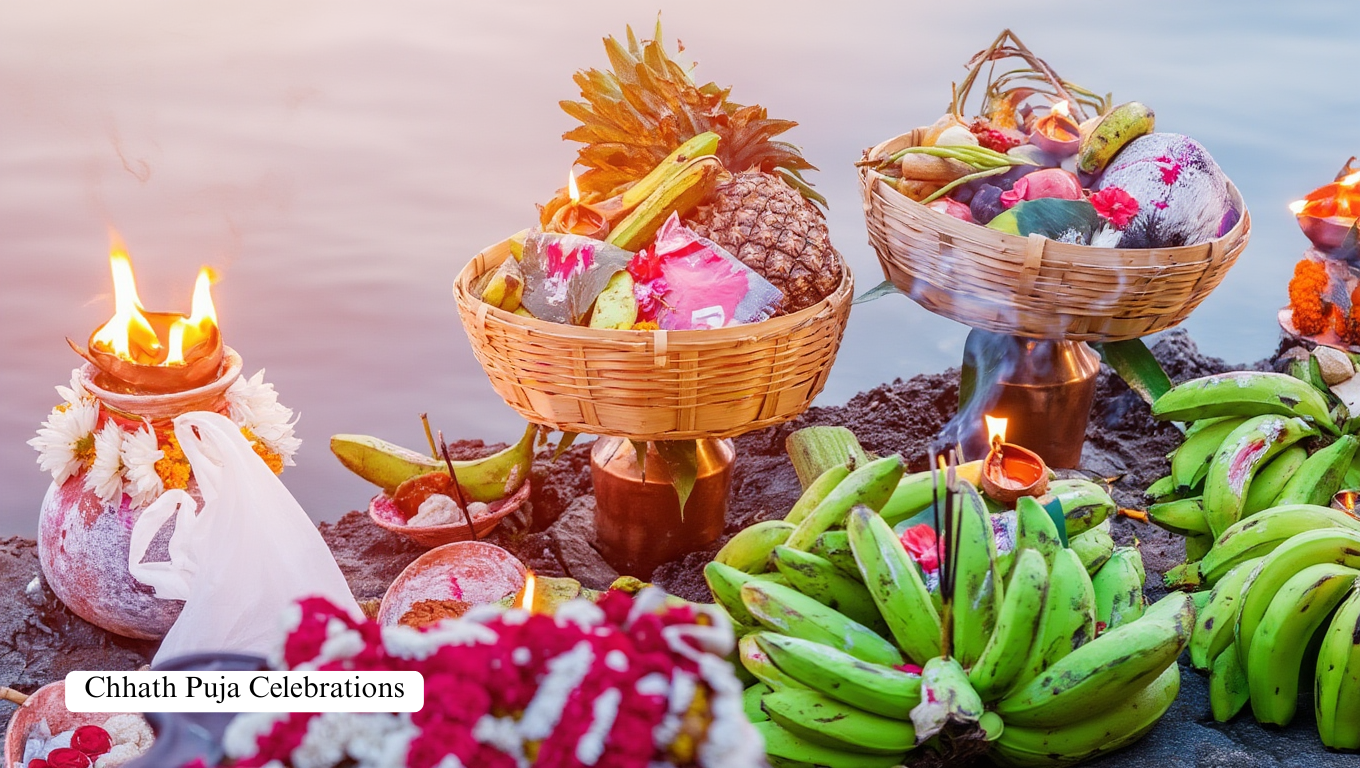
Madhushravani unfolds across twenty to thirty days during the monsoon months of July and August, observed primarily by newly married women in the Mithila region in the first few years of their marriage. It involves daily fasting, the worship of snake deities, and the telling of folk stories that accompany each day of the observance, transmitted by older women to younger ones through repetition rather than instruction.
The timing is ecological as much as religious. The monsoon is when snakes emerge from waterlogged ground into the paths of people moving through fields and villages. The worship of Nag deities, the snake gods of Mithila's folk religious tradition, is a ritualization of the community's relationship with that emergence: not fear, but acknowledgement and respect for a presence that the season makes unavoidable.
FACT: Regional cultural surveys of the Mithila belt estimate that over 60 percent of rural households continue to observe Madhushravani in some form, with the highest rates among households with newly married women. Ethnographic researchers have noted that Madhushravani's observance rates have remained more stable than most other domestic folk rituals in the region, attributed to its direct relevance to the health and social concerns of the monsoon season and its function as an informal support system for women adjusting to new households.
The newly married woman observing Madhushravani is doing several things at once. She is performing a religious obligation. She is building relationships with women in the household and neighborhood through shared practice. She is learning, through the stories told each day, the knowledge the tradition holds about how to navigate the domestic world she has entered. Marriage in Mithila has historically meant relocation, and Madhushravani is, in part, a ritual of adjustment.
Bihula Bishari Puja: When Art Becomes the Archive
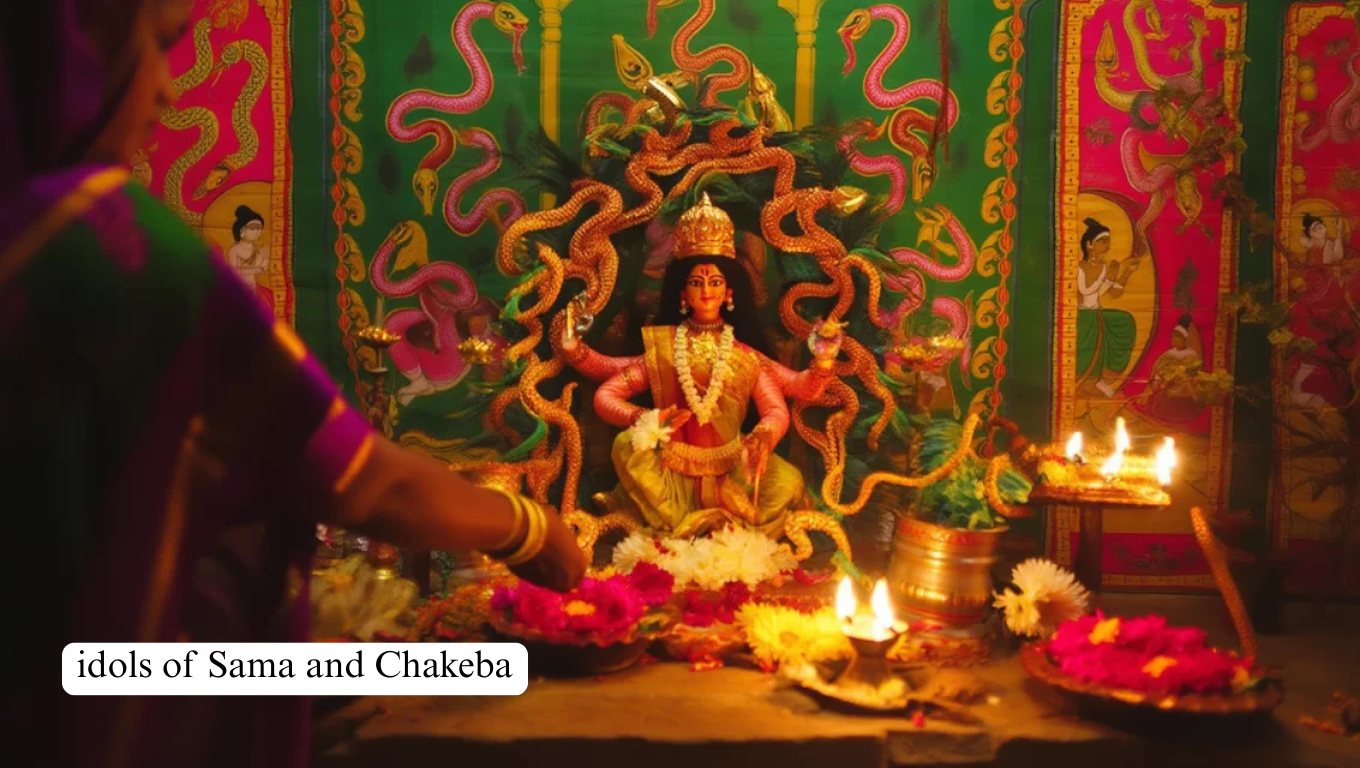
Bihula Bishari Puja is rooted in one of the most distinctive folk narrative traditions in Bihar: the legend of Bihula, a devoted wife who refuses to accept her husband's death by snakebite and travels through the underworld to reclaim him. The festival observing this legend is concentrated in the Anga region of eastern Bihar, the area around Bhagalpur, and it is inseparable from Manjusha art, the scroll painting tradition used to narrate the Bihula story.
Manjusha paintings are made from jute sticks, paper pulp, and natural dyes, and they are used as ritual objects during the festival before being immersed in the river at its conclusion. They are not made to last. Their function is narrative and devotional, not archival, yet they have sustained the Bihula story across centuries more effectively than any archive has sustained comparable narratives.
FACT: Manjusha art, also called the "Angika art of Bihar," is listed on India's official list of Geographical Indication products. The craft is named for the box-shaped containers, manjushas, in which the scroll panels are traditionally mounted. The tradition is documented as far back as the 7th century CE in references in the texts of Chinese traveller Xuanzang, who visited the Anga region during his pilgrimage across India.
The festival's ecological consciousness is embedded in its structure. The immersion of the Manjusha paintings at the end of the festival, like the dissolution of Sama Chakeva's clay figures, is the ritual conclusion that returns to the water what the water provided. The natural materials from which the paintings are made return to the environment. Nothing is kept. Everything is renewed.
Makar Sankranti: The Harvest in the Kitchen
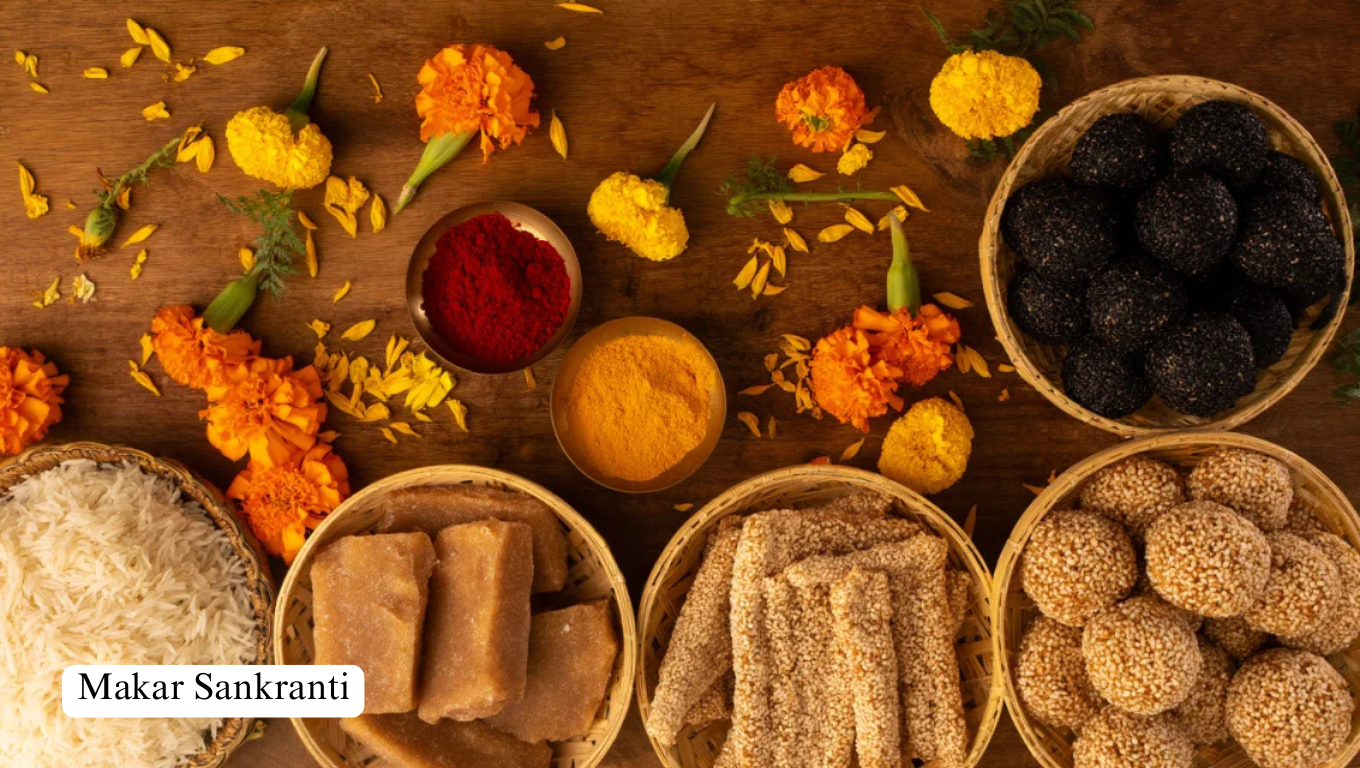
Makar Sankranti, known in Bihar as Tila Sankrant, falls on January 14 and marks the sun's transition into Capricorn, the point in the solar calendar when the days begin to lengthen meaningfully after the winter solstice. It is a festival of sesame seeds and jaggery, of freshly harvested grain, of food prepared and shared between households as the agricultural cycle completes one of its most significant transitions.
The sesame and jaggery combination, til-gur, is not incidental. Both are warm foods in Ayurvedic understanding, suited to the cold of January, and both are available in their freshest form at the harvest. The festival is eating what the season has produced in the company of the people you share your life with as an acknowledgement that the harvest has arrived.
In Bihar's agricultural communities, Makar Sankranti also marks a transition in the farming calendar: the end of the winter crop period and the beginning of preparation for the next planting season. The festival is positioned at exactly the moment when the community needs to feel that the cycle has completed and the next one is beginning. The food and the sharing accomplish this in a way that no formal ceremony could.
What These Festivals Share
Five festivals, spanning the full annual calendar from the post-monsoon season through the winter and the monsoon and back again, each connected to a specific community, a specific season, and a specific need. What they share is not a common religious doctrine or a shared organizational structure. What they share is a common understanding of what a festival is for.
A festival in Bihar is not primarily a celebration. It is a practice: something done, year after year, because the doing of it maintains the things that need to be maintained. The relationship between the devotee and the sun. The bond between siblings separated by migration. The adjustment of the newly married woman to her husband's household. The transmission of a folk narrative across generations. The acknowledgement that the harvest has come.
FACT: Bihar's folk festival calendar is one of the most dense in India when measured by active household participation per festival. Unlike states where major festivals concentrate participation at public venues and leave domestic life relatively unchanged, Bihar's folk festivals typically involve the majority of households in the observing community in active ritual practice, preparation, or collective labor for the festival's duration. This density of domestic participation is what sustains the traditions across generations without institutional support.
The collective labor that surrounds every festival, the riverbank cleaning before Chhath, the clay-making before Sama Chakeva, the storytelling sessions of Madhushravani, the Manjusha painting for Bihula Bishari, and the cooking of Tila Sankrant are not background activities. It is the festival, as much as any prayer or offering is the festival.
Why Folk Experience for Bihar's Festivals
Bihar's folk festivals are accessible to visitors in different ways and to different degrees. Chhath Puja's sunrise and sunset offerings at the riverbanks are fully public, observable by anyone who arrives at the ghat at the right time with the context to understand what they are seeing. Sama Chakeva and Madhushravani are domestic and accessible only through the community relationships that make a private gathering open to a respectful guest.
Folk Experience designs Bihar's festival itineraries revolve around what each festival actually requires from a visitor: preparation before Chhath, introduction before Sama Chakeva, patience before Madhushravani, and timing before Makar Sankranti. The festival calendar structures the itinerary rather than the itinerary accommodating the festival calendar as an afterthought.
The experience of spending the pre-dawn hours at a Patna ghat during Chhath, knowing what the thirty-six-hour fast has cost the woman standing in the water and what the arghya she is making means within the tradition, is available to any visitor who arrives with that knowledge. Folk Experience makes sure you arrive with it.
The festivals will happen with or without you. Come knowing why they matter.
keep wandering