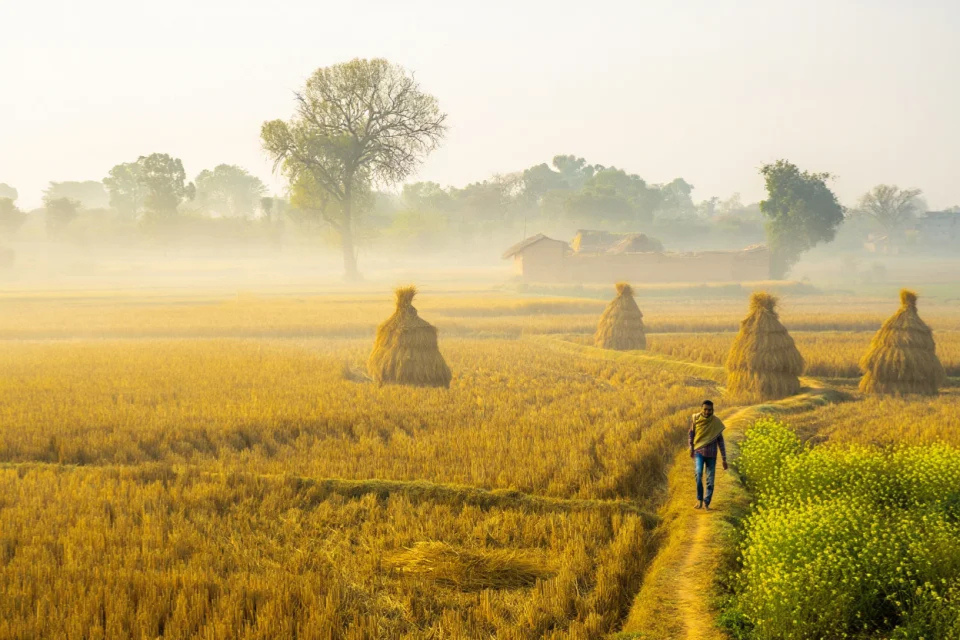
Makar Sankranti (Tila Sankrant): Agrarian Cycles and Food Traditions in Bihar
In Bihar, the year does not turn on a calendar page alone. It turns in fields, kitchens and bodies shaped by three agricultural seasons and multiple crop cycles across the year. Makar Sankranti, locally known as Tila Sankrant, marks a quiet but decisive shift in rural life. Ob...
Meet your AI Story Guide
Turn this field note into a one-minute brief with the essential places, people, and traditions.
Why Makar Sankranti Matters to Bihar’s Agrarian Life
Bihar's farming calendar has its own rhythms, and Makar Sankranti lands at one of the important ones. Rice, pulses, and oilseeds like sesame are winter crops, and by mid-January much of the harvest is in. The most intensive work is done. What follows is a pause: a moment when the farm can wait and the household can breathe.
Makar Sankranti acknowledges that pause. It is not a celebration of surplus. It is a recognition that the hard season has been survived: the cold mornings, the heavy labour, the months of reduced variety in the diet. That is why the festival centres not on temples or processions, but on kitchens. The kitchen is where the work of surviving winter actually shows up.
Seasonal Transition: From Winter Hardship to Renewal
January in Bihar is a demanding month. Temperatures drop, fog cuts visibility for days at a stretch, and the body needs more fuel than usual. The diet in this period has historically been limited: stored grains, whatever was preserved from the harvest, limited fresh produce. The festival responds to that physical reality, not through symbolism but through food that actually works for the season.
Til, Rice, and Jaggery: Food as Seasonal Knowledge
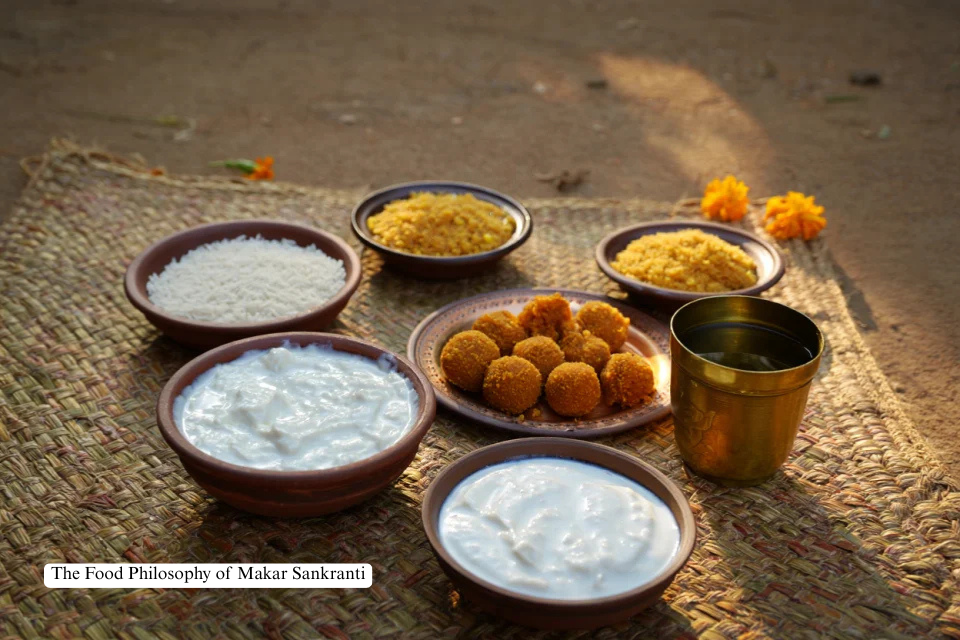
The logic behind the ingredients of Tila Sankranti is straightforward once you understand the season. Sesame, known as til, generates warmth in the body and is rich in oils. Rice is already stored and ready. Jaggery provides slow-releasing energy and keeps the body warm from the inside. This combination was not designed in a kitchen to taste interesting. It was built over generations to meet the specific needs of Bihar's winter. The nutritional reasoning is sound even by modern standards, and it predates modern nutritional science by a very long time.
Tila Sankrant Inside the Home: Food Rituals and Sharing
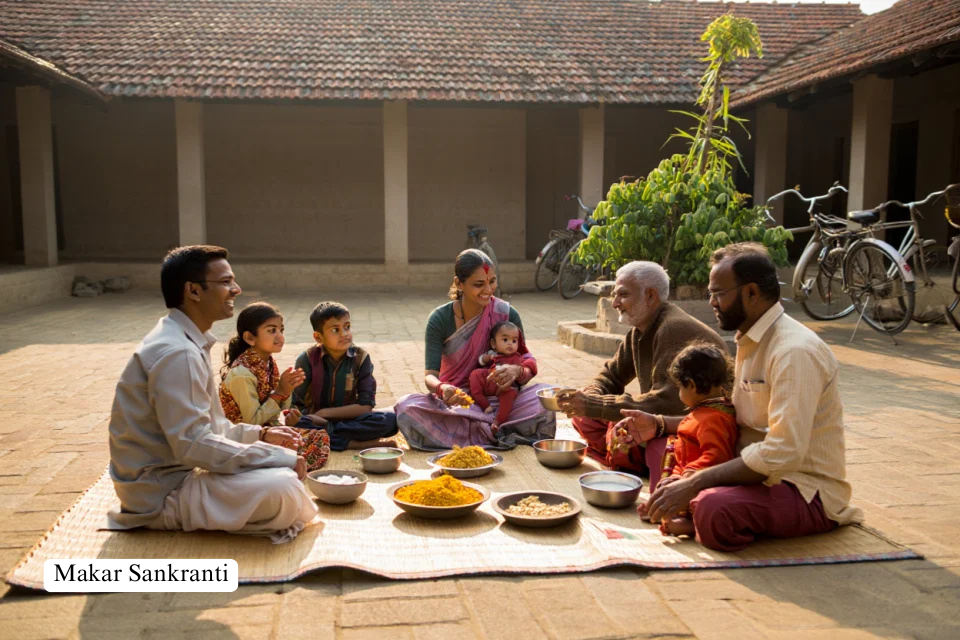
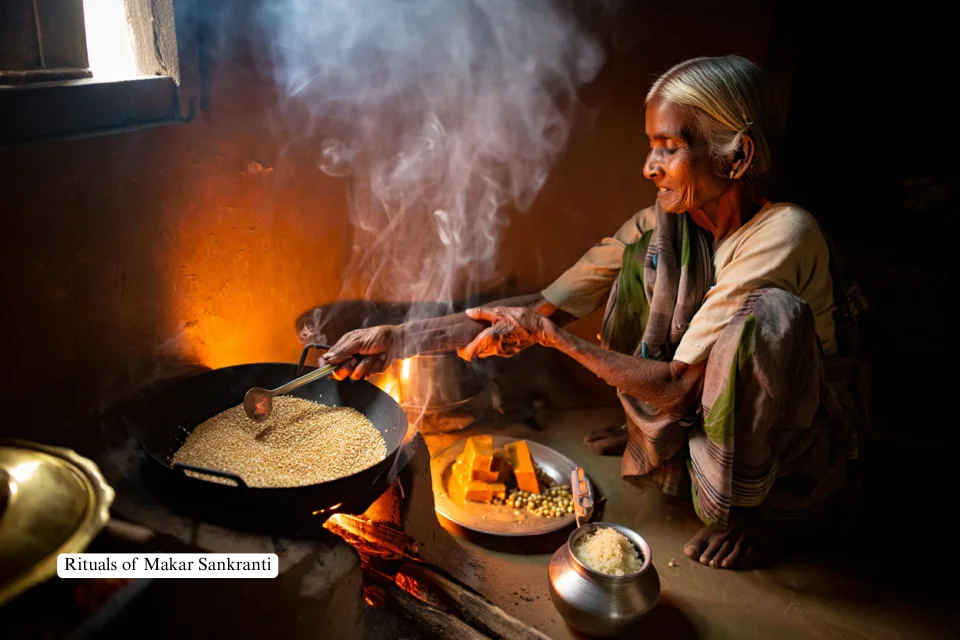
Makar Sankranti in Bihar is a household festival. Women begin cooking before sunrise: tilkut, til laddoos, chura with dahi, jaggery-based sweets. The first obligation is to share rather than eat. Food goes to neighbours, relatives, and especially elders before the household sits down to its own meal. In many villages, households send preparations to each other across the morning. What gets reinforced through this is not individual celebration but mutual dependence: the understanding that seasonal hardship is survived together, not alone.
Regional Ways of Observing Makar Sankranti in Bihar
The festival shows different faces across Bihar, but the core ingredients and the core logic stay consistent.
In north Bihar, agricultural districts observe Sankranti through chura, dahi, and jaggery eaten collectively in courtyards. The region's high rice production is reflected in the food, and the practice of extended families and neighbours eating together during seasonal transitions has not disappeared here.
In south and central Bihar, tilkut and rice-based sweets dominate. Local market data shows sesame product sales peak sharply in the days around Sankranti, which reflects how directly the festival is tied to winter oilseed cultivation in this part of the state.
In riverine areas along the Ganga, meals on Sankranti often include locally caught fish alongside the traditional preparations. Where agriculture and fishing overlap, food adapts to reflect both.
In urban Bihar, the ritual has simplified but the food has not. Studies suggest that a significant share of urban families still prepare at least one traditional Sankranti dish, even if they skip other elements of the observance. The smell of roasting sesame and melting jaggery is still a seasonal marker in Bihar's towns and cities.
Sankranti and Rural Work Cycles
Makar Sankranti lands during a natural break in the agricultural cycle. Tools get repaired. Storage gets sorted. Planning for the next season begins. The pause is not empty time. It is restorative time: families eat together in daylight, conversations go longer, and the body is allowed to recover before the next phase of work starts. The festival is not a break from the agricultural rhythm. It is part of how that rhythm sustains itself.
Why Makar Sankranti Remains a Food-Centred Festival
There are no idols at the centre of Tila Sankrant in Bihar. No elaborate ritual determines who can participate. The meaning travels through food rather than through ceremony. That is probably why the festival has lasted as long as it has. Recipes change very little. Ingredients stay local. The knowledge of how to make tilkut or chura preparations passes from hand to hand rather than through written texts or formal instruction. Cultural traditions that are embedded in necessity tend to outlast those that are embedded only in obligation, and Sankranti survives because people still need to eat well during winter.
Why Understanding Makar Sankranti Changes the Way You Travel Bihar
When you begin to understand Makar Sankranti, Bihar's seasonal logic becomes visible. You stop looking for events and start noticing rhythms: when people rest, what they eat, why the kitchen is the most important room in the house during winter. Travel shifts from dates and schedules to seasons and kitchens. Rural life starts to make sense not just through the festivals marked on a calendar but through how labour, food, and climate shape each other across the year.
Just as Chhath teaches discipline, Sama-Chakeva teaches emotional continuity, and Madhushravani teaches care, Makar Sankranti teaches balance. In Bihar, culture is not always performed. Often it is simply cooked and shared.
Why Choose Folk Experience to Travel Bihar
Travelling in Bihar is not about ticking destinations off a list. It is about understanding people, practices, and everyday life. That is where a folk-led approach makes all the difference.
Folk Experience invites you to travel Bihar differently:
Because culture is lived, not staged: Folk experiences take you into homes and villages where festivals such as Tila Sankrant unfold naturally.
Because food explains place better than monuments: Seasonal meals reveal more about the rhythms of Bihar than sightseeing ever can.
Because it supports everyday livelihoods: Folk-led travel respects agricultural cycles and local economies.
Because stories stay with you longer than photographs: You leave with real understanding.
Because travel should slow you down: Folk experiences encourage you to be present, patient, and attentive.
Because understanding builds respect: When you travel through food, seasons and work cycles, you do not just see Bihar. You start to understand it.
Choosing a folk experience means choosing depth over distance, people over places, and meaning over movement.
That is how Bihar reveals itself: not in grand gestures, but in meals shared at the turn of a season.
Culture survives longest where it is necessary, not celebrated.
keep wandering