Meenakari Work of Rajasthan: Painting Paradise in Metal
If you've ever walked through Johari Bazaar in Jaipur, the old jeweller's market – not the tourist version, you've probably noticed tiny flashes of colour catching the light inside narrow shopfronts. Blues, greens, and reds, all glowing against gold. That's Meenakari. And the ...
Meet your AI Story Guide
Turn this field note into a one-minute brief with the essential places, people, and traditions.
A Glimpse Into History
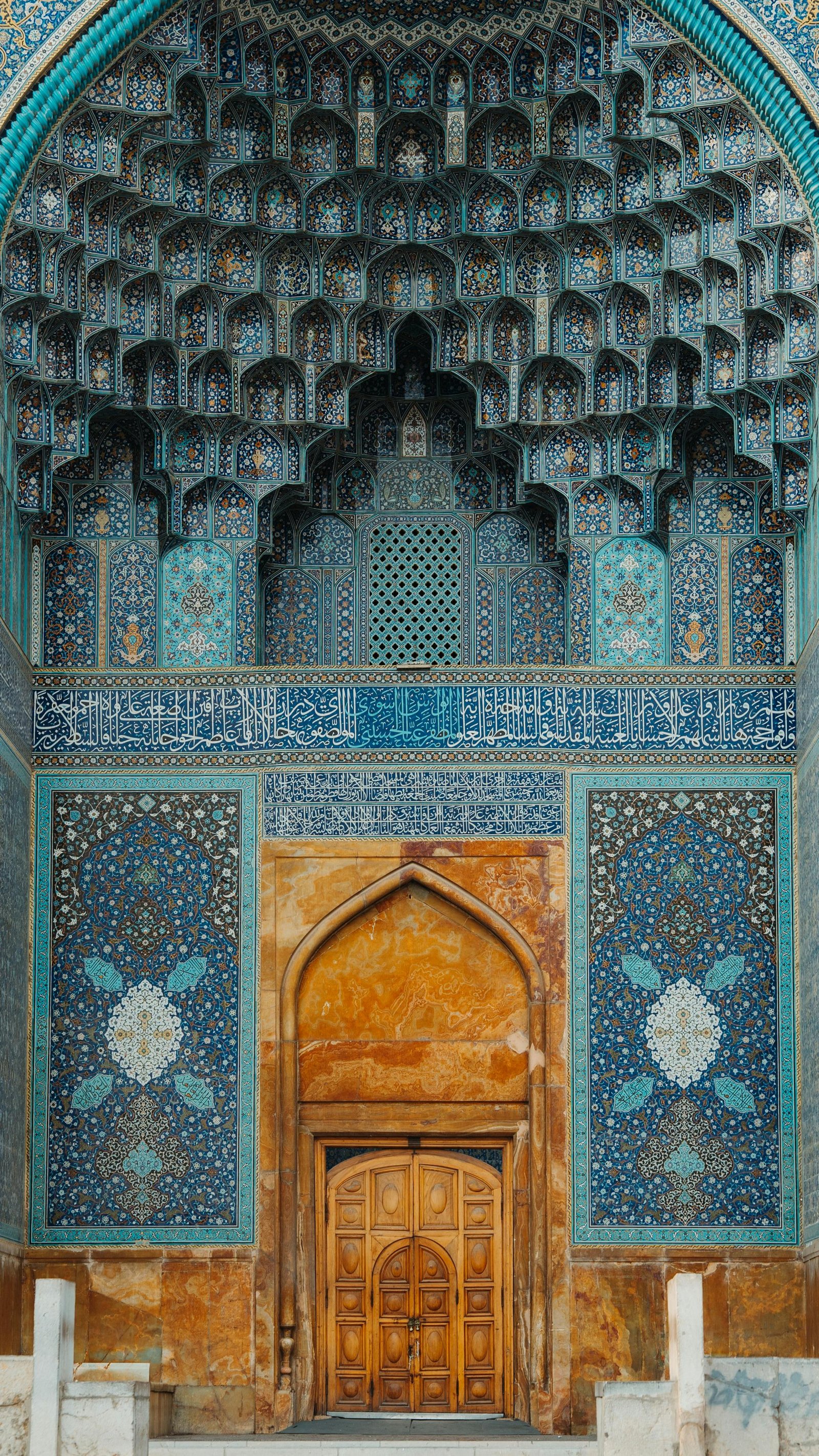
Meenakari didn't originate in India. It came from Persia. The word itself is Persian. "Meena" means heaven, and "Kari" means work. Put them together, and you obtain something like, "The art of placing paradise on an object." Such claims may seem exaggerated until one encounters a finely crafted piece and reflects, "Indeed, that is an accurate description."
Persian artisans had been fusing glass enamel into metal for centuries before the craft reached Indian shores. The bridge was the Mughal Empire. During Emperor Akbar's reign, the technique made its way into Indian royal courts. But the real turning point, for Rajasthan specifically, was when Raja Man Singh of Amber invited Persian craftsmen to Jaipur in the 16th century.
That's when things got interesting. The Persian artisans brought their technical mastery, the precision, the enamelling techniques, and the understanding of how glass and metal bond under heat. Jaipur's goldsmiths brought their aesthetic: bolder colours, Rajasthani motifs, flora and fauna patterns, and a certain maximalism that Persian work didn't have. The two traditions collided and produced something neither could have made alone.
Under royal patronage, Meenakari went from a foreign import to a defining feature of Jaipur's identity. It appeared on thrones, palace walls, ceremonial swords, and, most famously, jewellery. If you had money and status in Rajasthan, your possessions had Meenakari on them. That was just how it worked.
The Making of Meenakari: Where Fire Meets Imagination
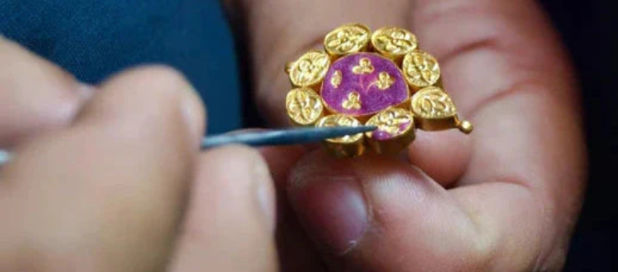
A single Meenakari piece can take weeks to complete. Sometimes months, depending on complexity. And it's not one person's work; it passes through multiple hands. The sonar (goldsmith) handles the metal. The meenakar (enameller) does the colouring. The ghotnewala (polisher) brings the final shine. Each one is a specialist. Each step has to be done right or the whole thing falls apart.
Here's a comprehensive overview of the process, from beginning to end.
The metal comes first. Gold is the preferred base because its purity lets the enamel colours shine brightest. Silver and copper work too, and they're more affordable, but gold is gold. The surface gets cleaned thoroughly of any impurity, and the enamel won't stick properly. This step may not seem glamorous, but if you skip it, the rest of the process will be ineffective.
Then the carving. An artisan takes delicate chisels and engraves the design directly into the metal. Flowers, paisleys, peacocks, vines – whatever the piece calls for. Each cut creates a tiny cavity that'll eventually hold enamel. This stage is where the piece gets its personality. And there's zero room for error. One slip changes how light interacts with the finished product, and these guys can tell the difference.
The colour comes next. And the fun part is where it gets wild. The "paint" in Meenakari isn't paint at all; it's powdered glass. The enamel powder is mixed with water or a natural solution and tinted using metal oxides. Copper provides you green. Cobalt makes blue. Iron produces red. Using incredibly fine brushes, the artisan fills those carved cavities with enamel paste. Here's the catch: each colour has to be applied separately and fired individually. You can't do them all at once. Layer after layer after layer.
Firing is where the magic happens. The enamelled piece goes into a kiln at over 700°C. Inside that furnace, the glass powder melts and fuses permanently with the metal. The surface emerges glossy, with vibrant colours permanently locked in. Some complex pieces go through this firing process up to ten times. Each colour and layer undergoes another round in the kiln. The patience required is honestly challenging to comprehend until you watch someone do it.
The process involves applying layers upon layers of enamel.
Finally, the polish and stonework. The piece is buffed and smoothed until it shines. Some pieces have precious stones added, emeralds, rubies, and pearls set into the enamel work. The finished product looks like it shouldn't be possible to make by hand. Glass fused into metal, every colour sharp and bright, the whole thing glowing like it has its internal light source.
Cultural Significance: More Than Ornamentation
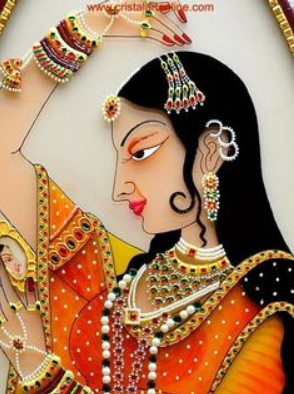
Meenakari isn't just pretty. In Rajasthan, it carries a real, specific meaning tied to life events and beliefs, such as symbolising prosperity and good fortune during significant occasions like weddings and festivals.
Weddings run on it. Meenakari jewelleries – necklaces, earrings, and bangles are a non-negotiable part of a bride's trousseau. The colours aren't random. Bright hues signify prosperity, fertility, and good fortune. The intricate motifs, the flowers, and the vines represent harmony and eternal love. A Rajasthani bride without Meenakari jewellery is like a wedding without music. Technically possible, but nobody would consider it complete.
Festivals demand it. During Diwali, Teej, and Gangaur, people buy or gift Meenakari items: decorative boxes, trays, and small idols. The shimmer is considered auspicious. It's believed to attract positivity and wealth into the home. Whether it's a tiny enamel box or an elaborate tray, if it has that Meenakari glow, it's considered a worthy offering.
Symbolism is built into every design. Lotuses represent purity. Peacocks symbolise immortality. Sun and moon motifs stand for balance. These aren't arbitrary aesthetic choices; they're a visual language. Artisans know exactly what each pattern communicates, and buyers in Rajasthan do too. It's a shared vocabulary written in enamel and metal.
"Meenakari" isn't limited to jewellery. You'll find it on temple decorations, palace ceilings, and the hilts of ceremonial daggers. Anywhere beauty and significance needed to coexist, Meenakari showed up.
Reviving the Craft
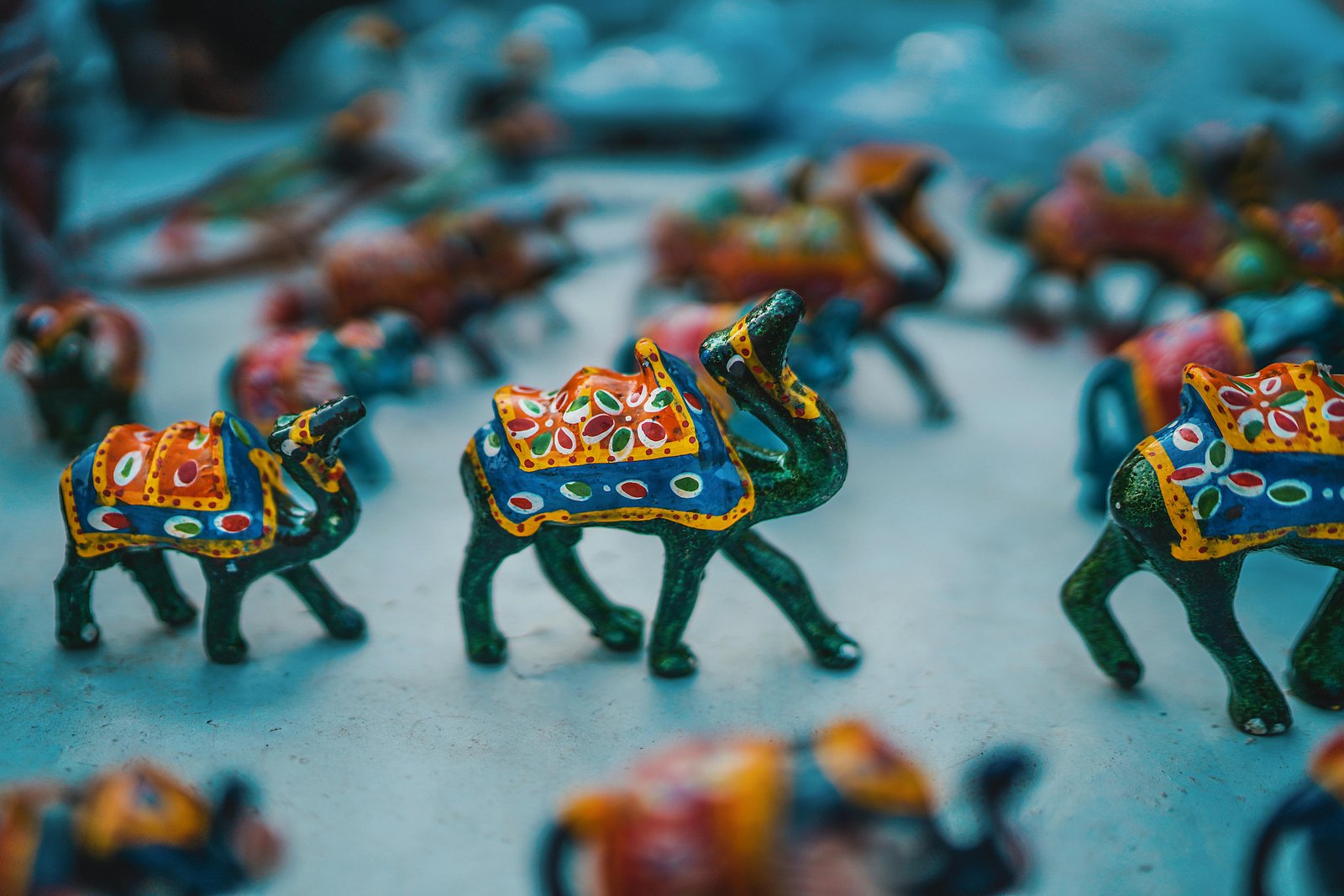
The craft is centuries old. It's also under pressure. But unlike some traditional arts that are simply fading away, meenakari is experiencing something like a comeback – uneven and incomplete, but real.
Modern designers have got involved. Indian luxury bridal collections have started featuring Meenakari prominently again. Not as a nostalgic throwback, but paired with contemporary silhouettes that appeal to younger buyers, these collections showcase Meenakari in innovative ways that blend traditional craftsmanship with modern aesthetics. The enamel work is the same. The settings around it are new. It's working.
Materials have adapted. Not everyone can afford gold-based Meenakari. So artisans have expanded into copper and silver bases, which makes the craft more accessible without sacrificing the technique. It's also more sustainable, with less reliance on gold mining and more variety for buyers at different price points.
The global market has opened up. Digital marketplaces, international craft exhibitions, and artist residency programmes are connecting Jaipur's meenakars with audiences they never had access to before. A family workshop in Johari Bazaar can now sell to a buyer in London or Tokyo. That's new. And it matters.
But the reality is still complicated. Most artisans work in small, family-run setups in Jaipur, Nathdwara, and Pratapgarh. Their livelihoods depend on fair wages and ethical trade practices, which are essential for sustaining their craft and ensuring that they can support their families and communities. Revival isn't just about visibility; it's about making sure the people doing the actual work can afford to keep doing it.
Where to Find Authentic Meenakari Art
Jaipur is the epicentre. Johari Bazaar and Tripolia Bazaar, historic markets in the old city, have traded Meenakari for centuries. The range is enormous. Elaborate bridal sets worth lakhs sit alongside small enamel curios that cost a few hundred rupees. Everything shimmers. The sensory experience alone is worth the trip.
Some places worth knowing about: Surana Jewellers in Johari Bazaar is a well-known name. The Kundan and Meena Emporiums in Tripolia Bazaar carry a wide range. And there are smaller artisan studios scattered through the area that offer live demonstrations. You can watch the entire process happen in front of you, from metal prep to final polish.
A few of these workshops also run Meenakari classes where you can try enamelling yourself. Fair warning: it's humbling. What looks fluid and effortless when a master does it turns out to be incredibly demanding when you're holding the brush.
Getting there from Jaipur Airport takes about 25 minutes by cab; it's roughly 12 kilometres. The best time to go is between October and March, when the weather is cooler and workshops are in full swing.
Why This Craft Matters
In a world that mass-produces everything, Meenakari is a stubborn holdout. Every piece is made by hand. Every firing poses a risk; one incorrect temperature can shatter weeks of work. Every finished piece represents time, patience, and a kind of love for the craft that doesn't show up on a factory floor.
When someone buys an authentic Meenakari piece – not a machine-made knockoff, but the real thing – they're doing more than acquiring jewellery. They're supporting a heritage that stretches back to royal courts and Persian workshops. They're putting money into the hands of artisan families who've carried this knowledge for generations. They're voting, with their wallet, for the idea that human hands still make things worth having.
Experience Meenakari with Folk Experience
Reading about Meenakari is one thing. Watching a 60-year-old artisan hold a piece of gold over a coal fire with his bare hands while his son fills microscopic cavities with powdered glass using a brush the width of a hair – that's something entirely different.
At Folk Experience, our Jaipur cultural trails take you inside the workshops of Johari Bazaar. Not the showrooms. The workshops. This area is where the kilns are hot and the artisans are actively working. You watch the fire turn colours. You learn why certain designs mean what they mean, including the cultural significance behind each pattern and how they reflect the artisans' heritage. And you hear the stories directly from the families who've been doing this work for three, four, five generations. How they learned, what's changed, and what they're worried about losing.
Our experiences are built for people who want to understand, not just buy. Who wants to touch the craft, feel the heat of the furnace, and walk away knowing something real about how Rajasthan turns raw metal into something that looks like it fell out of a dream?
Travel with Folk Experience and discover how Rajasthan turns metal into poetry.