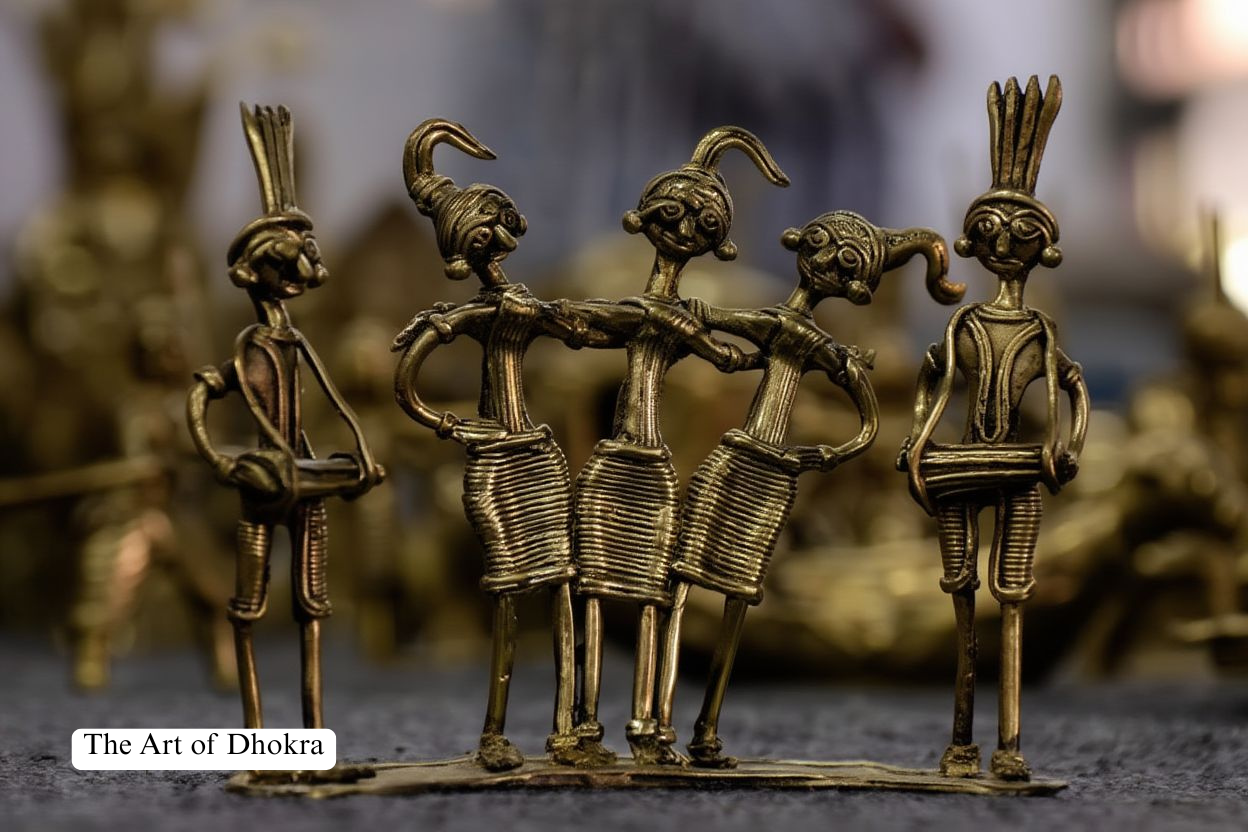
Metal Crafts of Bihar: Tradition, Utility, and Handcrafted Skill
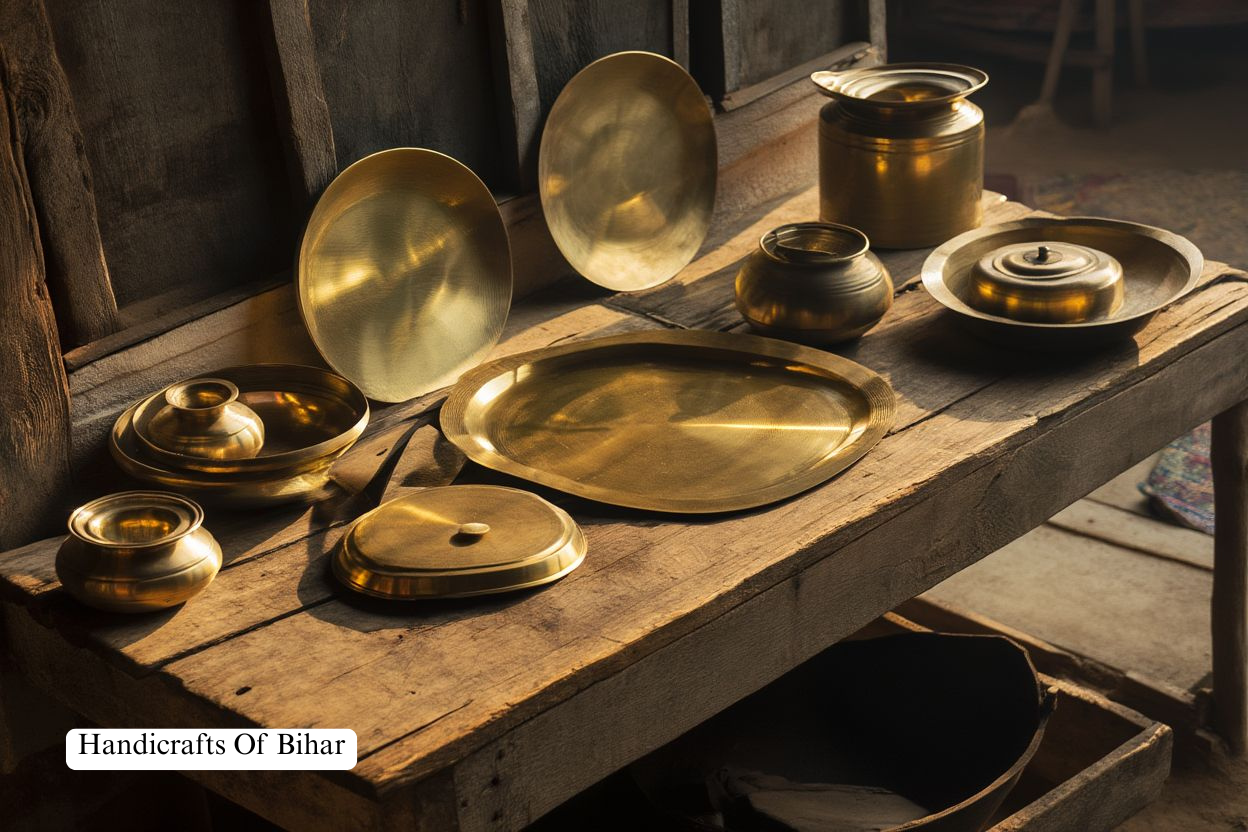
The brass plate that a family in Gaya has been eating from for forty years is not an heirloom in the museum sense. It is not displayed or protected. It is washed every day, stacked with the others, brought out at mealtimes, and returned to the shelf. Its value is not in its ag...
Meet your AI Story Guide
Turn this field note into a one-minute brief with the essential places, people, and traditions.
What Is Made and Why It Is Made That Way
The objects that Bihar's metal craftsmen produce fall into two broad categories that have never been entirely separate in practice: the domestic and the ritual.
The domestic category includes cooking vessels, plates, bowls, storage containers, and water pots. These are objects that a family acquires once, or twice in a generation, and that are expected to outlast the acquiring. A brass cooking pot bought at a craftsman's workshop in Bhojpur does not have an expected replacement date. It has an expected lifespan measured in decades. The craftsman who makes it knows this, and the way he makes it reflects this knowledge: the walls are thick enough to absorb heat evenly, the joints are finished so that they do not weaken under daily washing, and the form is simple enough that a traveling repair craftsman can fix whatever eventually does give way.
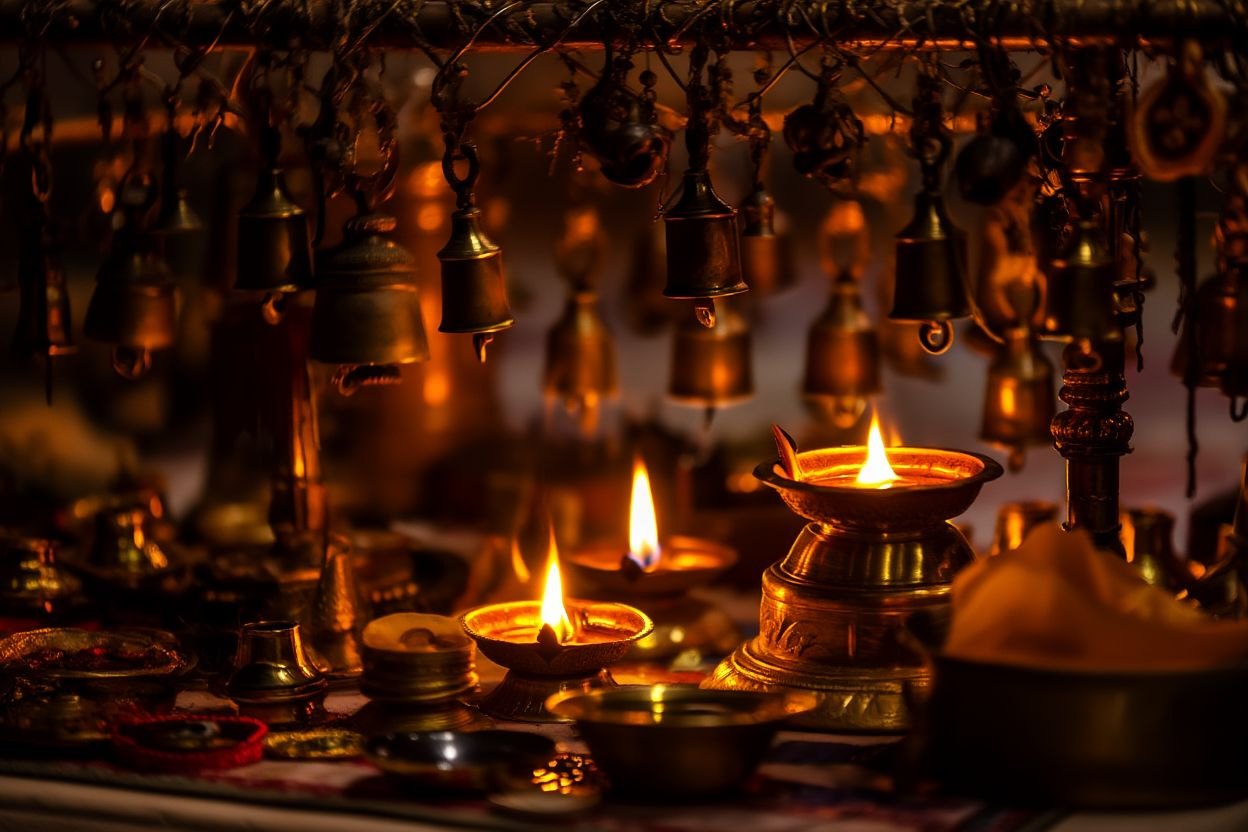
The ritual category includes lamps, bells, offering vessels, and the specific objects associated with the daily puja practices that Bihar's Hindu households maintain. Here the material choice carries additional significance. Metal is understood in the Hindu ritual tradition as a medium of purity, permanence, and resonance. The sound of a bell is part of what a bell is for. The steady, non-flickering quality of the flame in a well-made brass lamp matters to the devotee in a way that is not purely aesthetic.
The Craftsmen and How the Knowledge Moves
Bihar's metal craft is family-based and transmitted through proximity rather than formal instruction. A child growing up in a craftsman's household absorbs the knowledge of the work before they are old enough to participate in it: watching the heating of the metal, understanding by observation when the temperature is right, and learning the physical judgment of hammering by watching the effect of incorrect force before they are old enough to hold the hammer.
The stages of metalcraft production—heating to high temperature, casting or shaping in molds, hammering for strength and form, and polishing and finishing by hand—are each governed by this kind of experience-based judgement that cannot be fully codified. Knowing when the metal is ready requires having seen it ready and not ready many times. Knowing how much force to apply in hammering requires having applied too much and too little before the right amount becomes instinctive. This is why the knowledge lives in families rather than in manuals.
FACT: The Kansari community, traditional bell-metal craftsmen who take their name from kansa, the bell-metal alloy of copper and tin, have been documented across Bihar, eastern Uttar Pradesh, and West Bengal as one of the oldest continuous specialist craft communities in the Gangetic Plains. Bell-metal, which produces the distinctive resonant sound valued in temple bells and ritual cymbals, requires a specific alloy ratio that varies slightly by region and by intended use, and the knowledge of these variations is maintained within Kansari family lineages rather than in any recorded technical literature.
Different members of a craftsman's family often handle different stages of production, a division of labor that has evolved within the family unit over generations rather than being imposed from outside. The workspace is typically the courtyard or an attached room in the family home, which means the craft and the domestic life of the family share the same physical space. There is no separation between the workplace and the household, which is part of why the transmission of knowledge is so effective: the child cannot avoid learning.
The Pressures These Craftsmen Are Under
The challenges facing Bihar's metal craft communities are structural rather than incidental, and they have been building for several decades.
The cost of raw materials, copper, tin, brass, and bronze alloys, has risen consistently, while the prices that craftsmen can charge for finished objects are constrained by competition from machine-made alternatives that retail at fractions of the handmade price. A family that has been making brass cooking vessels for four generations now competes with a factory that produces the same vessel shape in aluminum or stainless steel for a tenth of the cost and sells it in every weekly market in the district.
The aluminum and stainless steel vessels that have replaced brass and bronze in many Bihar kitchens are lighter, cheaper, and easier to clean. They are also fundamentally different objects: they do not last in the same way, they cannot be repaired in the same way, and they carry none of the accumulated ritual and domestic history that a thirty-year-old brass pot carries. But these differences are not visible in the price comparison at the weekly market.
FACT: Traditional brass and bronze vessels have measurable antimicrobial properties that aluminum and stainless steel do not. Studies published in food science and materials journals have documented that copper-alloy surfaces, including brass and bronze, inhibit the growth of bacteria, including E. coli and Salmonella. This property, observed empirically by generations of households before it was documented in laboratories, is part of the reason that brass water storage vessels and cooking pots were preferred over alternatives in communities without consistent access to modern water treatment.
The younger generation in craftsmen's families is making different choices. The income from metal craft, which requires years of training before it is marketable and which is subject to the raw material cost pressures described above, compares unfavourably to the income from construction work or urban service employment that is available to a young man willing to migrate. Some families have found a route through the craft economy by connecting to urban design markets and artisan promotion organisations, but this route is available to a small proportion of the craftsmen who practise the tradition.
Why Handmade Persists
Despite the economic pressures, handmade metal craft continues in Bihar for reasons that are partly economic and partly cultural.
The repair economy is one of the economic reasons. Handmade metal objects can be repaired by the same craftsmen or the same kind of craftsmen who made them. A cracked brass vessel can be soldered. A dented bronze lamp can be reshaped. A loose bell-metal fitting can be recast. The itinerant repair craftsmen who travel through Bihar's villages with their tools and their knowledge provide a service that the machine-made alternative economy cannot provide, because machine-made objects are not designed to be repaired. They are designed to be replaced.
The ritual economy is the cultural reason. The specific objects required for Bihar's extensive calendar of domestic and public ritual—the lamps, bells, offering vessels, and the specific forms associated with particular festivals and life-cycle events—continue to be produced by craftsmen who understand what the ritual requires. A machine can produce a lamp-shaped object. It cannot produce a lamp that reflects a craftsman's knowledge of how a lamp for a specific festival should be weighted and proportioned.
Engaging With Bihar's Metal Craft as a Traveller
The most direct engagement with Bihar's metal craft tradition available to a visitor is not in a craft emporium or at an airport shop. It is in the workshops where the craft is actually practiced and in the markets where craftsmen and buyers negotiate directly.
The weekly markets that function across Bihar's districts, particularly in the areas around Bhojpur, Nalanda, and the Bhagalpur region, include sections where metal craftsmen sell directly. The conversation that happens at these market stalls, about what a vessel is made from, how it is made, how long it will last, and how it can be repaired, is a form of cultural encounter that no curated craft display provides.
Folk Experience facilitates visits to metal craft families in Bihar as part of itineraries designed around the state's artisan traditions. The visit to a working workshop, with time to watch the hammering and finishing stages and to talk with craftsmen about the specific objects they make and why they make them that way, gives the craft encounter a depth that browsing finished objects cannot achieve. The conversation about which objects are made for the domestic market and which for the ritual market, and what the difference in making is, is available only in the workshop.
Bihar's metal craft will not seek you out. It is present in the kitchens and the puja rooms and the weekly markets of the state, functioning as it has always functioned, without needing a visitor's attention to validate its existence. But attending to it, understanding what it represents and what makes it worth preserving, is one of the more direct encounters with Bihar's material culture that a visitor can have.
Folk Experience will take you to where the metal is still being shaped by hand.
keep wandering