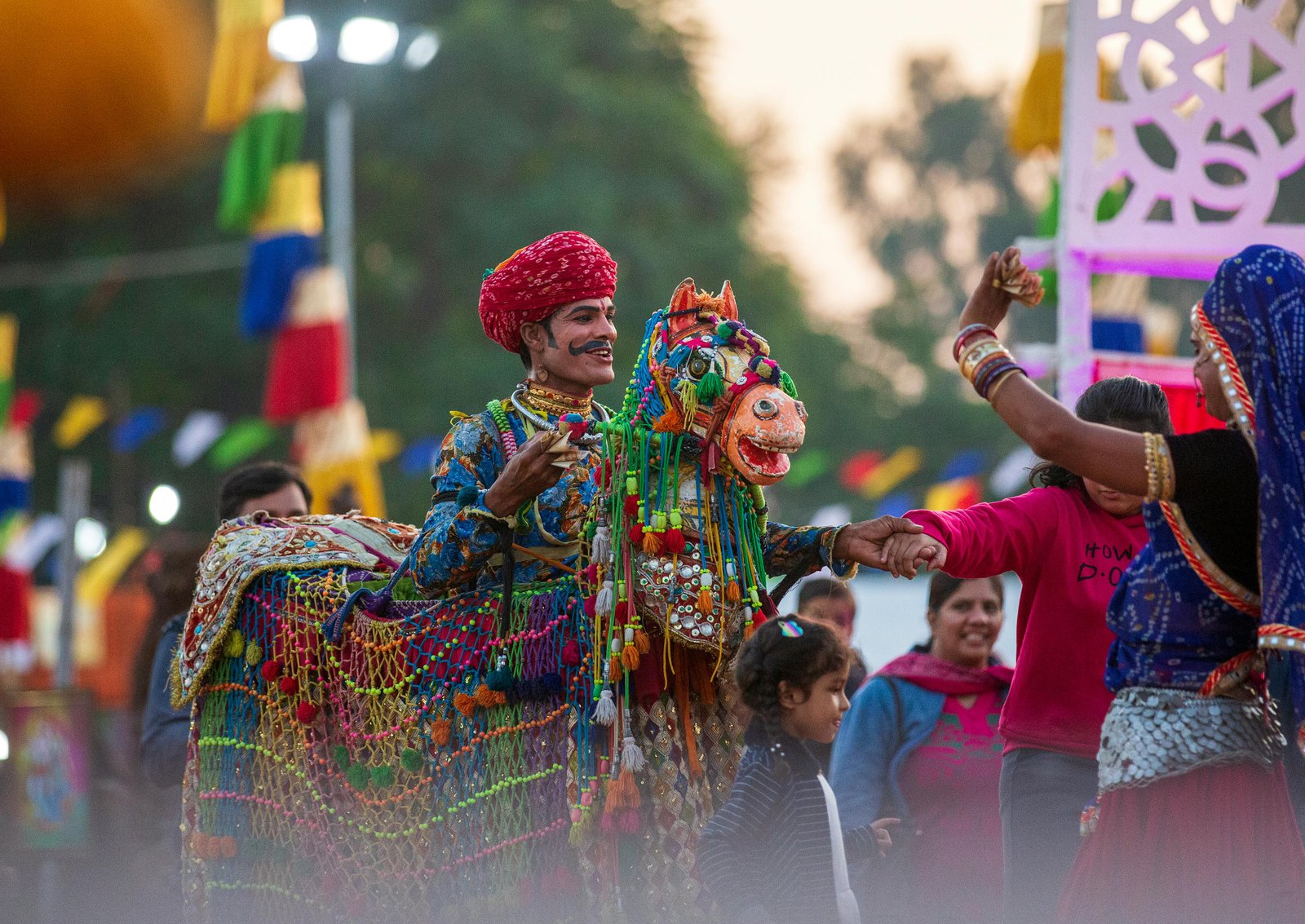
Pushkar Mela: A Cultural Extravaganza in the Heart of Rajasthan
For most of the year, Pushkar is quiet. A small lake town in Rajasthan where cows wander the streets, temple bells go off at odd hours, and backpackers eat banana pancakes on rooftop cafés. It's peaceful. Maybe even sleepy. And then, for one week every autumn, the whole place ...
Meet your AI Story Guide
Turn this field note into a one-minute brief with the essential places, people, and traditions.
The Sacred City and Its Mythological Roots
Before the fair, there's the town itself. And Pushkar isn't just another dot on the Rajasthan tourist trail. It's one of India's oldest and holiest pilgrimage sites. This assertion has been true for a very long time.
The mythology goes like this: Lord Brahma, the creator god in the Hindu trinity, dropped a lotus from his hand. Where it landed, a lake formed. That's Pushkar Lake. Alternatively, it is also known as Pushkarraj Talab. Devotees believe the water has divine properties, and bathing in it during Kartik Purnima, the full moon in the Hindu month of Kartik, is said to wash away your sins. Whether you believe it or not, seeing hundreds of people wade into the lake at sunrise with such conviction affects you.
Fifty-two bathing ghats surround the lake, but three carry special significance. Brahma Ghat is where Lord Brahma supposedly performed his yagna, the holy fire ritual. Vishnu Ghat is where Lord Vishnu is believed to have taken a spiritual dip. Shiva Ghat is where Lord Shiva meditated. Three ghats, three gods. A divine trinity built into the geography of a tiny desert town. That's why people who take their pilgrimages seriously put Pushkar near the top of their list.
The Brahma Temple: A Divine Rarity
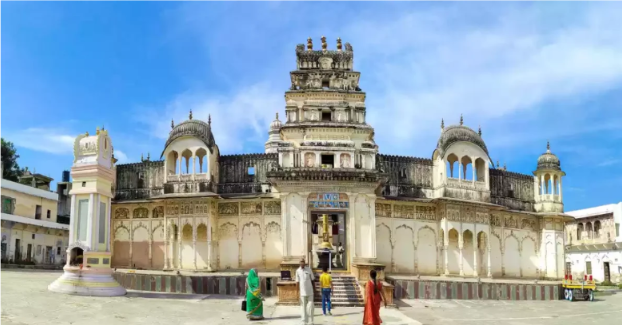
You can't talk about Pushkar without talking about the Brahma Temple. It's one of the only temples in the entire world dedicated to Lord Brahma. Think about that for a second. Brahma is one of the three principal gods in Hinduism, and he barely has his temple anywhere. Pushkar is the exception.
The temple is built from white marble with a red spire that catches the desert light in a way that's impossible to ignore. Inside, there's a four-faced idol of Brahma sitting with his consort, Goddess Gayatri. The walls carry the hum of chants that have been going on here for centuries.
The backstory is excellent. According to legend, Brahma needed to perform a sacred yagna at Pushkar, but his wife Savitri hadn't shown up in time. The ritual required a wife's presence, so Brahma married Gayatri, a shepherd girl, to complete it. Savitri found out, lost it completely, and cursed Brahma: he would never be worshipped anywhere else on earth. And that curse, apparently, stuck. Pushkar became the one place where Brahma gets his due. Everywhere else, nothing.
Up on the hills surrounding the main temple, you'll discover the Savitri Temple and Gayatri Temple. Both hold mythological importance, but they're also worth the climb for practical reasons, such as the breathtaking panoramic views they offer and the opportunity to experience the serene atmosphere away from the bustling town below. The views of Pushkar town and the lake from up there are stunning, especially at sunrise when the light hits the water and the whole valley goes gold.
From Cattle Fair to Cultural Carnival
The Pushkar Mela didn't start as this massive international event. Centuries ago, it was a cattle and camel trading fair. Herders from across Rajasthan would bring their animals, do their business, and go home. Straightforward. Functional.
It's still partly that. Walk through the fairgrounds today and you'll see herders in bright turbans showing off their best camels and horses.
Animals decorated with mirrors, beads, and embroidery that clearly took someone days to put together. Camel races happen. Camel beauty contests happen, and yes, they're taken seriously. Horse trading goes on in corners of the fair that most tourists never reach.
But the cattle fair grew into something much bigger, evolving into a vibrant cultural festival that attracts thousands of visitors each year. The cultural side exploded. Folk dancers performing to dholak beats. Men competing in turban-tying competitions, which are more intense than they sound.
Moustache competitions featuring gentlemen with extraordinary facial hair that defies the laws of physics, confidently strutting as if on a runway. The markets are packed with textiles, jewellery, leather goods, and handcrafted souvenirs that range from genuinely beautiful to gloriously tacky.
The fair now draws visitors from all over the world. Photographers, backpackers, culture tourists, and families on holiday – everyone mixed together in this desert carnival that somehow manages to be simultaneously ancient and completely alive. It's Rajasthan distilled into one week: colour, hospitality, chaos, warmth, and a cultural depth that sneaks up on you between the camel rides and the chai stalls.
A Spiritual Celebration by the Sacred Lake
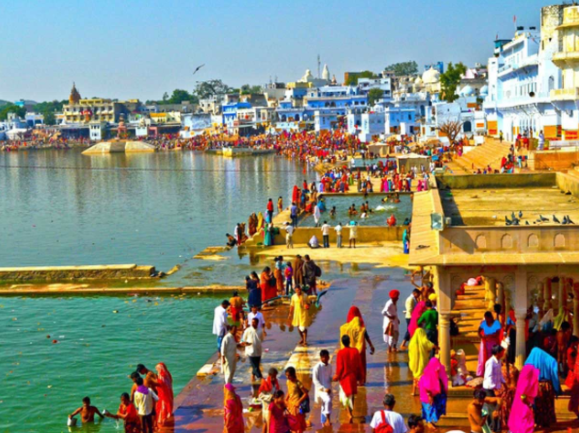
Here's the thing that makes Pushkar different from every other fair in India. Underneath all the noise and spectacle, the spiritual core never disappears. It's always there, running parallel to the festivities like an underground river.
Mornings start with temple bells and conch shells bouncing off the lake. Pilgrims, hundreds of them, gather at the ghats before the sun is fully up. Some have travelled enormous distances to be here. They wade into the water, pray, and come out looking lighter. It's hard to explain if you haven't seen it. There's a sincerity to it that cuts through any scepticism you might have walked in with.
And then the evenings. The Maha Aarti at Kartik Purnima is the centrepiece of the entire week. Imagine thousands of tiny oil lamps being set afloat on the lake. The full moon overhead. Chanting from the ghats. The water catches every flicker of light until the surface looks like it's breathing fire. The term 'celestial' is often used to describe this experience, and in this instance, it does not seem like an exaggeration.
That sacred and spectacular balance, existing in the same space without one drowning out the other, is genuinely rare. Most events are one or the other. Pushkar manages to be both, and that's what keeps people coming back.
A Feast for the Senses
Outside the ghats and the fairgrounds, Pushkar's streets deliver their own kind of experience. Vendors everywhere. Colourful turbans hang from shopfronts. Embroidered fabrics draped over railings. Trinkets, jewellery, and leather bags spill out of the stalls and onto the narrow lanes.
The food situation is solid. Dal baati churma is Rajasthan's signature dish served on steel plates at crowded street stalls. Kachori. Rabdi. Malpua. All of it is best eaten with chai served in an earthen cup, which gives the tea a slightly muddy, smoky flavour. can't replicate in a ceramic mug. If you're not eating while walking through Pushkar, you're doing it wrong.
And then there's the ambient entertainment. Musicians playing on corners. Jugglers working crowds. Mehndi artists setting up shop on blankets spread across the sidewalk. The town is small; you can walk across it in twenty minutes, but for this week, every square meter has something happening. It's sensory overload, but the good kind. The kind where you stop trying to process everything and just let it wash over you.
Planning Your Visit
The Pushkar Mela 2025 runs from October 30 to November 5. Kartik Purnima, the full moon and the main day for spiritual rituals, falls on November 5. That's the day you want to be there for the Maha Aarti, if nothing else.
Getting there is relatively easy. By train, the nearest station is Ajmer Junction, which is about 15 kilometres away. Most people grab an auto or a cab from there. By road, Pushkar connects well to Jaipur, Udaipur, and Delhi; it's a common stop on the Rajasthan road trip circuit. By air, Kishangarh is the closest airport, though Jaipur International is a more practical option for most travellers flying in from far away.
Accommodation ranges from desert camps, the atmospheric option, to heritage havelis and budget guesthouses. One piece of advice: book early. Pushkar, a small town, experiences a complete influx during the mela. If you leave accommodation planning until the last minute, you'll either pay through the nose or sleep somewhere you'd rather not.
More Than Just a Fair
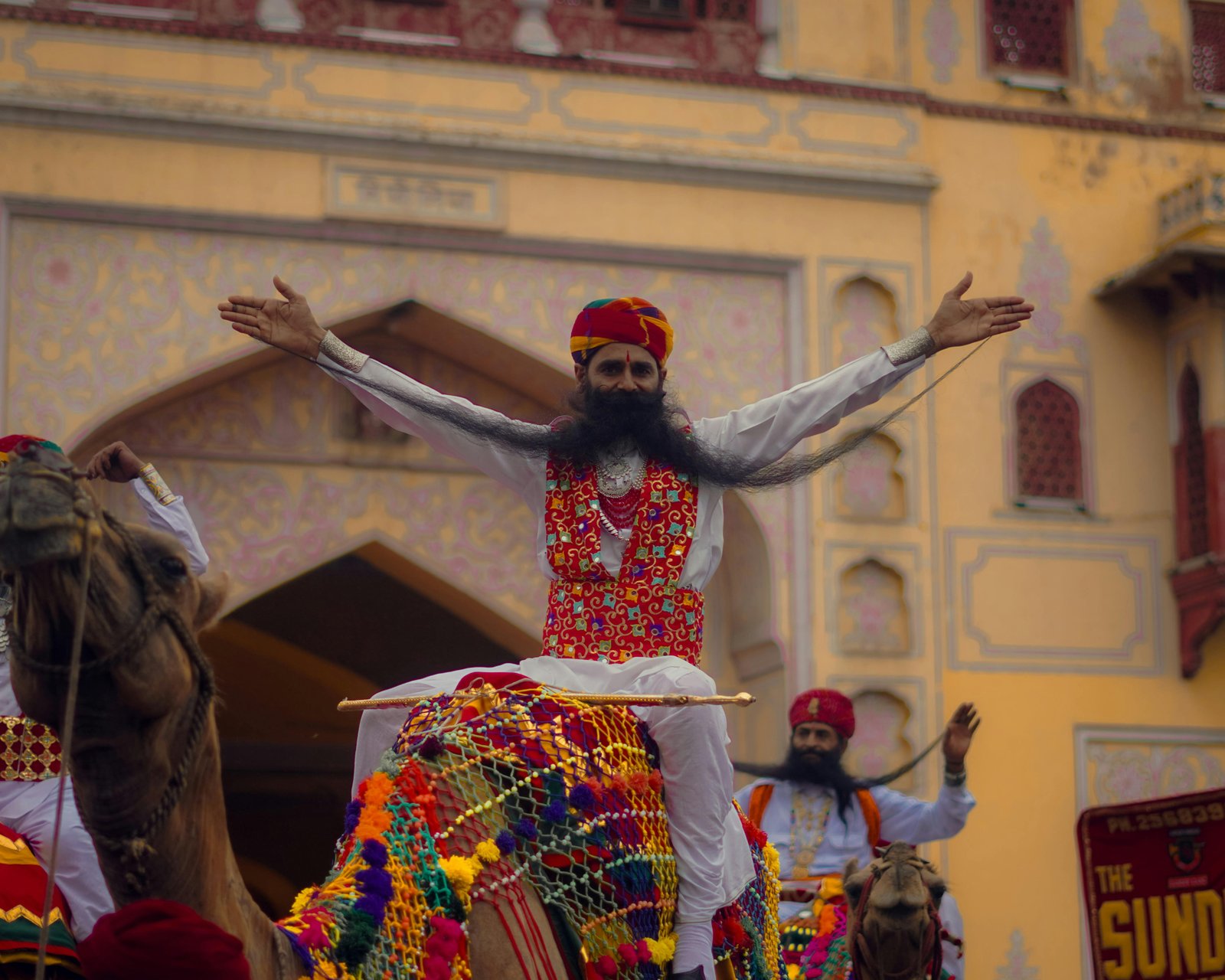
The Pushkar Mela isn't something you attend and then summarise neatly. It's too many things at once for that. The Pushkar Mela is simultaneously a livestock market, a spiritual gathering, a cultural festival, a photography goldmine, a food crawl, and a music event, all taking place in a town so small you could throw a stone across it.
What makes it work is that none of those elements feel forced. The pilgrims aren't performing for the tourists. The herders aren't there for the cameras. The musicians aren't hired entertainment. Everyone is doing their own thing, for their own reasons, and the fair is just what happens when all of those reasons overlap in the same tiny town during the same week.
Pushkar delivers, whether you're there for the blessings, the stories, the lake's light, or just to stand in the middle of something extraordinary. It has been delivering for centuries. And every November, when the full moon rises over that sacred lake and a thousand lamps hit the water, it makes a pretty convincing case that it'll keep delivering for centuries more.
In Pushkar, every colour tells a story, every sound sings a prayer, and every soul finds a moment of peace.