Rajasthani Folk Arts: A Journey into the Cultural Heart of India
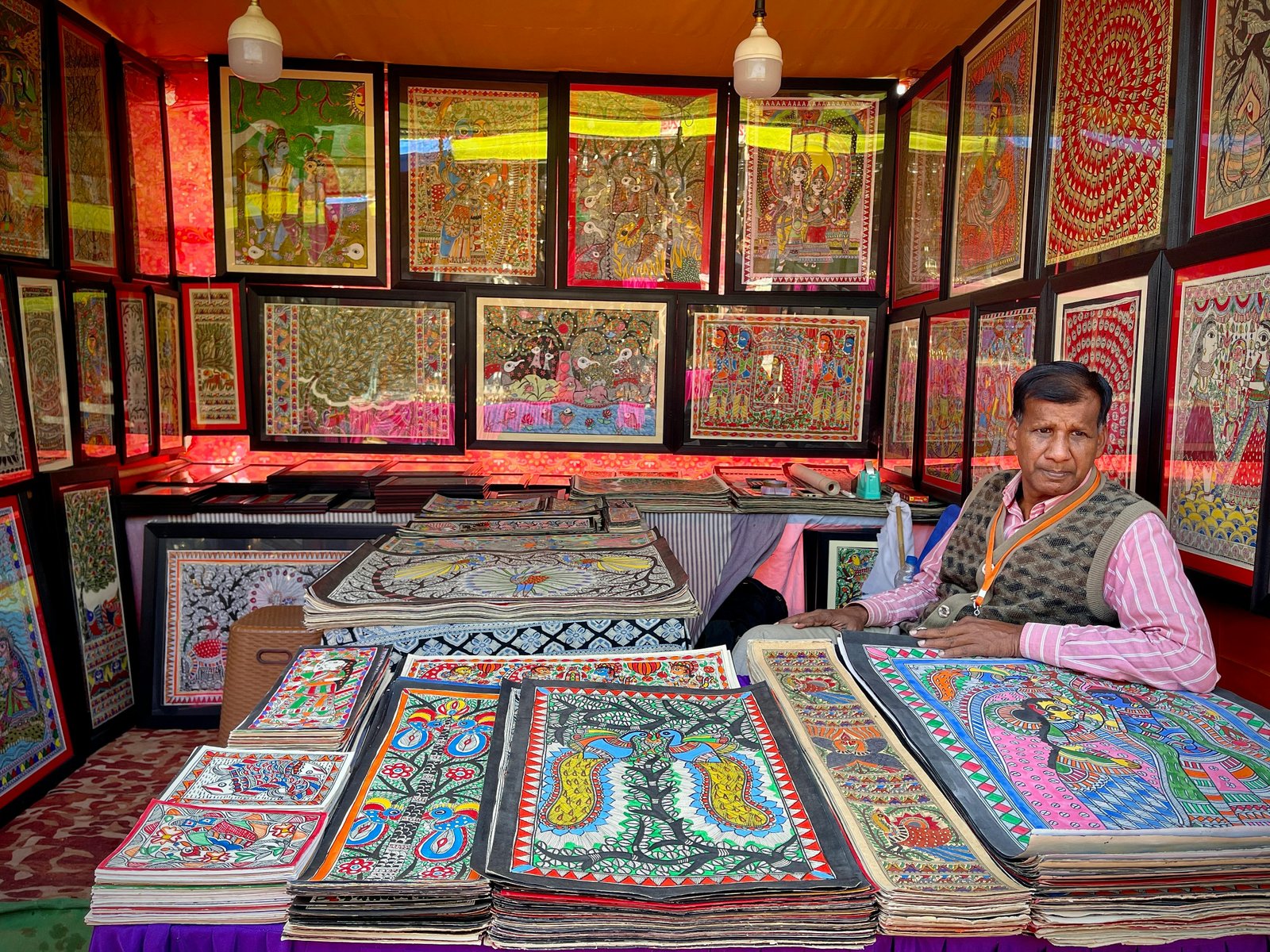
Rajasthan gets a lot of attention for its forts and palaces. Rightly so, they're stunning. But if that's all you see, you're only getting the tourist version of the place. The real cultural engine of Rajasthan runs on something quieter and older than any palace. It runs on art...
Meet your AI Story Guide
Turn this field note into a one-minute brief with the essential places, people, and traditions.
Thapa Art: Painting Faith on the Walls
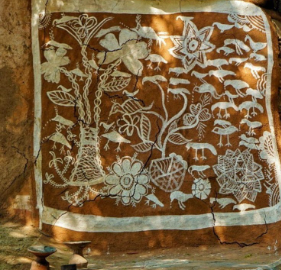
If you walk through certain villages in Rajasthan, particularly during wedding or festival season, the exterior walls of homes look like they've been illustrated by hand. Because they have been. Bold colours, confident lines, and images of gods and goddesses, birds, and flowers spreading across whitewashed surfaces. That's Thapa Art. Thapa Art is considered one of the oldest mural traditions in the region.
The artists are mostly women. They're called 'chiteras', and the materials they use are almost entirely natural kumkum, sindoor, ghee, henna, and cow dung. Nothing from an art supply store. The palette is limited, which forces a kind of creativity that more options could actually kill. Vivid reds, strong yellows and earthy browns – and somehow, with just those, they create images that stop you mid-step.
Every painting has a reason behind it. A wedding. A birth. A festival. A prayer for protection or prosperity. The wall isn't a canvas in the Western sense; it's more like a prayer board. The images aren't decorative. They're functional. They're asking for something, or thanking someone for something, or marking that something important happened here.
The women who do this work don't call themselves artists, usually. It's just something they do. Something their mothers did. Something happens when life calls for colour.
Mandana Art: Drawing Auspicious Beginnings
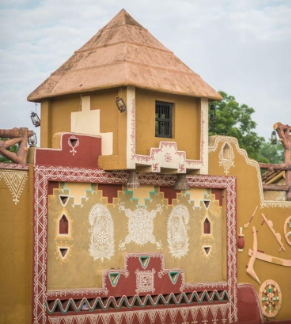
Thapa takes care of the walls. Mandana handles the floors.
It's practiced across Rajasthan, and if Thapa is the mural tradition, Mandana is the geometric one. Women draw intricate patterns on floors and walls using a mixture of cow dung, red ochre geru and chalk. The designs are geometric and floral, precise in a way that suggests years of practice passed down through watching and doing rather than any formal instruction.
The word "Mandana" literally means "to decorate.". And the occasions that trigger it are the important ones: festivals, fasts, weddings, Govardhan Puja, and the birth of a child. The patterns are believed to welcome prosperity and keep evil spirits away. Whether you see that as genuine spiritual practice or beautiful superstition probably depends on your worldview. Either way, the art itself is undeniably skilled.
One thing that stands out about Mandana is that it's often communal. Women from a household, sometimes a whole village, will work together on a large design. It becomes social. This collective creative act serves as bonding time, where gossip and recipes exchange alongside chalk and pigment. The art lives in that shared experience as much as it lives in the finished pattern on the floor.
Rajput Paintings: The Royal Legacy on Canvas
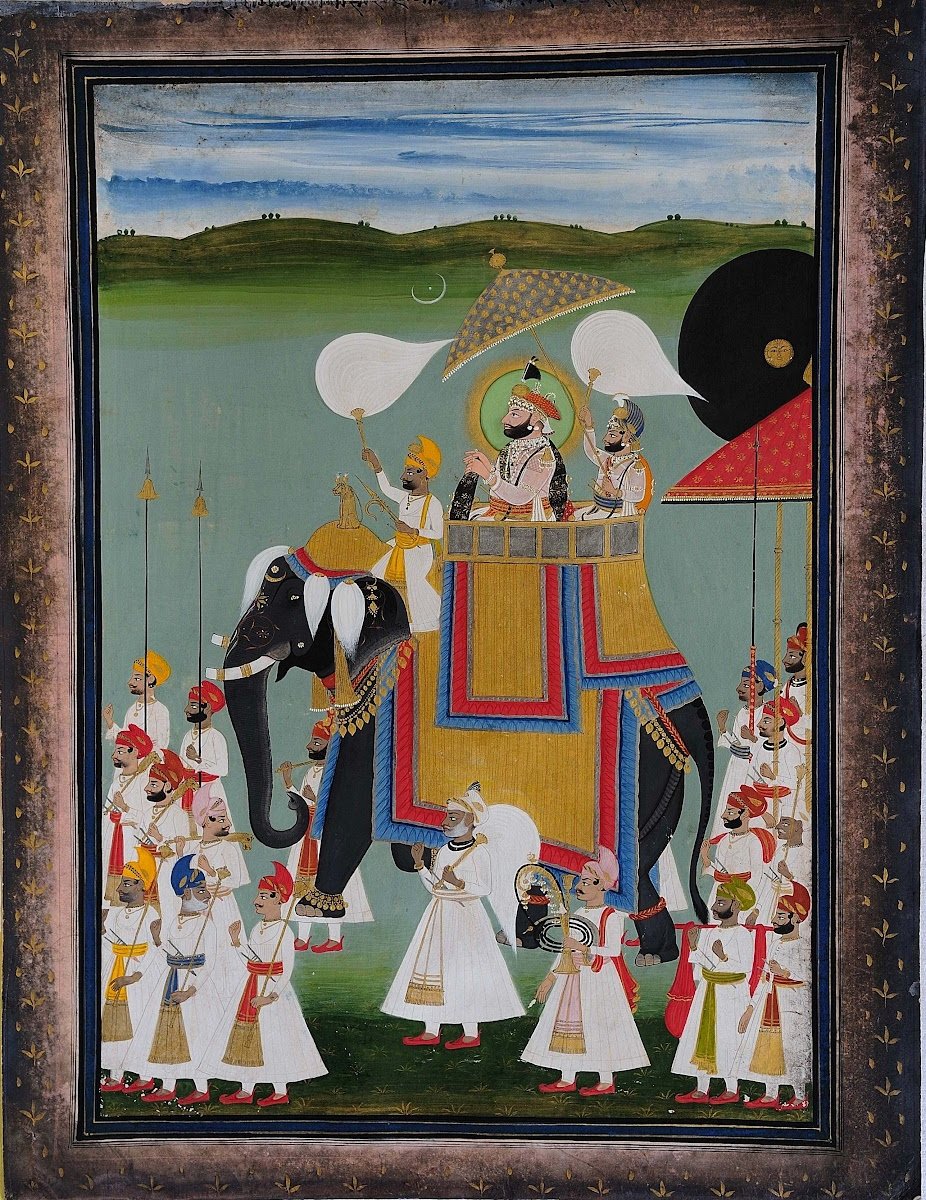
This one comes from the other end of the social spectrum. Rajput paintings emerged from the royal courts of Rajputana in the 17th century, and they carry all the refinement and ambition you'd expect from art made for kings.
The subjects are mostly religious and mythological. Scenes from the Ramayana and the Mahabharata and stories from Lord Krishna's life. The colours are mineral and plant-based: think deep blues, rich reds, burnished golds with actual gold leaf, silver, and lapis lazuli worked into the more elaborate pieces. Standing in front of one is a bit like looking through a window into a world where everything is more vivid than real life.
Technically, these paintings are extraordinary. The brushwork is fine enough to make you squint. The composition is disciplined. The emotional range goes from tender love scenes to battlefield chaos, all rendered with the same careful attention to detail. Whoever was painting these wasn't just talented; they were obsessive about getting it right.
But here's what keeps Rajput paintings from feeling stuffy or purely aristocratic: the subject matter regularly draws from folk life. Village scenes. Daily routines. Ordinary people engage in everyday activities alongside gods and heroes. That mix of regal grandeur and everyday humanity is what contributes to this tradition its particular warmth. The palaces commissioned the art, but it remembered the people outside the palace walls.
Gudna Motif: Tattoos that Tell Stories
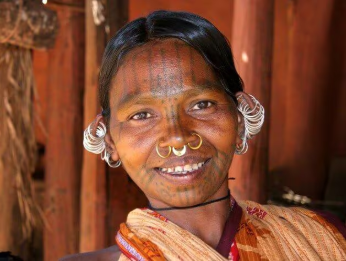
In Rajasthan's tribal and rural communities, some of the most fascinating art doesn't hang on a wall or sit on a floor. It lives on skin.
Gudna Motif is traditional tattoo art. The technique is old and direct: a needle dipped in soot from an oil lamp, mixed with natural ingredients like kumkum, aak milk, and juice from the harsingar flower. No machines. No studio. It takes just a practitioner, a needle, and someone willing to sit still while their body becomes a canvas.
The designs aren't random. Gods, animals, flowers, the sun, and the moon – each motif carries a specific meaning. Protection. Fertility. Spiritual strength. And different designs identify different things about the wearer: which community they belong to, whether they're married or unmarried, and what stage of life they're in. Reading someone's tattoos, if you know the language, is like reading a condensed biography.
The tattooing itself is a communal event. It happens during festivals, life milestones, and gatherings. People come together for it. There's pain involved; obviously it's a needle and soot, but the pain is part of the point. It makes the mark mean something. Every Gudna tells a story of belonging, belief, and the willingness to carry that belief on your body permanently.
Phad Painting: The Scrolls that Sing
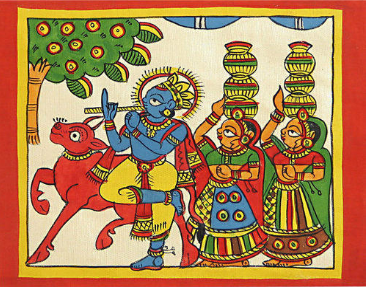
This one's special. Phad paintings are long cloth scrolls, some of them stretching thirty feet, that narrate the stories of local folk deities like Pabuji, Goga Chauhan, and Amar Singh Rathore. It's painted with natural vegetable dyes, and every inch is packed with figures, scenes, colours, and narrative details.
But the scroll is only half the art form. The other half is performance. Phad paintings were never meant to hang on a wall and be admired silently. They were designed to be unrolled at night by Bhopas, traditional folk storytellers who sing the stories depicted in the scroll while gesturing at the images, illuminated by oil lamps. It's painting plus music plus theatre – all happening simultaneously in a village square under the stars.
Each Phad functions as a portable temple, essentially. A sacred object that carries an entire mythology within it and can travel from village to village, bringing the stories with it. In a region where oral tradition has always been more important than written record, the Phad was the technology that preserved history. It served as a visual archive that resonated with the spirit of the times.
The tradition is still alive. There are still Bhopa families in Rajasthan who perform with Phad scrolls. Fewer than there used to be, certainly. But alive. Experiencing a Phad performance in person, with its singing, flickering lamplight, and gradual scroll reveal, prompts a reevaluation of the true nature of art.
Sanjhi Art: A Ritual of Devotion and Memory
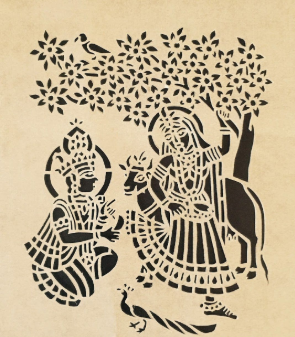
Sanjhi doesn't get the attention that Phad or Rajput paintings do. It's quieter. More private. But in some ways it's the most emotionally captivating folk art in Rajasthan.
Also called "Sanjhuli" or "Sinjhi", it's practiced by unmarried girls during Pitru Paksha, the period dedicated to honouring ancestors. The ritual starts on the full moon of Bhadrapada and runs until the new moon of Ashwin. Every day, at that window, a wall plastered with cow dung is decorated with bas-relief motifs made from flowers, coloured paper, and kharia, a chalk solution.
Here's the part that intrigues people: each day's design is created and then erased. Built up, admired, destroyed. The cycle repeats daily until the final image, called 'kilakot', is made on the last day. Creation and dissolution, over and over, as a deliberate practice.
It's teaching something, obviously. Patience. Detachment. The idea that beauty doesn't have to be permanent to be meaningful. For the young women practicing it, Sanjhi connects them to their ancestors through the act of making and unmaking a physical meditation on memory, femininity, and the passage of time.
It's folk art functioning as philosophy, and it happens in courtyards with chalk and cow dung and teenage girls who probably don't consider themselves to be philosophers. But that's what they're doing.
A Living Legacy
The thread running through all of these traditions is functionality. None of them started as decoration for their own sake. Thapa blesses a home. Mandana welcomes prosperity. Gudna marks identity. Phad carries mythology. Sanjhi processes grief and honours lineage. The art exists because people needed it to serve a purpose, and it turned out to be beautiful as well as useful.
Rajasthani folk art stands apart from purely aesthetic art due to the coexistence of purpose and beauty. These traditions don't need galleries. They need courtyards, festivals, and families willing to keep practising them. And remarkably, despite all the forces that push traditional crafts toward extinction, that's precisely what's still happening across the state. Women still paint walls before weddings. Bhopas still unroll scrolls at night. Girls still make and unmake Sanjhi during Pitru Paksha. The chain hasn't snapped yet.
Experience Rajasthan's Living Arts with Folk Experience
Reading about these art forms provides you information. Being in the room while they happen gives you understanding. Those are two completely unique things.
At Folk Experience, we take you to the source. Not galleries or cultural centres, but the actual villages and courtyards where these traditions live. You watch women painting Mandanas on fresh clay walls, using the same materials their grandmothers used. You sit with Phad painters and hear them explain what each section of a thirty-foot scroll means. You meet tribal communities where Gudna is still part of life, not a museum exhibit.
Our journeys are built around genuine encounters with real practitioners. People who didn't learn this craft from a book. People for whom this art is as ordinary and essential as cooking or farming. That's the version of Rajasthan we think is worth travelling for – the one where every colour has a reason behind it, and every reason connects to the life being lived right now.
Discover the living pulse of Rajasthan, where every colour has a story, and every story is a celebration.