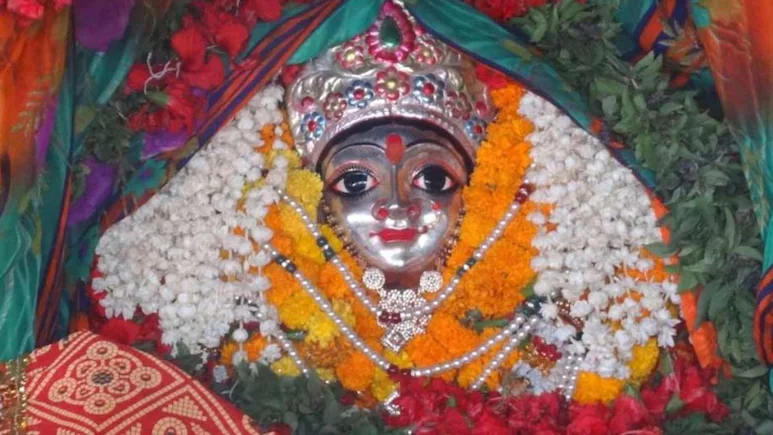
Sheetala Ashtami: Rajasthan's Festival of Renewal, Faith & Healing
When Rajasthan's golden dunes start shimmering under the first real heat of summer, something unusual happens across the state. Homes wake up to a day of quiet devotion, Sheetala Ashtami. Kitchens stay silent, no stoves are lit, and the smell of yesterday's cooking mixes with ...
Meet your AI Story Guide
Turn this field note into a one-minute brief with the essential places, people, and traditions.
Origins and Significance: The Healing Goddess of Rajasthan
Locally, people call it Basoda. It falls eight days after Holi, during the Krishna Paksha of Chaitra month, right when the weather switches from cool to warm. This isn't just symbolic, it's practical. As temperatures climb, infections and fevers become more common, which is exactly when prayers to Sheetala Mata begin. She's seen as the protector against heat-related illnesses and skin diseases.
Sheetala Mata's worship goes way back. The Skanda Purana describes how Lord Brahma gave her the divine task of safeguarding all beings on Earth.
She's depicted riding a donkey, not the most glamorous choice, but there's meaning in it. She carries a broom, a pot of cool sanctified water, and neem leaves. Each item represents cleansing, purification, and healing.
For Rajasthanis, she's a fascinating mix of fierce and compassionate. She watches over children, heals the sick, and steps in when nature turns harsh.
Her broom sweeps disease away, her pot cools fevers, her neem purifies, Sheetala guards every home.
Rajasthani families have long believed that praying to Sheetala Mata shields their children from smallpox, chickenpox, rashes, and seasonal infections. The festival isn't showy or grand. It's quieter than that, a heartfelt thank you to nature's healing powers.
Basoda: The Ritual of Rest and Renewal
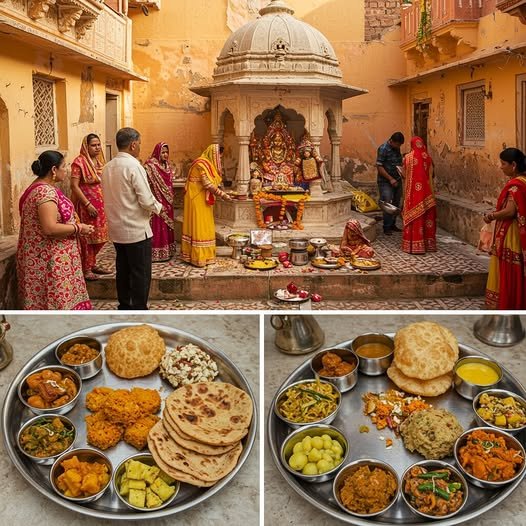
Here's what makes Sheetala Ashtami really different: the Basoda tradition. Families eat basi (day-old) food that was prepared the night before. No fires get lit, no cooking happens, and kitchens get a complete break. The previous night's meals are offered to the goddess first, then everyone eats.
This makes complete sense in Rajasthan, where seasons dictate what people eat. Summer's approaching, so heavy, spicy foods get set aside for lighter, cooling dishes.
What goes on the menu? Rabri, aate ka halwa, ker sangri, parathas, kanji vada, dahi vada, and puri, all served cold. Simple food, but loaded with meaning. It's basically a reminder to sync your body with the changing season.
The goddess embodies Sheetalta (coolness), and eating these cooling dishes is believed to bring her blessings. Clay pots also make a comeback in kitchens on this day, another example of Rajasthan's age-old connection with nature.
In Rajasthan's scorching heat, food becomes a form of prayer, calm, cool, and prepared with gratitude.
The Sacred Morning: Rituals of Purification
Dawn on Sheetala Ashtami starts early. Women wake before sunrise and take cold baths, it's both physical and spiritual cleansing. The puja area gets thoroughly cleaned, then decorated with red cloth, flowers, and an earthen pot filled with cool water.
Here's what's unusual: no incense or fire. That's different from most Hindu festivals. Sheetala's essence is all about stillness and serenity. Offerings stay simple, curd, rabri, gur, halwa, and barre. Turmeric, vermilion, sandalwood paste, and neem leaves get added as women pray before Sheetala Mata's image or pot.
Worship starts with Lord Ganesha's invocation, then moves to offering water, sweets, and basi prasad to the goddess. Each gesture, each bit of water poured, is asking for peace, health, and household balance.
Village prayers happen in small, quiet groups. No drums banging, no firecrackers, just faith spoken in whispers and hymns.
The Culture of Donkey Worship
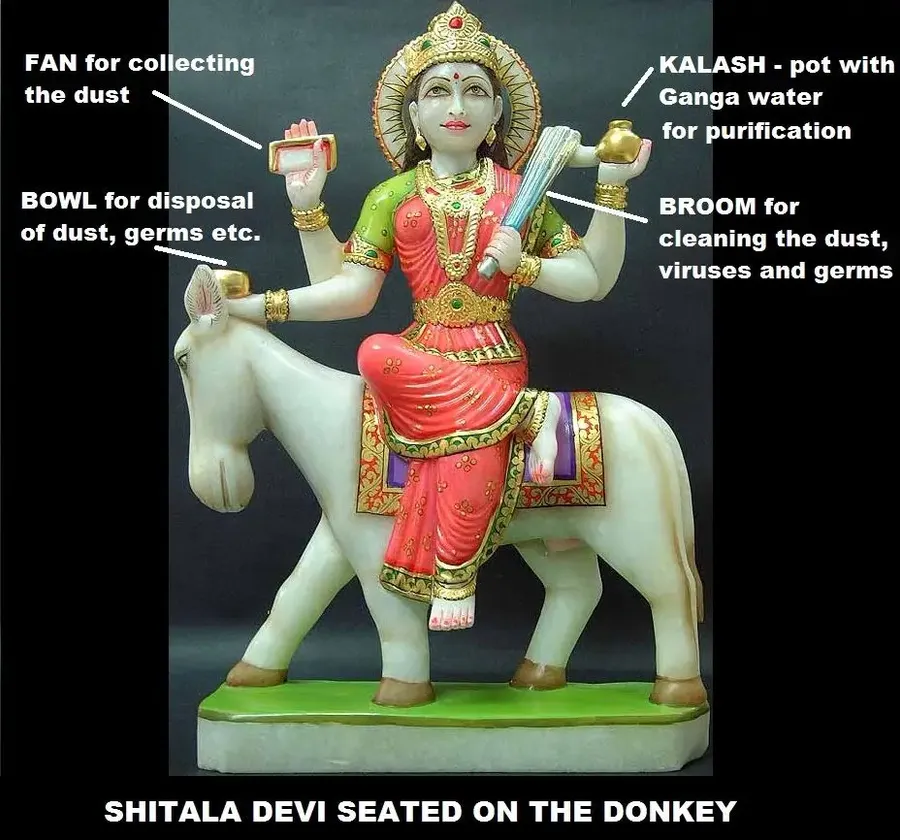
This is probably Rajasthan's most unusual custom during Sheetala Ashtami, worshipping donkeys.
Sheetala Mata rides a donkey, so the animal gets treated with real reverence. By honoring the donkey, devotees thank it for its endurance and service. It's recognizing humility and strength in the most unexpected package.
Donkeys get the full treatment: tilak marks on foreheads, marigold garlands, and treats like gur and chapatis.
In places like Bikaner and Jaipur, priests conduct special ceremonies at Sheetla Mata temples. Families show up, the air fills with bhajans and "Jai Sheetla Mata!" chants, and devotees queue up with prasad. Donkey owners walk through neighborhoods so people can offer blessings, it's genuinely touching to watch this community moment unfold.
Even the humblest creature becomes sacred through devotion's lens.
This tradition says something important about Rajasthani spirituality. It doesn't create hierarchies. Everything belongs, from the most powerful deity down to the hardest-working animal.
Scientific Wisdom in Tradition
Strip away the religious layer, and Sheetala Ashtami's rituals reveal smart health practices. The timing matters, it's post-Holi, right as summer starts, exactly when waterborne illnesses and heat-related problems spike. Emphasizing cleanliness, eating cooling foods, and giving kitchen fires a rest all help with detoxification and hygiene.
Even those neem leaves and water offerings aren't just symbolic. They've got actual antiseptic and purifying properties. What looks like pure religion is really ancestral health knowledge wrapped in ritual form.
Through devotion's language, ancient India taught the science of balance.
Celebrations Across Rajasthan
Whether it's busy Jaipur and Jodhpur or quiet village courtyards, Sheetala Ashtami gets observed with devotion rather than fanfare. Temple queues grow long as women bring basi prasad and pray for family wellbeing.
Bikaner's Sheetla Mata temple becomes the center of activity. Hundreds gather with hymns and offerings.
Jaipur mornings fill with prayer sounds, while kids play around brightly decorated donkey processions.
In rural Rajasthan, it stays intimate. Neighbors swap prasad, families head to temples together, and the whole day moves with peaceful reverence.
Other festivals explode with noise and color. Sheetala Ashtami does the opposite, it celebrates silence and simplicity. It's like a collective breath before summer's intensity hits.
A Festival of Renewal
What Sheetala Ashtami really does is remind Rajasthanis about living in sync with nature, something they've managed for centuries despite the land's extremes. It's teaching balance: hot versus cool, indulgence versus restraint, chaos versus calm.
The goddess might be worshipped through earthen pots and basic offerings, but her message transcends time, care for others, maintain cleanliness, and coexist peacefully.
Modern life keeps getting louder and faster. Festivals like this one offer something different, a chance to pause and honor the ancient wisdom that still runs through Rajasthan's cultural veins.
Experience Sheetala Ashtami with Folk Experience
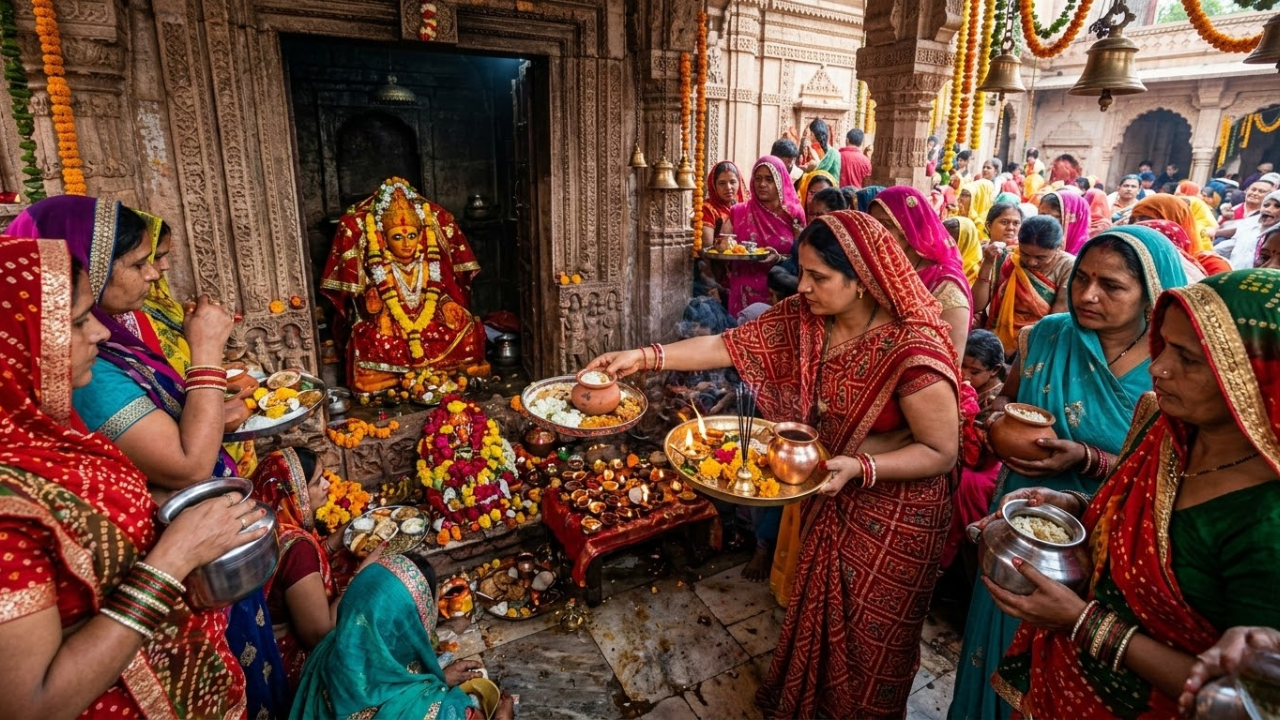
Really understanding Sheetala Ashtami means going beyond watching. It means joining local women as they prepare Basoda prasad before the sun comes up, visiting peaceful Sheetla Mata temples where dawn prayers are barely whispered, and hearing village elders tell stories about healing, faith, and balance.
Folk Experience designs journeys that put travelers inside Rajasthan's living heritage, you're participating, not just observing. Everything's built on respect, storytelling, and sustainability, creating genuine connections with communities keeping these traditions alive.
We work directly with local families, temple caretakers, and artisans. That means every experience helps support rural livelihoods and keeps centuries-old practices going. Nothing's staged, it's authentic, human, and tied to everyday rhythms.
Travel with Folk Experience and you'll find that silence has its own music, prayers murmuring, neem leaves rustling, devotion echoing softly across desert winds.
Experiencing Sheetala Ashtami means feeling Rajasthan breathe, slowly, calmly, perfectly in tune with Earth's rhythm.
To experience Sheetala Ashtami is to feel Rajasthan breathe, slowly, calmly, in tune with the rhythm of the Earth.