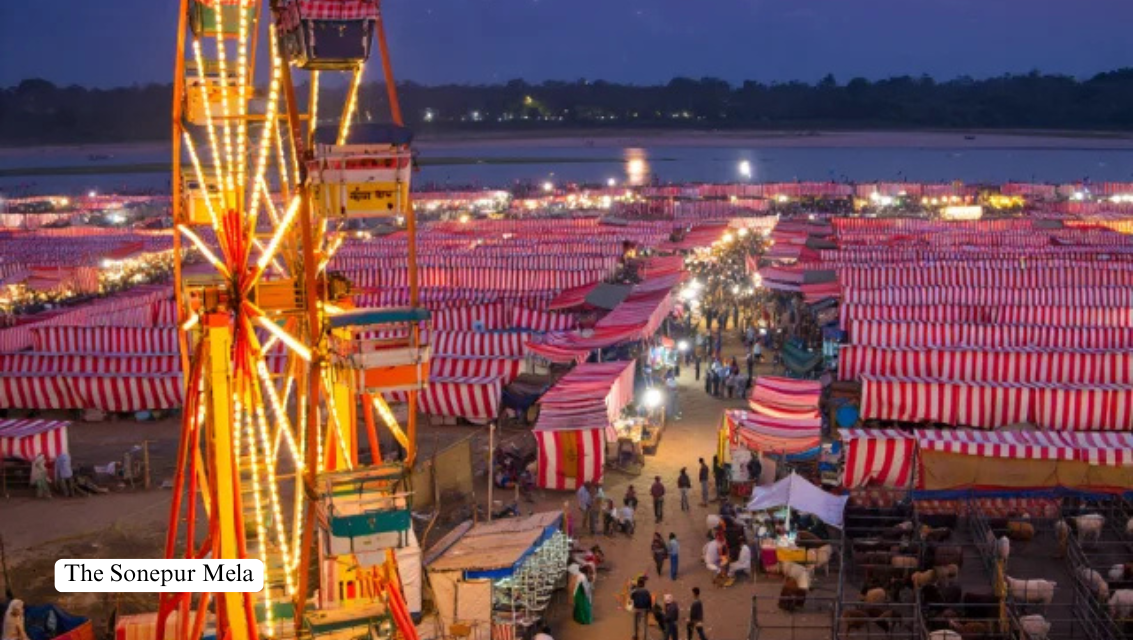
Sonepur Cattle Fair: Trade, Animals, and Rural Economy
In Bihar, some economies don’t sit behind desks or screens.They assemble on riverbanks, move on hooves, and negotiate face-to-face. They rely on memory as much as money and on reputation as much as contracts. The Sonepur Cattle Fair is one such economy. Held annually at the co...
Meet your AI Story Guide
Turn this field note into a one-minute brief with the essential places, people, and traditions.
Why Sonepur Matters to Bihar’s Rural Economy
In rural Bihar, a cow or a pair of bullocks is not just property. It is the difference between a farm that runs and one that does not. Cattle pull the plough, provide milk, return manure to the soil, and stand as a cushion when the harvest falls short. Horses carry people, serve ceremonies, and earn income. Sonepur is where this whole system of animal-based rural life comes to be renewed every year.
For households where farming is everything, fairs like Sonepur shape the year. A farmer might sell an older animal, use the money to buy a younger one, settle a few debts, and plan the next season's labour, all in the same week. For many of them, it is the only time of year they engage with a market of this scale. Sonepur does not compete with local markets. It gives them something local markets cannot: choice, comparison, and price discovery at scale.
Sonepur as a Historical Trading Centre
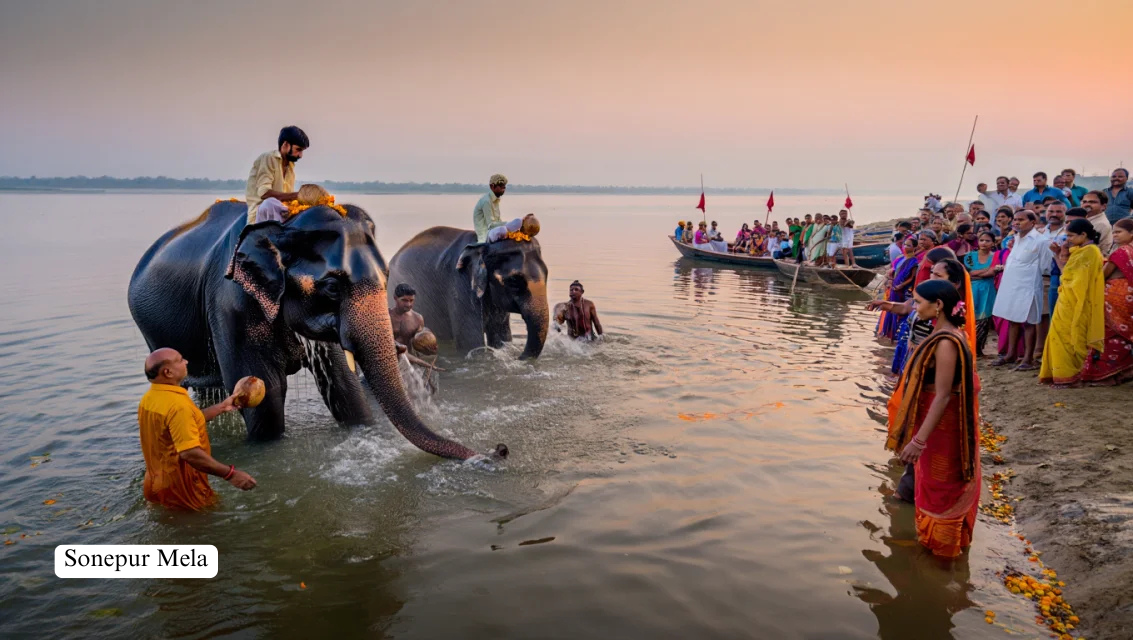
Sonepur has been drawing traders and farmers for well over three centuries. It grew up around the point where the Ganga and Gandak rivers meet, which made it a natural hub when rivers were the main way goods moved across eastern India. Horses, elephants, cattle: the fair became a place where animal trade happened at a scale that no local market could match.
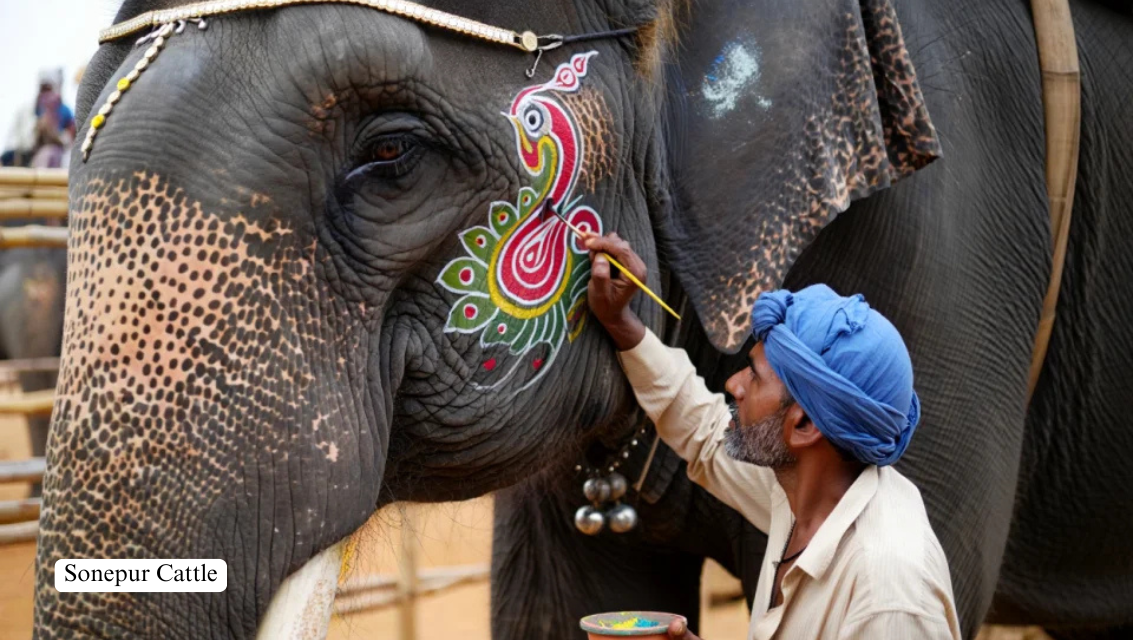
Under the Mughals and later under colonial administration, Sonepur became a node that trade routes bent toward. The commodities have shifted. Elephants are gone from the picture now, and the trade is far more cattle-heavy than before. But the geography is unchanged, and so is the logic. The fair keeps going not because someone has modernised it, but because the reason it exists in the first place has never stopped being real.
Cattle, Horses, and Livestock as Economic Assets
At Sonepur, buying an animal is nothing like buying a tractor part or a bag of seed. Each animal has a history. A farmer buying a bull wants to know how old it is, what kind of work it has done, how it handles stress, whether it eats well. He will ask the seller directly, and the seller will answer in detail, because his reputation for next year depends on telling the truth today.
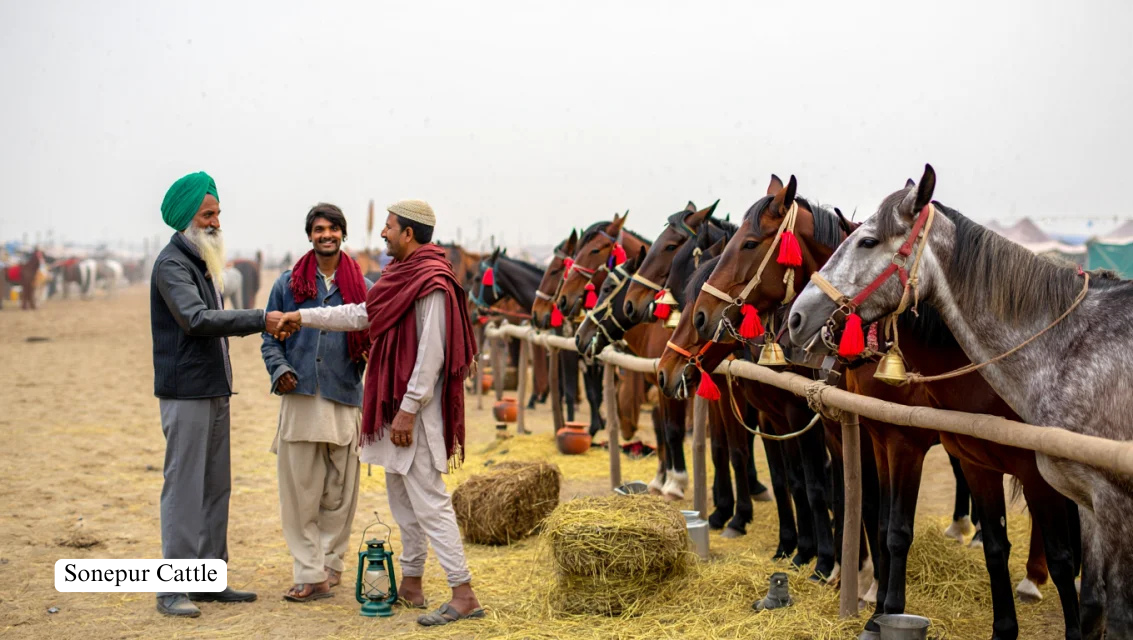
Horses, fewer now than in earlier decades, still matter in specific regions for transport and ceremonial use. Other livestock feed dairy operations and secondary income streams. But across all of it, the transaction is unhurried. Knowledge changes hands alongside the animals. And the animals themselves represent something more than what they cost. They represent next year's output, next year's income, next year's stability.
Negotiation, Trust, and Informal Market Systems
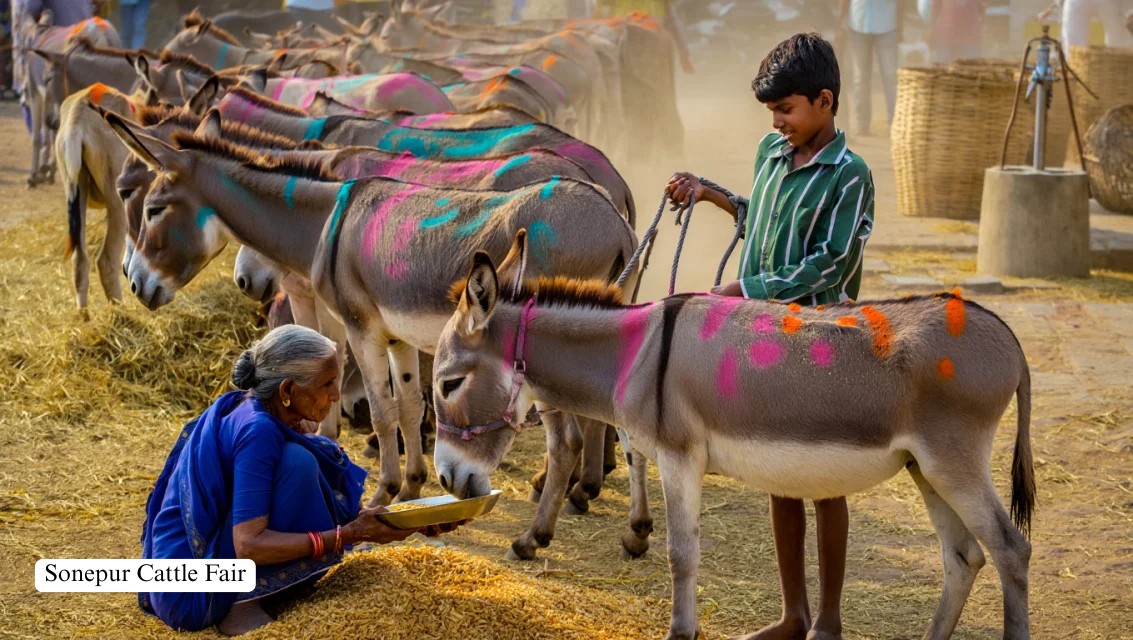
Nothing at Sonepur is signed. Prices get hammered out through back-and-forth negotiation, often in front of bystanders who know both parties and have opinions. Reputation is the only guarantee. A seller who overcharges or misrepresents an animal will find that word travels fast through the networks that make up this fair. Returning traders know each other. Long-running relationships are the infrastructure here. No paperwork needed when memory is doing the work instead.
Seasonal Movement and Rural Mobility
Sonepur pulls people and animals inward from across the region weeks before it opens. Farmers start planning the trip in advance. Transport routes adjust. Temporary shelters go up around the fairgrounds. Labour migrates toward the site for the duration. For those weeks, rural mobility across this whole part of Bihar picks up sharply.
This movement is built into the agricultural calendar. Sonepur comes at a point in the year when the intense harvest work has eased off. It gives rural life a release point, a moment where resources can shift hands before the next cycle of work begins.
The Fair as a Temporary Economic City
When the fair opens, the empty ground transforms fast. Markets appear almost overnight. Fodder sellers set up along the entry routes. Vets and animal health workers move through the pens. Food stalls line the paths between animal enclosures. Artisans find a market for rope, tools, and tack. Transporters are busy. Daily wage workers find work. For several weeks, Sonepur is one of the more economically active places in Bihar. When it ends, the infrastructure vanishes just as quickly. But the animals are on new farms, the money has moved, and plans have been made. The economic impact keeps running after the tents come down.
Social Life Inside the Marketplace
Sonepur is where news travels. A farmer from one district hears what prices look like in another. A trader picks up information about which areas are having a good breeding season and which are not. Matchmaking conversations happen quietly at the edge of the crowds. Old disputes get resolved informally, without courts or officials. The economic activity and the social activity are completely intertwined here. You cannot really separate what is trade from what is conversation.
Why Sonepur Is More Than a Spectacle
People have been taking photographs at Sonepur for decades now, and in recent years it has attracted travel writers and tourists looking for something picturesque. The elephants are gone, but the scale and variety still make for good images. None of that is why Sonepur exists.
What keeps it going is the same thing that started it: function. Farms need animals. Animals need buyers. The fair brings them together every year at a scale that nothing else does. Strip away the photography, strip away the tourists, and the market would still be there. A fair survives when it is useful. That is the whole story.
What Sonepur Reveals About Bihar’s Economy and How It Changes the Way You Travel
Sonepur shows you an economy built on relationships rather than records, on movement rather than storage, and on the kind of knowledge that passes between people rather than through documents. When you understand what is actually happening at this fair, Bihar stops looking underdeveloped and starts looking like a place with its own systems that work.
Markets begin to look like cultural spaces. Trade begins to look like tradition. The animals themselves tell you something about how livelihoods are structured and how fragile they can be. Travel shifts: less photographing, more listening; less passing through, more paying attention. Sonepur says it plainly: in Bihar, economy and culture are not separate things. The economy is one of the ways culture keeps going.
Why Choose Folk Experience to Travel Bihar
Travelling in Bihar is not about ticking destinations off a list. It is about understanding people, practices, and everyday life. That is where a folk-led approach makes all the difference.
Folk Experience lets you travel. Bihar differently:
Because markets explain society: Sonepur reveals Bihar’s hidden ways of working.
Because livelihoods matter: Folk-led travel respects rural economies, not just their aesthetics.
Because stories stay with you longer than photographs: You leave with real understanding.
Because travel should slow you down: Folk experiences encourage patience, listening, and presence.
Because understanding builds respect: When you travel through markets, labour and lived systems, you don’t just see Bihar. You start to understand it.
Choosing a folk experience means choosing depth over distance, people over places, and meaning over movement.
That is how Sonepur reveals itself: not as a fair to see, but as an economy to understand.
keep wandering