Statue of Unity: Beyond the World's Tallest Statue
Most introductions to the Statue of Unity lead with numbers. Height. Scale. Records broken. Those facts land, but they don't tell you much. A statue this large could have been built for any reason, but the reason here is the part worth understanding. It rises on the banks of t...
Meet your AI Story Guide
Turn this field note into a one-minute brief with the essential places, people, and traditions.
Sardar Patel: The Architect of India's Unity
Most people know Sardar Vallabhbhai Patel as a figure of independence. Fewer think about what he did in the years that followed, which is where his real test began.
When the British left, India faced two problems at once. One was self-governance. The other was far thornier: over 560 princely states, each with its ruler, its own interests, and its own sense of what it owed the new nation, if anything. The question of whether they would come together or pull apart sat at the very foundation of what India would become.
The future of India depended on whether these states would:
• unite into a single republic, or
• fracture into competing entities
Patel went at this without drama. His approach had three clear tools:
• negotiation
• persuasion
• administrative firmness
Where there was room for dialogue, he used it fully. Where delay started threatening the country's cohesion, he moved quickly. What made him effective wasn't force or charisma. It was his ability to keep pragmatism and principle in the same hand without dropping either.
Unity, for Patel, wasn't an ideal to aspire to. It was a practical necessity. Without it, governance, security, and survival were all at risk. That clarity of purpose earned him the title Iron Man of India, though his real strength was in responsibility, not rigidity. He consistently chose long-term national stability over personal recognition.
The Statue of Unity doesn't mark a single moment in his life. It marks the whole sustained effort of building a nation after the celebration of independence had died down.
Why This Landscape Matters?
The location wasn't chosen casually. The Narmada Valley, with its forests, hills, and tribal communities that have lived here for centuries, is about as far from a seat of political power as you can get. That distance is part of what makes it meaningful.
Placing the statue here pulls Patel's legacy out of the world of institutions and policy and puts it into a living landscape. The people of the Narmada Valley have always measured time by seasons, rivers, and ritual rather than political milestones. Their relationship with this land is old and specific.
That context reframes what unity means:
• not as authority imposed from the centre
• but also inclusion across geography, culture, and ecology
The Narmada River runs through all of it, steady and persistent, sustaining the land and the people around it without drawing attention to itself. There's something of Patel in that. The monument, set within this landscape, asks you to think of unity as careful holding rather than dominance.
Cultural Landscapes Around the Statue
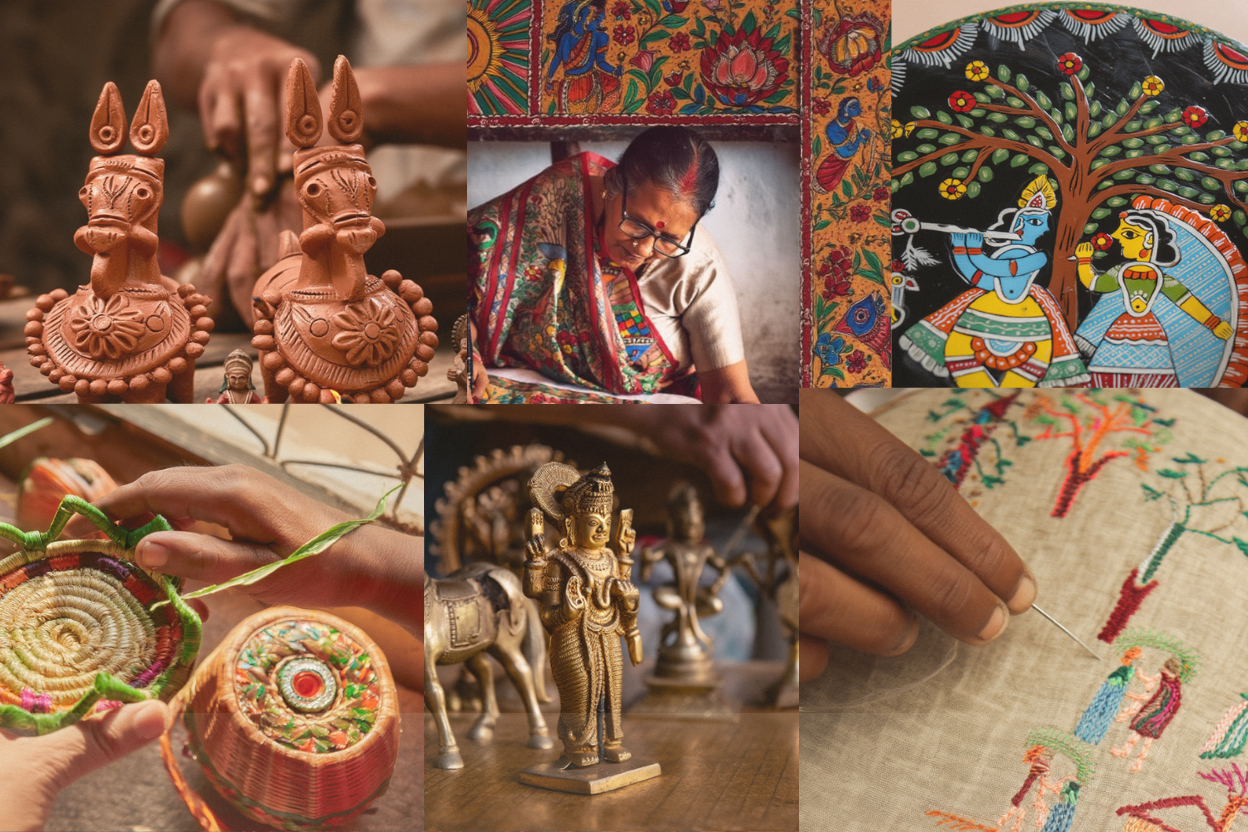
Step away from the monument, and the region opens up into something quieter and much older. Villages in the Narmada Valley don't run on fixed schedules. Life follows monsoon, harvest, and forest cycles. Culture isn't something that happens on a stage here. It runs through everyday life.
Art appears on:
• walls
• tools
• clothing
• domestic spaces
Patterns repeat not because anyone decided to keep them, but because stopping would mean losing something with no written record to fall back on. What people know here, they learn by watching. Elders don't teach through instruction; they teach by doing, and younger people learn by being nearby.
Music and movement belong to labor and gathering, not performance. Taking part matters more than watching.
These traditions predate modern nationhood by a considerable margin, yet they continue within it. That's its own kind of unity: coexistence without erasure.
Seen in that light, the Statue of Unity doesn't stand apart from living cultures. It stands among them.
Ecology and the Idea of Stewardship
The landscape surrounding the statue isn't a backdrop. Forests, riverbanks, and protected zones are part of what the site is actually saying. Integration, here, goes further than politics. It reaches into the natural systems that make any kind of continuity possible.
The Narmada Valley supports:
• forest corridors
• riverine habitats
• biodiversity alongside human settlement
That coexistence speaks to stewardship, the understanding that you have a responsibility to care for what enables life across generations, not just your own.
Walking trails, conservation areas, and open river views pull attention away from consuming the site and toward relating to it. That shift echoes what Patel's leadership was built on:
• stability over spectacle
• foresight over immediacy
Unity, in this landscape, becomes inseparable from care.
Moving Beyond the Monument
Once the scale stops being the first thing you notice, the monument starts doing something more remarkable. It stops being an object and starts being a question.
What does unity actually mean? How do you hold difference without flattening it? What kind of leadership can sustain diversity over time?
What Patel's life actually shows is that unity and uniformity are two different things. You can hold a diverse country together without resolving every difference. What it takes is discipline, a willingness to negotiate, and a sense of responsibility that outlasts any single political moment.
The statue doesn't hand you answers. It opens up space for inquiry. That's what moves it beyond commemoration into something that continues to matter.
Why the Statue of Unity Still Matters?
At a time when division is loud and effortless, the Statue of Unity points toward a different kind of leadership. Not one built on charisma or visibility, but on sustained responsibility.
Patel's work is a reminder that unity doesn't arrive and stay. It has to be worked at, negotiated, and renewed. The monument prompts us to ask not just how it was done then but how it's done now.
Experience the Statue of Unity with Folk Experience: Understand Unity Beyond Scale
Folk Experience doesn't bring you here to look at one thing and leave. The visit moves across ideas, landscapes, and communities that weave their lives into this place.
The experience invites visitors to:
• see beyond height, records and statistics
• Connect Patel’s leadership to the cultural and ecological context of the Narmada Valley
• understand unity as something practiced in the day to day, and not declared in the abstract
• explore the intersection of political integration, cultural continuity and environmental stewardship
• experience the site as movement through stories, and not as a fixed point
• reflect, question and carry the idea of unity forward
The Statue of Unity is not about how tall we stand but how firmly we stand together.