Teej Festival in Rajasthan: A Celebration of Monsoon, Devotion & Joy
You know that moment when the first raindrops finally hit Rajasthan's bone-dry earth? Something shifts. The desert doesn't just get wet, it bursts into this whole song-and-dance routine called Teej. Temple bells ring out across pink-walled cities, swings pop up everywhere catc...
Meet your AI Story Guide
Turn this field note into a one-minute brief with the essential places, people, and traditions.
The Spirit of Teej: Love, Renewal & the Rhythm of Rain
Teej shows up right when monsoon does, bringing this sense of renewal after months of absolutely brutal heat. All across Rajasthan, it flips the golden desert into something green and gets everyone into celebration mode.
The festival's really about Shiva and Parvati's divine love, representing faith, not giving up, and keeping marriages strong. Women fast and pray hoping their husbands live long, healthy lives and that marriages stay happy. Unmarried girls? They're praying to find good partners.
But Teej goes deeper than just ritual stuff. It's this big cultural celebration of everything women represent, strength, beauty, joy, the works. Through music, fasting, swinging, and partying, women don't just connect with the divine. They connect with each other, swapping laughter, songs, and stories while the monsoon rains fall.
The Many Faces of Teej: Haryali, Kajari & Hartalika
Rajasthan doesn't do just one Teej, there are actually three different versions, each with its own vibe and backstory.
Haryali Teej is the main one, especially in Jaipur and Bundi. It happens on the third day of Shukla Paksha in Shravan (around July–August). Haryali literally translates to "green," which makes total sense given how lush everything gets during monsoon.
Kajari Teej, sometimes called Badi Teej, happens over in Mewar and Marwar around the same period, somewhere between Raksha Bandhan and Janmashtami. It's celebrating those gorgeous dark monsoon clouds (that's what Kajali means) and all the abundance they bring.
Hartalika Teej focuses specifically on Parvati's penance to win over Shiva. It's the ultimate devotion-and-endurance story.
Together, these three versions tell this complete story mixing love, nature, and starting fresh across Rajasthan.
Every song women sing during Teej? It's a prayer, not just hoping for love, but asking for life itself.
The Religious Significance: The Eternal Union of Shiva and Parvati
The backstory behind Teej goes way, way back, like, as old as the Kailash mountains. According to legend, Goddess Parvati did some seriously intense penance, fasting for 108 years straight, trying to get back together with Shiva.
Her devotion was so strong that Shiva couldn't resist, he accepted her as his wife. That's why Teej celebrates not giving up, divine love paying off, and faith getting rewarded.
Fun fact: "Teej" actually means this tiny insect that shows up during rains. It symbolizes being reborn and getting a fresh start. In Rajasthan, the festival becomes this beautiful tribute to both divine love and the whole renewing vibe of monsoon, blossoms pushing up through dust, hearts finding devotion through longing.
Rituals and Festivities: Three Days of Faith and Celebration
Teej plays out over three days packed with both devotion and fun.
Day 1: Dar Khane Di, The Feast of Love
Day one's called Dar Khane Di. Married women get meals lovingly cooked by their husbands, it's this sweet gesture celebrating partnership and being grateful for each other.
Houses fill up with laughter, singing, and amazing smells from sweets like ghewar, malpua, and puri-halwa. It's all about warmth and hanging out together before the serious fasting starts.
Day 2: The Fasting & Worship
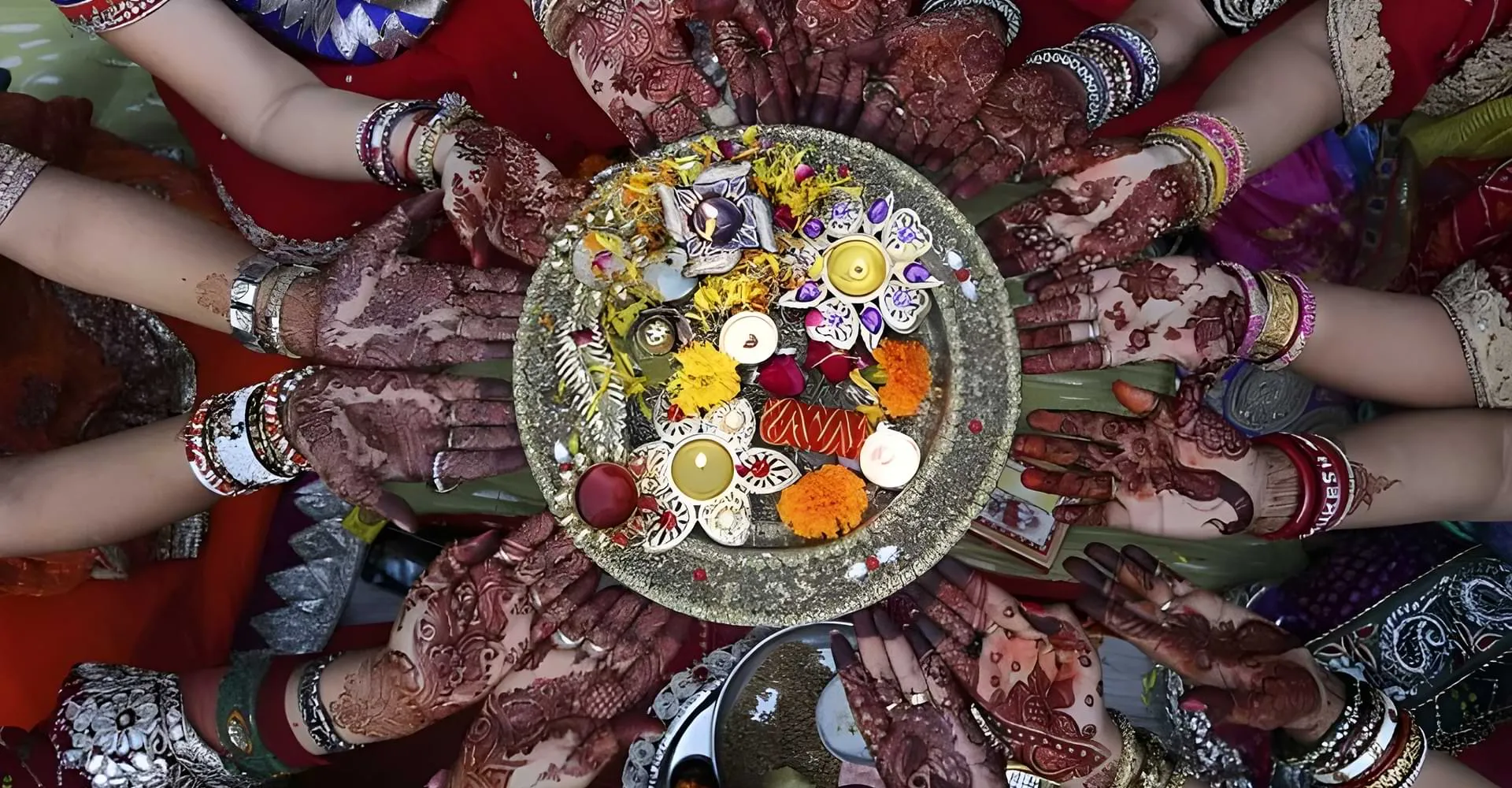
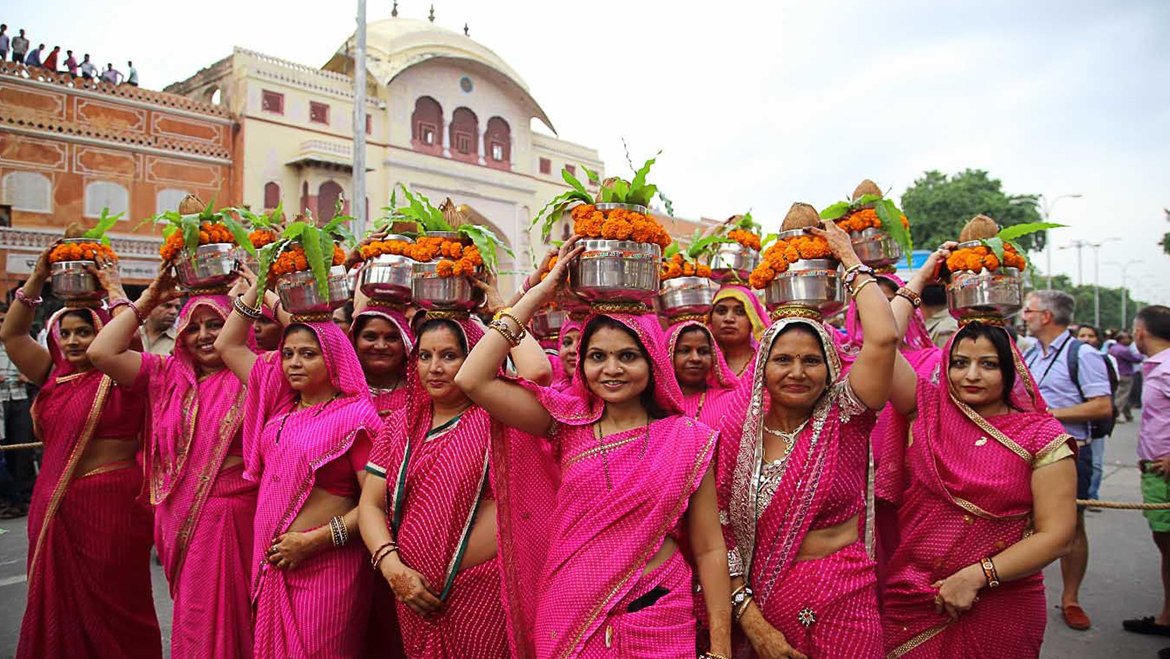
Day two gets spiritually intense. Women do this strict fast, lots of them skip both food AND water, to honor Parvati's devotion. They take baths in red mud (it represents getting purified) and get all dressed up in solah shringar, which means sixteen different adornments: bangles, anklets, sindoor, mehndi, colorful sarees in green, red, or pink.
Shiva and Parvati temples get absolutely mobbed with devotees. Can't get to a temple? No problem, people set up altars right at home, decorating idols or photos of the divine couple with flowers and red cloth. They bring offerings like bel patra, aak flowers, honey, shringar saman, fruits, sweets, everything representing prosperity and purity.
When evening rolls around, women light ghee lamps and tell the Teej Katha, it's Parvati's story about unbreakable faith and love. The whole vibe glows with reverence and sisterhood as communities come together for shared devotion.
Day 3: Swings, Songs & the Celebration of Life
Day three just explodes with color and noise. Decorated swings wrapped in marigolds and ribbons get hung from trees and in courtyards, they symbolize monsoon showing up to party. Women sing folk songs and perform traditional Ghoomar dance, their bright lehengas spinning around like blossoms in the wind.
Every courtyard has laughter mixing with raindrops. The smell in the air? Henna, rain, and earth, that's the signature scent of Rajasthani monsoon happiness.
The Jaipur Teej Procession: A Royal Spectacle
In Jaipur, Teej transforms into this massive royal pageant. It's so impressive that travelers fly in from around the globe just to witness it.
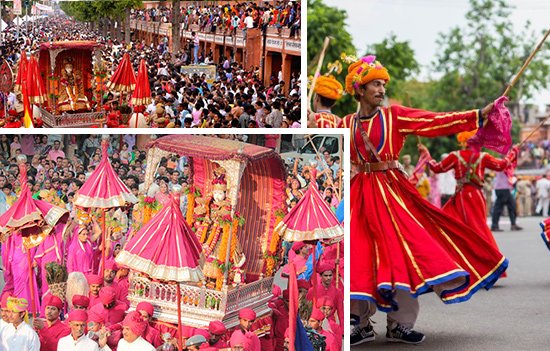
For two full days, the Pink City becomes this moving display of devotion and art. The big highlight is the Teej Sawari, this grand procession kicking off at historic Tripolia Gate (which only opens to public a few times yearly) and snaking through Chhoti Chaupar and Gangauri Bazaar before ending at Chaugan Stadium.
Goddess Parvati's gorgeously decorated idol sits on a golden palanquin, getting carried by eight guys in red turbans. The procession's got elephants, camels, bullock carts, folk dancers, musicians playing traditional instruments, the whole deal.
Folk artists belt out Rajasthani ballads while local women pass around Teej Prasad to the crowd, sweets, ghewar, poori-halwa, all that good stuff.
Teej fairs pop up everywhere in Jaipur and Bundi, selling handcrafted jewelry, textiles, those vibrant Leheriya sarees. Every stall gives you this window into Rajasthan's craftsmanship.
In Jaipur, Teej isn't something you just watch, you feel it in every drum beat and every splash of color flooding the streets.
The Sweet Taste of Tradition: Ghewar
Can't have Teej without Ghewar, it's Rajasthan's go-to festive sweet. Round, honeycombed, dripping with syrup. Pure happiness in edible form.
They make it from flour, ghee, and sugar syrup, sometimes topping it with silver foil or malai. Ghewar basically IS Teej in dessert form.
Soon as those first rains hit, sweet shops all over the state start pumping out fresh ghewar. That smell? That's what monsoon tastes like.
Colors, Faith & Connection: The Essence of Teej
What really sets Teej apart is how it blends sacred stuff with celebration. It's not just about skipping meals, it's about faith. Not just getting dressed up, it's acknowledging love, gratitude, bouncing back from hard times.
In Rajasthani culture, women carry this role of keeping balance, between family stuff and faith stuff, between duty and devotion, between partying and praying. Teej honors all of that through songs, rituals, and women supporting each other.
Teej proves that devotion doesn't have to be all serious and quiet, it can dance, sing, and bloom right along with the rain.
Experience Teej with Folk Experience
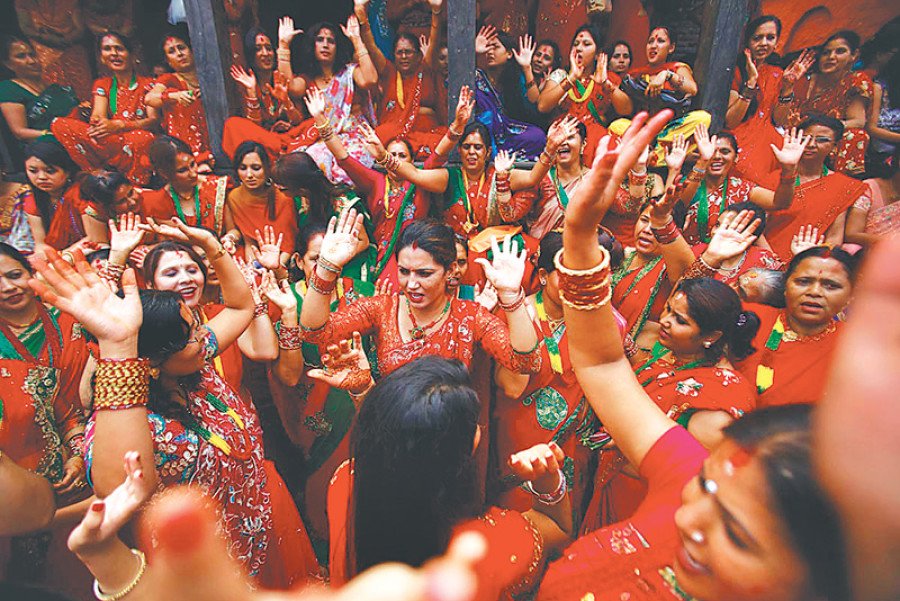
Really getting Teej means feeling Rajasthan wake up, not just seeing colors and hearing sounds, but feeling heartbeats. Walk alongside women dressed in green and vermilion, hearing their laughter echo under rain-washed skies. Learn to put together Sindhara baskets filled with sweets and bangles, listen to those melodic Teej geet women sing in courtyards, and join the Ghoomar dancing while monsoon breeze weaves through the ghagras.
At Folk Experience, we don't think festivals like Teej are shows you watch from the sidelines, they're stories you live. Each trip we organize invites you right into Rajasthan's living traditions, sharing food, humming folk songs, witnessing devotion and celebration's divine mix through the eyes of folks keeping these traditions breathing.
We build our experiences working hand-in-hand with local families, artisans, and temple communities. Your being there directly helps cultural preservation and keeps rural livelihoods going. You're not just passing through Rajasthan, you're becoming part of its rhythm, its rain, its whole renewal thing.
Travel with Folk Experience and figure out what celebrating really means, not through being fancy, but through grace, real connections, and joy flowing as freely as that first monsoon rain.
Seeing Teej in Rajasthan means watching devotion come alive, not in hushed silence, but in color, song, and people celebrating together.