Terracotta Craft: Clay, Culture, and Rituals in Bihar
The potter's wheel in Bihar has not fundamentally changed in two thousand years. The clay is still sourced from the same riverbanks and flood plains that have been supplying it since the Mauryan period. The kiln is still a pit in the ground or a simple above-ground structure w...
Meet your AI Story Guide
Turn this field note into a one-minute brief with the essential places, people, and traditions.
The Clay and Where It Comes From
Bihar's terracotta begins with the landscape. The alluvial soil of the Gangetic plains, deposited by the Ganga and its tributaries across millennia of seasonal flooding, produces clay with a specific character: fine-grained, plastic enough to be worked on the wheel or by hand, and responsive to the temperatures of simple wood-fired kilns in ways that other clay types are not.
Potters possess knowledge of the specific clay sources that work for their purposes, which riverbanks yield clay with the right consistency, which deposits have the right absence of sand, and which soils respond correctly to the preparation process. This is not knowledge that can be acquired quickly. It is accumulated through years of working with the material in the specific landscape, understanding how seasonal flooding changes the clay's properties, how moisture content at collection affects workability, and how the mineral composition of clay from one bend in the river differs from the clay a kilometre upstream.
The preparation of the clay before shaping begins is itself labour-intensive. Collected clay is cleaned of organic matter and stones, soaked in water, kneaded to a consistent texture, and rested to allow the moisture to distribute evenly through the mass. A potter who rushes this process will produce objects that crack during drying or shatter during firing. The preparation is the foundation, and its quality determines what is possible afterward.
"Bihar's terracotta potters are, among other things, some of the most knowledgeable soil scientists in the state. They have been observing the behaviour of specific clay deposits across specific seasons for generations, and they carry within the practice of their craft a material knowledge of the Gangetic floodplain that no formal survey has fully documented."
What Is Made and What It Is For
The objects Bihar's potters produce fall into categories that have remained relatively stable across centuries because the needs they serve have remained relatively stable.
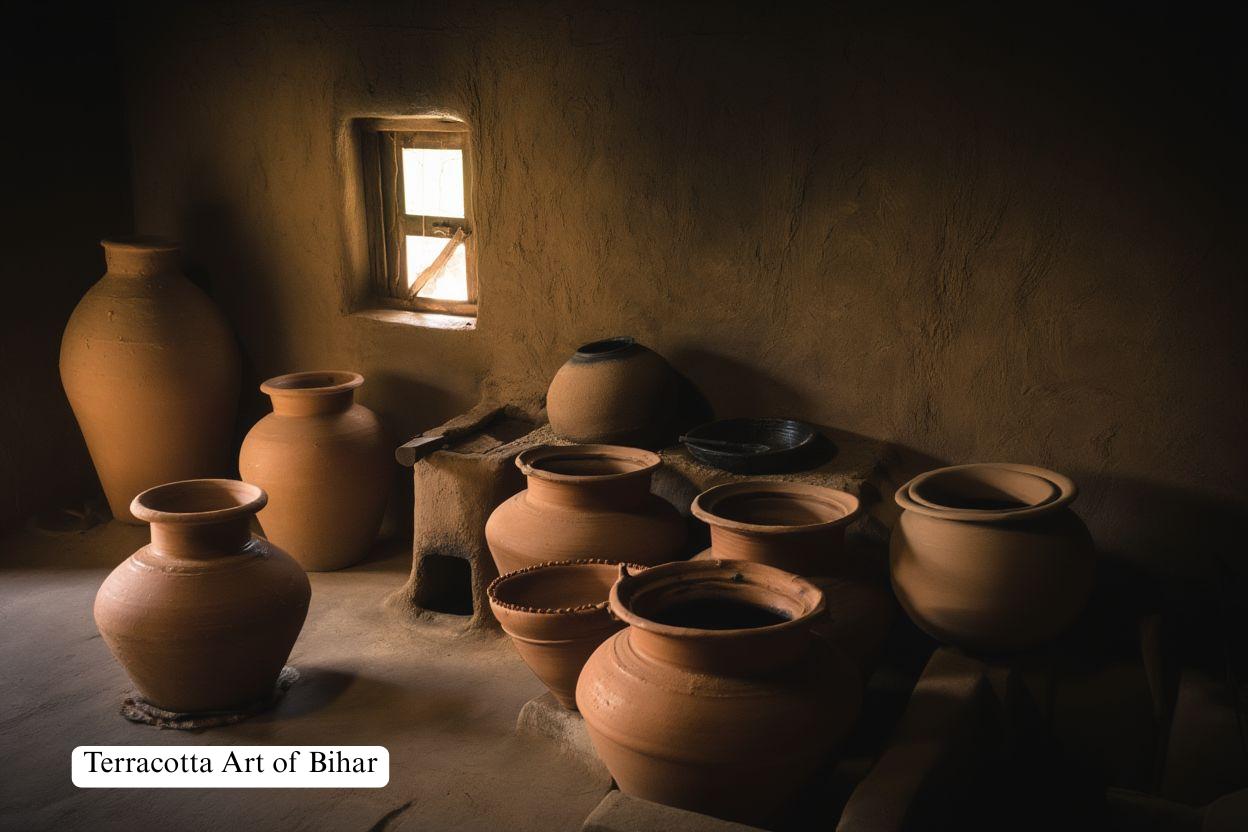
The water pot is the most functionally important object in the traditional repertoire. Bihar's summers reach 45 degrees Celsius in the interior districts, and the porous surface of an earthen pot allows a small amount of water to evaporate through the walls, cooling the water inside through evaporative cooling. This is the same principle as the traditional matka cooler that continues to operate in kitchens across north India. The earthen pot is not a romantic alternative to refrigeration. For the majority of Bihar's rural population without reliable electricity, it is the practical solution to a practical problem.
FACT: The evaporative cooling properties of unglazed terracotta vessels can reduce water temperature by 10 to 15 degrees Celsius compared to ambient temperature in dry heat conditions. This property, utilized in Bihar's traditional water pots and the kulhad clay cups used for serving tea, is a consequence of the same porosity that makes terracotta unsuitable for storing oil or other non-aqueous liquids. Bihar's potters have historically maintained distinct vessel forms for water storage and for dry goods storage, with the water storage form specifically designed to maximize surface area exposure for cooling.
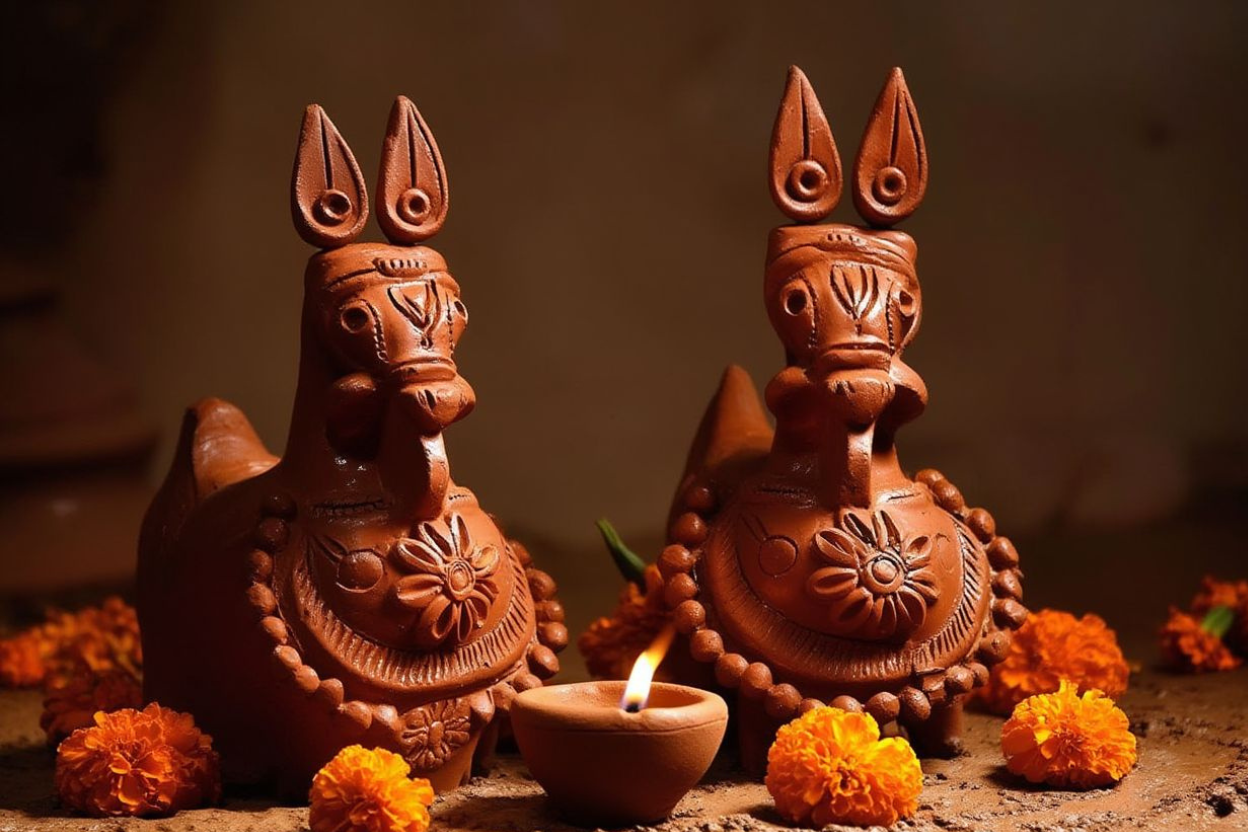
The lamp, the diya, is the ritual object most continuously in demand across Bihar's domestic and public religious life. Clay lamps are used for daily puja in households; for the specific festivals that require lamps in large numbers; for the ghats during Chhath Puja; for Diwali's thousands of small flames; and for the small daily offerings at roadside shrines. The demand is year-round, and the form has barely changed: a small shallow dish with a pinched lip to hold the wick, made quickly and inexpensively enough that it can be used once and broken without significant cost.
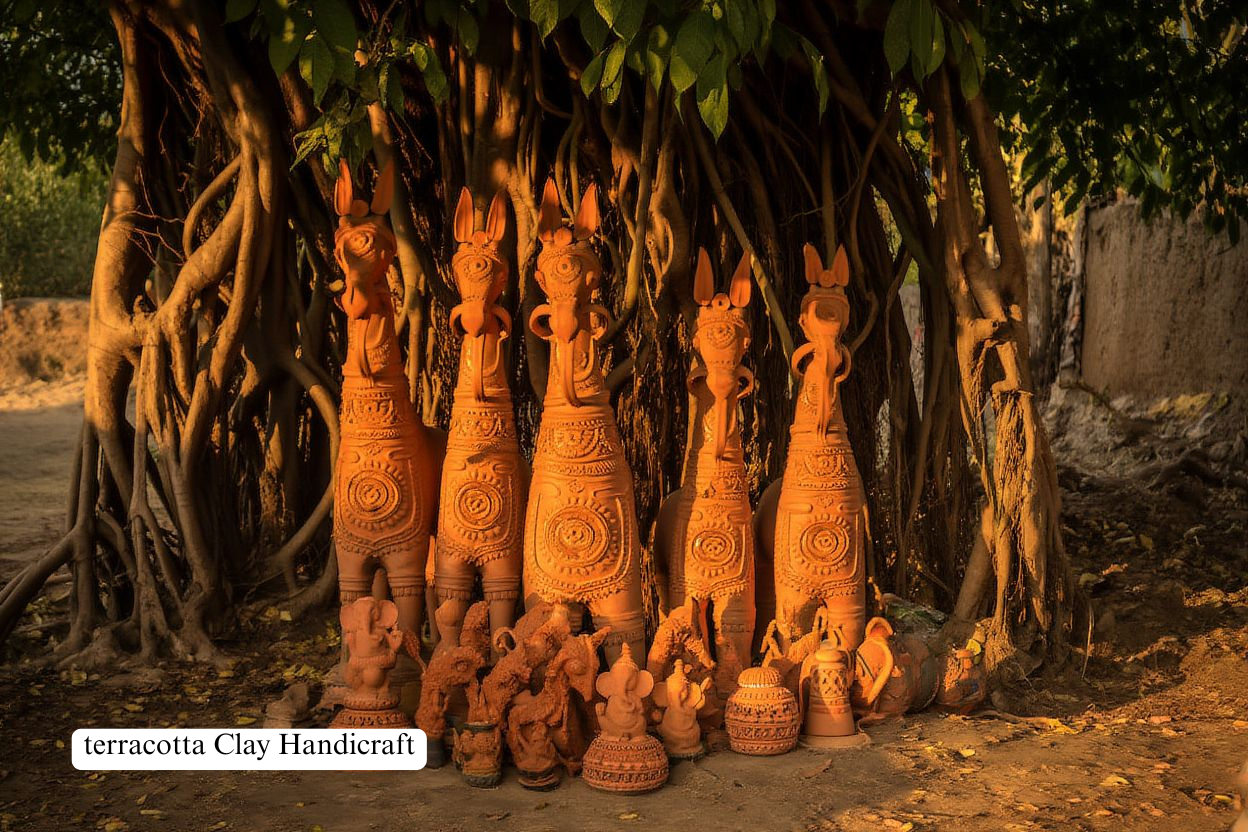
The votive horse is a form specific to Bihar's folk religious tradition that connects the terracotta craft to a layer of religious practice that sits below the major Hindu temple traditions. Across the Ganga plains, local shrines to horse deities, particularly the deity known as Sal Baba or Salaha, receive clay horse offerings from devotees who have made vows and are fulfilling them. These horses are not fine art objects. They are communication between a devotee and a deity, made in the form the tradition prescribes, offered at the shrine, and left there as the completion of a transaction.
The Communities That Make It
The Kumhar community, the traditional potters of the Gangetic Plains, are the primary practitioners of terracotta craft in Bihar. The name is derived from the Sanskrit "kumbhakara," maker of vessels, and the community's identity has been defined by this function for long enough that the work and the community have become inseparable in the social organization of Bihar's villages.
The craft is transmitted within families, typically from father to son or father to daughter, through the daily observation and gradual participation that domestic workshop settings make possible. A child who grows up watching a parent work on the wheel absorbs the visual and tactile knowledge of clay's behavior long before they are old enough to be formally taught. By the time a young Kumhar begins working independently, they have been watching the craft for fifteen or twenty years.
FACT: The Kumhar community is listed as an Other Backward Class in Bihar's reservation framework, reflecting the craft's historical social position as skilled but not high-caste work. The community's presence in virtually every traditional village across Bihar, providing the vessels that other communities needed for cooking, storage, and ritual, gave the Kumhars a specific economic position that was simultaneously essential and socially marginalized, a pattern common to the artisan communities of the Gangetic plains.
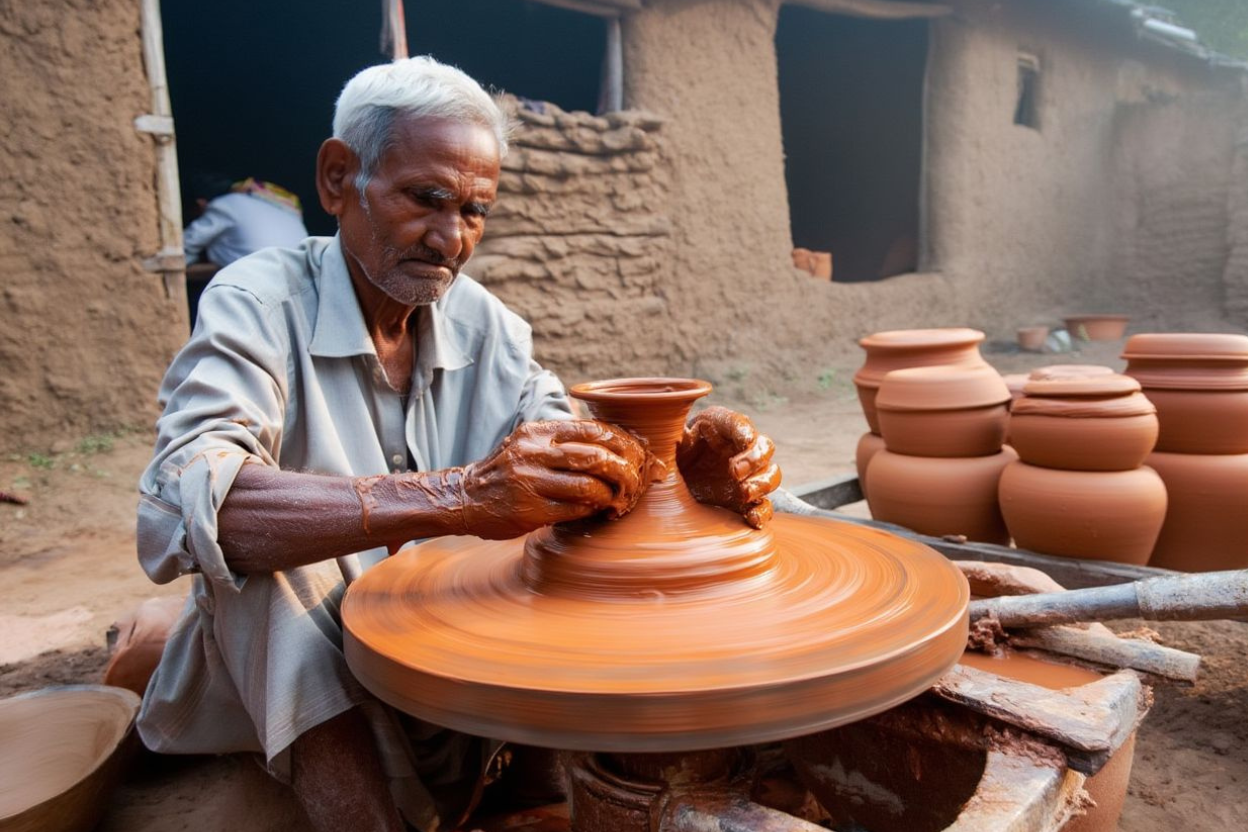
The workshop is typically the courtyard or the ground-floor room of the family home, which means the craft is embedded in the domestic life of the family rather than separated from it. The wheel is operated by foot in traditional practice, which frees both hands for shaping the clay while maintaining the rotation. The tools are minimal: a smooth stone for compressing the interior walls, a piece of cloth for smoothing the exterior, and a wire for cutting the finished object from the wheel.
What Threatens It and What Sustains It
The pressures on Bihar's terracotta craft are the same pressures that affect most traditional crafts in the state, and they have been building for several decades.
Plastic and aluminum have replaced earthenware in most Bihar kitchens. The plastic bucket and the aluminum cooking pot are lighter, cheaper, and more durable in the sense that they do not break if dropped. The cultural argument for earthenware, that the water is cooler, that the cooking is more even, and that the lamp flames better in clay, is real, but it requires a buyer who values these differences enough to pay the price premium and accept the fragility.
The market for clay lamps remains strong because there is no substitute for the form: the diya is a diya, and the religious practice that requires diyas does not accept a plastic version as a substitute. This has kept a portion of the Kumhar community's income stable even as the domestic vessel market has contracted.
What has changed for some Kumhar craftsmen is the market they sell into. Urban design markets and artisan promotion organizations have created demand for terracotta objects that are valued for their handmade quality, their material authenticity, and their connection to Bihar's craft heritage. This market is different from the village market that has sustained the tradition historically: the buyers are different, the prices are higher, and the objects are sometimes adapted in form for the new context. Whether this adaptation sustains or changes the tradition is a question that different Kumhar families answer differently depending on their circumstances.
Engaging With Bihar's Terracotta as a Traveller
The terracotta craft of Bihar is observable in its natural context in almost any traditional village across the state. The Kumhar's workshop is visible from the lane. The drying pots are in the courtyard. The weekly market where pots are sold is not a craft market organized for visitors but the regular market where the potter and the buyer have always met.
What changes with guidance is what you understand when you see these things. The visitor who watches a potter center clay on the wheel, seeing the resistance the clay offers and the skill with which it is overcome, understanding that the form emerging is the result of an accumulated knowledge of how this specific clay behaves under these specific hands, is having a different experience from the visitor who passes the workshop without stopping.
Folk experience includes terracotta village visits in Bihar itineraries not as an add-on to the standard heritage circuit but as a way into the material culture of the state that no monument provides. The conversation with a Kumhar potter about which clay sources are still accessible, about what the shift from earthenware to plastic in village kitchens has meant for their livelihood, and about which objects are still in genuine demand and which are produced now primarily for the craft market is a conversation about Bihar's current reality as much as its historical practice.
The votive horse at the roadside shrine outside the village, the diya burning at the evening puja in a household you pass, and the water pot in the kitchen of the family hosting you: these are the terracotta tradition in its living form, present in daily life rather than in a display case.
Folk Experience will help you see what is already in front of you.
keep wandering