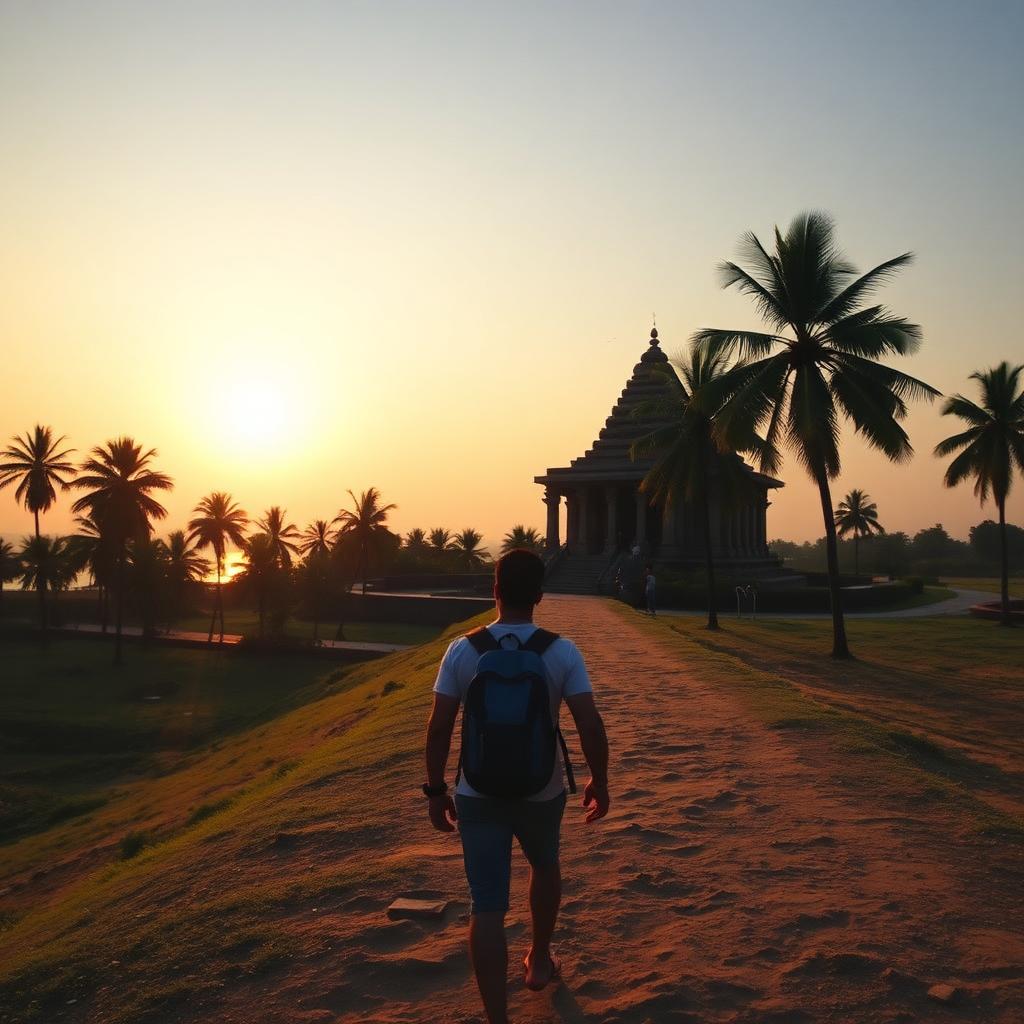
The Honest Guide to Visiting Odisha: When, How and Why
Odisha does not have an image problem exactly. It has an awareness problem. Ask most Indians which state they associate with the Jagannath Temple and the Puri beach, and they will say Odisha. Ask them what else the state contains, and the…
Folk Editorial
Folk Experience
Meet your AI Story Guide
Turn this field note into a one-minute brief with the essential places, people, and traditions.
Odisha does not have an image problem exactly. It has an awareness problem. Ask most Indians which state they associate with the Jagannath Temple and the Puri beach, and they will say Odisha. Ask them what else the state contains, and the answers tend to thin out quickly. Konark. Yes. Chilika. Perhaps. Beyond that, most people who have not been are working with a mental map that has very little on it east of Bhubaneswar and south of Puri. This is a significant underestimation of a state that contains, within its 155,000 square kilometres, the second-highest waterfall in India, Asia's largest brackish water lagoon, the world's only population of pseudo-melanistic tigers, the world's most important mass-nesting site for Olive Ridley sea turtles, sixty-two distinct tribal communities, one of the most sustained and coherent traditions of temple architecture on the subcontinent, a maritime heritage that linked the eastern coast of India to Bali and Java for two thousand years, a textile tradition that dresses a god every morning with cloth woven specifically for that purpose, and a historical depth that includes one of the oldest recorded acts of imperial remorse. This guide is an attempt to address the awareness problem. Not with superlatives, but with honest logistics: when to come, which part of the state to prioritise for what kind of interest, what the festival calendar looks like across the year, and what responsible travel in Odisha actually requires from you as a visitor. The state does not need your enthusiasm. It has been here long enough to be indifferent to it. What it needs, and what the communities and ecosystems that make it significant actually benefit from, is your preparation.
Understanding Odisha's Geography: Three Distinct Regions
The first planning decision any visitor to Odisha needs to make is not about a specific destination. It is about which part of the state they are going to, because Odisha is not one place. It is at least three distinct geographical and cultural regions, each with its own character, its own season, its own reasons for visiting, and its own logistical requirements.
The Coast: Temples, Beaches, and the Golden Triangle
The coastal strip of Odisha, running south from Bhubaneswar through Puri to Chilika and up the northern coast through Cuttack toward Paradip, is the part of the state that most visitors know. This is where the Golden Triangle sits, the circuit connecting Bhubaneswar, Puri, and Konark that draws the majority of Odisha's domestic and international cultural tourism.
The coastal region's appeal is concentrated and legible: the Old Town temple complex in Bhubaneswar (over 400 surviving temples within a few square kilometers), the Jagannath Temple and the Puri beach, the Konark Sun Temple, the craft villages of Raghurajpur and Pipili near Puri, and Chilika Lake to the south. These are all within roughly 100 kilometers of each other, connected by reasonable roads and, in some cases, rail.
FACT: The Bhubaneswar-Puri-Konark Golden Triangle covers a distance of approximately 100 kilometers and can be covered in three days at a minimum, but rewards five to seven days for visitors who want to engage with the temple architecture, the craft villages, and Chilika Lake with any depth.
The coastal region is also where the infrastructure of Odisha tourism is most developed. The hotel stock in Bhubaneswar and Puri ranges from budget guesthouses to reasonable mid-range properties. The road connectivity is good. The food in the coastal towns is consistently strong, with the Odishan seafood tradition available in its freshest expression. For a first visit to Odisha, or for visitors with limited time, the coastal circuit is the logical starting point.
Western Odisha: Craft, Music, and the High Interior
Western Odisha, the region centered on the Sambalpur, Bargarh, Bolangir, and Sundergarh districts, is a different country from the coast in ways that go beyond geography. The cultural traditions of the west, the Sambalpuri textile tradition; the Sambalpuri folk music with its distinct scale and instrumentation; the Dhanu Yatra festival at Bargarh (one of the largest open-air theatrical events in the world); the Hirakud Dam and its associated landscape; and the craft communities of Sonepur are largely disconnected from the coastal heritage that defines Odisha's tourism identity.
FACT: The Dhanu Yatra festival at Bargarh, held over eleven days in December-January, transforms the entire town into a stage for the enactment of the story of Krishna and Kansa. It is listed in the Guinness World Records as the largest open-air theater production in the world, with the whole town as the set and tens of thousands of participants and spectators over the festival period.
Western Odisha is also where the transition to a tribal-majority landscape begins in earnest. The Sundergarh district has a significant adivasi population, including Ho and Munda communities, and the landscape of western Odisha, the Hasdeo River valley, the Ib River basin, and the junction of the Deccan plateau and the Eastern Ghats, has a character that is distinctly different from the coastal plains. Visitors coming specifically for textiles, folk traditions, or the cultural context of western Odisha need to plan it as a separate trip rather than an addition to the Golden Triangle circuit.
The Tribal South and Interior: Koraput, Rayagada, Malkangiri
The southern and interior districts of Odisha, particularly Koraput, Rayagada, Kandhamal, and Malkangiri, represent what travel writers sometimes call India's last frontier in tribal cultural tourism, with all the complication that phrase implies. This is where a majority of Odisha's sixty-two tribal communities live: the Dongria Kondh in the Niyamgiri Hills, the Bonda in Malkangiri, the Saura in Gajapati and Rayagada, the Gadaba, the Kondh, and the Poroja.
The visual culture of this region, the traditional markets (haats) where tribal communities trade on specific days of the week, the body ornamentation and dress that differ community by community, and the agricultural and food traditions that have developed in specific ecological niches over centuries are unlike anything in the coastal or western regions. It is also the part of Odisha that requires the most careful preparation, the most thoughtful approach, and the most explicit thinking about what responsible engagement with tribal communities actually means.
FACT: Odisha has sixty-two officially recognized Scheduled Tribe communities, the third-largest tribal population of any state in India. The tribal communities of the Koraput-Rayagada-Malkangiri region include several Particularly Vulnerable Tribal Groups (PVTGs), communities designated by the central government as facing the most severe challenges to their survival and livelihoods.
Visiting this region requires more than curiosity. It requires prior research on which communities are accessible and on what terms, an understanding of the difference between community-invited engagement and intrusive observation, and a willingness to work with operators who have genuine relationships with the communities rather than purely transactional access.
The Season: When to Come and For What
Odisha's climate follows the broad pattern of the eastern coast: hot summers, a southwest monsoon from June through September, and a dry, relatively cool winter from October through February. But the fine-grained answer to when to visit depends on what you are coming for, and the honest answer involves acknowledging that no single period is perfect for all of Odisha's attractions simultaneously.
October to February: The Core Season
This is when most things work best, most of the time, for most visitors. The temperatures are manageable, ranging from 10 to 25 degrees Celsius at their most comfortable in December and January. The sky is clear. The roads are passable. The wildlife sanctuaries are open. The birds are at Chilika in their peak numbers. The Olive Ridley turtles are gathering offshore in preparation for the February nesting season.
The temple architecture of the coastal region is at its most accessible. The Lingaraj complex in Bhubaneswar, the Konark Sun Temple, and the Jagannath Temple complex are all best experienced in the morning light of the winter months, when the temperature allows extended time outdoors and the stone warms slowly through the day rather than baking from mid-morning.
This is also festival season. The Konark Dance Festival in December, held in the forecourt of the Sun Temple, is five days of classical dance performed against the backdrop of the most ambitious building in Kalinga architecture. The Makar Mela at Kalijai Island in Chilika, in January, draws tens of thousands of pilgrims across the water to the lake's sacred island. Mahashivaratri in February brings night-long worship at the Lingaraj Temple in Bhubaneswar.
The trade-off: Peak season means higher prices, fuller hotels, and the crowds that the Golden Triangle destinations attract at their busiest. The Puri beach and the Konark complex can be genuinely crowded on winter weekends and during national holidays. Book accommodation well in advance for December and January.
November: The Kartik Purnima Advantage
November deserves a specific mention as possibly the single best month for a visitor who wants both good weather and a defining festival experience. Kartik Purnima, the full moon day of the month of Kartik, falls in October or November and is when Bali Jatra begins in Cuttack. The pre-dawn Boita Bandana ritual on the Mahanadi, the eight-day fair at Gadagadia Ghat, and the specific atmosphere of Kartik Purnima across all of Odisha, when every water body carries lit paper boats in the dark, is the kind of cultural experience that the rest of the year does not replicate.
FACT: Kartik Purnima, when Bali Jatra begins, also marks the beginning of the Olive Ridley offshore congregation period, when the turtles start gathering in the nearshore waters of the Odisha coast before the February nesting season. November visitors who include both Cuttack and the Gahirmatha coast in their itinerary can experience both the festival and the early turtle season in the same trip.
February to March: Turtles and Silk Cotton
February is when the Olive Ridley mass nesting happens at Rushikulya and Gahirmatha. The exact timing depends on the lunar calendar and the ocean conditions, but the nesting typically occurs in the ten days around the February full moon. This is also when the Konark Dance Festival takes place, typically in the first week of December, though some years it falls in late November.
March is the month of the Simul, the red silk cotton tree that gives Similipal its name. The forest in March is spectacularly colored, the canopy lit with scarlet flowers before the monsoon rains bring the green. Wildlife watching is still productive in the early part of March, before the heat builds in April.
June to September: Monsoon and Rath Yatra
The southwest monsoon arrives in Odisha in June and brings with it the state's most famous festival. Rath Yatra, the chariot festival of Lord Jagannath at Puri, is one of the largest religious gatherings in the world. It falls in June or July, on the second day of the bright fortnight of the month of Ashadha, which in 2026 is July 16.
FACT: The Rath Yatra at Puri draws millions of devotees and observers annually, with the three chariots of Jagannath, Balabhadra, and Subhadra pulled by devotees along the Grand Road from the Jagannath Temple to the Gundicha Temple approximately two kilometers away. The chariots are freshly built from specific wood each year and dismantled after the festival.
Visiting during Rath Yatra requires accepting the full reality of what a gathering of this scale involves: crowds that are essentially incomparable in scale, accommodation that books out months in advance, and a logistical complexity that makes independent travel difficult. The spiritual and cultural experience, for visitors who want it, is extraordinary. The logistics require planning that the shoulder and peak seasons do not.
The monsoon months otherwise make most of Odisha's nature destinations inaccessible. Similipal closes to visitors. Chilika is rougher and less productive for wildlife watching. The forest roads of the tribal interior become challenging. The monsoon is not the season for Odisha's nature and heritage circuit. It is, specifically and singularly, the season for Rath Yatra.
Summer (April-May): The Honest Assessment
Summer in Odisha is genuinely hot. Temperatures on the coast reach 38 to 40 degrees Celsius. The interior can push higher. April and May are the months when the Daringbadi hill station in the Kandhamal district, known as the Kashmir of Odisha for its relative coolness, becomes relevant. For most of Odisha's heritage and wildlife circuit, April and May are not recommended unless you are specifically drawn by the off-season discounts and lower crowds that compensate, partly, for the heat.
The Festival Calendar: Month by Month
Planning an Odisha visit around a specific festival is one of the best decisions a traveller can make. The following is a working calendar of the major festivals, with their approximate timing and location:
traveler
January: Makar Mela at Kalijai Island, Chilika (Makar Sankranti, typically January 14-15). Magha Saptami at Chandrabhaga, near Konark (the full moon of Magha, January-February), when devotees bathe at the beach where the Chandrabhaga River once met the sea.
February: Mahashivaratri at the Lingaraj Temple, Bhubaneswar (the 14th night of the dark fortnight of Magha, typically February). Olive Ridley mass nesting at Rushikulya and Gahirmatha (around the February full moon).
March-April: Raja Parba, the three-day menstruation festival celebrating the earth's fertility (mid-June, not March, though some sites list it differently). Chaitra Parba, the tribal festival of the Saura and other communities of southern Odisha (March-April). Pana Sankranti, the Odishan New Year (April 14).
June-July: Rath Yatra at Puri (June-July, on Ashadha Shukla Dwitiya). Snana Purnima, the ritual bathing of the Jagannath deities on the full moon of Jyestha, a precursor to Rath Yatra. Raja Parba, the menstruation festival celebrating earth's fertility (mid-June, three days around the summer solstice).
September: Nuakhai, the new rice harvest festival of western Odisha (Bhadra Shukla Panchami, typically September), when new-season rice is first offered to the deity and then consumed by the family. The most important festival of the Sambalpur-Bargarh region.
October-November: Durga Puja (Ashwin Shukla, October). Kumar Purnima, celebrated by unmarried girls worshipping the moon (full moon of Ashwin, October). Kartik Purnima and Bali Jatra in Cuttack (October-November full moon).
December: Konark Dance Festival, first week of December. Dhanu Yatra at Bargarh, eleven days from the full moon of Margashira (December-January).
The Responsible Travel Code
Odisha's attractions include some of the most culturally and ecologically sensitive sites in India. The following are not suggestions. They are the baseline of what responsible travel in Odisha requires.
At tribal communities:
Do not visit tribal markets, villages, or sacred sites without a guide who has genuine, ongoing relationships with the community, not transactional access. The distinction matters and is usually visible after ten minutes of observation: a guide with real relationships is known to people, greeted by name, and able to facilitate conversation rather than simply narrating what is happening. Do not photograph people without explicit consent. Do not photograph sacred objects, ritual practices, or domestic spaces without being invited to do so. Tribal tourism that treats community life as a visual experience for outside observers degrades the communities it claims to celebrate.
At wildlife sites:
Follow the protocols established by the forest department and conservation organizations at each specific site. At Rushikulya turtle nesting, this means no white artificial light, no touching of turtles or nests, access only with authorized guides, and strictly limited group sizes. At Similipal, obtain the core area permit if you are visiting the waterfalls or seeking wildlife in the interior. At Chilika, book with operators who work with the fishing community rather than around them.
At temples:
Non-Hindu visitors are not permitted inside the Lingaraj Temple in Bhubaneswar or the Jagannath Temple in Puri. This is a matter of the temples' own governance, not a restriction imposed by the state, and it should be respected without complaint. The observation platforms provided at both temples offer meaningful views. The many other temples in the Old Town complex at Bhubaneswar, including the Mukteswar, the Rajarani, the Parasurameswara, and the Vaital Deula, are accessible to all visitors.
At craft villages:
If you buy from weavers or craft practitioners in their villages, buy at the price they ask without bargaining. These are not markets. They are homes and workshops, and the price of a handloom textile that took seven months to produce is already considerably less than the labor it represents.
How Long You Need and What to Prioritise
Five to seven days: The Golden Triangle circuit (Bhubaneswar, Puri, Konark) with one day at Chilika. This covers the temple heritage, one major craft village, the lagoon, and the beach. Adequate for a first visit; insufficient for anything approaching depth.
Ten to twelve days: The Golden Triangle plus Similipal in the north (two to three days minimum) and the Dhauli-Udayagiri historical sites near Bhubaneswar. This gives a meaningful combination of coastal heritage, ancient history, and forest ecology.
Two weeks or more is sufficient to add western Odisha (Sambalpur, Nuapatna weaving village) or the tribal south (Koraput-Rayagada circuit) and to time the visit around a specific festival. A two-week Odisha itinerary that includes the coast, the forest, and either the west or the south is one of the most coherent and varied heritage-and-nature journeys available in India.
FACT: Odisha has three airports with regular domestic connections: Bhubaneswar (Biju Patnaik International Airport), which receives the most flights; Jharsuguda in western Odisha; and a smaller facility at Jeypore serving the southern districts. The rail network covers most of the state, with the Bhubaneswar-Puri and Bhubaneswar-Cuttack corridors particularly well served.
Why Folk Experience for Odisha?
The gap between knowing that Odisha exists and knowing how to experience it is not a small one. The state's infrastructure for independent travel, outside the Golden Triangle, requires local knowledge to navigate effectively. The tribal south in particular demands a level of community relationship and cultural preparation that individual travelers cannot easily assemble.
Folk Experience has been working in Odisha long enough to have built what guidebooks and travel apps cannot provide: genuine relationships with the weaving communities of Nuapatna, the fishing villages of Chilika, the forest communities of Similipal's buffer zone, and the cultural practitioners whose knowledge turns a visit to a temple or a market or a waterfall from a viewing exercise into an encounter with a living tradition.
Here is what Folk Experience brings to an Odisha itinerary:
Regional logic. Not every visitor needs to see every region. Folk Experience designs itineraries around what you are actually interested in: coastal heritage and temples, wildlife and ecology, craft and textiles, tribal culture and landscape, and the best combination of these for the time available. The default Golden Triangle circuit is one option among many.
Festival timing. Odisha's calendar rewards specific planning. Folk Experience can build an itinerary around the Bali Jatra at Cuttack, the Rath Yatra at Puri, the turtle nesting at Rushikulya, or the Konark Dance Festival, giving your visit an anchor event rather than a general survey.
The responsible travel infrastructure. The tribal south requires operators with community relationships. Turtle nesting requires forest department coordination. The core area of Similipal requires permits. The Khandua weaving village requires an introduction that a walk-in visit cannot replicate. Folk Experience handles these not as logistics but as the basis of the experience itself.
The depth that the time allows. A seven-day Golden Triangle visit with Folk Experience will give you more of Bhubaneswar's Old Town, more of Chilika's fishing community context, and more of Konark's architectural logic than a standard packaged tour covers in twice the time.
A single point of contact across a large state. Odisha's regions require different local knowledge, and the operator who knows the coast is not always the same one who knows Similipal or Koraput. Folk Experience operates across the state with the kind of on-the-ground consistency that regional handoffs between operators cannot match.
Odisha has been waiting, relatively unnoticed, for long enough that it has stopped waiting. It is what it is, regardless of whether visitors arrive prepared to receive it. The preparation is entirely for your benefit.
Folk Experience will make sure you arrive ready.
Subscribe to our newsletter
Folk Experience © 2026 – All Rights Reserved