The Paika Rebellion of 1817: Odisha's Forgotten Uprising
On the second day of April 1817, a force of armed Paikas marched on the police station at Banapur, near Khurda in present-day Odisha. They burned the building. They looted the treasury. They killed several officials of the East India…
Folk Editorial
Folk Experience
Meet your AI Story Guide
Turn this field note into a one-minute brief with the essential places, people, and traditions.
On the second day of April 1817, a force of armed Paikas marched on the police station at Banapur, near Khurda in present-day Odisha. They burned the building. They looted the treasury. They killed several officials of the East India Company. Then they marched on Khurda town itself, from which the British administration fled. The rebels sacked the offices, captured the district, and for a brief, extraordinary period controlled the territory that had been wrested from the Gajapati kingdom of Khurda fourteen years earlier by a colonial power that had, in the Paika view, done nothing to earn the right to govern it. This was 1817. The year the British crushed the Maratha Confederacy at the Battle of Kirkee, the year they were consolidating imperial control across the subcontinent, the year they believed the question of who ran India had been substantially settled. The Paikas of Khurda had a different view of the matter. The Paika Bidroha, as it is known in Odisha, where bidroha means rebellion, predates the Sepoy Mutiny of 1857 by forty years. It involved not a single community but a coalition: the Paikas, the tribal Kondhs who marched from Ghumusar to join them, the peasants whose livelihoods had been disrupted by Company revenue policy, and the priests of the Jagannath Temple who understood the rebellion as a defence of the deity who was the embodiment of Odia unity and sacred sovereignty. Its leader, Bakshi Jagabandhu Bidyadhar, was one of the most effective guerrilla commanders in early 19th-century India. It spread across most of Odisha before it was suppressed. And it has been, for most of Indian history, barely a footnote in the national narrative of the independence movement. The question of why is worth examining with the same seriousness as the rebellion itself.
Who the Paikas Were
The Paikas were not simply soldiers. They were an institution, and understanding that institution is necessary for understanding both why the rebellion happened and what it meant to those who fought it.
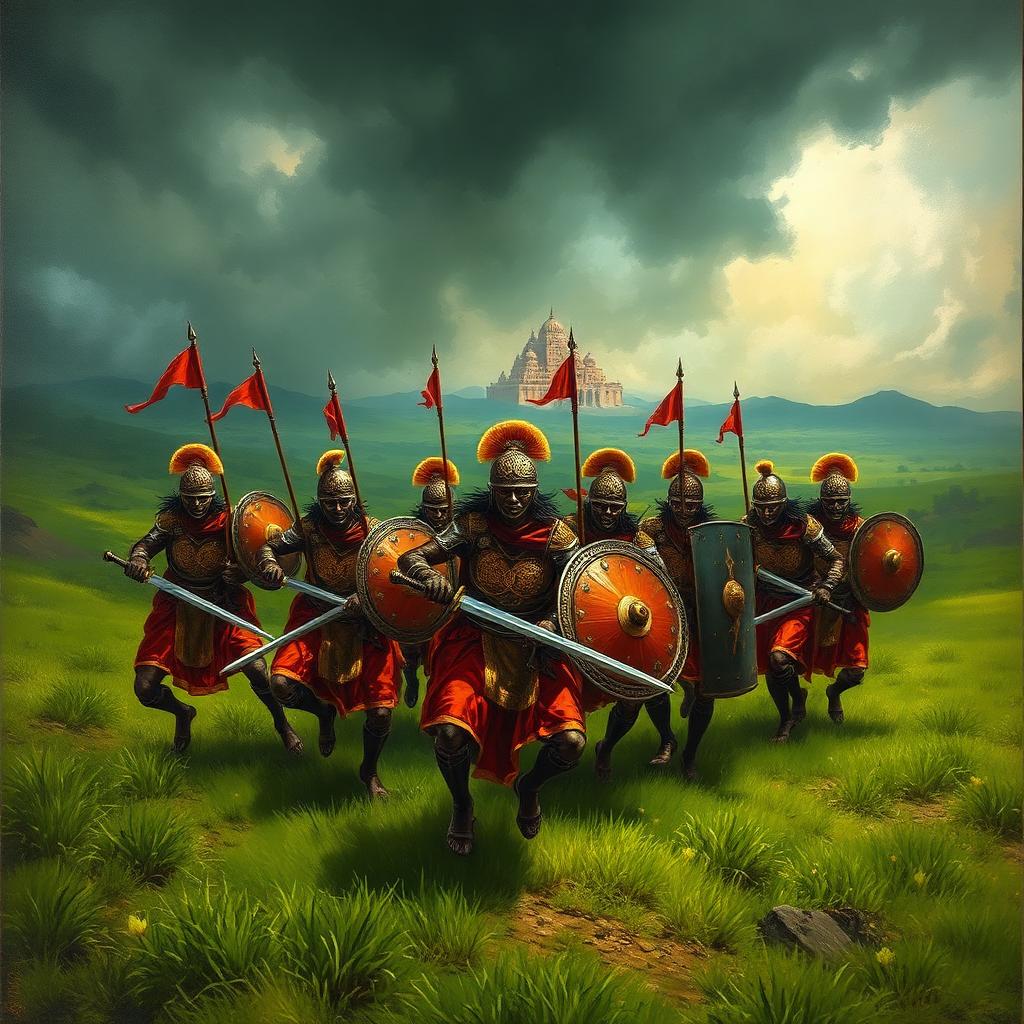
Since at least the 16th century, the Gajapati kings of Odisha had maintained a militia force known as the Paikas, recruited from various social groups and organized into a structured hierarchy with specific functions in both war and peacetime. The Paharis were shield-bearers carrying the khanda sword, the heavy single-edged weapon associated with Odishan martial tradition. The Banuas conducted distant campaigns and used matchlocks as the firearm technology evolved. The Dhenkiyas were the archers who also performed administrative and ceremonial duties in peacetime.
FACT: The Paikas were compensated not primarily in cash but through grants of hereditary rent-free land called nish-kar jagirs. These land grants were the economic foundation of Paika life, supporting families across generations in the service of the Gajapati kingdom. The grants were understood as permanent, heritable, and constitutive of Paika social identity, not a temporary compensation for service but the material expression of the community's relationship with the state.
This compensation structure was the source of the Paikas' loyalty to the kingdom and, equally, the source of their fury when the British arrived and systematically dismantled it. The land grants were not merely economic. They were the Paikas' proof of who they were: warriors in the service of the Gajapati, holders of a specific and honored place in the social order of Odisha. To take the land was not simply to reduce their income. It was to remove the material foundation of their identity.
The Paika tradition also included a martial arts form, the Paika Akhada, which combined weapons training with a performance tradition that was maintained in village spaces and had both training and ceremonial dimensions. This tradition positioned the Paikas not merely as soldiers but as the custodians of a specific physical and cultural identity, and the Akhada was the community space where that identity was maintained and transmitted across generations.
The British Conquest and What It Destroyed
The East India Company acquired Odisha in 1803, not through direct conquest of the Gajapati but through the defeat of the Marathas, who had controlled the region. The transfer was consequential: the British took from the Marathas a territory they had held, but in doing so they also took from the Gajapati kingdom of Khurda the sovereignty it had maintained, in modified form, even through the Maratha period.
FACT: The East India Company annexed Odisha from the Marathas in 1803 following the Second Anglo-Maratha War. An agreement with Raja Mukunda Deva II of Khurda promised monetary compensation and the return of four parganas (administrative units). The British subsequently reneged on the agreement, setting the stage for a series of confrontations that would culminate in 1817.
The consequences of the conquest were felt across Odishan society almost immediately, but they fell with particular force on the Paikas. The British abolished the nish-kar jagir system, converting the hereditary rent-free land grants into ordinary taxable holdings. The economic impact was immediate. The social and psychological impact was, if anything, deeper: the Paikas' relationship to their land had been defined by its exemption from taxation, which was itself the marker of their special status in the kingdom's social hierarchy. Ordinary tax-paying landholders were ordinary people. The jagir had made the Paikas something else. Its abolition made them ordinary.
The British also abolished the cowrie currency system that had been the medium of exchange for most transactions in rural Odisha, insisting instead on tax payment in silver. In a rural economy where silver was scarce, this created an immediate liquidity crisis: peasants and Paikas alike found themselves taxed in a currency they did not have. The salt trade, another source of income for coastal communities, was placed under company monopoly, eliminating the local salt-making industry that had supplemented agricultural income. The ports were closed to prevent competition with the company's trade networks.
FACT: The British East India Company's abolition of the cowrie currency system in Odisha, combined with the requirement that taxes be paid in silver, created an acute cash shortage in the rural economy. Cowries had been the medium of exchange for hundreds of years in Odisha's markets and villages. Their sudden delegitimization removed the primary circulating medium from an economy that had no immediate substitute.
Jayee Rajguru, the royal advisor to the Khurda court, attempted to organize Paika resistance as early as 1804 and led a protest force of 2,000 Paikas when the British violated the terms of their agreement with Raja Mukunda Deva. He was captured and publicly executed in 1806, his body displayed as a warning. The execution produced the opposite of its intended effect, transforming Jayee Rajguru into the first martyr of Odishan resistance and deepening the sense of grievance that was already structural.
Bakshi Jagabandhu: The Man Who Led the Rebellion
Bakshi Jagabandhu Bidyadhar Mohapatra was the military commander, the Bakshi, of the army of the Khurda Gajapati. His family had held this position across generations. His ancestral estate of Killa Rorang was among the most significant jagir holdings in Khurda, the material expression of his family's long service to the kingdom.
In 1814, the British took it from him.
The seizure was accomplished through a scheme involving a company official named Singha, a Bengali administrator who, according to accounts of the period, obtained possession of the Rorang estate through fraudulent means with the connivance of the British administration. Jagabandhu was left, as contemporary accounts put it, in penury. The head of a family that had commanded the Gajapati's army for generations, deprived of his land by a scheme involving a subordinate official of the colonial administration, with no recourse in a legal system that answered to the same administration that had taken his estate.
FACT: The personal grievance of Bakshi Jagabandhu, whose ancestral jagir was seized through questionable means in 1814, combined with the structural grievances of the Paika community as a whole to create the specific leadership dynamic of the 1817 rebellion: a man with both personal reasons for rebellion and the social authority to lead a community that shared the structural conditions that made rebellion rational.
The rebellion that Jagabandhu led in 1817 was not impulsive. It was the culmination of nearly fifteen years of mounting grievance, punctuated by the failed resistance of 1804 and the martyrdom of Jayee Rajguru. When a force of 400 Kondh tribals marched from the neighboring state of Ghumusar into Khurda in March 1817, declaring their intention to liberate the territory from British rule, the Paikas under Jagabandhu joined them. The coalition that formed was unusually broad: the land-owning Paika militia, the tribal Kondhs who had their own reasons for resisting British authority, the peasantry whose livelihoods had been disrupted by the revenue system, and the religious establishment of the Jagannath Temple, which conferred on the rebellion the sanction of Odishan sacred identity.
The choice of Lord Jagannath as the symbol of the rebellion was not incidental. The priests of the Puri temple proclaimed Mukunda Deva II as the Gajapati, the ruler of the ancient kingdom of Kalinga, when the rebels briefly held Puri. In doing so, they positioned the rebellion not as a bandit uprising or a local tax protest but as a restoration of legitimate sovereignty, sanctioned by the deity who was the sacred guarantor of Odishan political order.
The Course of the Rebellion
The opening phase was swift and, by the standards of 1817, remarkably successful. The police station at Banapur burned. The treasury was looted. The district headquarters at Khurda were taken. The British administration fled. By early April, the rebels controlled a substantial portion of the Khurda-Puri region.
The British response was equally swift, if initially poorly executed. A force under Captain Wellington was dispatched to Puri. The Paikas, armed primarily with swords and a limited number of matchlocks, could not hold against artillery. The rebel force that had briefly captured Puri was driven out. But Jagabandhu did not attempt to hold territory against superior firepower. He retreated into the forests and converted the rebellion into a guerrilla campaign.
FACT: The Paika Rebellion formally began in March 1817, and the British declared martial law in Khurda by April. The formal military phase was largely suppressed by May 1817, but guerrilla resistance continued until 1825, when Bakshi Jagabandhu surrendered under negotiated terms. The rebellion therefore lasted eight years in its insurgent phase, though the initial open uprising was crushed within weeks.
The guerrilla phase of the rebellion was conducted from the forests of the Khurda-Nayagarh region, where Jagabandhu and his remaining force maintained resistance through selective attacks on revenue collection, administrative outposts, and the communication networks of the British administration. The forest terrain was the Paikas' advantage, as the local knowledge of the Kondh allies and the terrain familiarity of the Paika fighters made effective British pursuit difficult.
Martial law, imposed in Khurda in April 1817, remained in effect as the British worked to suppress the remaining resistance. The punishments imposed on captured rebels were severe: life imprisonment, death sentences, and confiscation of properties. The message the British intended to send was the same one they had sent with Jayee Rajguru's execution a decade earlier: resistance would be punished with the full force of colonial authority.
By 1819, the open guerrilla campaign had wound down. Smaller uprisings continued through the early 1820s. Jagabandhu remained in the forests, continuing to evade capture, until 1825, when he surrendered under terms negotiated with the British administration. He was taken to Cuttack, where he lived under house arrest until his death in 1829. He was never tried. He was never formally pardoned. He died a prisoner of the state he had spent eight years resisting.
What the Rebellion Accomplished
By the standard measures of military and political success, the Paika Bidroha failed. The British suppressed it. The revenue system that provoked it remained unchanged. The jagir lands were not restored. The cowrie currency did not return. The Gajapati kingdom was not restored to sovereignty.
But the assessment of what a rebellion accomplishes is not always the same as an assessment of whether it achieved its immediate objectives. The Paika Rebellion forced the British to make a series of concessions that, while limited, showed the capacity of organized resistance to extract administrative responses from colonial authority. Temporary tax remissions were granted. Land assessments were lowered. Forced estate sales were suspended. These were not structural changes, but they were acknowledgments that the rebellion had exposed the unsustainability of the policies that caused it.
FACT: Following the Paika Rebellion, the British administration appointed a commission to investigate the causes of the uprising. The commission's findings, which acknowledged the role of British revenue and administrative policies in provoking the rebellion, led to temporary modifications in those policies. The structural revenue system remained intact, but the concessions demonstrated that armed resistance had compelled administrative responses.
The rebellion also established, in Odishan consciousness, a model of resistance that would inform subsequent uprisings in the region. The several smaller uprisings that followed in the 1820s drew on the example of 1817 and on the networks of community solidarity that Jagabandhu's campaign had activated. More broadly, the Paika Bidroha entered the oral tradition of Odisha as the foundational event of the state's identity as a place that had resisted colonial power before most of the rest of India had organized to do so.
Why India Barely Remembers It
The question of why the Paika Rebellion has been marginalized in the national narrative of Indian resistance to colonial rule is a question about how history gets made and whose history counts.
The nationalist history of India's independence movement was, for most of the 20th century, written from the perspective of the political organizations and events that are most legible to a centralized national narrative: the Indian National Congress, the 1857 Mutiny (reframed as the First War of Independence), and the major figures of the freedom movement whose names and images are reproduced on currency and in school curricula. This narrative has a geographical bias toward the North Indian heartland, where the most politically mobilized and most extensively documented resistance organizations were concentrated, and a class bias toward the educated elites whose participation in colonial political structures gave them the literacy and the institutional access to produce records that subsequent historians could find.
The Paika Rebellion does not fit easily into this narrative. It was regional. It was led by a martial community that the post-independence state did not particularly need to celebrate. It was suppressed before the period that nationalist historiography considers the serious beginning of organized resistance. And Odisha itself, which only achieved its current boundaries as a distinct linguistic state in 1936, was a relative latecomer to the political geography of Indian nationalism. Its regional history did not have powerful institutional advocates in the decades when the national narrative was being consolidated.
FACT: The Government of Odisha passed a resolution in 2017, marking the bicentenary of the rebellion, formally requesting the central government to declare the Paika Bidroha India's first war of independence. The central government, on the recommendation of the Indian Council of Historical Research, declined to grant this specific designation while acknowledging the rebellion as one of the earliest popular uprisings against British rule. The Union Culture Minister committed to including the rebellion in Class VIII NCERT textbooks. In 2025, the NCERT's first volume of the revised Class VIII history textbook was released without any reference to the Paika Rebellion, generating significant political controversy in Odisha.
The NCERT controversy of 2025 encapsulates the politics of historical memory that have surrounded the Paika Rebellion for decades. The omission prompted former Chief Minister Naveen Patnaik to call it a "huge dishonor"culture minister to the Paika community. Parliamentarians from Odisha raised the issue in the Rajya Sabha. The NCERT clarified that the rebellion would appear in the second volume of the textbook, which is yet to be released. The episode illustrated both the continued marginalization of the Paika Rebellion in the national curriculum and the depth of feeling in Odisha about that marginalization.
The debate about whether the Paika Bidroha was the first war of Indian independence is, in one sense, a question that cannot be definitively settled because the category itself is contested. What counts as a war? What counts as organized? What makes a resistance to colonial rule an independence movement as opposed to a local uprising? These are genuinely complex historical questions, and the ICHR's reluctance to grant the designation reflects real methodological caution as much as political calculation.
But the broader question, which is whether the Paika Rebellion deserves to be known, studied, and taught as one of the most significant events in India's resistance to colonial rule, is not in dispute. It does. The rebellion was organized, broad-based, sustained over years, and provoked by exactly the kind of structural colonial exploitation that the independence movement would eventually make the central critique of British rule. Its obscurity is a product of the politics of historical memory, not of any inadequacy in the event itself.
The Landscape of the Rebellion
The sites associated with the Paika Rebellion are not as extensively commemorated as the event deserves, but they are present and accessible in the Khurda region, approximately 30 kilometers from Bhubaneswar.
Khurda itself, the headquarters of the Gajapati kingdom and the center of the 1817 uprising, holds the Khurda Fort, whose ruins mark the site of the political authority that the Paikas were defending. The fort is a modest presence today, its significance outsized relative to its current infrastructure, but it is a standing physical link to the kingdom and the community whose resistance defines the rebellion.
FACT: The Government of India approved a Paika Memorial at Barunei in Khurda district, with then-President Ram Nath Kovind laying the foundation stone in 2019. Barunei is associated with the legend of Bakshi Jagabandhu's forest hideout during the guerrilla phase of the rebellion and is considered a sacred site in Odishan cultural memory of the uprising.
Barunei Hill, near Khurda, is associated in local tradition with Jagabandhu's period in the forests during the guerrilla phase of the rebellion. The Barunei temple on the hill, dedicated to Goddess Barunei, was a refuge and a rallying point for the rebels. The hill is a site of continuing religious significance and, since the bicentenary commemorations of 2017, a site of national historical remembrance.
The Dhauli Hill near Bhubaneswar, where Ashoka inscribed his remorse for the Kalinga War in 261 BCE, sits in the same historical landscape as the Paika sites. The continuity between Kalinga's resistance to Mauryan conquest and Khurda's resistance to British conquest is not a rhetorical flourish. The territory is the same, the memory of independent sovereignty is the same, and the specific form that resistance took in both cases, coalition, guerrilla strategy, and appeals to sacred legitimacy, reflects consistent patterns in how Odishan communities have responded to external domination.
Why Folk Experience for the Paika Heritage Trail
The Paika Rebellion is not yet well served by Odisha's tourism infrastructure, which reflects both the rebellion's historical marginalization and the relative newness of the bicentenary-driven interest in its sites. Folk Experience has developed a Khurda heritage trail that connects the Paika history to the broader landscape of Odishan resistance and Kalingan identity.
Here is what that engagement looks like:
The Khurda-Barunei trail connects the fort ruins at Khurda, the Barunei Hill temple associated with Jagabandhu's forest phase, and the developing Paika Memorial site, giving visitors a physical grounding in the geography of the rebellion. The trail is designed to be understood historically, not simply visited visually: the guides who accompany Folk Experience groups on this trail can situate each site in the sequence of events from the 1803 annexation through the 1817 uprising and the guerrilla years to Jagabandhu's death in 1829.
The Dhauli connection: Folk Experience regularly combines the Paika heritage trail with the Ashokan rock edicts at Dhauli, building an itinerary around the theme of Kalingan and Odishan resistance to external power across two millennia. The conversation that emerges, about what makes a community resist, what makes resistance succeed or fail, and how history decides what to remember, is one of the most intellectually substantive that any Odisha itinerary offers.
The community context: The Paika tradition is not purely historical. The Paika Akhada, the martial arts and performance tradition maintained by the community, continues in villages in the Khurda region. Folk Experience can facilitate access to Akhada demonstrations and to families who maintain the tradition, giving the rebellion a living dimension that the memorial sites alone cannot provide.
The school and educational tie-in: For educational groups, academic visitors, and travelers with a specific interest in the politics of historical memory and colonial-era resistance, Folk Experience can design an itinerary around the Paika Rebellion that connects the historical sites to the contemporary NCERT controversy, the question of what gets taught in Indian schools and why, and the broader question of how regional histories are absorbed or ignored by the national narrative.
The history reel angle: The Paika Rebellion is, by any measure, one of the most visually and narratively compelling untold stories in Indian colonial history: the warrior-farmers in their silk-cotton forests, the guerrilla campaign that frustrated British forces for eight years, the leader who died in custody rather than in battle, and the priests who crowned a king in the Jagannath Temple as an act of resistance. For content creators and documentary filmmakers, Folk Experience can facilitate access to locations, community members, and scholars whose perspectives give the story its depth.
The Paikas of Khurda knew, in 1817, that they were fighting a more powerful adversary. They knew that the outcome was uncertain. They rose anyway, because the alternative, submitting to the erasure of their land, their identity, and their relationship to the kingdom they had served for generations, was worse than the risk of resistance.
That calculation, made forty years before the Sepoy Mutiny and two hundred years before the country began, haltingly, to remember it, is the measure of what the Paika Rebellion was.
Folk Experience will take you to where it happened.
Subscribe to our newsletter
Folk Experience © 2026 – All Rights Reserved