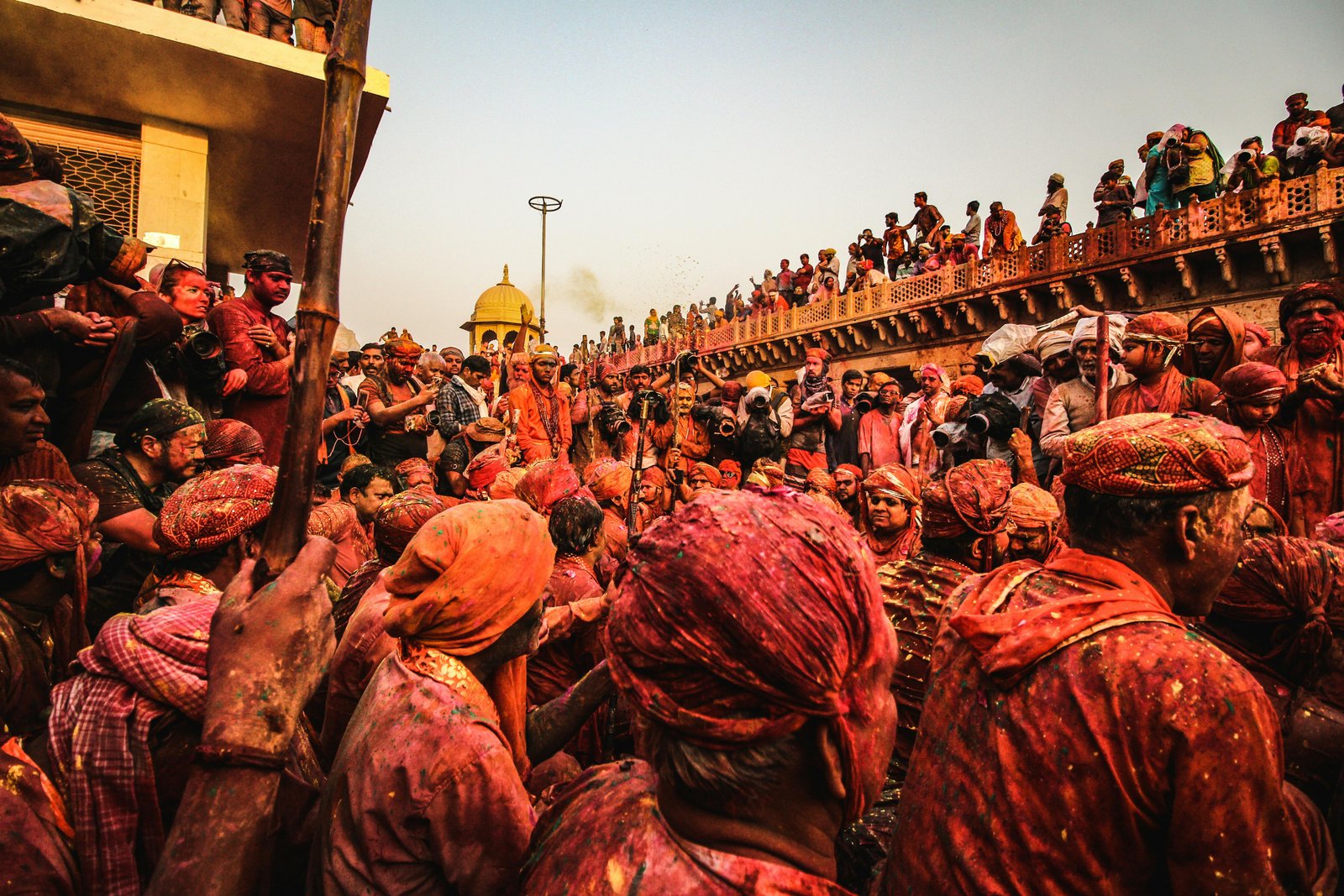
The Vibrant Brij Festival of Bharatpur: A Journey Through Culture, Love, and Devotion
There are a few days every year, right before Holi, when Bharatpur stops being a quiet Rajasthani town and turns into something you have to see to believe. Colour everywhere: in the air, on people's faces, on the streets, and on dogs that wandered too close to the celebrations...
Meet your AI Story Guide
Turn this field note into a one-minute brief with the essential places, people, and traditions.
The Sacred Essence of Brij
The Brij region is where Lord Krishna is believed to have spent his childhood. Bharatpur is part of that geography, and the Brij Festival is essentially the city's way of honouring that connection. This isn't a recently invented cultural event or a tourism initiative. It's rooted in centuries of devotion to Krishna and Radha and the stories that surround them.
The festival marks the spiritual side of spring arriving, not just the weather warming up but a kind of awakening. That's how people here describe it. Pilgrims travel to Bharatpur's Radha Krishna temples to pray and sing bhajans. The temple courtyards fill up. The sound carries across the old ghats and down the narrow streets. There's an energy to it that's difficult to manufacture.
The Banganga River is central to the whole thing. Devotees take a holy dip in the water, a purification ritual that's meant to cleanse the soul, not just the body. The riverbanks are lined with thousands of diyas. Chanting mixes with the sound of the water.
And there's this atmosphere of calm that sits alongside all the festival chaos, which shouldn't work but somehow does. People stand waist-deep in the river with their eyes closed. Completely motionless, while a hundred metres away, someone is tossing pink powder at a stranger and laughing uncontrollably. Both things are happening at once. Both are at the festival.
The Raslila: When Love Takes Form
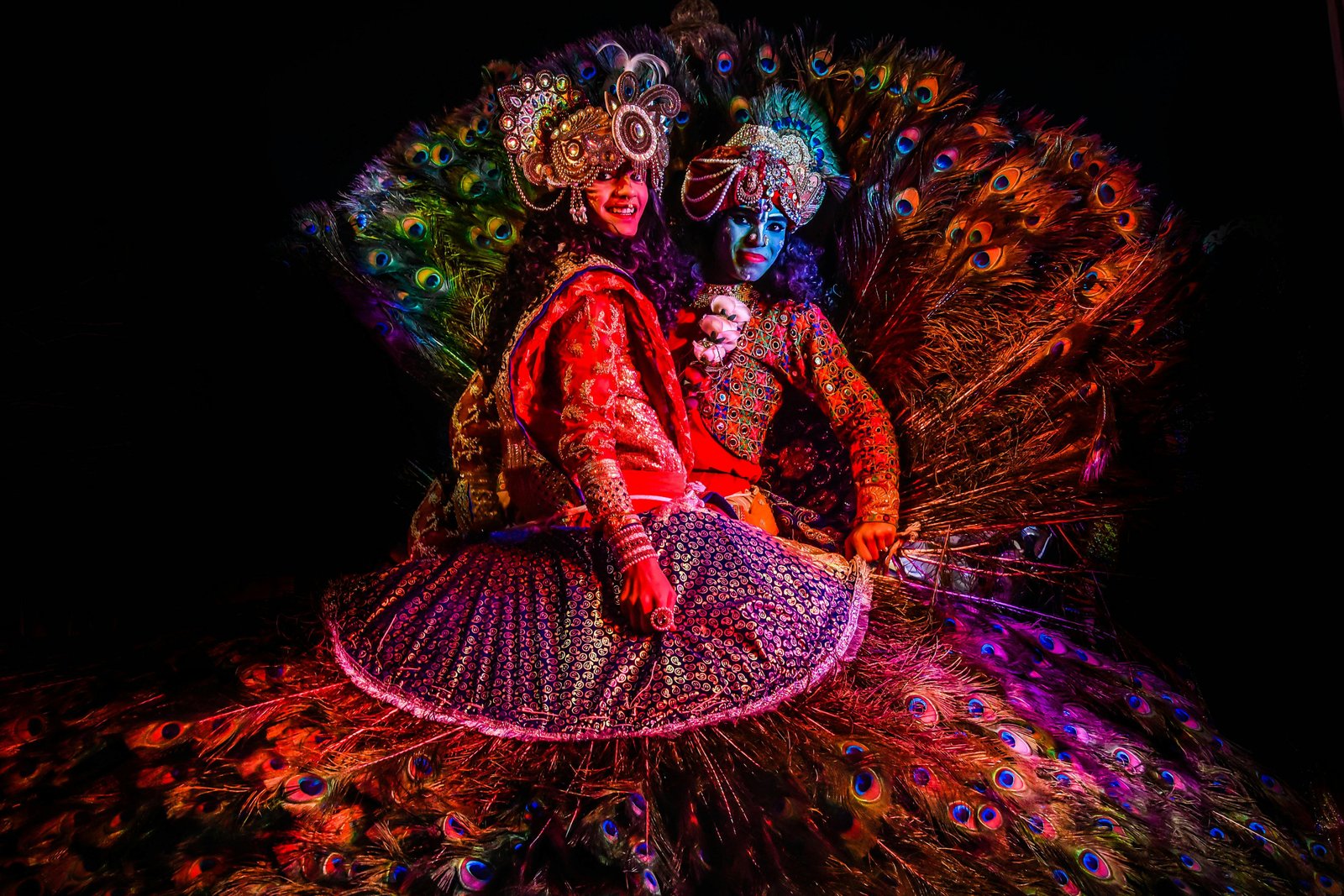
If you're at the Brij Festival and you only see one thing, make it the Raslila.
Raslila is a performance that combines dance and theatre that retells the love between Krishna and Radha. Dancers, adorned in elaborate costumes with peacock feathers and flute props, enact scenes from Krishna's life. The playful stuff. The romantic stuff. His interactions with the gopis. The divine play, known as Leela, exists between human love and something much greater than humans.
The performances take place at night, under an open sky, and watching Raslila in that setting has a unique quality that a stage with professional lighting would completely diminish. The costumes glow in lamplight. The musicians sit close enough that you can see their fingers on the strings. And the audience isn't watching passively; they're participating. Singing along. Calling out. Getting emotional at parts they've seen performed a hundred times before.
For the people of Bharatpur, Raslila isn't entertainment. Calling it that would be slightly offensive, honestly. It's a sacred offering. It serves to preserve the legacy of mythology in the present era. These families have told these stories since childhood. When a dancer takes on the role of Krishna, the audience isn't watching an actor. They're seeing their god. That belief is what gives the performance its power.
A Riot of Colours and Joy
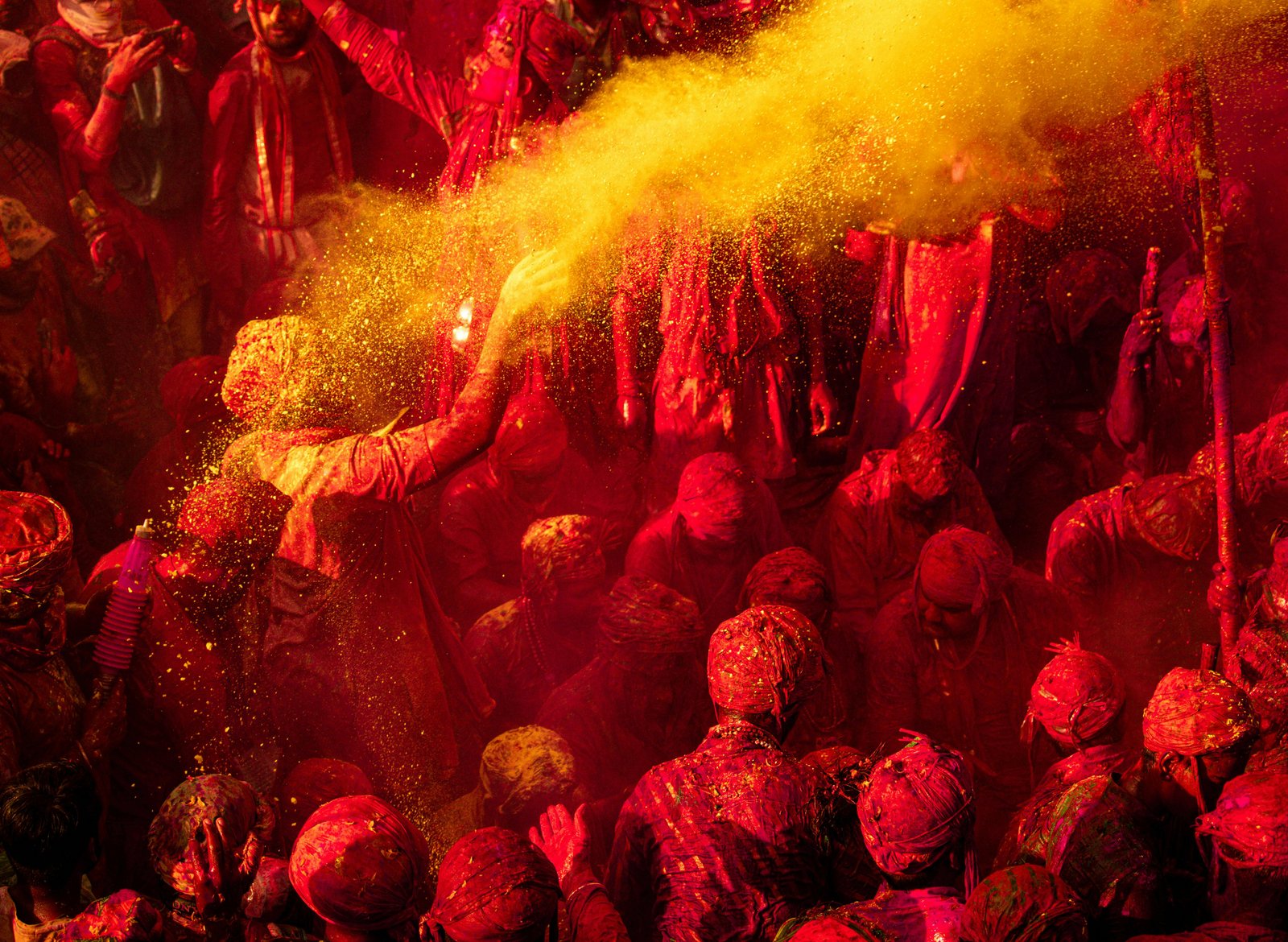
When the morning of the main celebration arrives, Bharatpur literally explodes in colour.
Clouds of gulal powdered colour rise above the narrow lanes like pink and yellow fog. People smear each other's faces with abandon. Strangers included. Tourists very much included. Nobody asks permission. Nobody needs to. The whole point is that colour erases boundaries. When everyone is dressed in red, green, and blue, it's impossible to distinguish between them.
Men and women in bright Rajasthani clothes dance together in the streets. Folk music plays from everywhere, sometimes competing sources, which creates this chaotic layered soundtrack that's oddly perfect. Sweets get passed around. Kids run through the lanes with water guns. Old couples sit on balconies, watching everything below with expressions that suggest they've been doing this routine for sixty years, and it still makes them happy.
The colours themselves aren't random, at least not traditionally. Red is passion. Yellow stands for purity. Green for growth. Blue is for divine love, Krishna's colour. It's debatable whether anyone thinks about the symbolism while throwing fistfuls of powder at their neighbours. But the meaning is there, baked into the tradition, whether it's consciously observed or not.
Folk Rhythms and Cultural Extravaganza
The Brij Festival doubles as a folk arts showcase and a wonderful one. Open grounds around Bharatpur become performance spaces where you can see traditional dances, Ghoomar and Kalbelia, performed by artists who work for real, not for tourist shows.
Ghoomar dancers in their swirling ghagras. Kalbelia women in black mirror-work outfits are bending in ways that don't seem anatomically possible. Both are happening on the same grounds, sometimes overlapping, which creates this visual overload that's challenging to process but impossible to stop watching.
The music is constant. Dholak, algoza, morchang, and sarangi: the full Rajasthani folk instrument lineup. The musicians aren't on a raised stage somewhere. They're in the middle of things, close to the dancers, close to the audience. The sound is raw and immediate in a way that recorded music can never replicate.
Street processions serve as the unifying element. Music, dance, devotion, and colour are all moving through Bharatpur's streets as a stream of celebrations. It's sensory overload, but the positive kind. The kind where you stop trying to take photos and just stand there letting it happen around you.
A Feast for the Senses
The food situation at the Brij Festival is exceptional and warrants more than a brief mention.
Stalls everywhere. The smell of ghewar, that disc-shaped Rajasthani sweet made from ghee and flour, hitting you from two streets away. Pyaaz kachori, which is basically a deep-fried onion pastry that has no business being as delicious as it is. Malpua sweet pancakes soaked in syrup. And chai. So much chai. Served in little clay cups, they give tea an earthy, smoky flavour that a paper cup would ruin.
Eating at the Brij Festival isn't really about the individual dishes. It's about the context. The dining experience involves standing in a crowd of colour-smeared people, holding a hot kachori in one hand and a clay cup of chai in the other, while drums play somewhere behind you and someone's kid accidentally hits you with a water balloon. That's the dining experience. And it's better than any restaurant.
Beyond Celebration: A Festival of Harmony
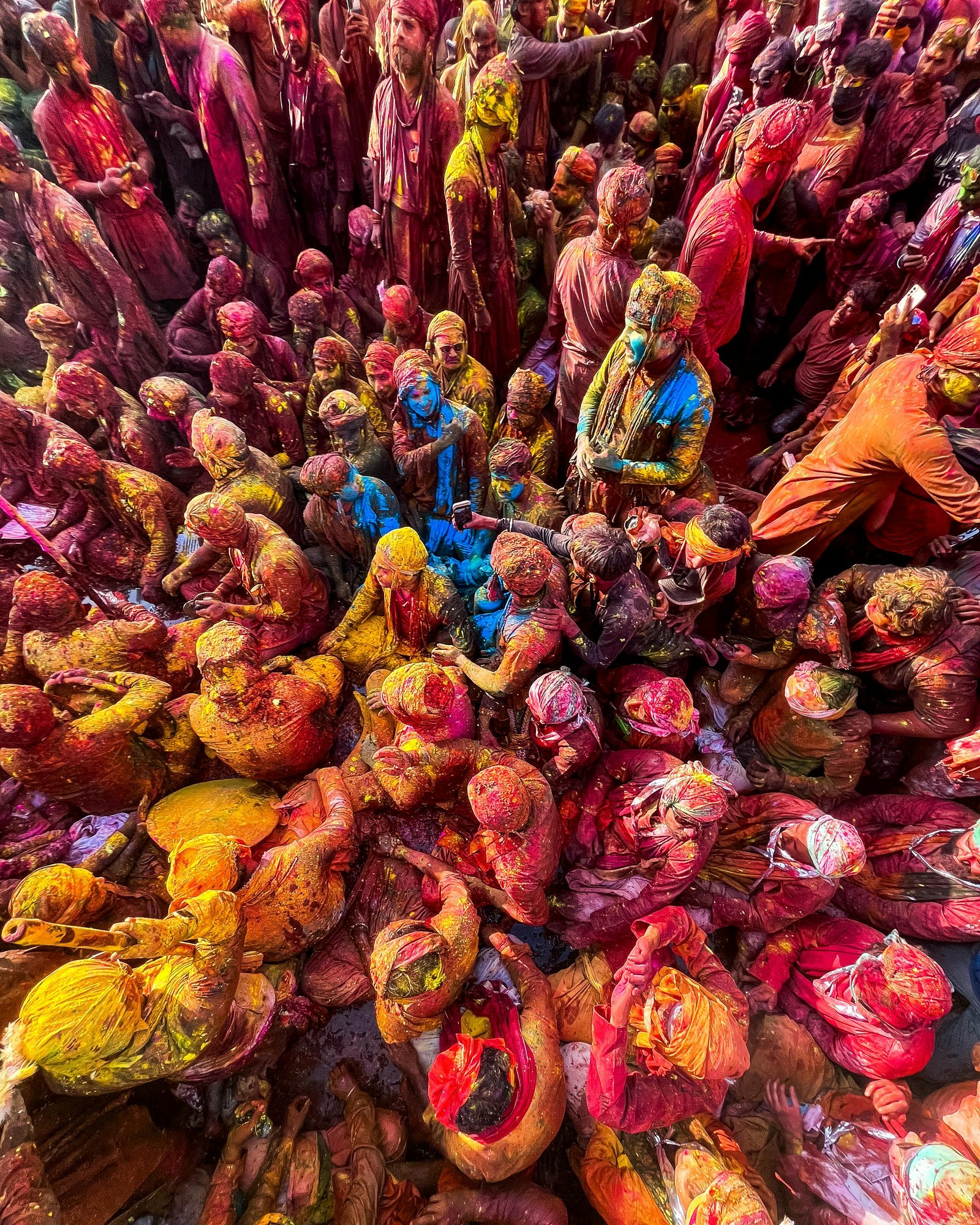
The most frequently mentioned aspect of the Brij Festival, after the colours, music, and food, is how they levelled everything. During those few days, the usual social divisions that operate in Indian life dissolve. The same crowd, consisting of locals and tourists, experiences the same gulal. The rich and poor are dancing in the same street. Old people and kids are playing Holi together. Language barriers don't matter when everyone's laughing.
It's easy to romanticise, and I don't want to oversell it. Social realities don't vanish because of a festival. But there is something genuinely different about how people interact during Brij. A looseness. A willingness to connect with strangers. A temporary suspension of the usual rules about who talks to whom and how. Whether it lasts beyond the festival is another conversation. But while it's happening, it's real. And it reflects something about Rajasthan that the forts and palaces don't show you this culture's deep instinct for hospitality and inclusion, especially when there's a reason to celebrate.
Experience the Magic with Folk Experience
The Brij Festival is one of those events where the difference between watching and participating is enormous. You can observe it from a safe distance and get some lovely photos. Alternatively, you can immerse yourself in the experience, get covered in colours, learn the true meaning of the rituals, and emerge with a deeper understanding of Bharatpur and its people than you would've otherwise.
At Folk Experience, we set you up for the second option. Our Brij Festival journeys put you in the middle of things, walking with devotees to the Banganga River; watching Raslila under the open sky with people who'll explain what's happening and why it matters; and celebrating Holi the way Bharatpur has been celebrating it for centuries. With the actual community. Not as a spectator. As a guest.
We build our experiences around storytelling, respect, and real connection with the people who keep these traditions alive. The version of Rajasthan we show isn't the one on postcards. It's the one who sings, prays, throws colours at strangers, and then feeds them before sending them home.
Travel with Folk Experience, where festivals are not spectacles but shared stories of the human heart.