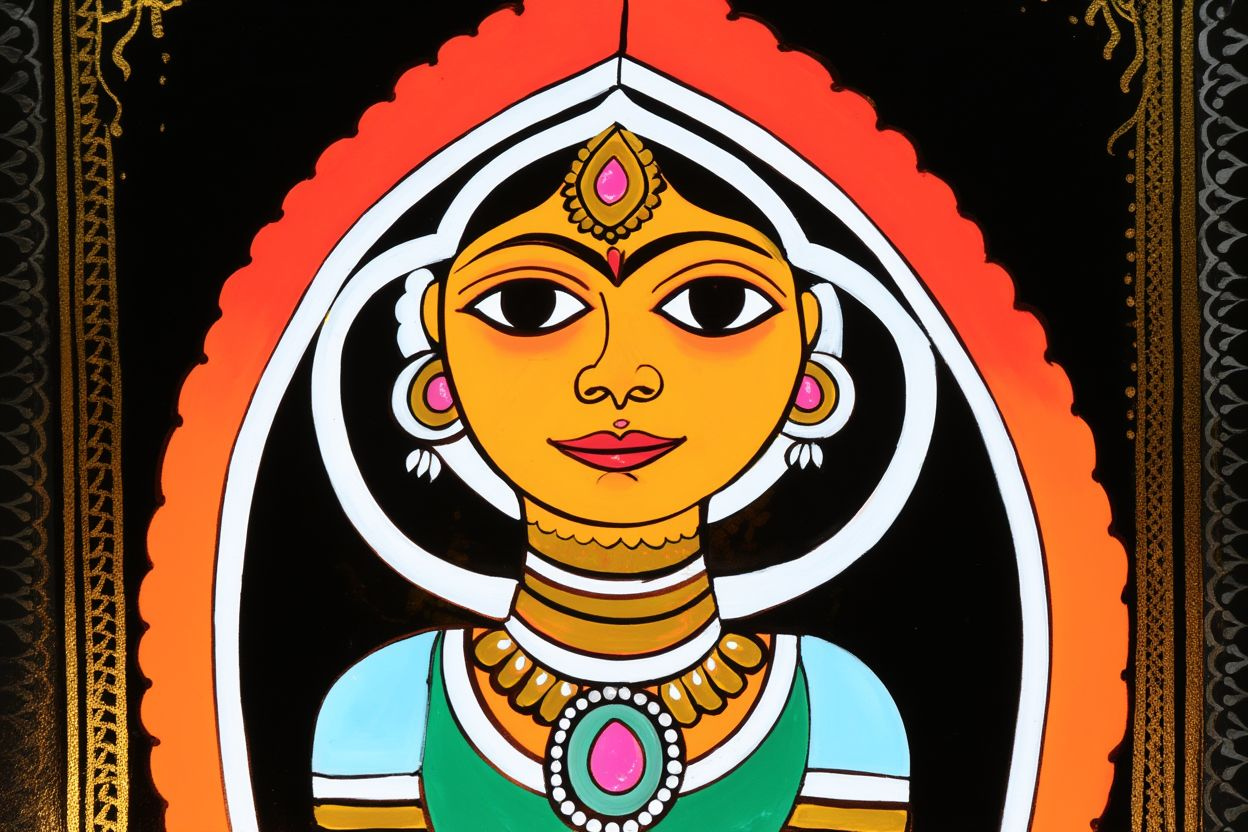
Tikuli Painting: Bihar's Traditional Glass Art
Before it became a painting tradition, Tikuli was something worn on the forehead. The tikuli was a small circular disc, made from gold or silver foil pressed onto lac or resin, placed at the point between the eyebrows as a mark of auspiciousness and social identity. In Bihar's...
Meet your AI Story Guide
Turn this field note into a one-minute brief with the essential places, people, and traditions.
The Technique and Why It Is Difficult
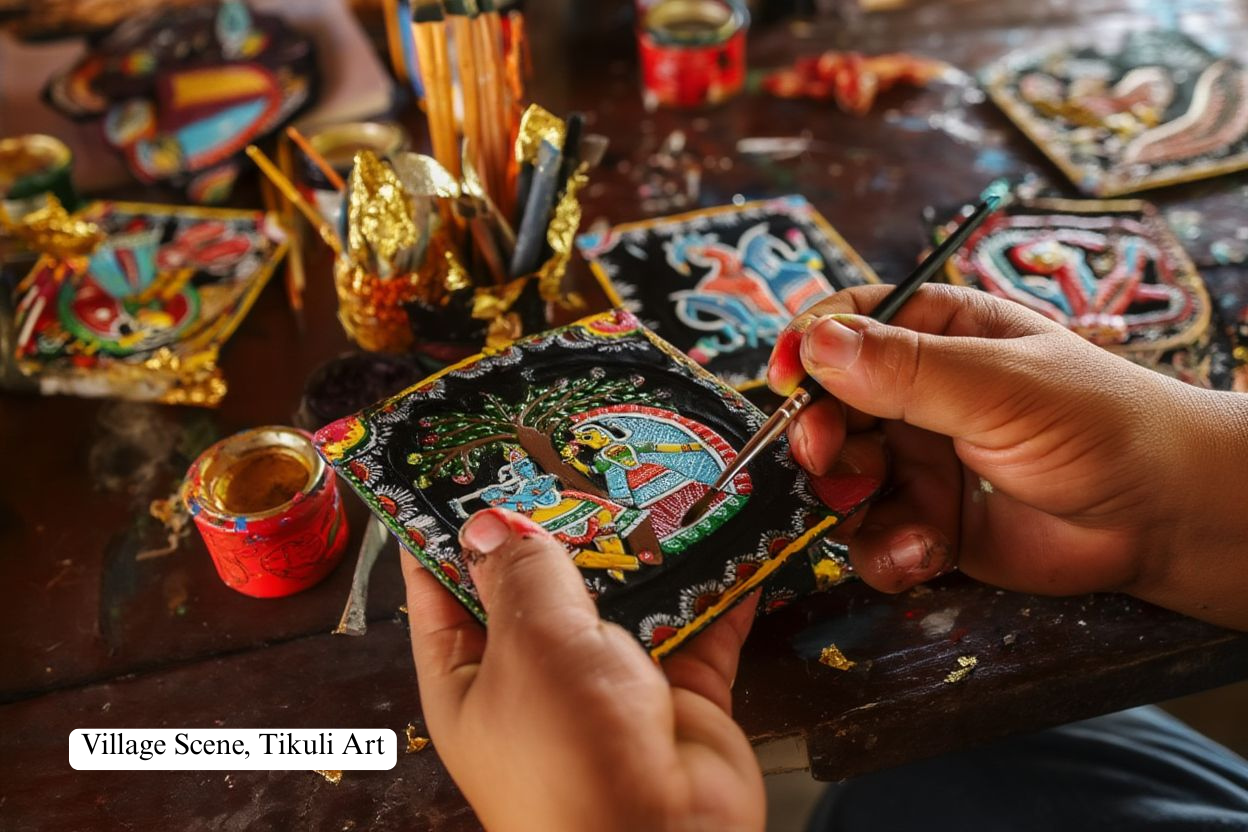
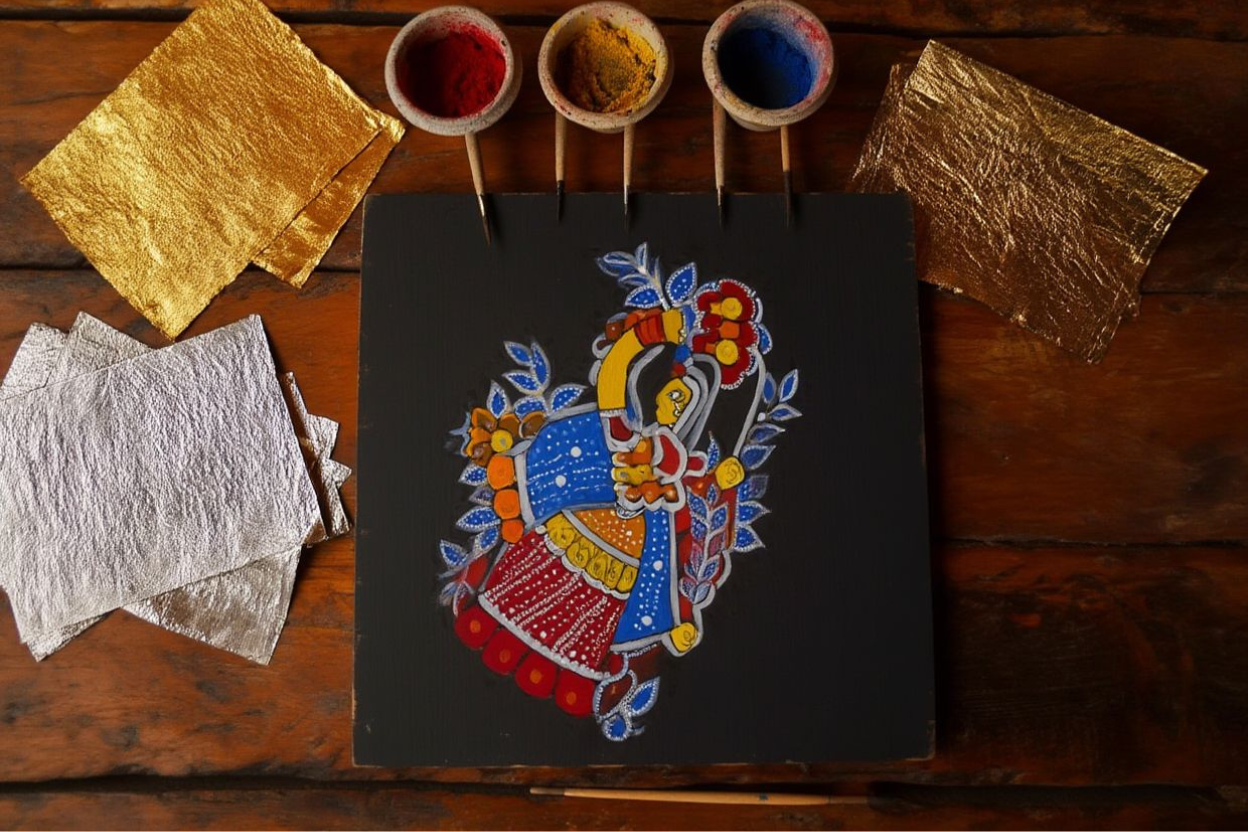
The reverse glass painting technique that defines Tikuli work requires the painter to work backward through the composition in a way that most painting traditions do not. Because the image is painted on the back of the glass and viewed through the front, the painter sees the reverse of what the viewer will eventually see. This means the finest details, the lines that will appear sharpest and most prominent to the viewer, must be painted first, before the background layers are applied. The painter builds the image from foreground to background, which is the reverse of the sequence that most pictorial traditions follow.
FACT: Reverse glass painting as a technique has independent origins in multiple world traditions, including European verre églomisé. Chinese reverse glass painting was introduced during the Qing dynasty through European trade and several South Asian traditions, including the Tikuli tradition of Bihar and the glass painting of Rajasthan's Shekhawati region. The Bihar tradition's specific character, its connection to the tikuli ornament and its ceremonial context distinguish it from these parallel developments despite the technical similarity.
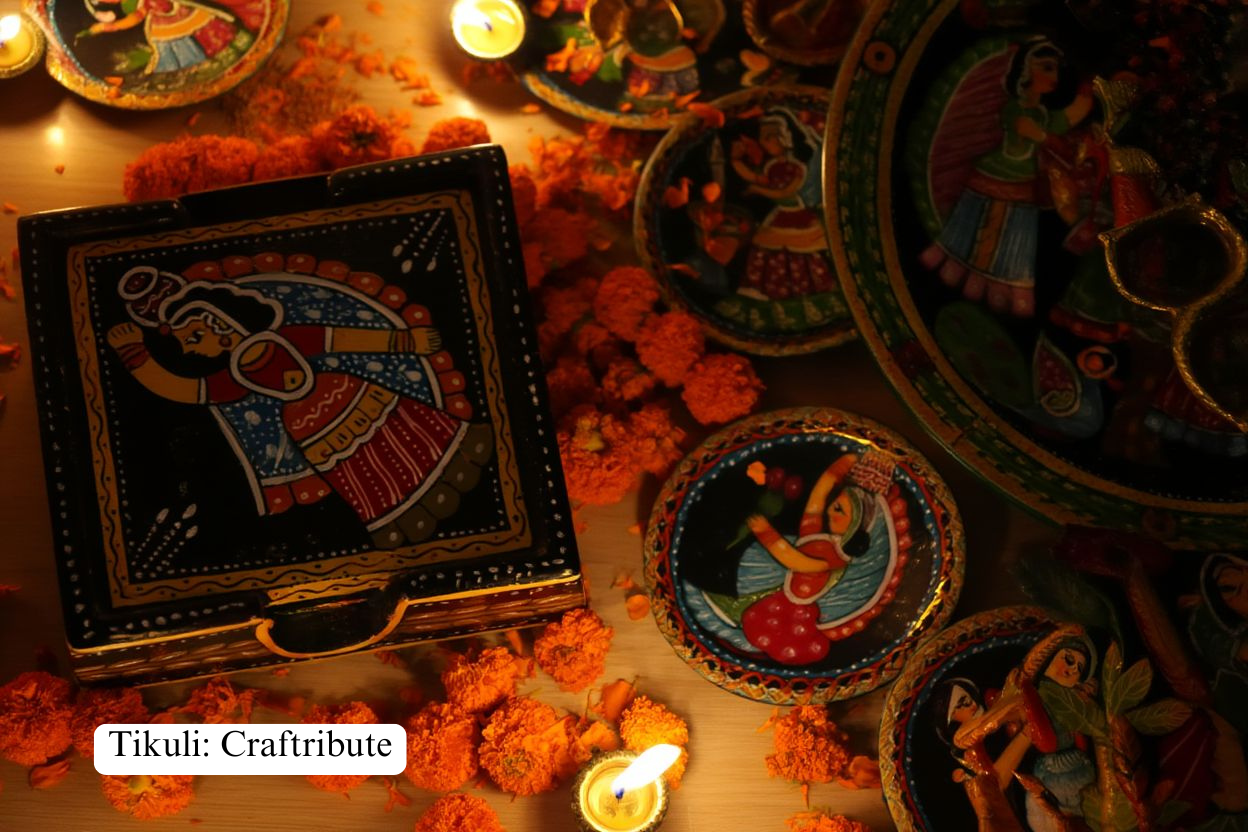
The gold and silver foil that is applied beneath the pigment layers is not decorative in the secondary sense. It is structural to the visual effect the tradition aims for. The foil reflects light back through the painted layers, giving the finished image a luminosity that flat pigment on a flat surface cannot produce. This quality, the sense that the image is lit from within rather than from without, is what connects Tikuli painting to the tikuli ornament it evolved from: both are objects that catch and return light.
The drying time between layers is significant. Each layer of pigment must be completely dry before the next is applied, because wet layers will lift or mix if new material is applied on top. The patience required is not incidental to the tradition's character. It is the primary condition of its production. A Tikuli painting cannot be rushed.
The History and Why It Stayed Small
Tikuli painting developed under the patronage conditions of Bihar's pre-colonial urban culture, primarily in Patna, which served as a significant center of commerce and culture during the Mughal period and afterward. The craft flourished when there was a class of patrons with the resources to commission ornamental objects and the cultural orientation to value miniature work and ceremonial refinement.
FACT: Tikuli painting is documented in accounts of Patna's traditional craft economy from the colonial period, when British administrators and travelers noted the presence of specialist artisans producing glass paintings alongside the city's other luxury craft traditions. The craft's concentration in Patna, rather than in the rural areas where most of Bihar's folk art traditions developed, reflects its origin in urban patronage culture rather than agricultural community practice.
The contraction of Tikuli painting in the 20th century was the contraction of its patronage base. The class of urban patrons who had commissioned ceremonial objects and decorative glass paintings diminished under the economic changes of the post-independence period. The demand for tikuli ornaments as worn objects declined as changing fashion moved away from the elaborate personal ornamentation that had characterized Bihar's urban ceremonial culture in earlier centuries. The artisans who maintained the tradition were working for a shrinking market with a technique that was too time-intensive to compete on price with printed alternatives.
The craft today is maintained by a small number of artisan families in Patna, most of them working in the same neighborhoods where the tradition has been practiced for generations. The number of active Tikuli painters is difficult to verify, but by most accounts it is in the dozens rather than the hundreds, which places Tikuli in the category of traditions that are genuinely at risk of disappearing within a generation if the transmission is not actively supported.
What Tikuli Paintings Show
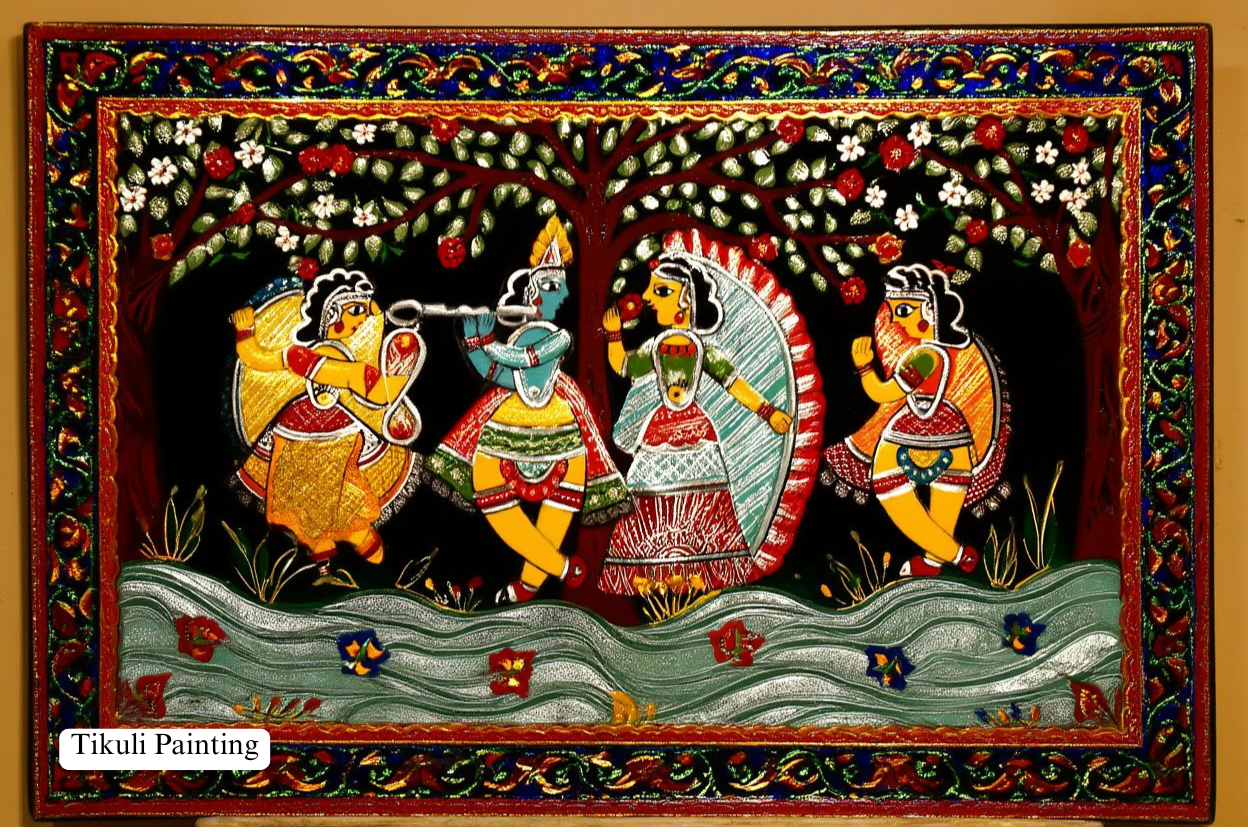
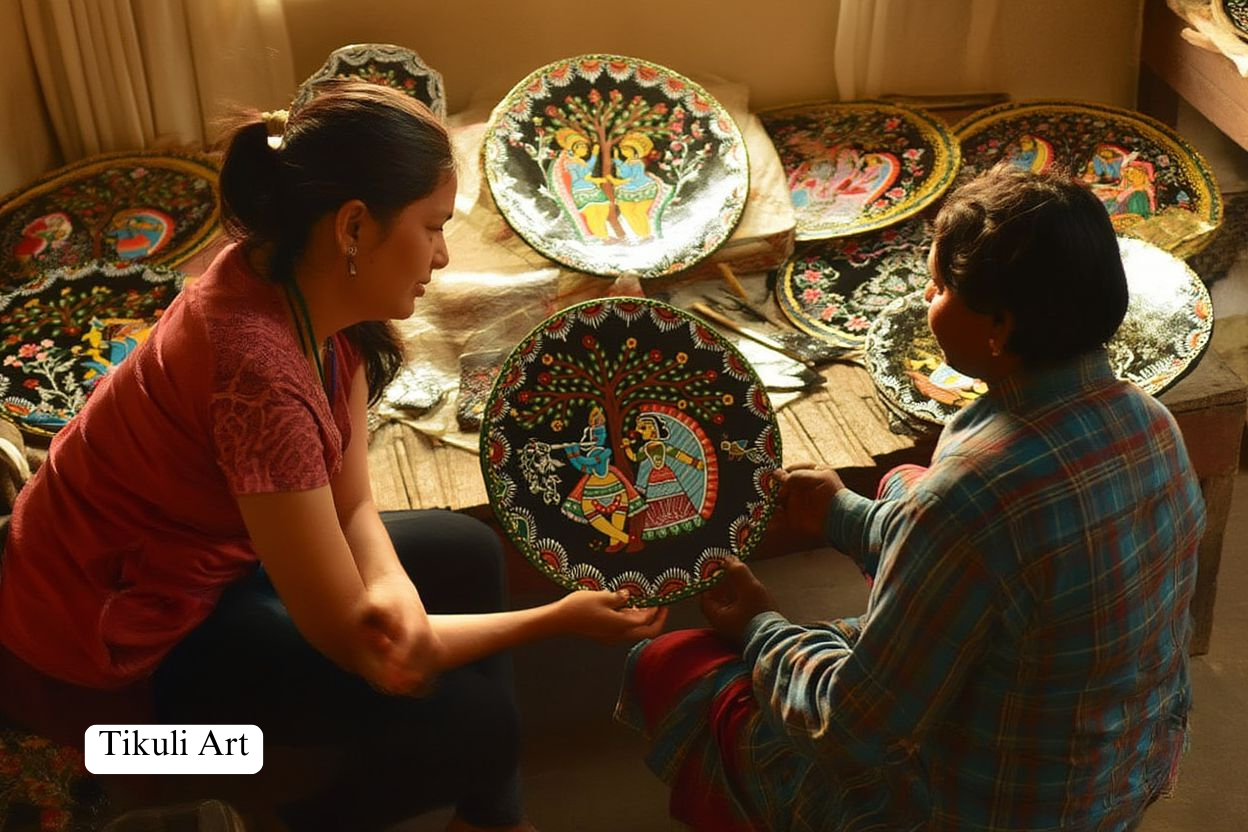
The subject matter of Tikuli painting is drawn from Bihar's ceremonial and devotional world. Mythological scenes from the Ramayana and the Mahabharata. Depictions of Krishna and Radha. Images of local deities. Scenes from weddings and festivals. The compositional conventions are derived partly from the Mughal miniature tradition that influenced Patna's art culture during the period when Tikuli painting was developing and partly from the folk iconographic vocabulary of Bihar's own religious traditions.
The reverse glass technique creates a surface that is distinctly different from the surface of a painting on canvas or paper. The image sits behind the glass rather than on it, which creates a slight visual depth even in a flat composition. The glass itself becomes part of the aesthetic, its transparency and reflectivity contributing to the finished work in ways that the painter accounts for but cannot entirely control.
The Artisans and the Question of Continuity
The families that maintain Tikuli painting in Patna are doing so under conditions that do not make the craft's survival easy. The raw materials, gold and silver foil, quality glass, and the specific pigments that produce the tradition's characteristic color range are available but not cheap. The market for the finished work is small and concentrated among collectors, cultural institutions, and the occasional visitor who arrives at the right workshop at the right time.
FACT: Tikuli painting received recognition under Bihar's state handicraft promotion programs, and Tikuli artisans have participated in national craft fairs and exhibitions, including the Surajkund Mela. Despite this institutional recognition, the craft has not developed the kind of sustained market access that would allow artisan families to maintain it as a primary livelihood. Most Tikuli painters supplement their income from the craft with other work, which limits the time available for production and for transmitting the technique to the next generation.
The transmission problem is the most acute. The reverse glass technique requires a sustained learning period before it is marketable: the painter must develop the specific manual control and the backward compositional thinking that the technique demands, and this takes years rather than months. A young person from a Tikuli artisan family who needs to earn income relatively quickly will find that other options, construction work, service employment, and daily wage labor pay faster returns than the years of practice that Tikuli painting requires before it becomes productive.
Some families have found ways to keep the tradition alive by connecting to design organizations and cultural institutions that value the craft's historical significance and are willing to commission work or support training programs. These connections are not available to all Tikuli artisans, and they are not sufficient on their own to resolve the structural economic problem. But they represent the most promising current model for sustaining a tradition that has no mass market.
Why Folk Experience for Tikuli
Tikuli painting requires the kind of introduction that the craft market alone does not provide. The connection between the tikuli ornament and the painting tradition, between the foil reflectivity and the ceremonial context, between the reverse technique and the specific visual effect it produces, is not visible in the finished object. It has to be explained.
Folk Experience includes Tikuli in Bihar itineraries as an encounter with a tradition that illuminates a specific aspect of Bihar's cultural history that more visible folk arts do not address: the ceremonial and aesthetic culture of Bihar's urban centres, the Mughal period influence on Patna's artistic traditions, and the specific challenge of maintaining a craft whose patronage conditions have fundamentally changed.
The visit to a Tikuli artisan's workshop in Patna, watching the reverse painting process from the initial gold foil application through the successive pigment layers to the final completion, and understanding what the craft is and where it came from, is one of the most concentrated encounters with Bihar's premodern urban culture that a visitor can have. It requires intention to find, patience to observe, and context to understand.
Folk Experience provides all three.
keep wandering