City of Temples, House of Kings — A Jammu Heritage City Walk
“In Jammu, the kings built temples and the temples kept the kings — a city where faith and royalty have stood side by side for two centuries and still do.”
At a Glance
The essentials, at once.
- Duration
- 4–5 Hours
- Destination
- Jammu, Jammu and Kashmir
- Best Season
- Year-round; October to March offers the most pleasant weather, while mornings and late afternoons provide the best experience throughout the year.
- Group
- Small group · Max 8
- Physical Rating
- Easy — short, unhurried walks at each site between comfortable private-vehicle transfers; a few temple steps along the way, suitable for all ages.
- Theme
- Heritage
- Timings
- 16:00 – 20:00
01The story
The Journey
This is not a monuments checklist; it is a guided passage through the story of the Dogra dynasty — told in the very stone, scripture and skyline they left behind. Jammu did not earn the name City of Temples by accident: its rulers built for their gods as grandly as they built for themselves, and this journey moves between the two, from sacred shrine to royal residence, with a storyteller-guide who knows where the history lives.
The sacred chapter unfolds first. At the magnificent Ranbireshwar Temple, you stand before one of the region’s most impressive Shiva lingams, in a shrine raised by a king for his city. At Raghunath Temple — one of North India’s largest temple complexes, dedicated to Lord Rama — gallery after gallery of deities reveals the sheer devotional ambition of the Dogra court. In the old lanes, the historic Panjvaktar Mahadev Mandir, lovingly known as the Rupaiye Wala Mandir, holds its place among Jammu’s oldest and most sacred Shiva temples. And at the ancient Peer Kho Cave Temple, legend deepens into the rock itself — a cave shrine woven into the Ramayana and the local stories your guide carries.
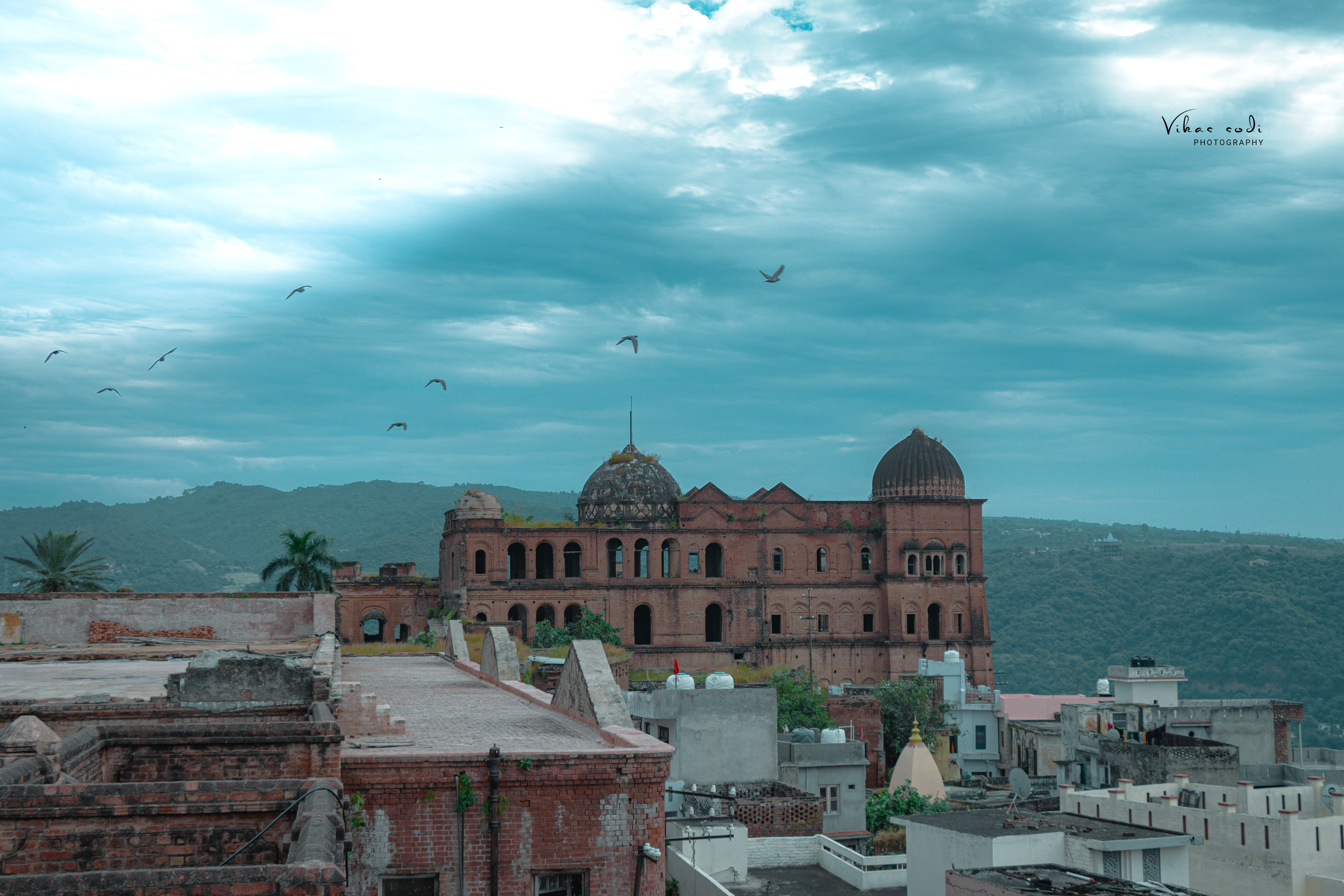
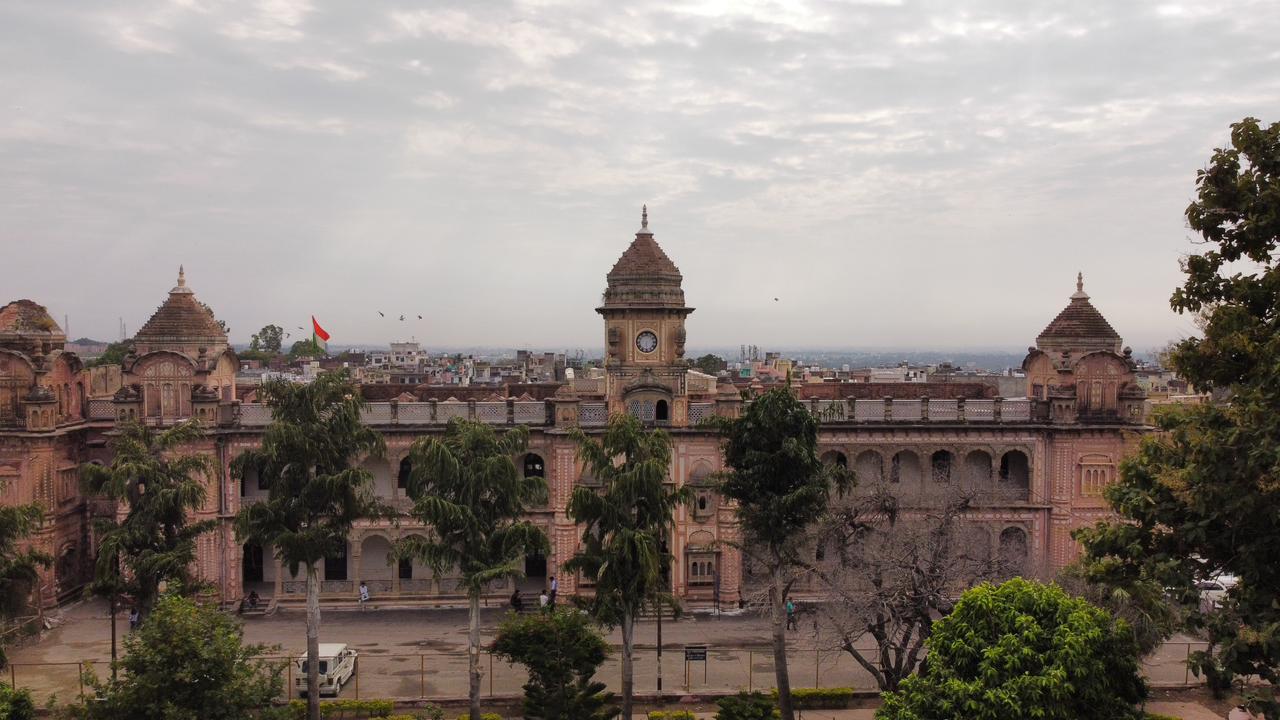
Then the royal chapter. At the Mubarak Mandi Heritage Complex, the former seat of the Dogra rulers, you walk through courtyards where Rajasthani, Mughal and European architecture meet in a single skyline — the ambitions of a dynasty written in three languages of stone. The journey closes at the elegant Amar Mahal Palace, a French-château silhouette above the Tawi River, now a museum of royal artefacts, miniature paintings and Dogra memory, where the family’s story is kept rather than merely displayed.
Between the sites, your guide threads it all together — the rise of the Dogra dynasty, the faith that shaped the city’s skyline, the architecture that outlived the throne. The tour ends not with photographs of buildings, but with the story of a city you can now read for yourself.
02The living journey
Moments you will carry home
The great Shiva lingam of Ranbireshwar and the vast galleries of Raghunath — the devotional heart of the City of Temples
The hush of Peer Kho’s cave shrine, where Ramayana legend and local memory share the same rock
The courtyards of Mubarak Mandi — Rajasthani, Mughal and European grandeur standing shoulder to shoulder
The view from Amar Mahal over the Tawi, and a museum where the Dogra story is still lovingly kept
The stories of kings, priests and city-builders, told by a guide who grew up among them
Your journey companion
Curious about City of Temples, House of Kings — A Jammu Heritage City Walk?
Ask Ganga AI anything about this day — timings, season, what to wear.
03The day on film
A taste of what awaits.
04The community
Community & Responsibility
Every stop on this journey keeps someone’s inheritance alive. Your guide is a local storyteller whose livelihood is this city’s history; the flower-sellers and prasad shops at the temple gates are family counters that have served pilgrims for generations; and your visit to Dogra Art Museum and Amar Mahal support the museums work of preserving the Dogra collection. When you travel with us, your curiosity quietly becomes their continuity.
05Practical notes
Good to know, before you go.
- Ideal For
- History enthusiasts, culture lovers, architecture admirers, pilgrims, photographers, families, solo travellers, and small groups
- Ideal Time
- Morning or late afternoon, when the temples are alive with prayer and the light is at its kindest on the old stone
- Duration
- 4–5 Hours
- Best Season
- Year-round; October to March offers the most pleasant weather, while mornings and late afternoons provide the best experience throughout the year.
- Physical Rating
- Easy — short, unhurried walks at each site between comfortable private-vehicle transfers; a few temple steps along the way, suitable for all ages.
Included
- Guided heritage tour with a local storyteller-guide
- Visits to selected heritage monuments and temples
- Insights into Dogra history, architecture, culture, and local traditions
Not included
- Monument and museum entry tickets, payable directly where applicable
- Personal purchases, offerings, tips and gratuities
- Anything not expressly listed under inclusions
06Before you book
Questions travellers ask
All tours need to be paid in full in advance. We do not accept cash payments.
Spend a day in Jammu.
Fill in the enquiry form and a folklorist from our team will get in touch. No payment now.