Pearls, Prayers & Parathas — An Old Delhi Walk through Chandni Chowk
“Old Delhi keeps its history not in museums but in lanes that still pray, trade and cook the way they always have.”
At a Glance
The essentials, at once.
- Duration
- 3–4 Hours
- Destination
- Old Delhi, Delhi
- Best Season
- October to March, when the lanes are cool enough to linger. Summer walks keep a gentler pace with shade and water stops.
- Group
- Small group · Max 8
- Physical Rating
- Easy to Moderate — around 3 km on foot through crowded, uneven lanes, with steps at Jama Masjid and the Jain temple; suits anyone comfortable walking for three hours
- Theme
- Heritage
01The story
The Journey
This is not a food crawl or a rickshaw dash through Chandni Chowk; it is a slow reading of Shahjahanabad, the walled city Shah Jahan built in the seventeenth century, through the prayers, trades and recipes that still run its lanes.
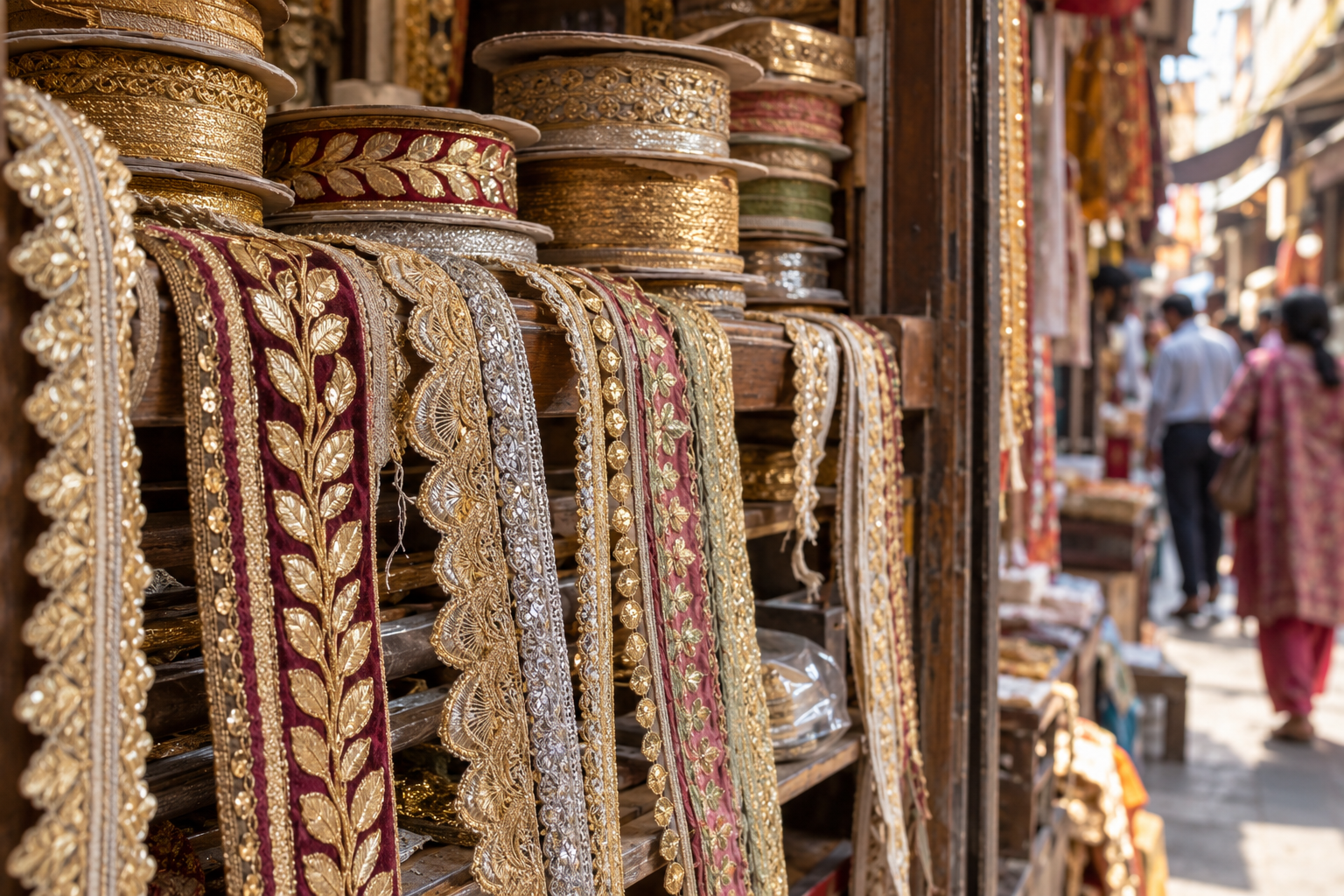
We begin beneath Jama Masjid, the Masjid-i-Jahan-Numa, completed in 1656 on the highest ground of the city. Below its red sandstone steps, the food street wakes to slow-cooked nihari and kebabs over coal. From here we walk into Dariba Kalan, the silver street whose name comes from the Persian dur-e-be-baha, the “unparalleled pearl”, and slip into Kinari Bazaar, where gota, zari and tinsel are sold for every wedding season in north India.
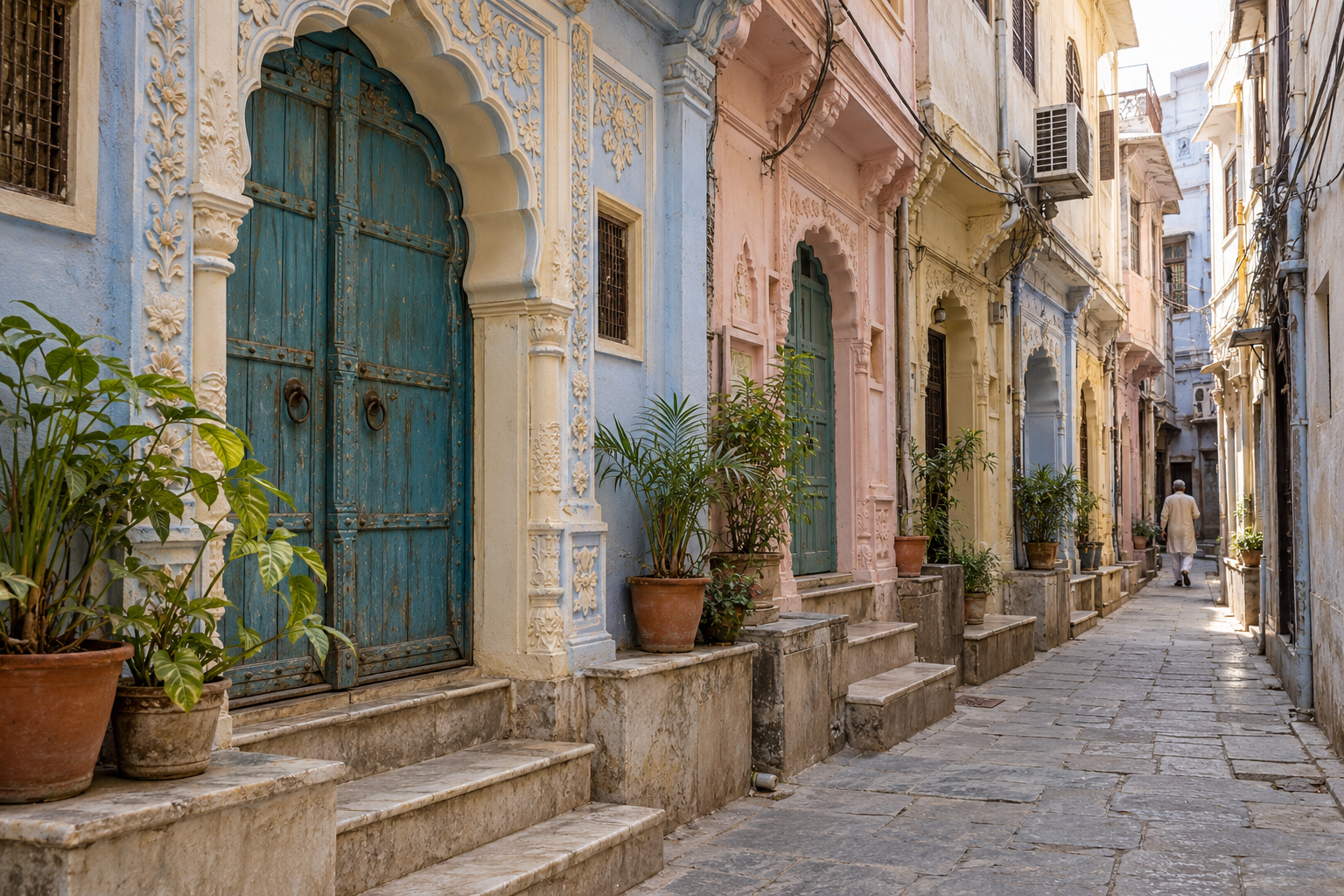
Off Kinari Bazaar lies Naughara, a lane of nine eighteenth-century Jain havelis with carved doorways, ending at a Shwetambar Jain temple whose gilded walls and glass mosaics tell the life of Mahavira. A few turns away, Paranthe Wali Gali has fried its vegetarian parathas since the 1870s, without onion or garlic, for a neighbourhood of Brahmin and Jain families. At the mouth of Dariba Kalan, a jalebi counter frying in desi ghee since 1884 gives the walk its sweetest pause.
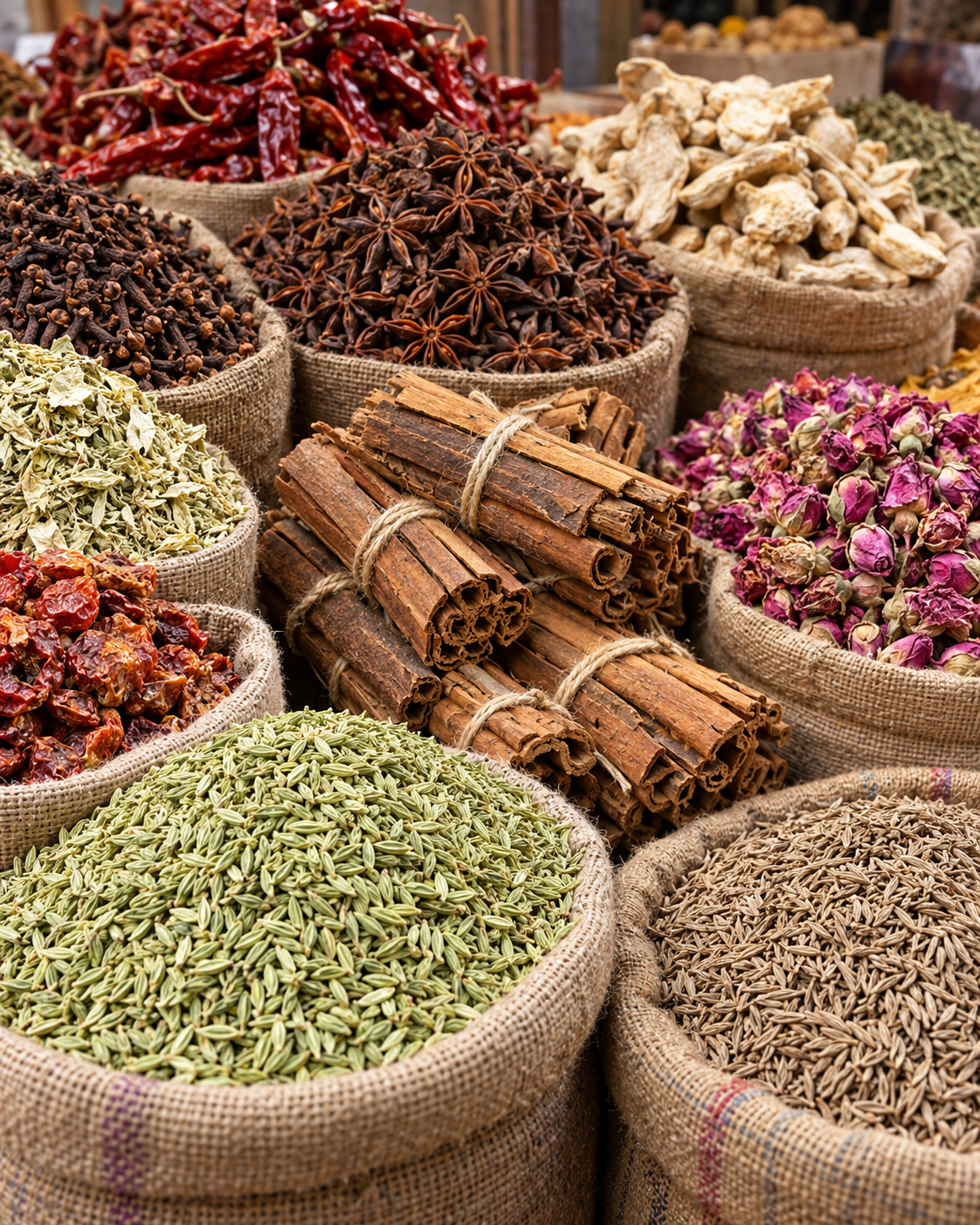
On Chandni Chowk itself, the avenue Princess Jahanara laid out in 1650 around a canal that once held the moon, we stand at Gurdwara Sis Ganj Sahib, where Guru Tegh Bahadur, the ninth Sikh Guru, was martyred in 1675. The walk ends in Khari Baoli, named after a saline stepwell of the 1550s and often called Asia’s largest wholesale spice market, where the air itself tastes of chilli. A mosque, a temple and a gurdwara within a short walk of one another: Old Delhi still lives as a city of neighbours.
02The living journey
Moments you will carry home
The view across Shahjahanabad from the steps of Jama Masjid
Gilded walls and glass mosaics at the end of Naughara’s quiet haveli lane
A stuffed paratha from Paranthe Wali Gali, then jalebi hot from the ghee
The hush of Sis Ganj Sahib, then the chilli-thick air of Khari Baoli
Your journey companion
Curious about Pearls, Prayers & Parathas — An Old Delhi Walk through Chandni Chowk?
Ask Ganga AI anything about this day — timings, season, what to wear.
03The day on film
A taste of what awaits.
04The community
Community & Responsibility
Every tasting on this walk is bought from the paratha makers, halwais, street cooks and spice traders who have kept these lanes running for generations, and every story is told by a guide from the city itself. Nothing is staged, nothing is packaged; your appetite quietly becomes their livelihood.
05Practical notes
Good to know, before you go.
- Ideal For
- First-time visitors to Delhi, food lovers, history readers and photographers who want to understand Old Delhi, not just pass through it
- Ideal Time
- Late morning to early afternoon, Monday to Saturday, when Jama Masjid welcomes visitors, the bazaars are open and Khari Baoli is trading
- Duration
- 3–4 Hours
- Best Season
- October to March, when the lanes are cool enough to linger. Summer walks keep a gentler pace with shade and water stops.
- Physical Rating
- Easy to Moderate — around 3 km on foot through crowded, uneven lanes, with steps at Jama Masjid and the Jain temple; suits anyone comfortable walking for three hours
Included
- A folklorist-guide who reads Old Delhi’s faiths, trades and recipes with you (English and Hindi)
- Core tastings: street food near Jama Masjid, a paratha meal at Paranthe Wali Gali and hot jalebi at Dariba Kalan
- Guided visits to Jama Masjid, the Naughara Jain temple, Gurdwara Sis Ganj Sahib and Khari Baoli
- The stories behind each lane: its name, its trade, its festivals and the families who keep it alive
Not included
- Travel to the start point and onward from Khari Baoli
- Jama Masjid ticket for foreign nationals, robe hire, personal shopping and tips
- Anything not expressly listed under inclusions
06Before you book
Questions travellers ask
All walking tours need to be paid in full in advance. We do not accept cash payments.
Spend a day in Old Delhi.
Fill in the enquiry form and a folklorist from our team will get in touch. No payment now.