When dusk falls over the blue city of Jodhpur, something magical unfolds. The air fills with the sound of drums, laughter, and the rustle of vibrant saris. Women take to the streets, not as spectators, but as symbols of strength and spirit. In their hands, they carry lathis (wooden sticks); on their faces, they wear …

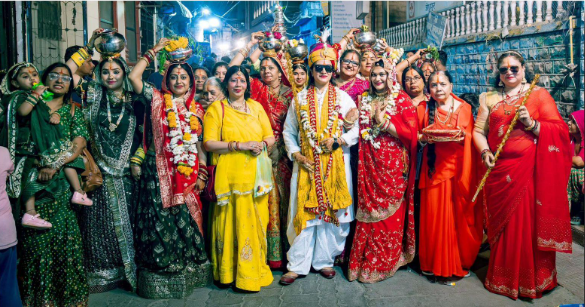
When dusk falls over the blue city of Jodhpur, something magical unfolds. The air fills with the sound of drums, laughter, and the rustle of vibrant saris. Women take to the streets, not as spectators, but as symbols of strength and spirit. In their hands, they carry lathis (wooden sticks); on their faces, they wear smiles and mischief.
The city, usually steeped in royal elegance, transforms into a stage of fearless joy and feminine energy.
This is Dhinga Ganwar, a festival that celebrates women not as goddesses on pedestals but as living forces of freedom, wit, and power.
“For one night, the women of Jodhpur rule the streets, with laughter as their anthem and courage as their crown.”
What is Dhinga Ganwar?
Dhinga Ganwar is one of Rajasthan’s most extraordinary celebrations, an extension of the Gangaur Festival, which honours Mata Gauri, the consort of Lord Shiva. While Gangaur is rooted in marital devotion, Dhinga Ganwar brings a twist, it celebrates women’s agency, individuality, and joy in its most playful form.
The word “Dhinga” means fun by deception, and “Ganwar” (or Gavar) refers to Goddess Gavar Mata, considered another manifestation of Parvati. The festival thus becomes a joyous expression of female power, a blend of reverence and rebellion.
According to local lore, a widow once dreamt that Lord Shiva instructed her to worship his other wife, Goddess Ganwar, instead of Gangaur.
When she followed the divine vision, it gave birth to a new tradition, one that balanced spirituality with spirited celebration.
Another tale from Jodhpur’s folk history tells of a miraculous event in 1970, when an idol of Gavar Mata was unearthed during an excavation at Haddiyon Ka Chowk.
Soon after, people began to experience divine signs, doors mysteriously opening, and the goddess’s image reappearing across homes.
The women of Jodhpur took this as a divine calling, to celebrate Gavar Mata and their own strength through this vibrant festival.
Rituals and Preparations: Sixteen Days of Devotion
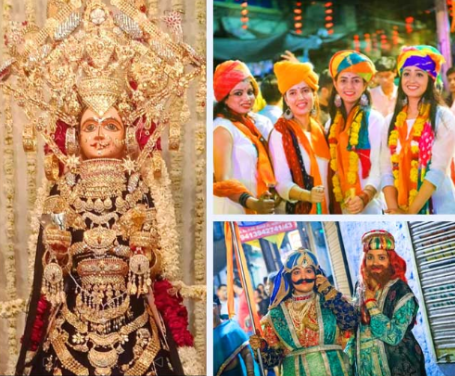
The festival unfolds over sixteen days, mirroring the structure of Gangaur, and culminates in a spectacular night procession. The number 16 holds deep symbolic value ,representing the solah shringar (sixteen adornments) of women and the phases of the moon, connecting beauty, fertility, and faith.
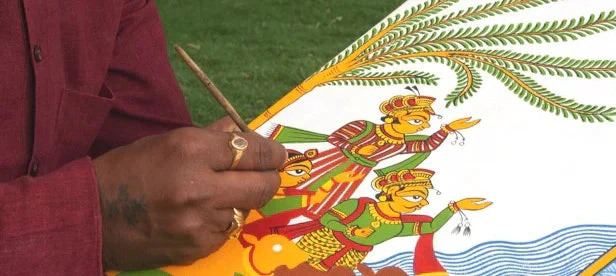
Before the festivities begin, women paint images of Gavar Mata, Lord Shiva, Lord Ganesha, the sun, moon, and sacred motifs like mice and women carrying earthen pots ,all using natural colours on walls and courtyards. The idols of Dhinga Ganwar are then adorned in gold jewellery, embroidered attire, and delicate veils.
Sixteen women worship together, sharing rituals, songs, and food ,a practice that strengthens sisterhood and continuity. On the final day, eleven idols of Gavar Mata are placed across Jodhpur’s old city, each marking a sacred stop in the night’s festivities.
“In every courtyard, a new goddess is born ,in laughter, in colour, and in the courage to celebrate herself.”
When the Night Falls: The Festival Comes Alive
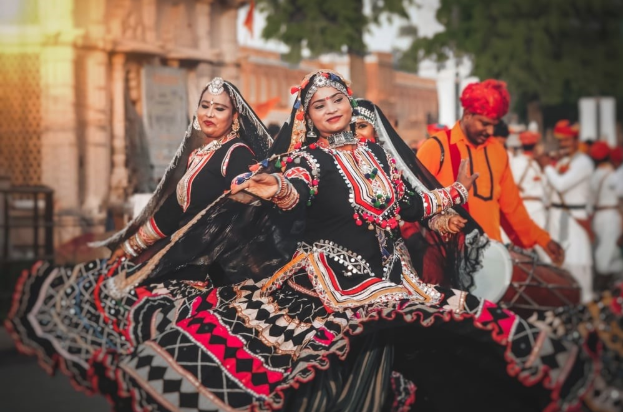
As twilight deepens, Jodhpur’s narrow lanes shimmer with anticipation. The city, painted in hues of blue, becomes a living artwork of movement and sound. Women dressed in traditional attire ,ghagras, odhnis, and ornate jewellery ,begin their procession, carrying idols on their heads.
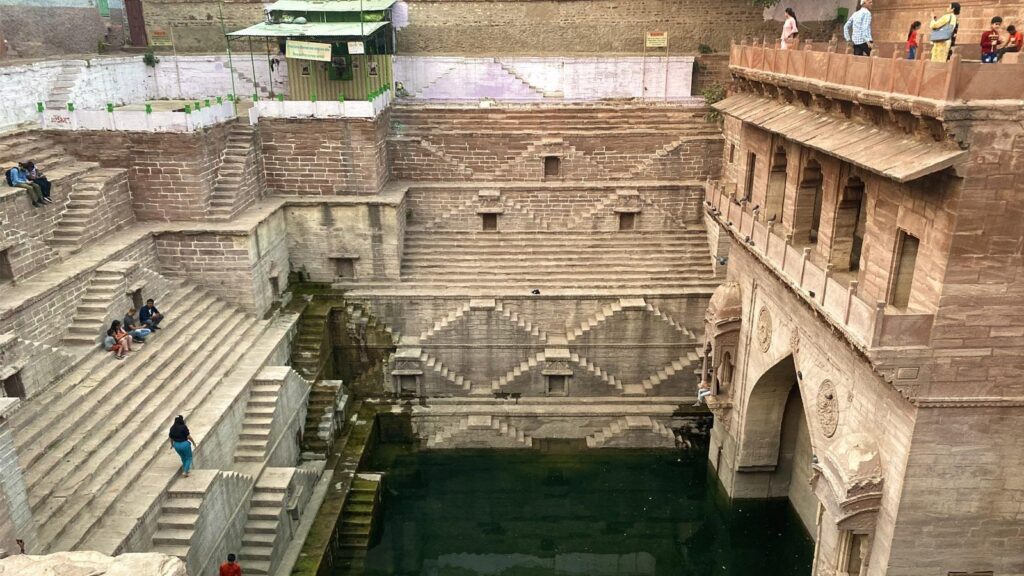
The heartbeat of the celebration is Toorji Ka Jhalra, a centuries-old stepwell built by a queen, symbolising women’s historical role in managing water and life in the desert.
On Dhinga Ganwar night, the stepwell becomes a sacred stage ,its platforms filled with over a hundred women dancing in circles around the drummers. The rhythm of the dhol echoes off the stone walls, blending devotion with sheer exhilaration.
The air is thick with music, chants, and laughter. Tourists and locals gather to watch ,not as passive onlookers, but as participants drawn into the energy of the crowd. For that one night, Jodhpur is not just a city of forts and kings ,it is a city ruled by women.
Do Women Really Hit Men? The Playful Power of Dhinga Ganwar
Yes ,and that’s part of what makes this festival so unforgettable.
During Dhinga Ganwar, women take up lathis (sticks) and roam the streets in groups, sometimes dressed as gods, maharajas, Bollywood stars, or even cricketers.
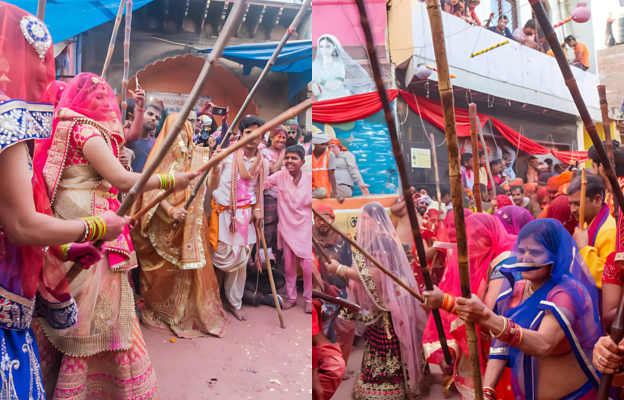
Their mission? To playfully chase and “hit” unmarried men who dare to cross their path. But fear not ,it’s all in good spirit! In fact, legend has it that any unmarried man struck by a woman during Dhinga Ganwar will be married within the year.
This act, while humorous and symbolic, carries a deeper cultural message ,a playful inversion of power. It gives women a moment to express strength, joy, and independence within a patriarchal setting, turning tradition on its head ,quite literally.
“In Jodhpur, even the sticks sing ,they sing of freedom, laughter, and fearless women.”
Symbols and Meanings: Between Myth and Modernity
Beneath the colour and chaos lies a profound symbolism. Dhinga Ganwar is more than a night of revelry; it’s a reflection of Rajasthan’s unique way of merging faith with freedom.
- Gavar Mata represents courage, transformation, and feminine energy.
- The lathi symbolises self-defense, strength, and assertion ,a reminder that devotion doesn’t mean submission.
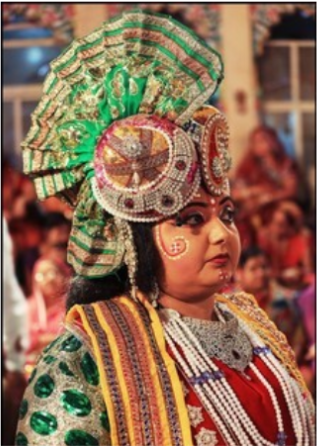
- Costumes allow women to embody various forms of identity ,from gods to rulers to icons, showing that femininity itself is multifaceted.
From a cultural perspective, Dhinga Ganwar breaks barriers without breaking tradition. It proves that empowerment can be festive ,that joy can be rebellion, and laughter can be liberation.
A Celebration of Women, for Women
What makes Dhinga Ganwar remarkable is its inclusivity. Married women, widows, and young girls all participate ,together, without hierarchy or hesitation. It’s one of the few festivals in India where widows are actively included in rituals, reinforcing the idea that womanhood itself, not marital status, is sacred.
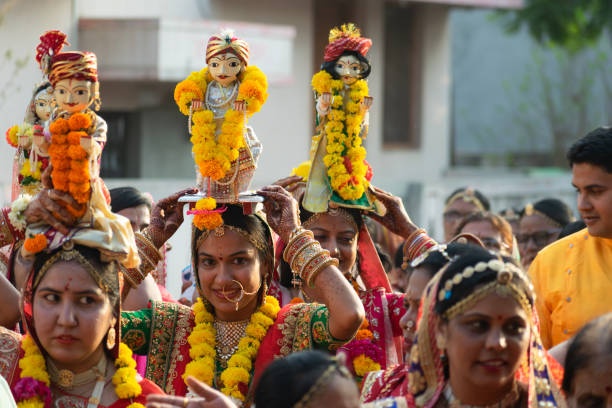
The festival’s preparation becomes a communal effort. Jewellery is shared, songs are practiced, and every woman ,regardless of age or background ,becomes part of the city’s heartbeat.
For visitors, it’s a sight that lingers long after, a celebration that captures the essence of Rajasthan’s spirit: proud, poetic, and full of life.
Experience Dhinga Ganwar with Folk Experience
To witness Dhinga Ganwar is to see Rajasthan at its most alive, when laughter becomes devotion, and courage turns into celebration. Walk with the women of Jodhpur as they take over the streets beneath the moonlit sky, their bangles jingling in rhythm with the drums. Feel the pulse of the stepwell at Toorji Ka Jhalra, where generations of women have gathered to dance, to pray, and to reclaim their stories through song.
At Folk Experience, we take you beyond the surface, into courtyards where legends are retold and where empowerment is expressed not in speeches, but in joy. Our journeys connect you with the women who keep this festival alive, artisans who craft its symbols, and communities who embody its fearless spirit.
Each experience is built on respect, sustainability, and authentic storytelling. You’ll not only witness a festival, you’ll understand what it means for Rajasthan’s women to celebrate faith, strength, and freedom all at once.
Travel with Folk Experience, and discover a Rajasthan that sings of resilience, where every beat of the dhol echoes a woman’s laughter, and every colour in the night sky tells a story of her power.
“Travel with Folk Experience, and discover Rajasthan not as a spectator, but as a storyteller ,one who carries its rhythm long after the drums fall silent.”