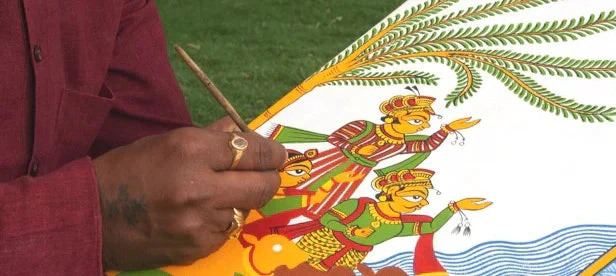
In Rajasthan, beauty is not just seen, it’s felt. It glimmers in every mirror-worked fabric, echoes in every folk song, and circles the wrists of women as crimson rings of light. Among these timeless symbols of tradition, lac bangles crafted from natural resin and shimmering with colour remain one of the most iconic expressions of …

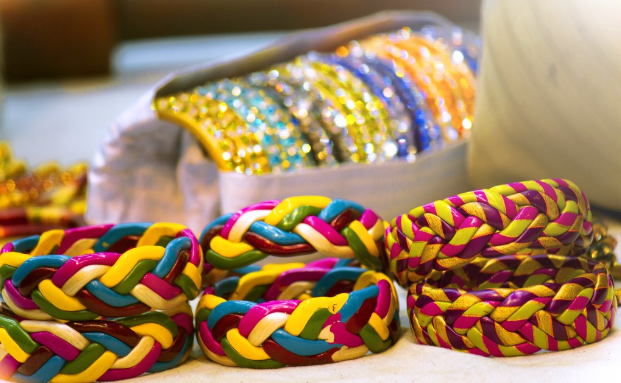
In Rajasthan, beauty is not just seen, it’s felt. It glimmers in every mirror-worked fabric, echoes in every folk song, and circles the wrists of women as crimson rings of light.
Among these timeless symbols of tradition, lac bangles crafted from natural resin and shimmering with colour remain one of the most iconic expressions of Rajasthani culture. They are not just ornaments; they are living memories of marriage, devotion, and the artistry passed from mother to daughter, generation after generation.
“Every bangle holds the hard work of an artisan and the heart of Rajasthan.”
A Legacy Older Than Empires
Long before Rajasthan’s palaces rose from the sands, lac bangles were already adorning the wrists of women across India. Archaeologists have found fragments of lac jewellery in the Indus Valley Civilization, dating back more than 3,000 years. Ancient scriptures such as the Atharva Veda, Mahabharata, and Ramayana all mention “laksha”, the resin derived from trees and insects used for crafting ornaments, sealing texts, and even building the legendary Lakshagraha (House of Lac).
Over centuries, this humble resin became sacred. In Rajasthan’s desert towns, Jaipur, Jodhpur, and Bikaner lac work evolved into a refined craft patronised by royals and adored by commoners alike. The bright red bangle became a cultural constant: a circle of protection, beauty, and blessings.
The Alchemy of Art: How Lac Bangles Are Made
To watch a lac artisan at work is to witness centuries of practice moulded into rhythm and fire. The process is simple yet intricate, a dance of patience, heat, and colour.
1. Harvesting Nature’s Resin
Lakh, or lac resin, comes from tiny insects that live on trees like Kusum, Palash, and Ber.
Farmers in regions such as Maharashtra, Jharkhand, Assam, and West Bengal collect branches coated with the hardened secretion, which they soak, scrub, and dry until it becomes pure golden resin.
2. Melting the Gold of the Forest
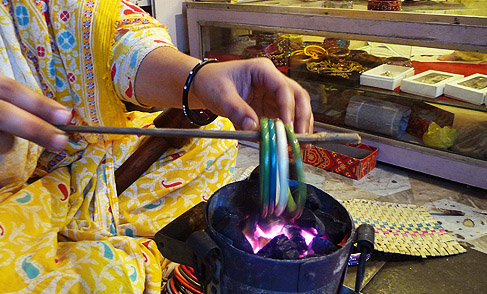
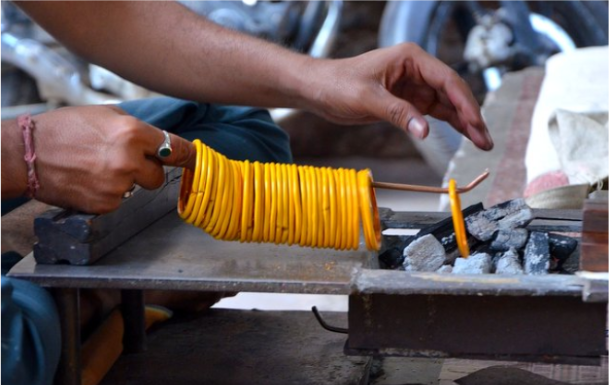
The resin is melted in a large iron pan (kadhai) over a coal furnace (bhatti). The air fills with a faint, sweet scent as the amber substance softens at 350°C, transforming into molten gold.
3. Strength and Form
To make it durable, artisans mix sok powder (natural glue) and berja (plant gum). The hot, pliable mixture is rolled into flexible rods and shaped into circles using wooden tools, each ring measured carefully by touch and instinct, not machines.
4. The Colours of Emotion
Traditionally, artisans used natural pigments:
- Turmeric for yellow,
- Henna leaves for green,
- Saffron for orange,
- Charcoal or mineral dyes for deep red and black.
The rods are coloured, reheated, and polished until they gleam like glass.
5. Ornamentation
The finishing touches, foil work, mirrors, glass stones, or gold dust turn every bangle into a miniature piece of art. Some are kept simple; others shimmer like the desert sun.
“The artisans of Jaipur shape colour itself into circles of joy.”
Why Lac Bangles Matter
In India, bangles are not mere jewellery, they are woven into the rhythm of life. In Rajasthan, they symbolise marital happiness, prosperity, and womanhood.
1. For Brides: Newly-married women wear a special set of 21 red lac bangles, known as chooda, for up to one and a half years after marriage.
- Red stands for fertility and marital bliss.
- Gold signifies wealth and divine grace.
No bridal look is complete without the musical clinking of these bangles, a melody of promises and new beginnings.
2. For Festivals: During Teej and Gangaur, women gift colourful lac bangles to their friends, sisters, and daughters as tokens of affection.
3. For Faith: Many believe that lac resin holds spiritual power, protecting the wearer from negative energy and symbolising the cycle of life.
The Language of Colours
Each hue in lac bangles tells a story, carrying its own cultural symbolism in Rajasthan’s palette of emotions:
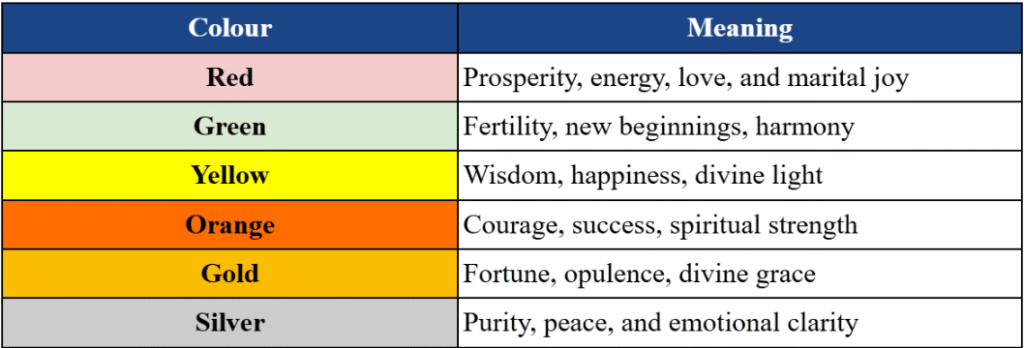
Whether worn singly or in vivid stacks, these colours mirror the rhythm of Rajasthani life, bold, warm, and unafraid to shine.
The Challenges Behind the Beauty
Behind every shimmering bangle lies a struggle.
Over the last few decades, machine-made plastic bangles have flooded markets. Cheap (₹10-50) and easy to mass-produce, they’ve undercut the handmade lac bangles (₹200-2,000). Deforestation has also reduced access to natural resin, forcing artisans to pay more for raw material.
As a result, many traditional Manihars (lac bangle makers) have left the craft, seeking more stable work. The once-thriving community of thousands has dwindled to a few hundred skilled families, mostly in Jaipur, Bikaner, and Jodhpur.
Yet, amid these challenges, hope endures. Increasing awareness around eco-friendly fashion and the rise of handmade marketplaces have sparked renewed appreciation for lac bangles.
More travellers now visit workshops, buying directly from artisans and keeping the circle of tradition alive.
Where to See and Buy Authentic Lac Bangles
To witness the art of lac bangle-making in its purest form, head to Maniharo ki Gali also known as Maniharon ka Rasta in Tripolia Bazaar, Jaipur.
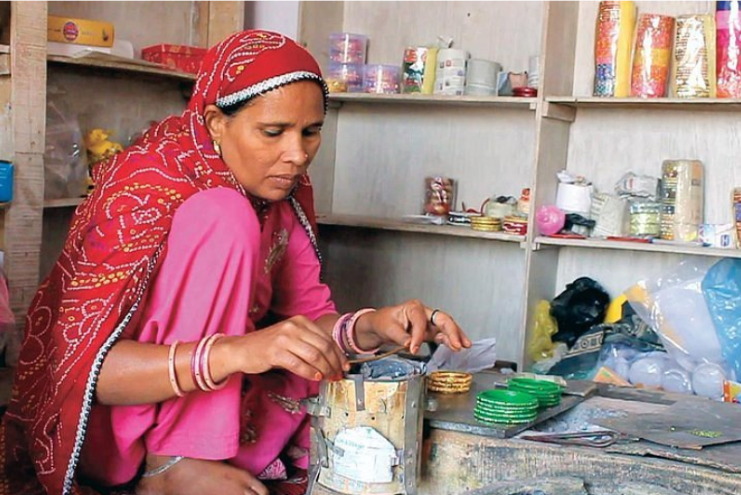
Here, narrow lanes shimmer with stalls stacked high in every colour imaginable. Inside, artisans sit by tiny furnaces, rolling, shaping, and decorating bangles with astonishing speed and precision. Visitors can even commission custom designs or try their hand at shaping a bangle, a humbling experience that reveals how much skill hides behind simplicity.
Insider Tip: Hold a bangle up to the light, genuine lac appears slightly translucent and feels warm and light, unlike plastic imitations that look dull and rigid.
- Location: Tripolia Bazaar, near Hawa Mahal, Jaipur
- From Airport: ~15 km / 30 min by cab
- Best Time to Visit: Morning hours (10 am – 1 pm) for artisan interactions
Apart from lac bangles, Tripolia Bazaar also offers Bandhani textiles, brassware, and handcrafted souvenirs, making it a perfect stop on any cultural trail through Jaipur.
Why This Craft Matters
Each lac bangle represents not just artistry but identity, a tradition that connects modern Rajasthan to its ancient roots.
By supporting lac artisans, you help sustain:
- Cultural Heritage: Skills and techniques passed down for centuries.
- Sustainable Craft: Eco-friendly materials with minimal waste.
- Rural Livelihoods: Empowering local families and women artisans.
“When you wear a lac bangle, you don’t just wear jewellery, you wear a story.”
Experience the Craft with Folk Experience
At Folk Experience, we go beyond markets and souvenirs, we take you into the workshops themselves.
Join us for an immersive journey through Jaipur’s Tripolia Bazaar, where you can meet the Manihars who keep this centuries-old craft alive. Watch molten resin turn into shimmering colour, learn the symbolism behind every hue, and design your own pair of bangles under a master artisan’s guidance.
Our experiences blend culture, craft, and connection, offering travellers a chance to touch Rajasthan’s living heritage, not just observe it.
Because in every bangle, there’s a heartbeat of the artisan, of the desert, and of a culture that believes beauty is a form of prayer.
“Travel with Folk Experience, where every craft tells a story, and every story connects you to the soul of Rajasthan.”