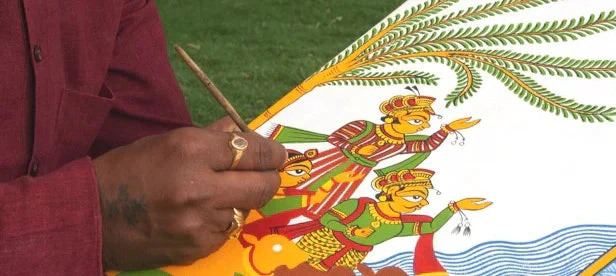
Every year, as the desert wind hums across the Aravallis, a sleepy town in Rajasthan awakens to rhythm and radiance.Pushkar, the sacred lake town, becomes a canvas of devotion and desert life where the spiritual and the spectacular meet. For one magical week, faith dances with festivity and the world gathers to witness Rajasthan’s most …

Every year, as the desert wind hums across the Aravallis, a sleepy town in Rajasthan awakens to rhythm and radiance.
Pushkar, the sacred lake town, becomes a canvas of devotion and desert life where the spiritual and the spectacular meet. For one magical week, faith dances with festivity and the world gathers to witness Rajasthan’s most captivating fair.
The Sacred City and Its Mythological Roots
Pushkar is not just another desert town, it is one of India’s oldest and holiest pilgrimage sites. According to Hindu mythology, Lord Brahma, the creator of the universe, dropped a lotus flower from his hand, and where it fell, Pushkar Lake was formed. This sacred lake, also known as Pushkarraj Talab, is believed to possess divine powers, and taking a dip in its waters during Kartik Purnima is said to wash away all sins.
The lake is surrounded by fifty-two bathing ghats, but three of them are especially significant, Brahma Ghat, where Lord Brahma performed his yagna (holy fire ritual); Vishnu Ghat, where Lord Vishnu took a spiritual dip; and Shiva Ghat, where Lord Shiva meditated. These ghats together form a divine trinity, making Pushkar one of the most spiritually charged places in the country.
The Brahma Temple: A Divine Rarity
Pushkar’s identity is deeply intertwined with its Brahma Temple, one of the very few temples in the world dedicated to Lord Brahma. Built from white marble with a red spire that glows in the desert light, the temple is a symbol of both myth and devotion. Besides, Lord Brahma’s four-faced idol sits with his consort, Goddess Gayatri, while the walls echo with ancient chants.
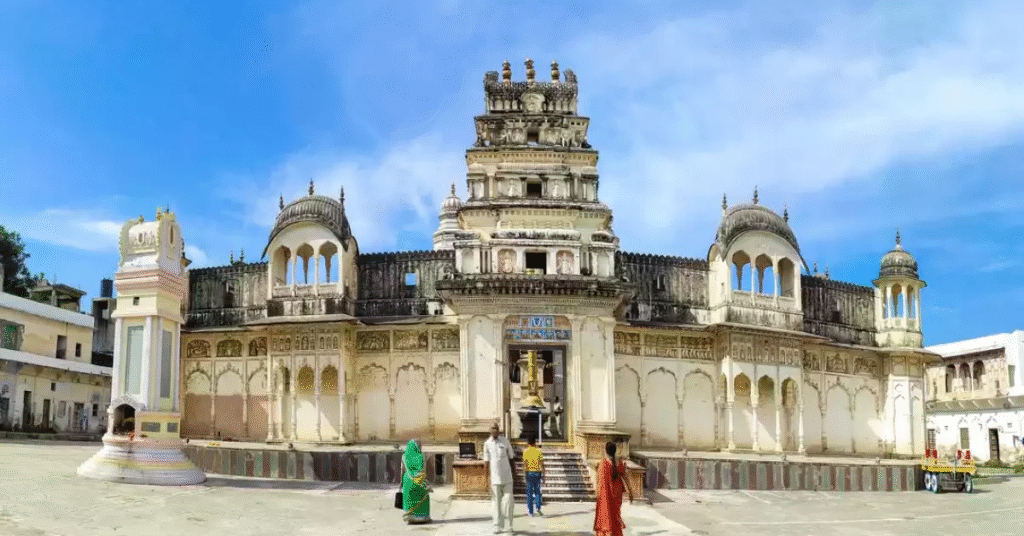
Legend has it that after performing the sacred yagna at Pushkar, Lord Brahma married Gayatri, a shepherd girl, to complete the ritual because his wife Savitri had not arrived in time. Angered by this, Savitri cursed Brahma, decreeing that he would not be worshipped anywhere else. Hence, Pushkar remains the only major centre of his worship, a divine exception in the spiritual geography of India.
Close to the main temple are the Savitri Temple and Gayatri Temple, perched atop the surrounding hills. These shrines not only hold mythological significance but also offer panoramic views of Pushkar town and the tranquil lake below, especially at sunrise.
From Cattle Fair to Cultural Carnival
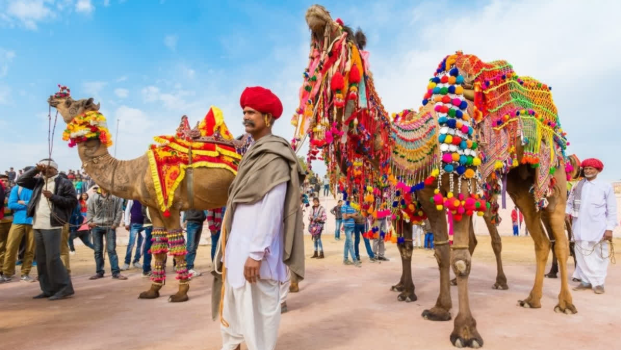
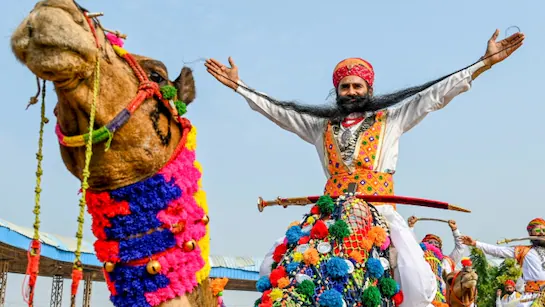
Centuries ago, the Pushkar Mela began as a modest cattle and camel trading fair. Today, it has evolved into a grand cultural extravaganza, drawing thousands of herders, artists, and visitors from across India and abroad. The fairgrounds come alive with scenes straight out of Rajasthan’s folk imagination, camels adorned in mirrors and beads, decorated horses, and herders wrapped in bright turbans showcasing their prized animals.
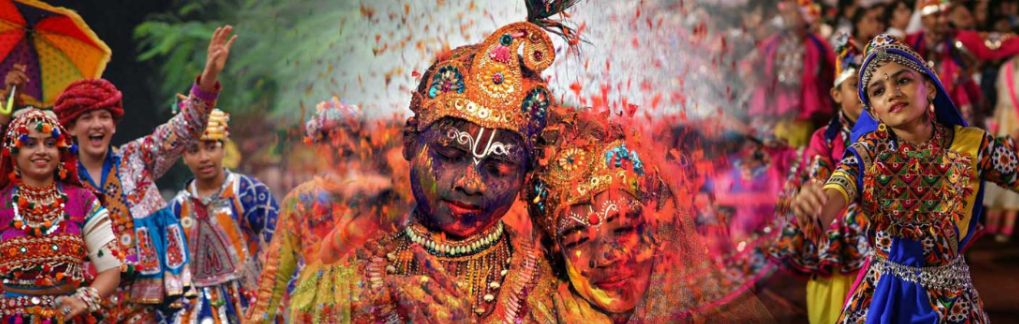
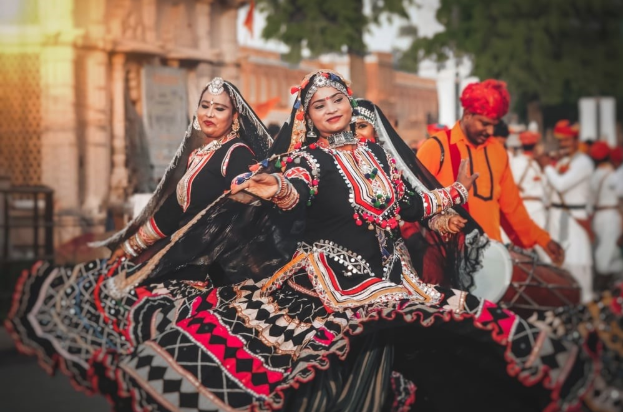
The camel races, beauty contests, and traditional games create a joyful energy that spreads through the desert air. Alongside the trading, the fair has become a vibrant display of Rajasthani art, music, and culture. Folk dancers swirl to the beats of dholaks, men compete in turban-tying and moustache contests, and markets overflow with textiles, jewellery, and handcrafted souvenirs. The Pushkar Mela, in essence, celebrates everything that defines Rajasthan: its colour, hospitality, and cultural depth.
A Spiritual Celebration by the Sacred Lake
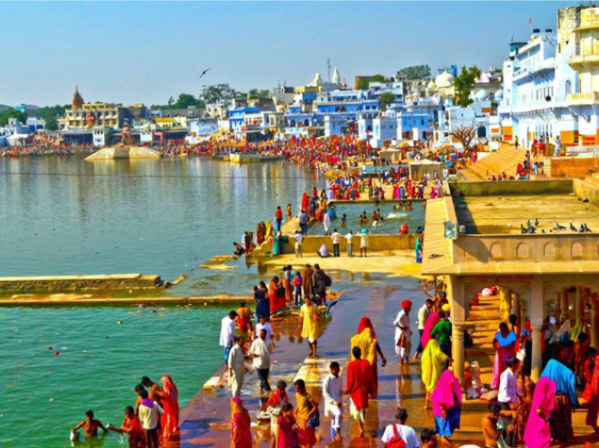
Even amidst the noise and festivity, Pushkar never loses its spiritual heartbeat. The mornings begin with the sound of temple bells and conch shells echoing across the lake.
Pilgrims gather at the ghats to take their holy dip, and by evening, the lake transforms into a vision of light during the Maha Aarti.
Thousands of oil lamps float gently across the water under the full moon of Kartik Purnima, illuminating the night in a sight that feels celestial.
“At Pushkar, devotion and celebration merge until you cannot tell where prayer ends and joy begins.”
This harmony between faith and festivity is what makes the Pushkar Mela unlike any other in the world.
A Feast for the Senses
Pushkar’s charm extends beyond its temples and ghats, it’s also a paradise for lovers of local culture. The streets are lined with vendors selling colourful turbans, embroidered fabrics, and handcrafted trinkets. Food stalls serve classic Rajasthani flavours, dal baati, churma, kachori, rabdi, and malpua, best enjoyed with a steaming cup of chai in an earthen cup.
Musicians, jugglers, and mehndi artists fill every corner, making each step through the fair a sensory delight. Pushkar, though small in size, embodies the entire cultural rhythm of Rajasthan.
Planning Your Visit
The Pushkar Mela 2025 will be held from October 30 to November 5, with Kartik Purnima, the main day of spiritual rituals, falling on November 5.
Pushkar is well connected by all means of transport:
- By Train: The nearest railway station is Ajmer Junction (15 km).
- By Road: Pushkar has good connectivity from major cities like Jaipur, Udaipur, and Delhi.
- By Air: The nearest airport is Kishangarh, while Jaipur International Airport serves as the main hub for most travellers.
Accommodation options range from desert camps and heritage havelis to budget guesthouses. Booking early is recommended, as the town attracts thousands of visitors during the fair.
More Than Just a Fair
The Pushkar Mela is not merely an event, it is an experience that captures the very soul of Rajasthan.
It is where faith and festivity coexist, where devotion meets dance, and where every visitor becomes part of a living tradition that has thrived for centuries.
Whether you are a pilgrim seeking blessings, a traveller in search of stories, or a photographer chasing the golden light of the desert, Pushkar welcomes you with open arms and timeless charm.
“In Pushkar, every colour tells a story, every sound sings a prayer, and every soul finds a moment of peace.”