
Day 1 / Jammu & Kashmir
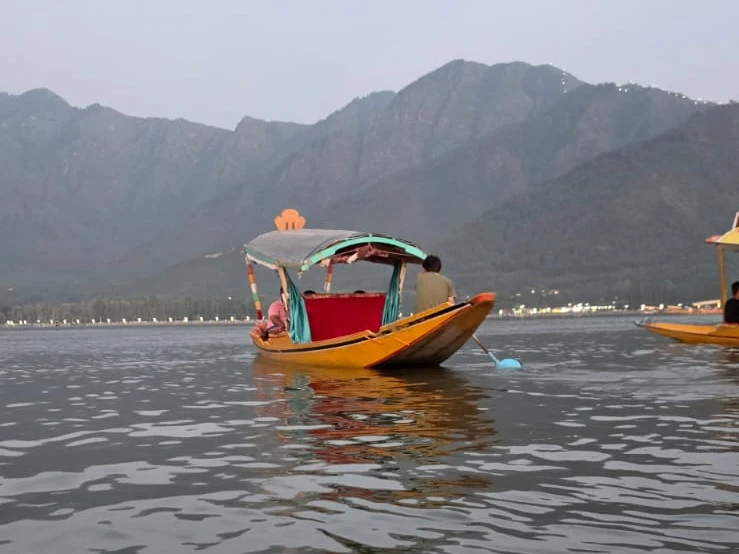
Day 1 — Srinagar, Dal Lake
arrive on a heritage houseboat, learn to read it as a carved house, and the folklorist's talk “Ceiling to Floor”
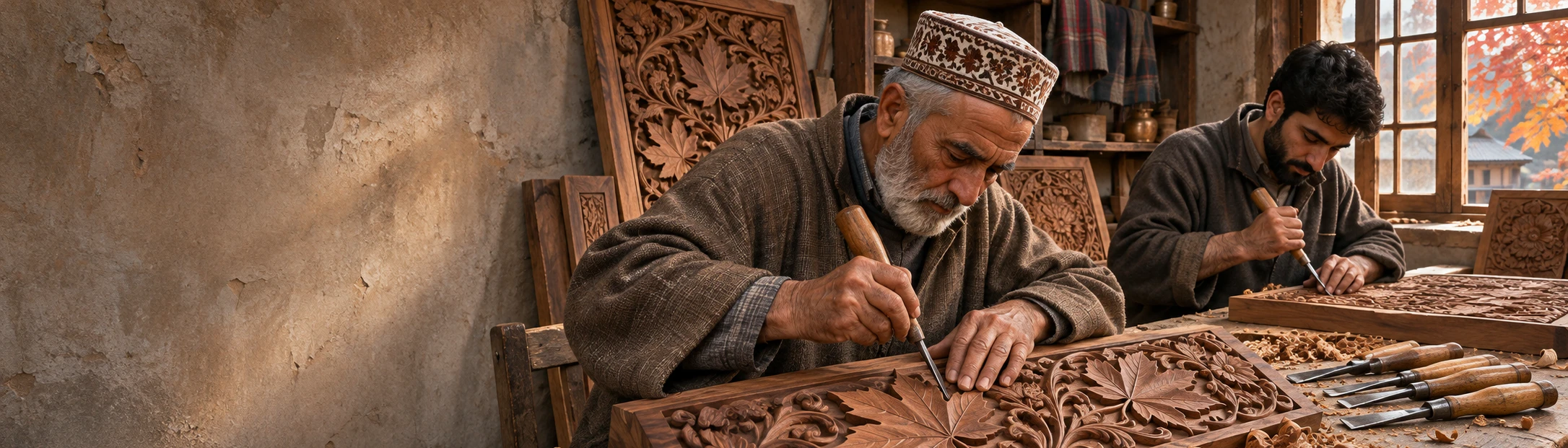
“Then, lo, saw I in mine own house a learned man.” — Lal Ded (Lalla), 14th-century Kashmiri mystic poet; tr. G. A. Grierson & L. D. Barnett, Lalla-Vakyani (1920)
At a Glance
The essentials, at once.
01The living journey
Sliding the last piece into a khatamband panel and feeling the pattern lock.
An ustad singing the talim while the knotters answer in colour.
Your first cut in walnut, under a master carver's eye.
Twisting lake reed into waguv with a family by Dal Lake.
Washing your hands from a tash-naer before a dinner served in copper.
Your journey companion
Ask Ganga AI anything about this journey — days, season, packing, pace.
02The itinerary
Day 1 / Jammu & Kashmir
arrive on a heritage houseboat, learn to read it as a carved house, and the folklorist's talk “Ceiling to Floor”
03The travellers
Craft collectors, architects and interior designers, textile lovers, writers, photographers and Kashmiri diaspora
04The community
Every session on this journey is paid directly to the people who lead it: the houseboat family who hosts you, the boat carpenter, the waguv weavers by Dal Lake, the ustad and karigars of the walnut karkhana, the khatamband makers, the coppersmith, engraver and tin-coater, the carpet knotters and the talim writer, the gabba and namda makers of Anantnag, and the home cooks who feed you. Fees are agreed before you arrive and paid in full whether or not you buy anything. Several of these crafts lose apprentices every year; a paid day of teaching gives a master a reason to keep the karkhana open and a young hand a reason to stay. That is how a living tradition remains a livelihood.
05Seasonal connections
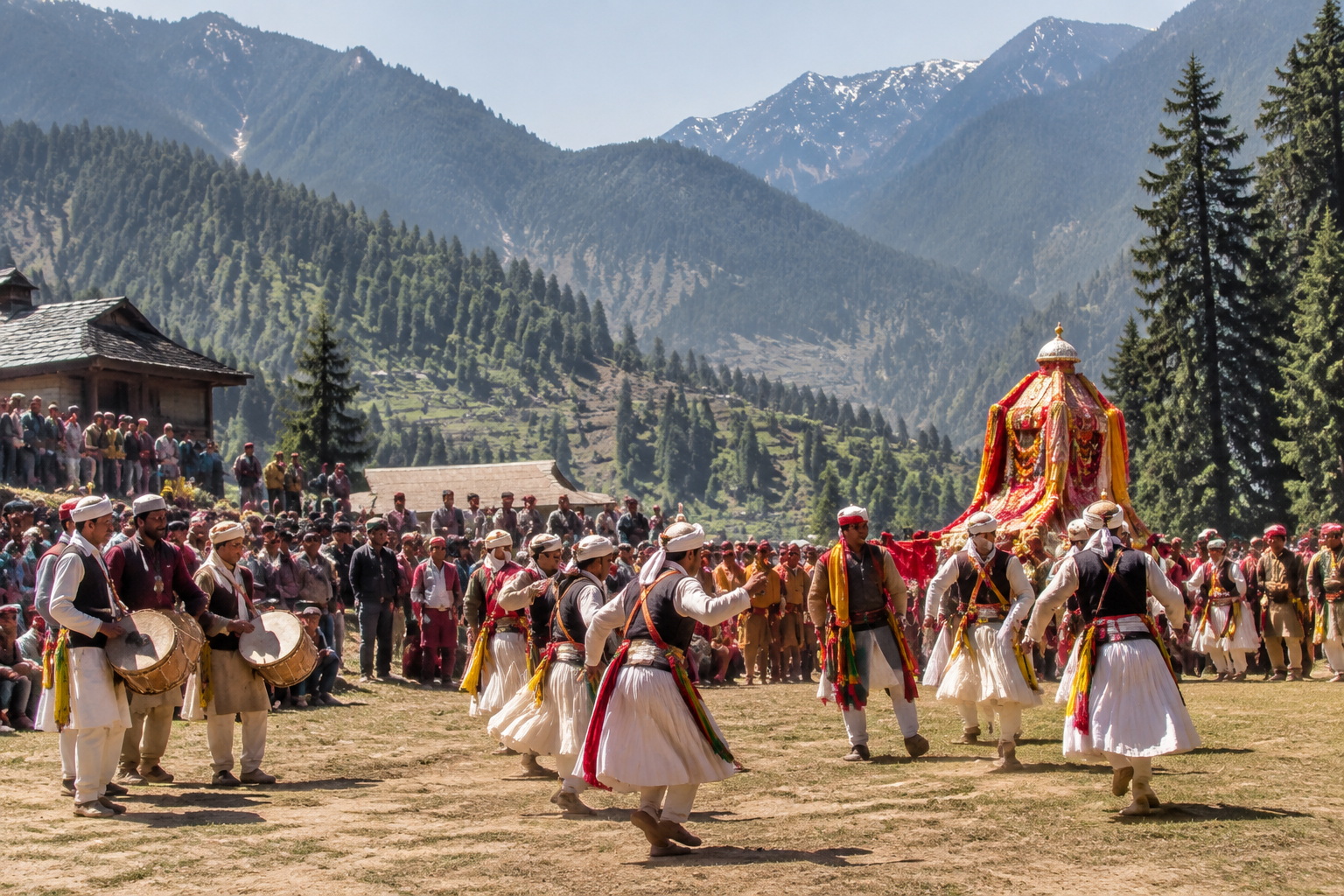
Explore the traditions, gatherings and changing seasons around this journey.
06Continue exploring
Selected by state and journey theme
07Further reading
For millions of travellers, a visit to Jammu begins and ends with one destination: the pilgrimage to Vaishno Devi, with Katra as its base. It is a journey of faith, and it is one that many families make year after yea…
Read storyKashmir offers more than Dal Lake houseboats: meadows, villages, wildlife and craft. Learn where to go and how to travel in ways that support local communities.
Read storyKashmir’s papier-mache turns paper pulp into painted boxes, vases and pen cases. Learn its Persian roots, how it is made, and how to buy it well.
Read story08Before you go
The little details make a journey.
Frequently Asked Questions · 12
Once you are satisfied with the itinerary and detailed discussion proceed with the advance payment. Booking will be confirmed once you make the payment.
At once, by email: confirmation, invoice, itinerary and preparation notes. Before
March to October. Winter- November to February.
A Folk Experience folklorist-guide.
Very little. It is not served in homes, workshops or near shrines, and is sold at only a few licensed places in Srinagar.
Modest clothes, a headscarf for women at Jamia Masjid, and shoes you can slip off, as most workshops and homes are floor-seated.
Yes, with consent. Ask before photographing people, never photograph children without a parent's permission, and ask before filming a design that a karkhana considers its own.
Yes. You are accompanied on every outing, and women hosts are present in women's spaces.
Yes. It pairs well with our Kashmir winter journey, The Kangri Season, and our Jammu journey on Dogra heritage and food.
Absolutely.
It varies from hotels to hotels. Average hotels follow 21 days cancellation policy. Details depend on the hotels, homestays or heritage properties booked.
Show your interest by filling the form and from our team, a folklorist will contact you soon.