

Day 1 / Jammu & Kashmir
Day 1 — Srinagar
Arrive, learn to carry a kangri, noon chai from the samovar and the folklorist's talk on the Forty Days.
Join The Kangri Season, a Kashmir winter cultural tour. Taste dawn harissa in old Srinagar and meet the artisans who weave Kani shawls and craft kangris.
At a Glance
The essentials, at once.
01The living journey
Eating harissa at dawn by the Jhelum while the old city wakes in the cold.
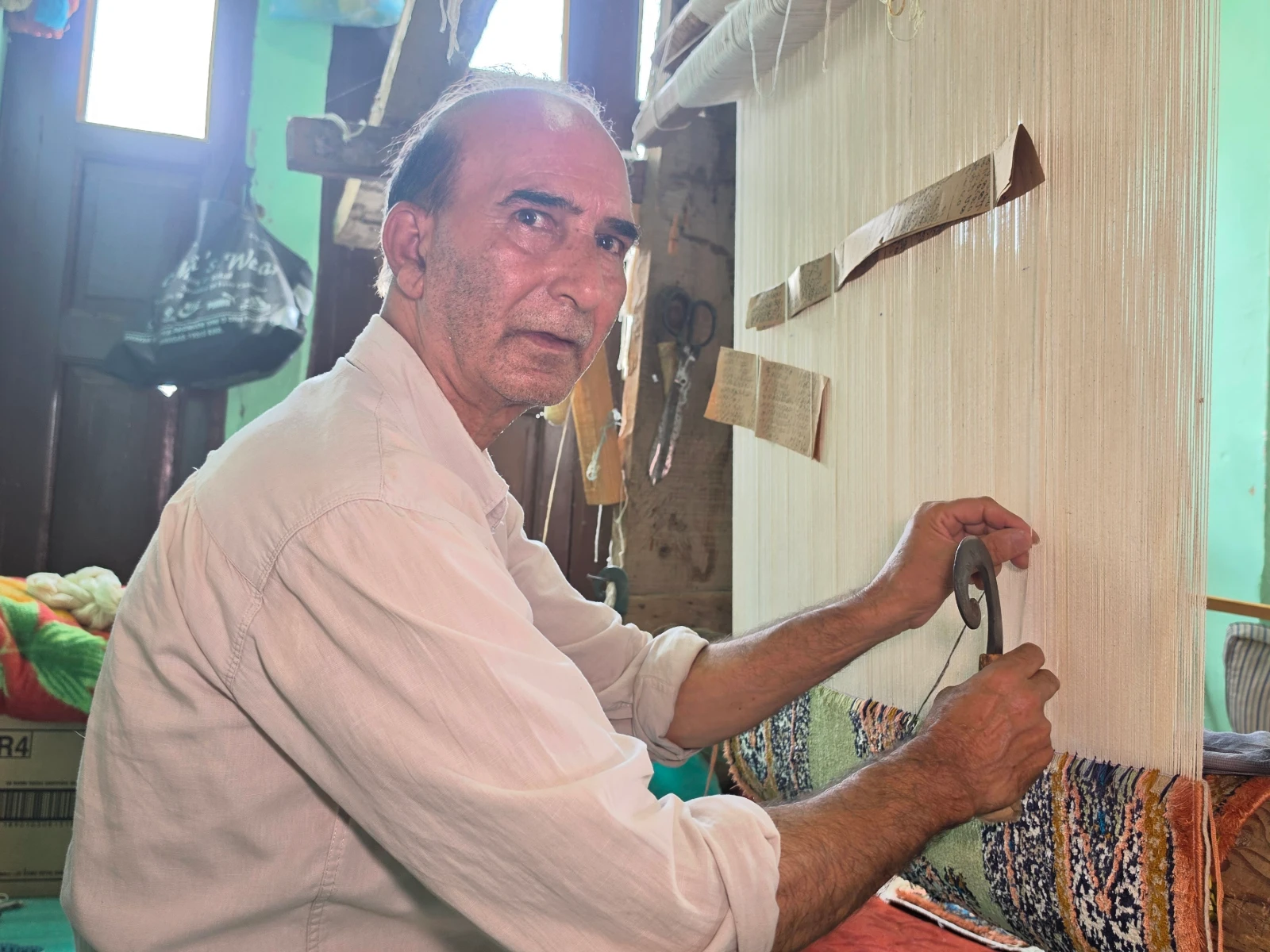
Reading a line of talim with a Kani weaver in Kanihama.
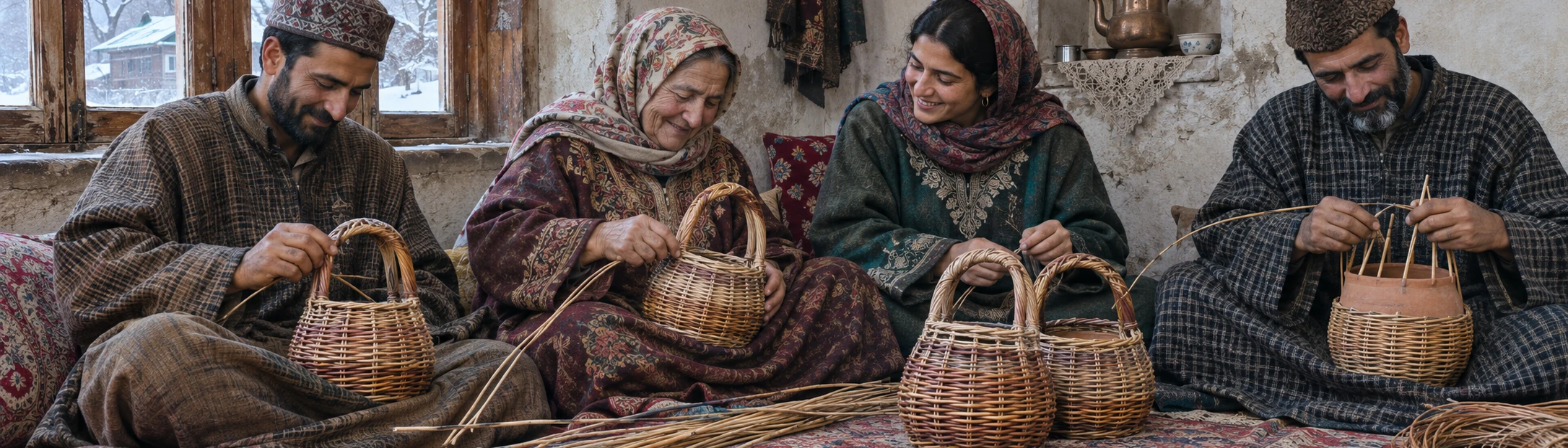
Weaving a few rows of willow around a kangri at Charar-e-Sharif.
Sufi verses sung to the santoor in a warm room on a freezing night.
A last dinner from the copper trami, cooked in front of you by a waza.
Your journey companion
Ask Ganga AI anything about this journey — days, season, packing, pace.
02The itinerary
Day 1 / Jammu & Kashmir
Arrive, learn to carry a kangri, noon chai from the samovar and the folklorist's talk on the Forty Days.
03The journey on film
This is not a snow holiday; it is a Kashmir winter cultural tour into the forty days when the valley turns inward. From 21 December to 31 January, the season Kashmiris call Chillai Kalan, the great cold, life gathers around the kangri fire-pot carried under the pheran, the samovar of salted noon chai, the wood-fired hammam room and the loom. Kashmiris speak of three named colds, Chillai Kalan, then Chillai Khurd and Chillai Bachha, and each brings its own food, dress and work. Srinagar is a UNESCO Creative City for Crafts and Folk Art, and pashmina, Kani and papier-mâché carry Geographical Indication tags, but you meet them here as households and workshops, not showrooms. You sit on floor cushions, ask questions, try the work with your own hands, and buy, if you wish, directly from the person who made the piece. This is also a journey through Kashmir's mystic poetry and shared sacred places: the Rishi shrine of Nund Rishi, the verses of Lal Ded, a night of Sufiana Kalam with santoor and saz-e-Kashmir and Hari Parbat, where a Sufi shrine, a Hindu temple and a Sikh gurdwara share one hill.
04The travellers
Culture-led travellers, textile and craft collectors, writers, photographers and Kashmiri diaspora returning to the old city
05The community
Every session on this journey is paid directly to the people who lead it: the host family who warms your evenings, the papier-mâché sakhtsaz and naqqash, the women who spin pashmina at home, the Kani weavers of Kanihama, the kangri makers of Charar-e-Sharif, the Sufiana musicians. Fees are agreed with each host before you arrive and paid in full, whether or not you buy anything. . In the hardest weeks of the Kashmiri winter, your visit is paid work and a reason to keep a craft going, which is what keeps a living tradition a livelihood.
06The story
07Seasonal connections
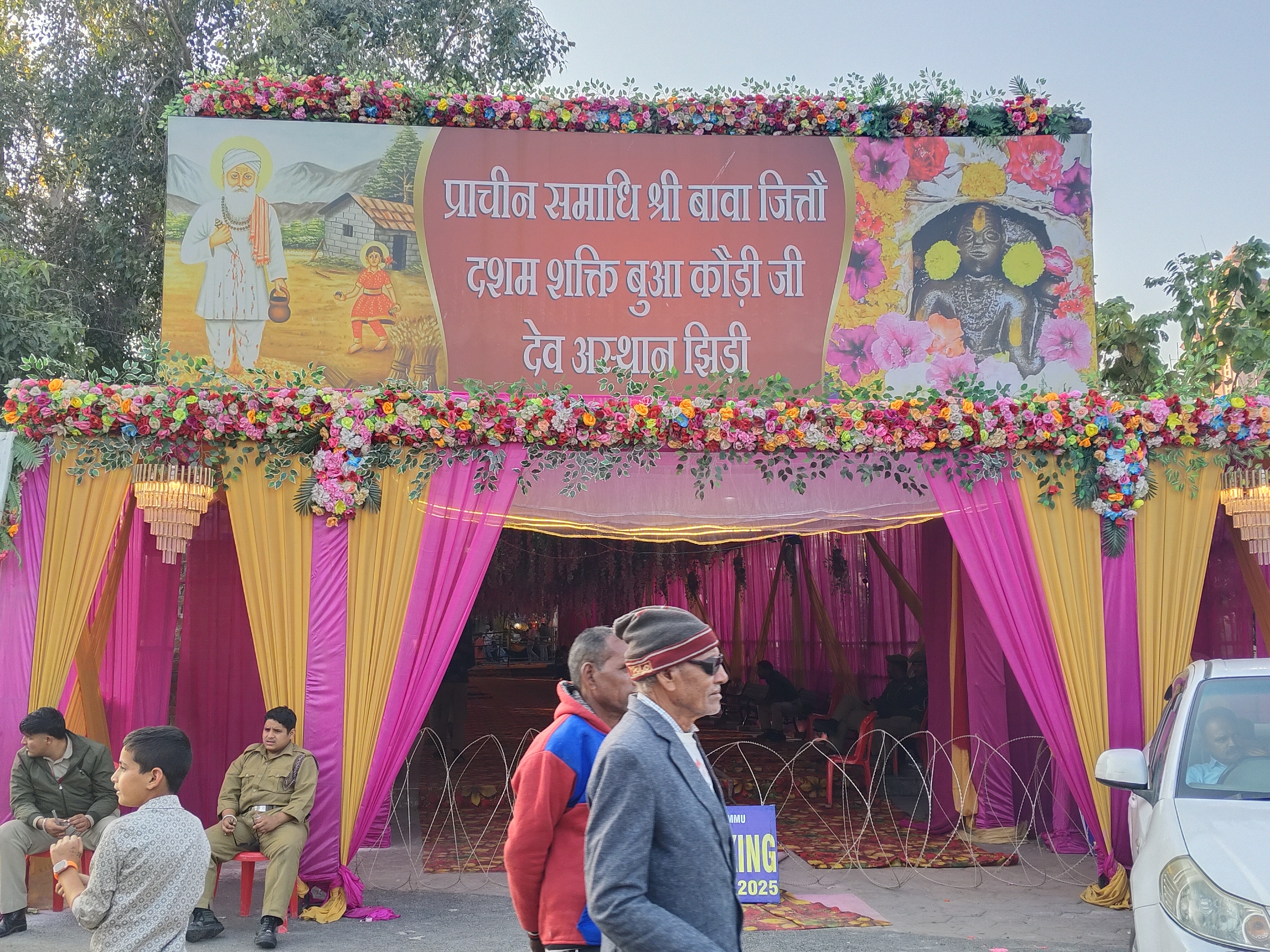
Explore the traditions, gatherings and changing seasons around this journey.
08Continue exploring
Selected by state and journey theme
09Further reading
For millions of travellers, a visit to Jammu begins and ends with one destination: the pilgrimage to Vaishno Devi, with Katra as its base. It is a journey of faith, and it is one that many families make year after yea…
Read storyKashmir’s papier-mache turns paper pulp into painted boxes, vases and pen cases. Learn its Persian roots, how it is made, and how to buy it well.
Read storyEach spring, in the plains of Kathua, Samba and Jammu, families begin to move. Flocks of sheep and goats, horses and herders set out along old routes towards the high pastures of the Pir Panjal and the Chenab valley,…
Read story10Before you go
The little details make a journey.
Frequently Asked Questions · 13
Deposit at booking and balance due before arrival.
At once, by email: confirmation, invoice, itinerary and preparation notes.
Chillai Kalan, 21 December to 31 January, the heart of Kashmir in winter, when harissa is cooked, kangris are carried and craft work moves indoors.
Days are usually in single figures Celsius and nights below freezing. Rooms are heated with power backup.
A Folk Experience folklorist-guide.
Yes, with notice. Kashmiri food is meat-centred and halal, with good vegetarian dishes and a Pandit vegetarian kitchen. Gluten-free is harder, as bread is central.
Very little. It is not served in homes or at shrines, and is available at only a few licensed places in Srinagar.
Modest clothes, a headscarf for women at shrines, and shoes you can slip off.
Yes, with consent. Ask before photographing people, never photograph children without a parent's permission, and follow your guide inside shrines.
Yes. You are accompanied on every outing, and women hosts are present in women's spaces.
Yes. It pairs well with our Jammu journey on Dogra heritage and food.
Absolutely.
Show your interest by filling the form and from our team, a folklorist will contact you soon.